[In his 1999 book titled You Can Call Me Al, the late-great Al McGuire of Marquette University coaching fame recalled the ABA’s early signing of his All-American center Jim Chones in 1972. According to McGuire, in the run up to Chones’ decision to sign with the New York Nets, he went over “to Jimmy’s apartment.”
“I pick him up and drive him to Racine, Wisconsin, a 30-minute drive from Milwaukee. I said [cryptically], ‘Jimmy, ya just broke your leg.’
Jimmy said, “Whaddya mean, Coach?’
‘You’re going pro.’
Then he started cryin’. I said, ‘Jimmy, what would you say if I told you [that] you would be makin’ $10,500 a week for the next four years?’ Then he stopped cryin’.”
Pretty dramatic stuff. Well, several years ago while working on the book, Shake and Bake: The Life and Times of NBA Great Archie Clark, I was able to call Chones and ask for his recollection of this special moment in his life. His reply? “Never happened.” He then chuckled about his college coach and his creative art of storytelling. Our conversation moved on to the ABA, and we soon somehow meandered into God and life. He recommended one of his favorite books (which I read), and I hung up forever wowed by Chones, his intellect, and his character. He’s a class act, who overcame losing a parent, growing up poor, and getting batted around unfairly by ABA teams anxious to unload his large contract.
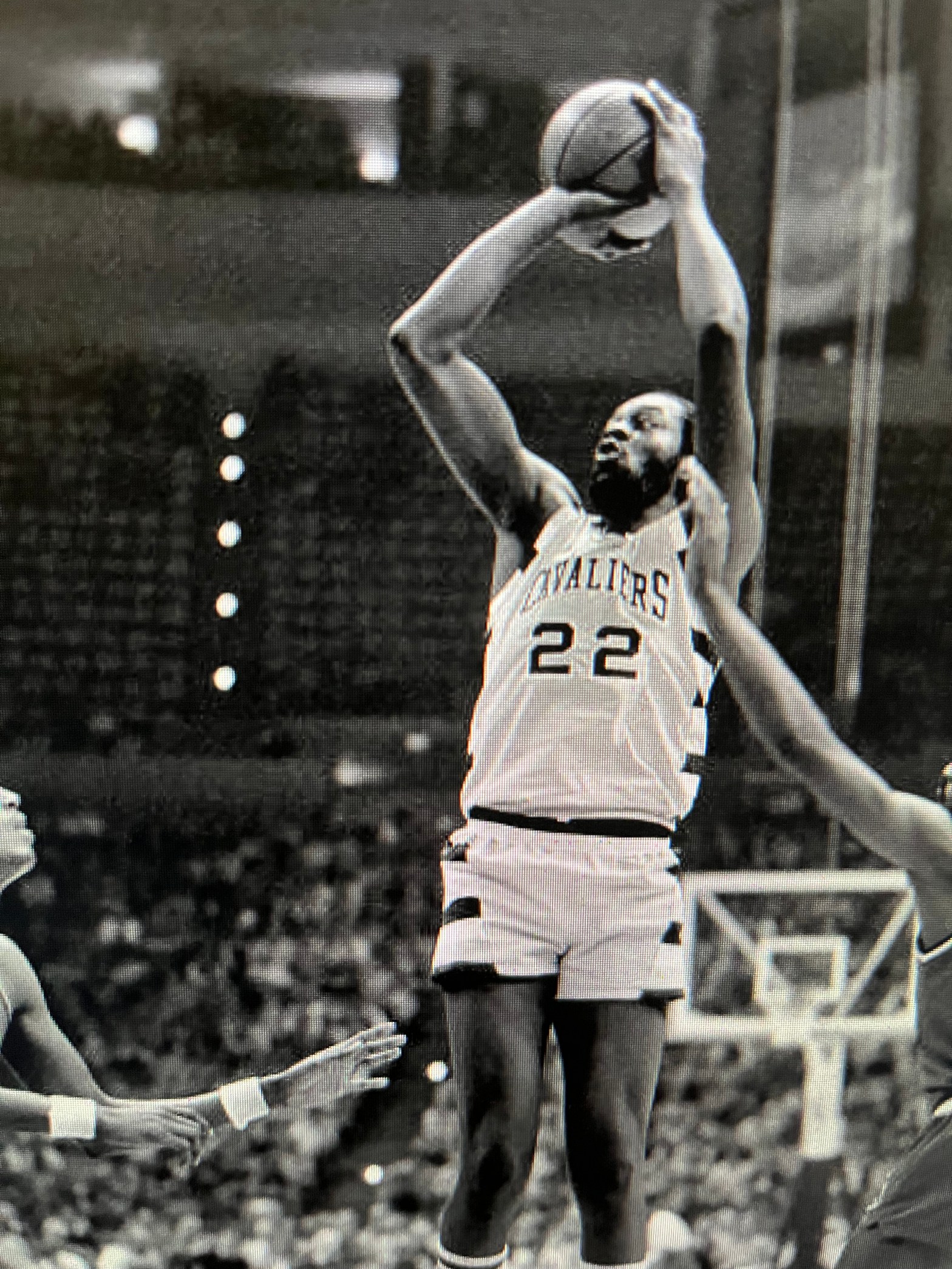
Though this article, published in the April 1975 issue of Basketball Digest, is short and superficial in many ways, it shows that Chones very much landed on his feet in the NBA, first in Cleveland and later in Los Angeles and Washington. And as the Milwaukee Sentinel’s Paul Levy also shows, Chones never lost faith and always believed in himself through all the pressure to excel. His story is one that shouldn’t be forgotten, and, you guessed it, he’s one of my all-time favorites.]
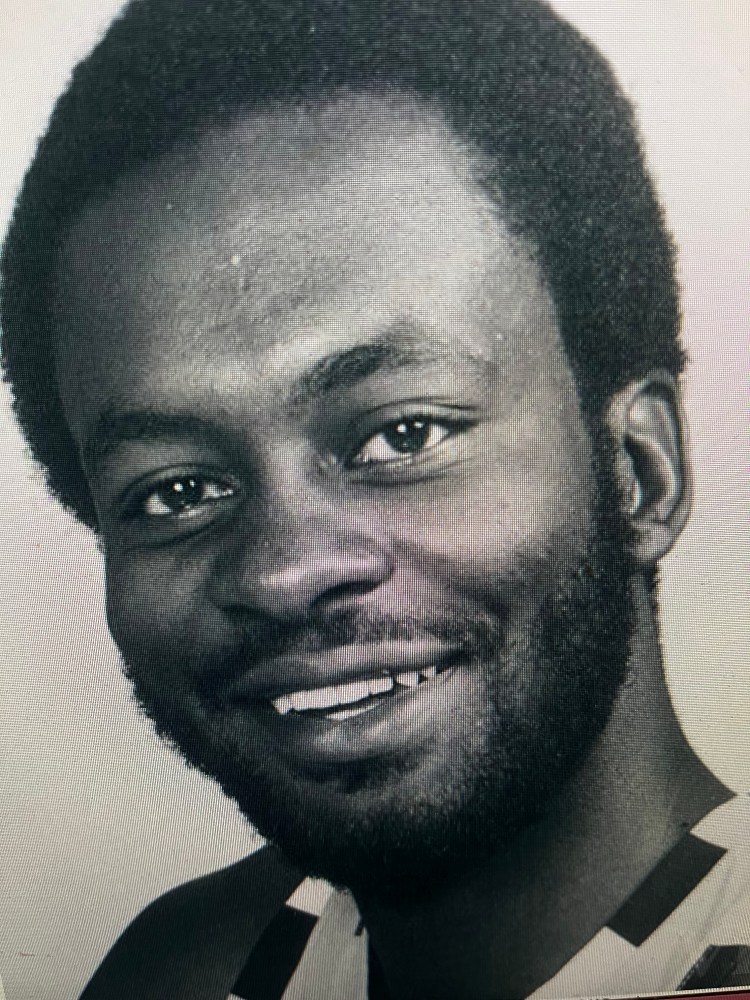
Jim Chones often wonders if he once tried to do too much too soon. He also wonders why he bothers to look back. “Maybe I hurried myself,” Chones said. “I used to worry about it. But not anymore.”
Chones was referring to his premature departure from the 1971-72 Marquette University team. With five regular season games remaining in that, his junior year, Chones signed a $1 million contract to play for the American Basketball Association’s New York Nets.
The Nets gave up on him after one year, sending him to the Carolina Cougars. The Cougars cut him at the end of last season when they decided they could no longer afford to pay his salary. Only 22 years old, the 6-feet-11 Jim Chones had about as much basketball talent as Rockefeller has money. And that, of course, can become a problem.
“Maybe it was because I hadn’t played in enough college games,” he said of his first ABA season, in which he averaged 11.4 points per game. He seemed to be excusing himself, but no excuses were needed.
“I keep plugging away,” he said. “I’m getting better every year. That’s the only way to look at it. The big thing in this league is to know you can play. Once you know that, there’s no problem.”
“All things being equal, he could have done all right with the Nets,” said Chones’ long-time friend George Thompson, now a Milwaukee Buck guard. “But things weren’t really equal. There was a lot of pressure on him. It wasn’t a normal situation.”
With the Nets, Chones said, “They were trying to teach me to play forward when I hadn’t learned to play center yet. There were a lot of negative things. There was pressure on the coach [Lou Carnesecca], too.”
The pressure has never really subsided for Chones. But he has learned to cope with it. “Everybody here has gone through hard times,” Chones said. ‘But in a way, it’s good. It makes you want to compete more. It makes you realize how much your job means.”
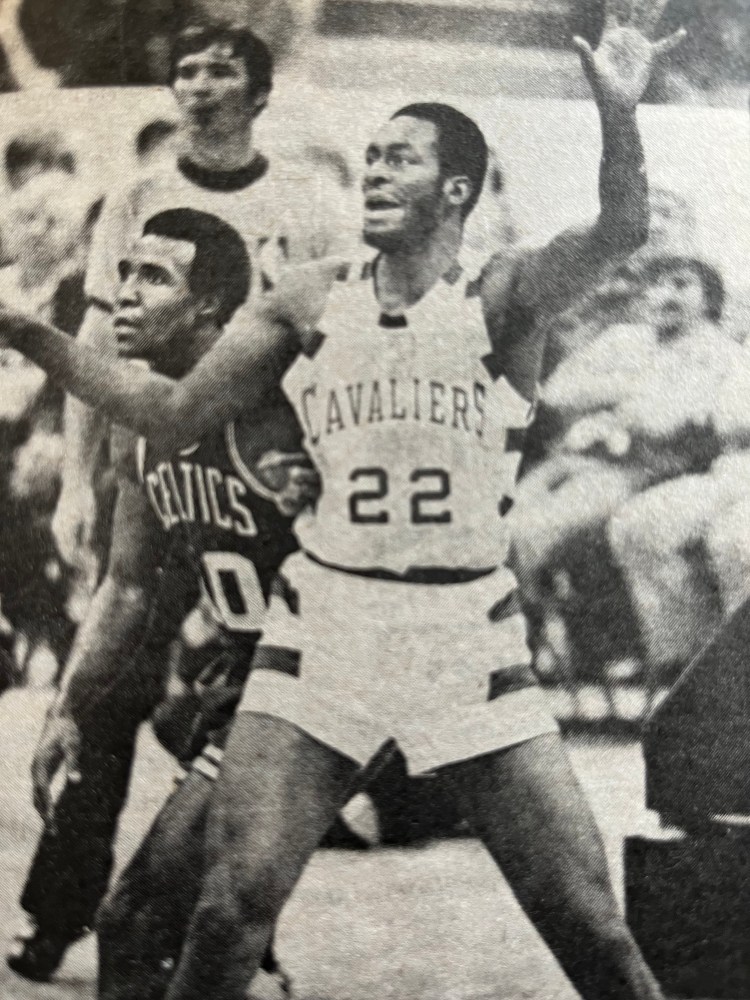
Quite a bit has happened to Chones since that rookie year with the Nets. “I’m feeling like a rookie again,” says the Cleveland Cavalier. “This league [NBA] is more advanced. The whole mentality of play is different. I’m just really awed by what some of these guys can do.”
As a senior at Racine (WI) Saint Catherine’s High, it was Chones who kept onlookers in awe. “That’s when I met him,” said Thompson. “He was a senior, and although I was in my last year at Marquette and I knew I wouldn’t be playing with him, I wanted to see him go there.”
Chones remembers the situation vividly. “He (Thompson) was the main reason I went there,” Chones said. “We became very good friends, and we always kept in touch when we played in the ABA. George has been one of the most influential people in my life.”
And there were times when Chones needed somebody to influence him. “It was very hard for me when my father died my freshman year,” Chones said. “But I had a few goals and dreams that I was still determined to achieve. I always wanted to play in the NBA. I always wanted to get a degree. I’ve been going back to school every summer to get my degree in philosophy. I don’t know what good it will do me, or if I’ll ever use it. But it’s something I want to have.”
He has not been given any lessons by [the injured] Kareem Abdul-Jabbar, something he has mixed emotions about. “You want to play against the best, and that’s Kareem,” he said with a laugh. “But then again, I had enough trouble with Bob McAdoo, so I don’t mind if Kareem sits out. But when I play him, I’m not going to spend days worrying about it.”
“He has the quickness and the tools,” says Cleveland coach Bill Fitch about Chones. “The thing is, he has to go around the league and learn to play the NBA big men. In the other league, there are not as many, what I would call, legitimate centers, so his skills got rusty. He has to continue to work on his moves inside. But once he’s gone around the league, he’ll be able to anticipate and to intimidate.”
Does Fitch think that being dropped by two ABA teams hurt Chones’ confidence?
“I can’t judge the confidence factor,” he replied, “but I know it hasn’t affected his determination. He has desire. This is a second chance for him. What I think happened, Jim looked in the mirror one day and realized that all his problems have been caused by himself. Once a man realizes that, he has no more problems.”
Though Chones admits he has made adjustments in his lifestyle, he’s never regretted leaving Marquette and grabbing the big money. “Man, you’re talking to somebody who never had anything,” said Chones. “My mother worked in a restaurant washing dishes and making salads and trying to support six kids on something like $3,000 a year.”
There are a lot of things Jim Chones does not to have to worry about anymore.
 From Way Downtown
One thought on “Jim Chones: Learning to Live with the Pressure”