[While working on a book years ago, I interviewed a small-college star from the 1950s named Eddie Solomon. After we finished up with his high-scoring college exploits, Solomon mentioned with pride that the NBA Philadelphia Warriors drafted him. Never signed with them, Solomon said, and I asked him why? “I didn’t want to drive from city-to-city riding all scrunched up in the back of a station wagon,” he said. “That’s how they got around back then. Travel could be really primitive compared to today.”
Instead, Solomon opted for the National Industrial Basketball League (NIBL), a semipro circuit with a big career perk. For playing a few games per week on the Caterpillar, Inc. NIBL team, Solomon was handed a solid entry-level position with the company. It amounted to a ready-made chance to climb the corporate ladder, which Solomon did and soon settled down to raise a family on a steady paycheck. The NBA couldn’t offer the same stability.
Solomon said he had no regrets . . . but one. Because he played in the now-obscure NIBL, not the NBA, Solomon’s younger acquaintances always sized him up as not good enough to play in the pros. Solomon assured me that wasn’t true, and it bummed him sometimes that his name isn’t found in the NBA logs. “Who would have known the NBA would become so big?” he rued.
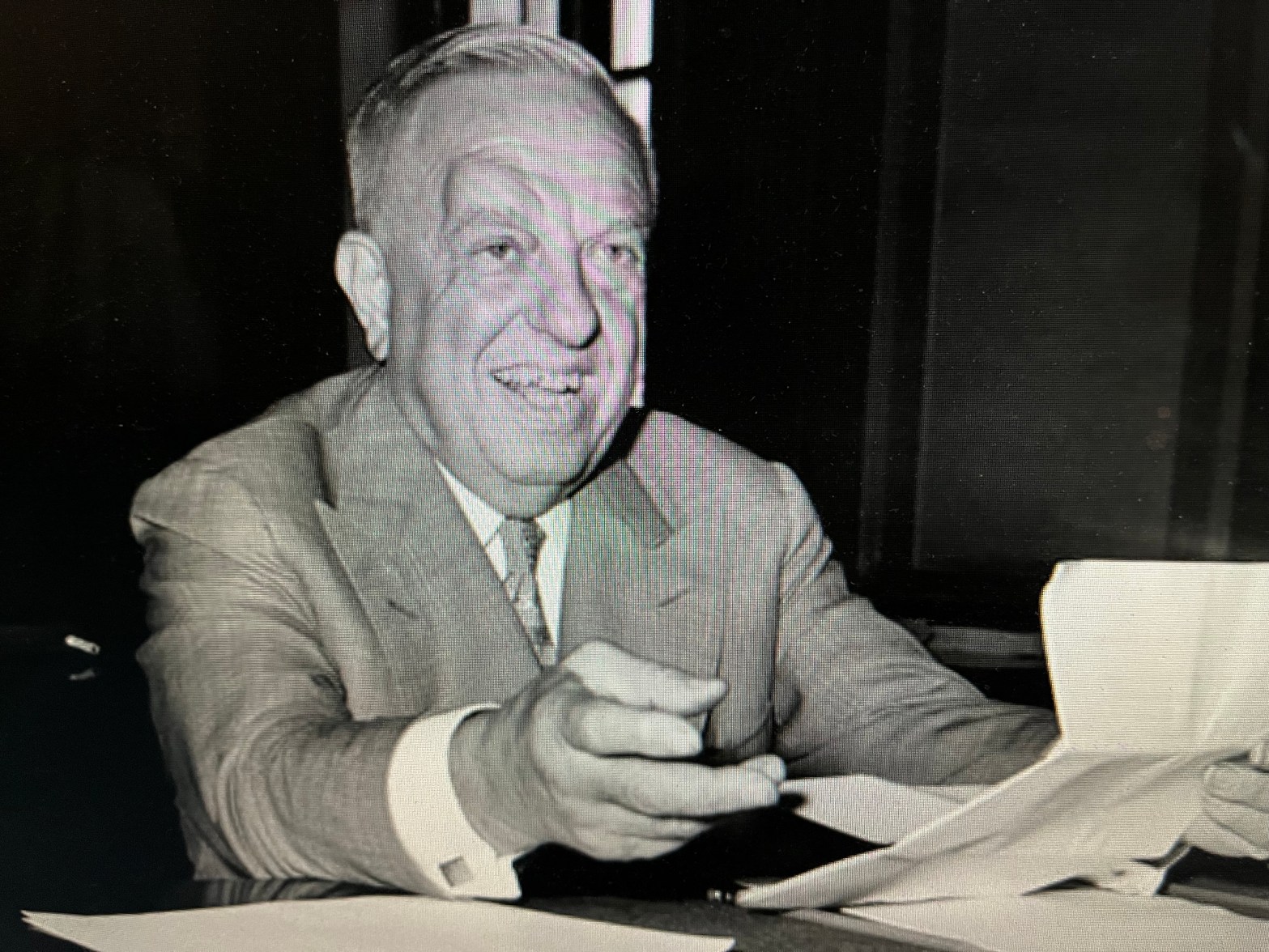
The high-scoring Eddie Solomon wasn’t the only one to take the sure-thing NIBL over the NBA’s primitive prospects. In this brief syndicated article, which ran in newspapers across the country in January 1953, NBA president Maurice Podoloff tries to set straight Eddie Solomon and all the other Doubting Thomases. An NBA career is “worthwhile,” Podoloff argued. His reasons, when compared to today’s mega-million conditions, show just how much times have changed. Enjoy!]
****

Almost every fan knows what it’s like to be a big-league baseball or football player, but it might surprise you to learn how little people—including college stars—know what it’s like in the major league of basketball.
For that reason, as president of the National Basketball Association, I have started what may be a unique series of “letters.” We mail them to basketball players in their senior year of college. And the big question we try to answer is this: What can the National Basketball Association offer you?”
Here are some of the answers:
- The opportunity to make an excellent salary during the player’s first year out of college. The average rookie starts off with a salary ranging from $4,000 to $5,000, and merit is quickly recognized. [Note: Five thousand dollars in 1953 equals about $55,600 today.]
- The opportunity to earn additional money at some other job during the six months between seasons.
- The opportunity to save money. Salaries are paid every two weeks. Playoff bonuses come in lump payments. All traveling expenses with the team are paid.
- The opportunity to continue college work in the team’s home city.
- The opportunity to take a sort of “postgraduate” course in basketball itself and to become a really great player under some of the best men in the game.
- The opportunity to increase them to business acquaintances offering openings in other lines of endeavor.
We can list star after star in our league, like Ernie Vandeweghe of the New York Knickerbockers, who attends medical school while playing basketball; George Mikan of the Minneapolis Lakers, who practices law in Minneapolis and has a gas station there; Bob Cousy of the Boston Celtics, who runs a summer camp. [Note: Cousy also had an insurance business in Worcester.]
Ed Macauley of the Celtics plans to go into the insurance business, but feels that 15 or 20 years from now, he will be much further advanced and more solidly established if he works at insurance during the summer only, while building up his capital out of his basketball earnings. And so it goes, big league basketball—as we are now going to some lengths to point out—is a lot more than just putting the ball through the hoop.
 From Way Downtown