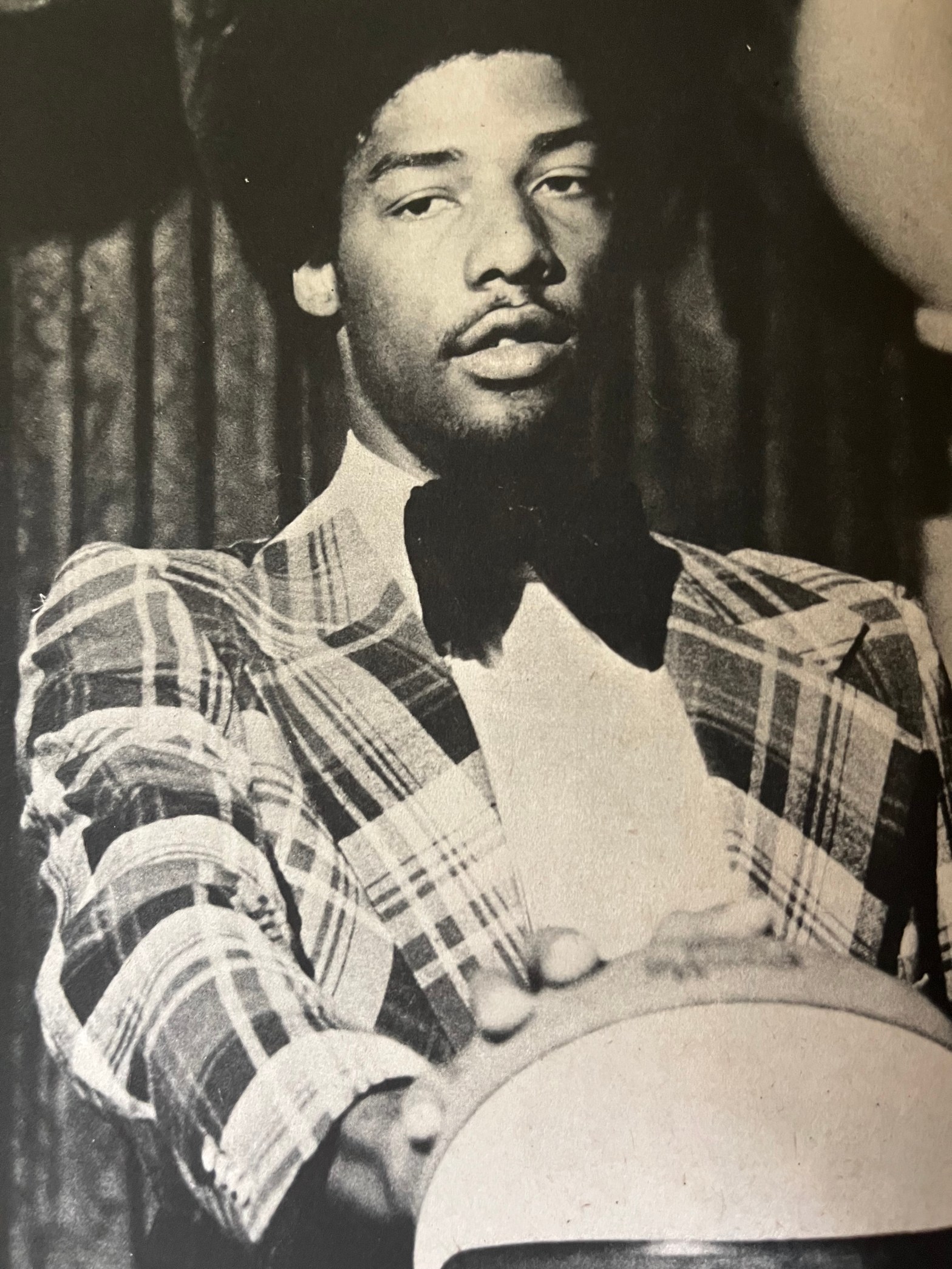
[The following article, with no byline, ran in fairly rough editorial shape in the magazine Sports All Stars 1975 Pro Basketball annual. I’ve cleaned up the typos, shoehorned omitted words into sentences, and massaged a few places where clunky prose reigned. It was worth the effort, though. This article offers a rare snapshot of the 1974 ABA champion Nets with their rising young superstar Julius Erving and a talented cast of characters named Super John, Special K, Big Whopper, and just plain Mike Gale. Enjoy!]
****
YESSSSS!
The crowd screamed, as they saw once again either a slam dunk or an easy outside shot 15 feet from the basket—as the figure of the “Good Doctor” appeared from nowhere to place the red, white, and blue into the hoop.
Week after week, game after game, loyal Nets fans from the ages of 6 to 60 would shake their heads in disbelief, jump out of their seats, wave banners, give each other “five,” as Julius Erving, superstar, showed them another basketball trick from his little black bag.
Julius, better known as Dr. J, has undoubtedly made a difference in the new home of the New York Nets—the Nassau Coliseum. Miles from the city lights of the Big Apple, the Nets and their superstar have made it big and have drawn the attention nationwide of pro basketball’s second league—the ABA.
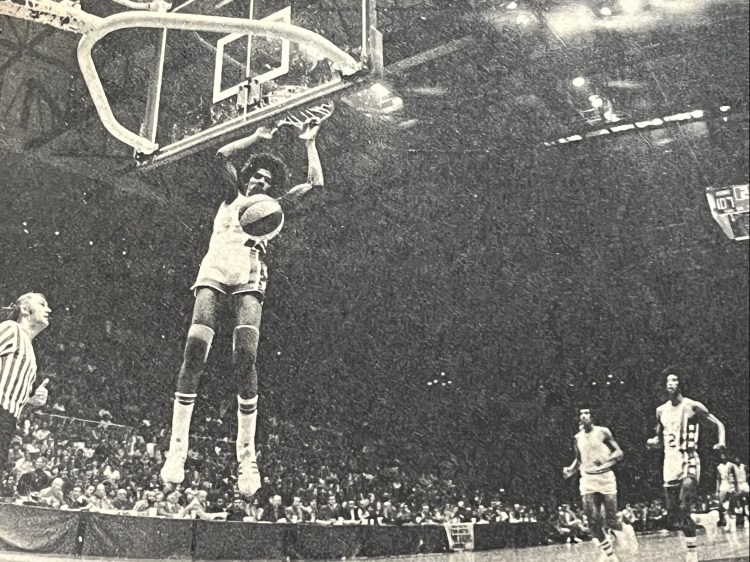
Dr. J is the drawing card. While the dazzle on the court has been compared to other basketball greats, few, if any, can match his unique style or graceful, and sometimes unbelievable, moves. And wherever he plays, whether it be in an ABA town or NBA city, spectators crowd to see him.
Regular and season ticket sales have nearly doubled at the Coliseum, while whole families from Long Island suburbia, fathers and sons, grandmas and grandchildren, give their Nets the benefit of warmth and loyalty. Occasionally, there are family-type specials: Halloween contests, award ceremonies, and hoop competition for youngsters. That includes halftime competition between midget teams averaging ages 8 to 10 years.
Then everyone settles down to the second-half excitement. The momentum resumes. DEE-fense! DEEEE-fense! PUT ONE IN DR. J.
In addition to the treat of watching this 6-7 third-year pro magically manipulate his way to the hoop, Dr. J’s precision-like skills led the New York Nets to their finest season, 55-29, as well as the Eastern Division title and the ABA championship crown.
Dr. J not only performs, he PERFORMS. He scores, he rebounds, he assists, blocks, and even steals balls. This past season, the Doctor averaged 27.4 points a game, becoming the first ABA player to win two consecutive scoring championships. He also finished seventh in the league in rebounding, ninth in two-point field-goal accuracy, sixth in assists, third in blocked shots, and third in steals. His free-throw percentage was 76.6.
The 24-year-old “super fellow” was also named the most valuable player in the ABA last year, compiling 49 votes from sportswriters and sportscasters in the league’s 10 cities. These kinds of honors and statistics can only be an asset to a struggling franchise. And the New York Nets welcomed “the assist.”
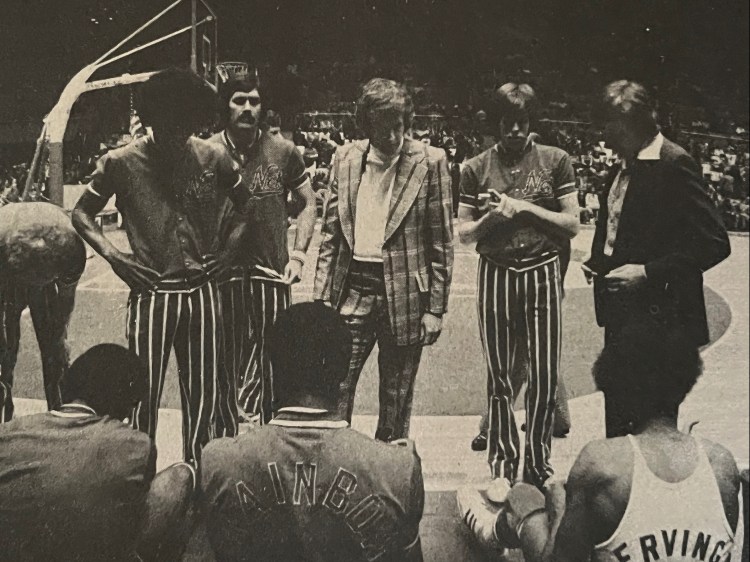
Erving is young. So is his coach, Kevin Loughery. If they can stay together, the Nets will become as great as their talent allows. Most of the players, although young and inexperienced, do have super talent. In fact, most were new to the club last season in Loughery’s first full year of coaching in the ABA. It was a brand-new start for the seven-year-old Nets franchise, a maiden voyage that concluded with championship honors.
But the Nets showed little of that championship potential in the beginning of the season. They lost nine-straight games early on and fell into the last place slot in the Eastern Division. ”It took a little time to get the team together,” said Loughery. “Two of our starters were rookies, who hadn’t played ball in their senior year at college, and we had eight new players.
“I was new to the team, and I had to see who and where the talent would fit. It took time to know each other on the floor, what each person could do in different situations. And finally we got a working unit together and played tremendous for the last two months of the season..”
That they did. The Nets, after their nine-game losing streak, only gave up 20 other games during the 84-game season. But it meant changing lineups, reshuffling positions, and even trades in midseason. It all just became a part of the process of building a winner.
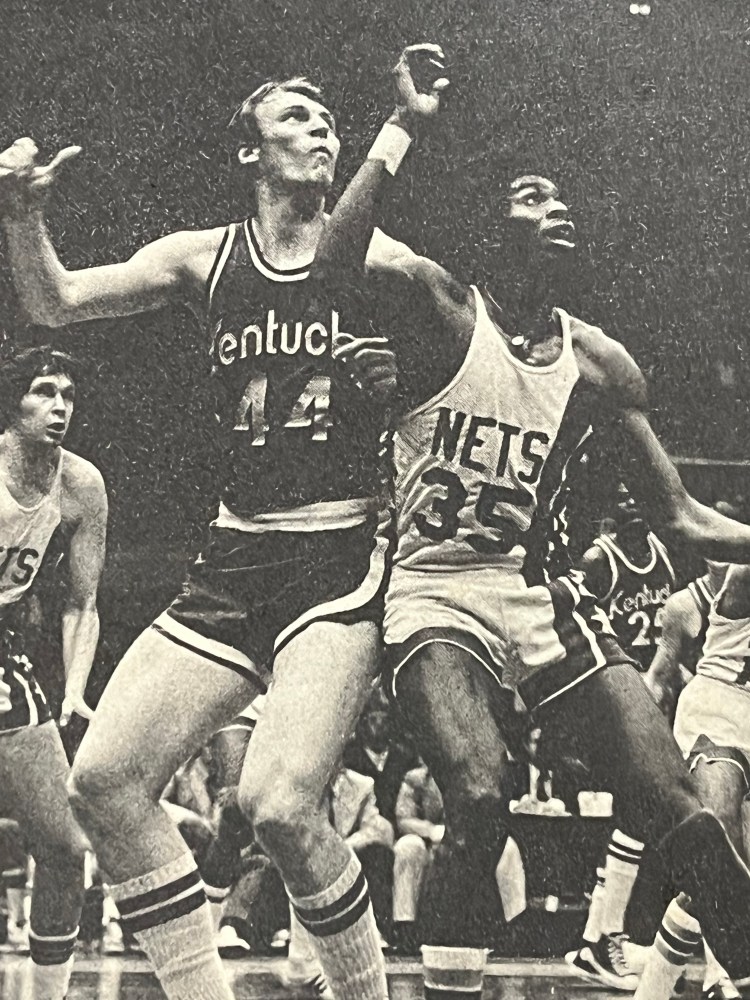
Larry Kenon and John Williamson were hailed as outstanding rookies. Both players greatly contributed to the winning effort of the team. Kenon, a 6-9 forward from Memphis State, ranked highest on the team in rebound percentages and contributed 15.8 points per game. With the NCAA runner-up Memphis State Tigers, Kenon’s rebounding average put him sixth in the nation’s standings.
Williamson’s background was equally as impressive. He was listed during his two varsity years at New Mexico State as one of the nation’s collegiate scoring leaders. “Both rookies did an outstanding job,” added Loughery. “K (Kenon) came into camp the first day and impressed us all as a star. And he’s contributed so much during the season and the playoffs.
“And Williamson, we call him ‘Super John,’ was fantastic. He didn’t start until the 14th or 15th game, and it was through his efforts during practice that I thought he was starting material. Both guys have the same ingredients—fierce competitors. They don’t like to lose and have tremendous confidence in themselves. And they became a part of that working unit we were looking for in the beginning.”
A tall counterpart of that working unit was 6-11 Billy Paultz. He began last season as the No. 3 man in the league in rebounds, third in blocked shots, and made the all-star team for the first time.
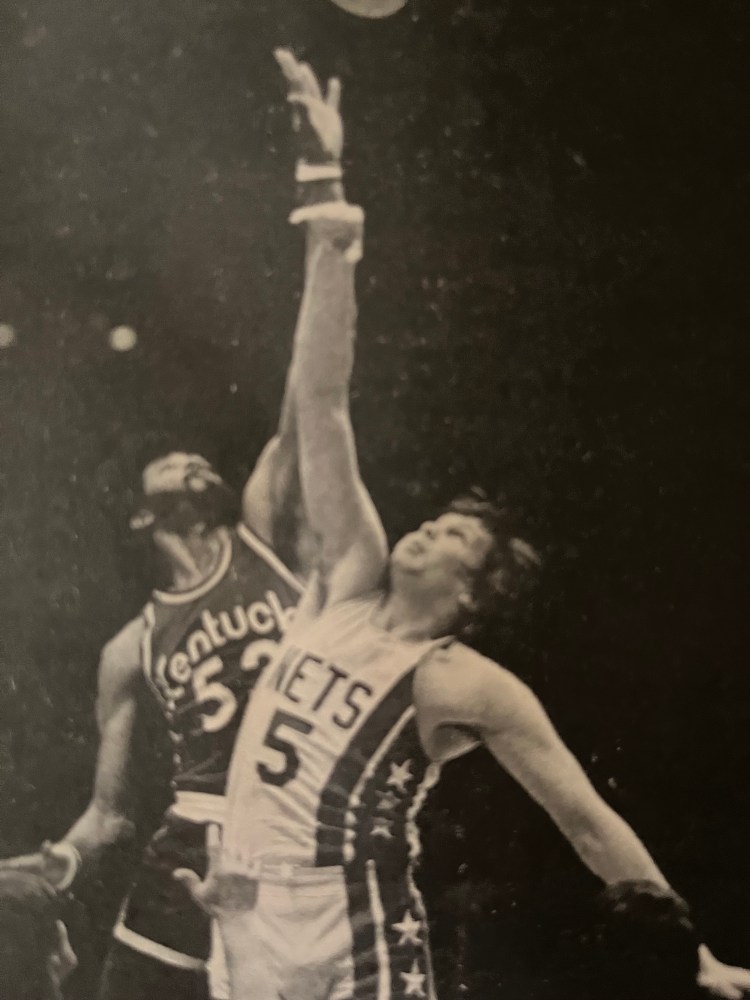
Paultz was not new to the team. He was a third-year vet who had to make adjustments to the new talent around him. But the transition posed no problems for the able man in the middle. He averaged 16.3 last season and grabbed 782 rebounds. He also contained the league’s No. 1 man, Artis Gilmore, during the playoffs, as the Nets downed Kentucky, 4-0, for the Eastern Division title.
Another Integral part of the Nets unit was guard Brian Taylor. Taylor’s quickness and tremendous defensive ability placed him in a starting position until being slowed by a midseason injury. Taylor, the 23-year-old former Princeton star, joined the Nets two years ago. He was named Rookie of the Year and ranked among the league leaders in field goal percentage. Last year, he was second on the team in steals while averaging 11.2 points per game.
The Nets had a hot five. Veterans John Roche and Bill Melchionni anchoed the bench. While first-year forward Billy Schaeffer, backup center Willie Sojourner, and forward Gary Gregor served as more than adequate reservists.
The club almost had a groove going near midseason. Then, Gregor was placed on waivers, And with a little more than two months to go in the regular season, Roche was traded to Kentucky for Mike Gale and Wendell Ladner. Gale and Ladner brought needed strength and experience, while tightening the Nets’ overall team defense. Although neither were starters, both were the Nets’ top reserves and made the team’s bench longer and stronger.
The Nets unit was now locked in, and Coach Loughery felt more secure. He knew his guys. He knew what they could do. Most important, the team knew it, too. All that was left to accomplish would be up to them.
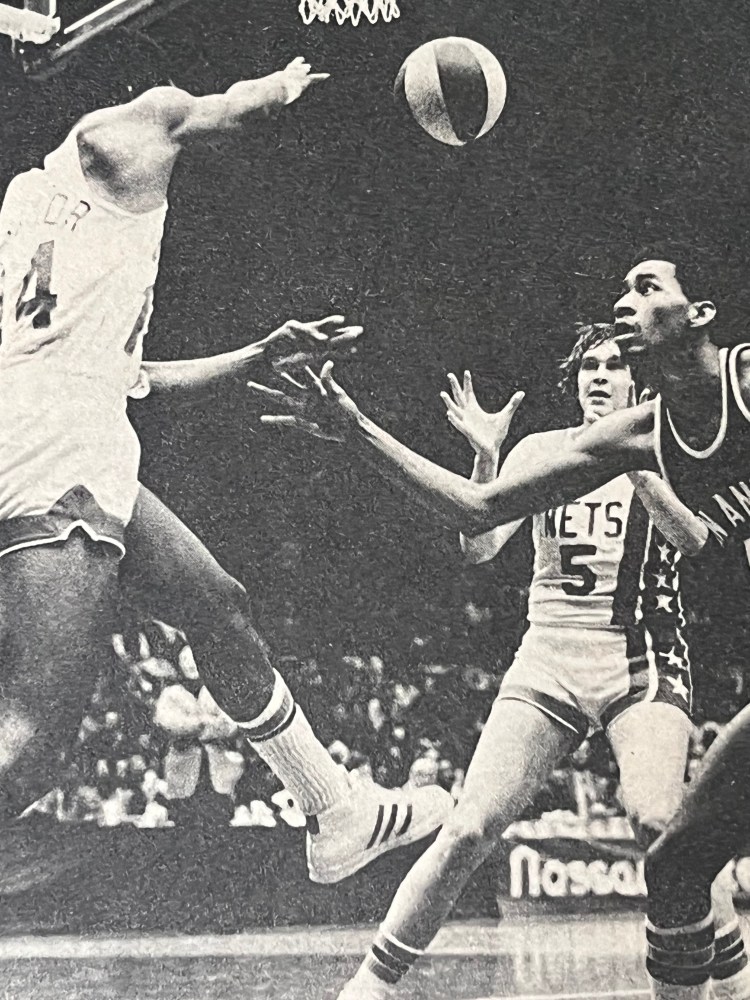
And that came easy enough. The Nets slid through the last two months of the season, met little challenge in the playoffs, and swept the final honors from Utah, 4–1.
The championship meant a lot to a new team that had worked so hard for it. “My first year with the Nets,” commented Dr. J, “was extremely rewarding. I’m not surprised at what we accomplished. The big thing right now is to avoid complacency and to be consistent in what we have done. If our lineup doesn’t change over the years, I’m sure we’ll develop that consistency.”
But no one could be happier than owner Roy Boe. He’s waited for and invested five years in the Long Island club. When he took over the team, he was aware of the need for rebuilding. In addition to finding a new coach, he acquired the services of a superstar—Rick Barry. After two years, playing Barry not only helped the team to its first semifinal playoff appearance but improved ticket sales.
Barry had previous NBA commitments, to which the courts made good, and down went the once hoped-for heroes of Long Island. The following year, Boe signed Brian Taylor, who had outstanding college credentials. He joined Melchionni, an already established ABA’er; John Roche, a former college All-American; the sturdy Billy Paultz at center; and the highly-regarded seven-footer Jim Chones, signed after his junior year at Marquette.
But there were no ABA titles in sight. Boe moved quickly to obtain additional talent. He signed Larry Kenon and added Kevin Loughery (when coach Louie Carnesecca returned to St. John’s University). Then Boe welcomed former Knicks star Dave DeBusschere to take over as the team’s vice president and general manager (on a 10-year term).
More good things were yet to come. On August 1, 1973, Boe announced that he had signed superstar Julius Erving to an eight-year contract. Agreements were made with the Virginia Squires, for whom Erving was playing, and with the NBA’s Atlanta Hawks who held his future contract.
Boe took a wait-and-see attitude toward the fruits of his labor. But he didn’t have to wait long. Last season, the Nets won the whole darn thing. Boe saw his investment mature with dividends.
The New York Nets are ready for another season. Another championship? Why not. While the challenges for superiority from within the league will be stronger, the Nets have stabilized their lineup and certainly experienced some success.
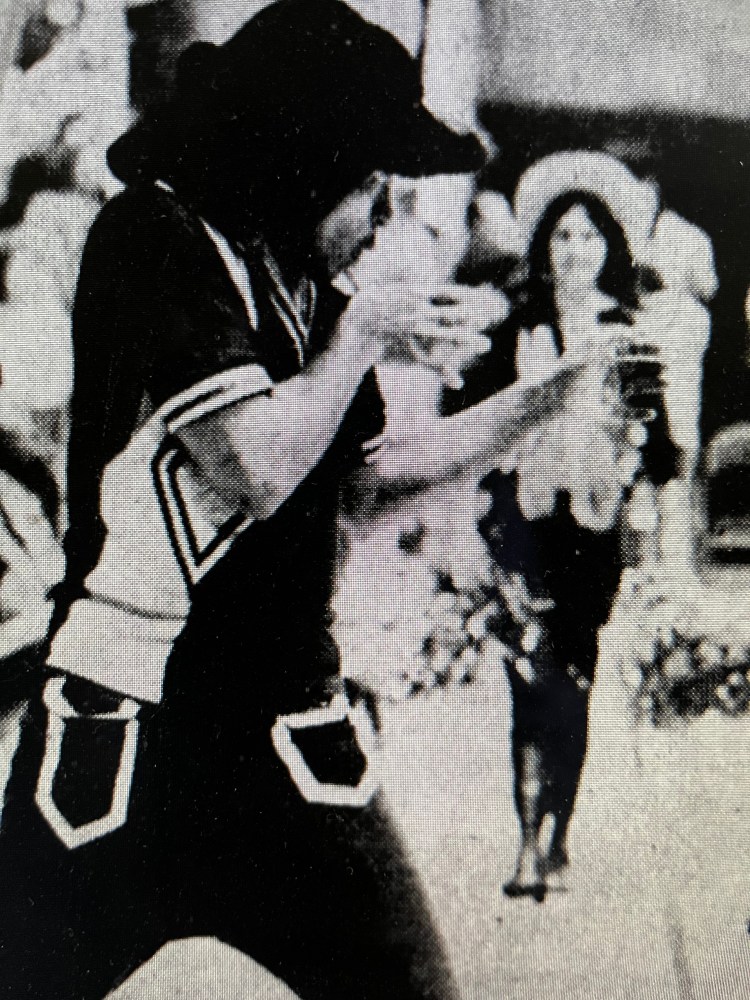
The ABA season will open October 18, and it is expected that more fans than ever will be on hand to welcome the Nassau Coliseum heroes back, along with the happiest cheerleader of them all—Dancing Harry.
 From Way Downtown