
[In 1970, Lou Carnesecca said his goodbyes at St. John’s College in New York’s East Village and headed down the expressway to Long Island, where he would coach the ABA’s New York Nets. Carnesecca lasted three seasons in the pros, then eagerly returned to St. John’s. As Carnesecca later summarized his brief experiment with the pros:
The greatest lesson I learned is something I found about myself. I am basically a teacher, much better suited for the college game than the pro game. I have had opportunities to go back to the pros, but I have declined. I feel like I belong in college coaching, and that’s where I’m going to stay. I probably need it. There’s three seasons in the pros to help me realize that I’m happy it’s right where I am, coaching at St. John’s.
Before Carnesecca had his aha moment, many a New York scribe in 1970 wondered whether the pros would be ready for the fiery former St. John’s play-caller. Among them was Bernie Beglane, who covered the Nets for the Long Island Press. He raised the question for basketball fans in the March 1971 issue of the magazine All Sports.]
****
You might ask . . .
Are the pros ready for Looie?
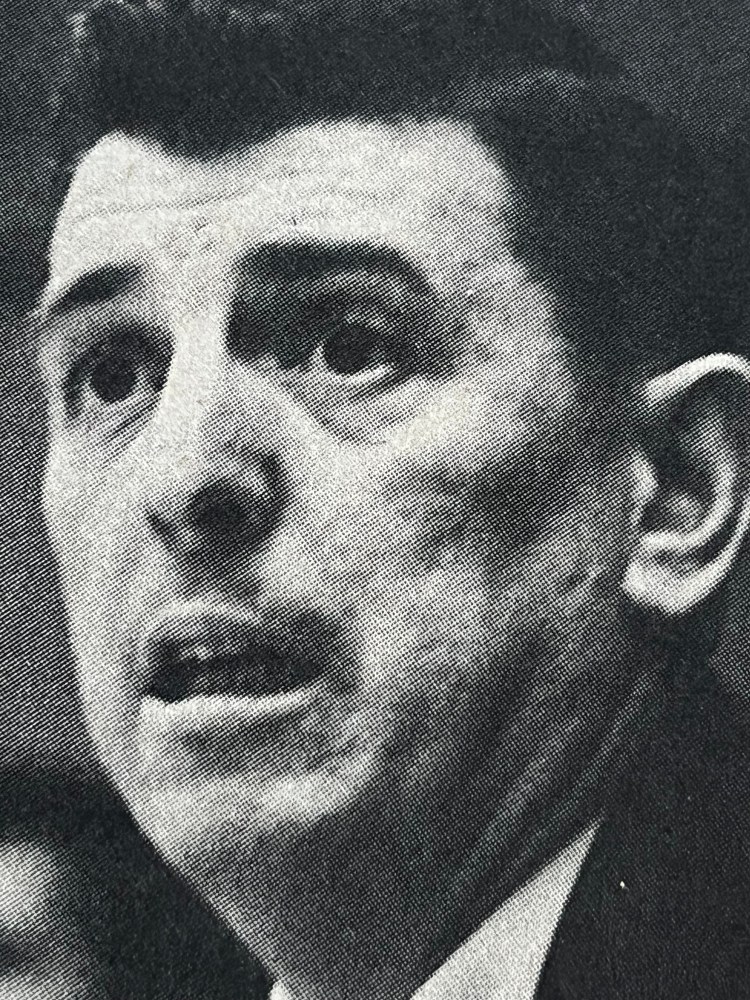
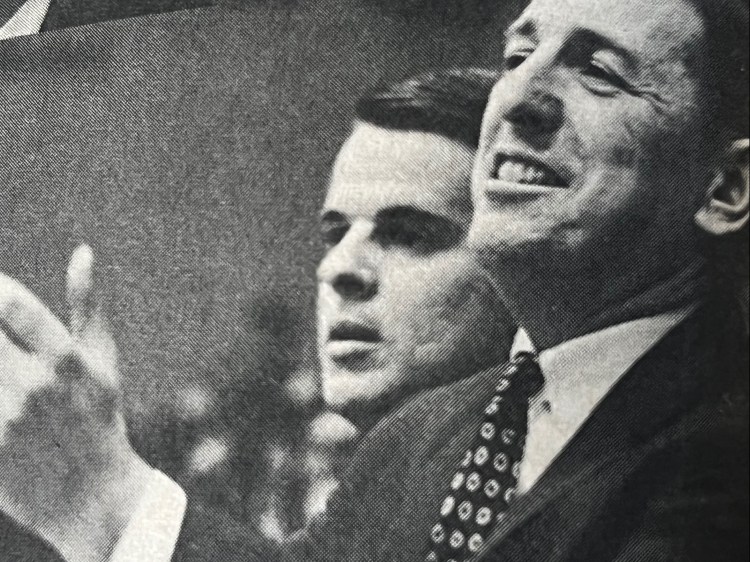
Looie is Lou Carnesecca. He is a dynamic midget in the world of giants who play basketball for money. He has a repertoire of emotional outbursts on the sideline that are delightful for the paying fan to see. He pleads, cries, laughs, stutters, runs, jumps, kneels. He does it all. It’s part of his flourish. A flourish they’re going to love in the pros.
He’s also very knowledgeable. Don’t forget that.
Today, Looie is a new coach in the professional ranks. He coaches the New York Nets of the fledgling, uphill, battling American Basketball Association. He has 19 years of coaching schoolboy and college basketball behind him.
But his credentials also include something else. Success. Like finishing second to John Wooden of UCLA fame in voting for Coach of the Year. What’s that old adage about not telling a book by its cover?
Looie stands only five feet, seven inches high, but he talks seven feet tall. And he gets so emotionally involved sometimes that he might even forget simple things like where he parked a car, or the color of the car, and maybe his jumping antics on the sideline may always be tabbed as the reason the college rule-makers installed a recent rule that a coach must stay on the bench or else . . .
Carnesecca’s tenure as coach of St. John’s University’s basketball teams appeared to be heading for a record. He was happy, St. John’s was happy, all of New York City—where Looie was born and bred and never did get to become a basketball star when he was a student at St. John’s—was happy.
And now, they’re asking if the pros are ready for Looie. All of which sets the juices to flowing within the fiery Carnesecca.
Are the pros ready for Looie?
“Wait a minute,” he whispered after losing his voice during a practice session, “who am I that the pros should be ready for me? Am I ready for them? That’s the question . . . Not are they ready for me. No matter what level you are on . . . high school, college, or pros, there are adjustments that must be made.”
Looie takes everything at face value. “Don’t forget,” he said. “I never ever expected to be a pro coach. My idea was to stay at St. John’s until I had enough of coaching and then . . . who knows?”
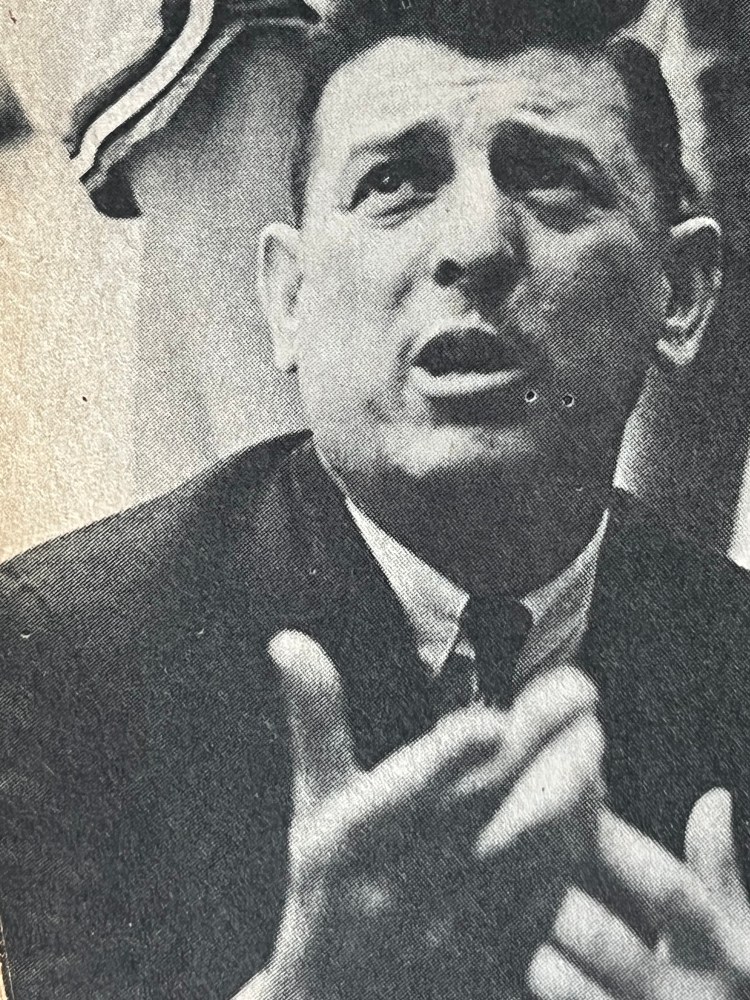
What led to the change in the “best-laid plans” of the now 46-year-old Carnesecca, whose athletic claim to fame as an undergraduate at St. John’s was that of being a second-string infielder on the baseball team?
“I was recruited,” he said. “Roy Boe (president and chief owner of the ABA club) contacted me and made an offer. He did a better job on me than I had ever done in all of my recruiting at St. John’s.”
Boe, a young millionaire dress manufacturer, knew what he wanted. He wanted colorful Looie. He saw the fan appeal in Carnesecca’s portfolio. And almost from that first meeting with Boe, Carnesecca knew what his answer would be. “I wanted to be part of the program,” said Looie. “This appeared to be an ideal situation . . . on Long Island in an area that is ripe for pro basketball . . . excellent conditions, including a new coliseum that will be ready next year.”
But despite the tempting offer of a long-term contract, Carnesecca did not exactly jump through the hoop and accept on the spot. He was shocked by the offer. “This was a tough decision to reach, and I spent a great many sleepless nights,” continued Lou.
“My wife, Mary, and I had many calls to people like Joe Lapchick, Eddie Donovan, Jack Ramsay, and Alex Hannum. I also contacted many of my close personal friends.”
And the advice offered by them?
“Let’s take Joe Lapchick,” answered Carnesecca, who had succeeded the late-great Lapchick when Joe retired five years ago. “He was tremendous with me at St. John’s. Not only did he teach me a great deal, but he also let me do a lot of work on my own.
“Having coached the New York Knicks, I knew Lapchick would steer me right, and when he heard of the offer, he said, ‘You have no choice.’ He also told me, ‘Basketball is basketball on any level. You do the things you know are successful with . . . ballhandling, defense, rebounding, and scoring.’”
Carnesecca mentioned the terms of the offer, and Lapchick shot back, “It’s a multi-year contract. That’s all I have to say.”
Looie sought out Donovan, who was a former coach and then general manager of the Knicks, and Ramsay, who had the same roles with the Philadelphia 76ers. Both had come from the college ranks. “There advice was similar,” Carnesecca said. “Both of them pointed out that the coaching was no problem, but that I would have to adjust to the tempo of the new life.
“The constant plane trips was one thing they mentioned, and the defeats were another. They told me to get used to losing since you play an 82-game schedule.”
Losing is something Looie did not do often at St. John’s, where he produced five postseason tournament teams in as many seasons. “I’m sure it won’t be easy—losses never are,” he said. “In the pros, though, you don’t have as much time to sit and stew over them as you do in the pros. Bang . . . the next night you’re in another town.”
Carnesecca became close friends with Hannum after giving several clinics at his summer camp. At the time, Alex still was coaching in the ABA with the Oakland Oaks. “Alex thought it was a good move,” stated Looie, who also is a vice president and general manager in charge of player personnel with the Nets.
“Alex also told me, ‘I feel certain the league will make it. Take a real whack at it.’”
Armed with all this advice and after constant discussion with his wife for almost a month, there remained one hitch in the mind of Carnesecca . . . his contract with St. John’s University. “I had to honor it,” he said. “It was only for a year and the people at St. John’s were willing to release me, but I felt I had to stay until my obligations were settled.
“At first, Roy Boe wanted to talk to St. John’s. When he fully realized that this was my decision, he went to work on me. Still, I felt this way, and nothing was going to change my mind. If he wanted me, he would have to wait one year. A lot of people might have thought I had some nerve, but that’s the way it would have to be.”
Nat Militzok, who played briefly with the New York Knickerbockers, is the attorney who handled Lou’s negotiations with Boe.
“There only was one offer made by Roy at our first meeting in Nat’s office,” recalled Carnesecca, “and I accepted it. Never was there any back-and-forth procedure for more money or better terms or anything like that. The figure was agreed-upon, and Nat worked out the terms.”
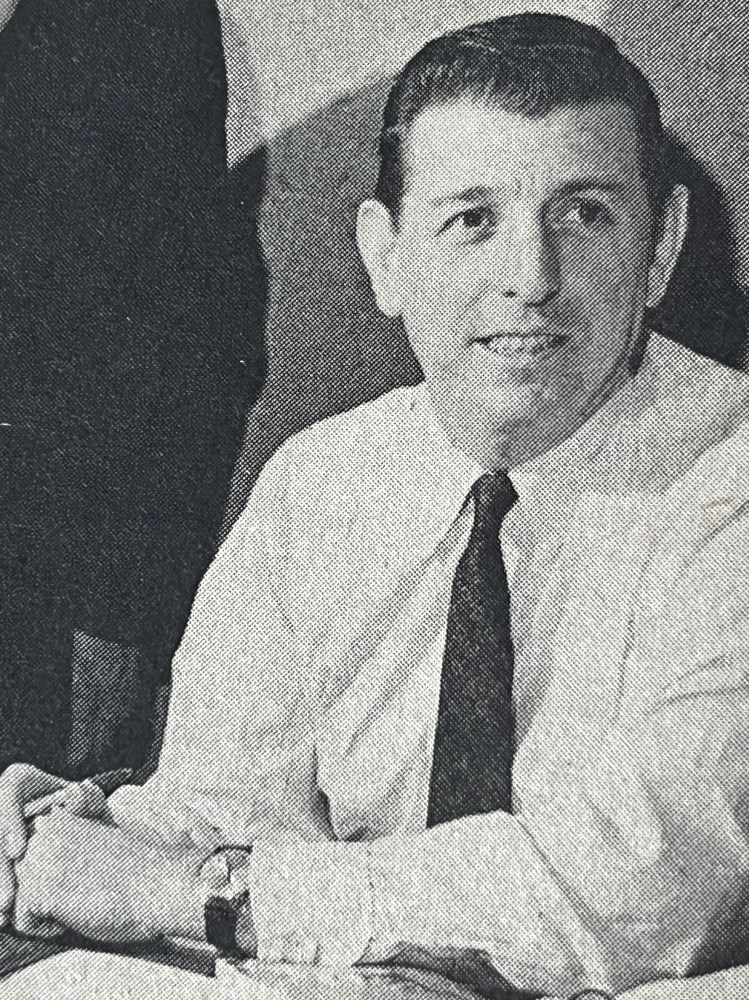
With everything finally set and the papers signed, Lou began his final season at St. John’s. He did so with the same enthusiasm as when he returned to his alma mater in 1958 to serve his seven-year stint as Lapchick’s assistant before succeeding him as head man.
That did not mean, however, that he was not interested in the Nets. He brought in York Larese, one of his former schoolboy players, when he coached at St. Ann’s Academy on New York’s East Side, to serve as the interim coach. Larese went on to the University of North Carolina from St. Ann’s and was with the Philadelphia Warriors before the NBA franchise moved to San Francisco.
At the same time, Carnesecca was serving as a consultant to the ABA team whenever his schedule at St. John’s allowed him the time. “I had regrets leaving St. John’s,” he continued. “It was the one place I wanted to coach at on a college level. I had turned down several other offers while at St. Ann’s.
“Walter McLaughlin (the Redmen’s athletic director) contacted me about going there, and I was very happy about the whole situation. I knew I was being groomed as Lapchick’s successor. As I said, Joe was very good to me, and let me do a great deal. All of the people at the school were great, too. That’s why it was so tough to leave.”
Now that the ties have been broken, there have to be some anxieties, no?
“There are,” was the answer, “and the biggest one is the one that bothers most coaches on any level . . . failure. I’m afraid of failure. This fear instills a force within a coach that makes him strive for perfection. It may sound corny, but it’s true.
“I also have to learn how to give the individual players more freedom and allow for their strengths. And the schedule is a personal adjustment. It’s go . . . go . . . go. Other coaches have done it, and so will I. It’s something that has to be done. I’m also learning to understand the players. After all, we were practically total strangers to each other. I’m willing to learn from them.”
Carnesecca also feels that he is fortunate enough to have Bernie (Red) Sarachek as a member of his coaching staff, along with John (Butch) Kresse, whom he brought along from St. John’s.
Sarachek turned down offers to coach in the NBA, preferring to stick with his sporting goods business, and his dual role of athletic director-basketball coach at Yeshiva University. “I would say that 85 percent of the offensive patterns I’ve used through the years are Red’s,” said Looie. “To my way of thinking, he has one of the greatest minds in the game.”
The marriage between Bernie and Carnesecca took place in 1955 and is still going strong. “Red used to deliver athletic equipment to St. Ann’s,” recalled the Nets coach. “I had been there four years by then and was starting to think I knew quite a bit about the game. When Bernie came to the gym, we sat around and talked basketball, and we’ve been doing it ever since. I found out in a hurry how little I really knew. Red made me wonder if I shouldn’t have followed my parents plans for me.”
What were they?
“You know the old people,” he replied in reference to his mother and father, who long since have closed their Italian grocery store and now follow their only child’s career. “They want you to be a doctor or an accordion player. Since I was in the medical corps of the Coast Guard during World War II, they wanted me to study medicine when I enrolled at St John’s.
“I wanted to be a coach ever since I can remember, and I’m going back to when I played ball in the streets.”
Carnesecca has come a long way since then . . . and he still has a long way to go. He’s ready for the pros.
What we’re determining now, as he coaches like an Oscar-winning acrobat from the sideline, is the whether the pros are ready for him.
 From Way Downtown