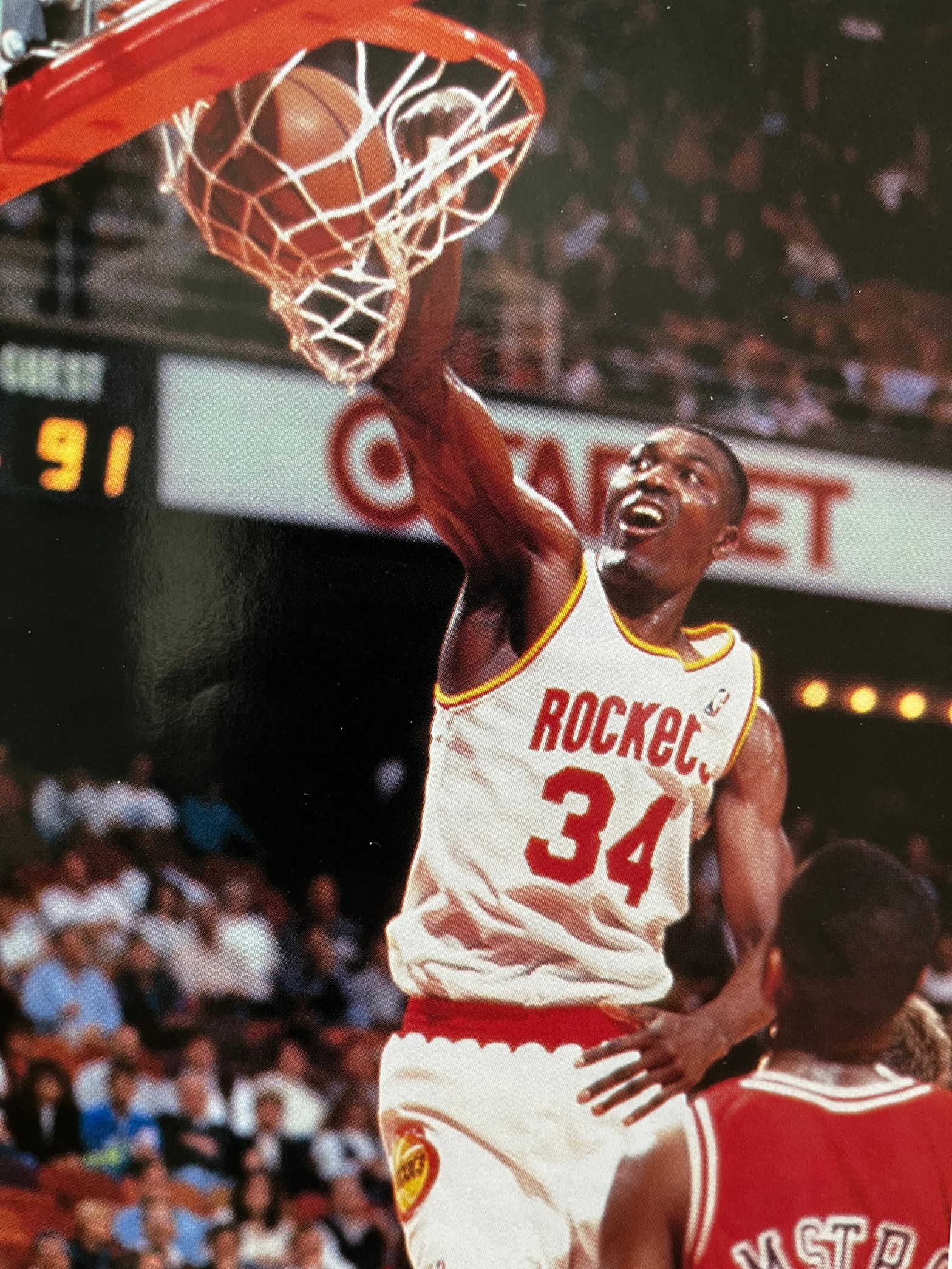
[No need for a lengthy intro here. Hakeem was The Dream. In this article, published in the April 1994 issue of Rip City Magazine, the Houston Chronicle’s Eddie Sefko explores how The Dream became the NBA’s heir apparent to Air Jordan as “the greatest [active] player on the planet.” That would be following the latter’s brief attempt at a second career in pro baseball. Sefko would leave Houston not long after to cover the Mavericks for the Dallas Morning News and now, 20-plus years post-Houston, Mavs.com. In all, Sefko has been living his NBA dream for nearly 40 years.]
****
It all started with a guy named Mike, who decided it was time to retire. When Michael Jordan took himself out of the NBA, the search was on for an Air apparent. Who would fulfill the fans’ need for somebody they could call the greatest basketball player on the planet (or at least the greatest among non-retirees)?
While some eyes roamed toward Charles Barkley, most landed on a bigger, stronger specimen. And so it came to pass that the Houston Rockets center Hakeem Olajuwon would be built up as the new king of basketball. When the Rockets rushed to 15 consecutive victories to start the season, the seven-footer from Lagos, Nigeria, became a media darling. It was like he suddenly became a player, even though he’d spent a decade terrorizing foes.
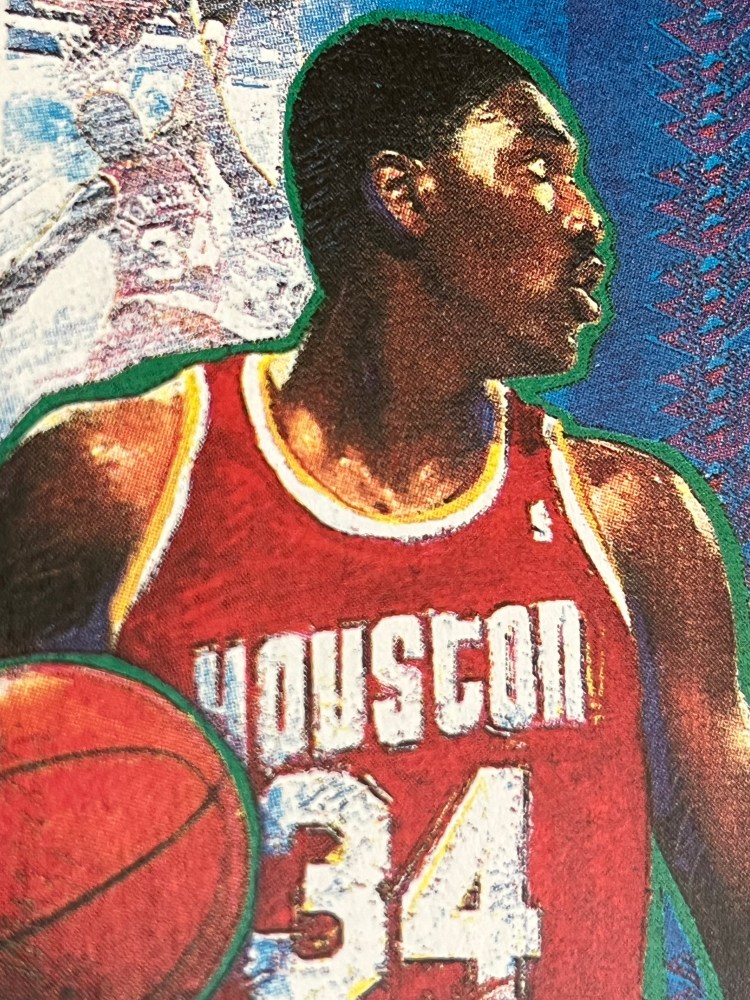
“I’m still the same person,” Olajuwon says. “To me, from day one all the players have known what I can do. My opponents and I have a mutual respect. I haven’t changed a bit over the years. I don’t know what everybody’s talking about.”
OK, maybe he’s fudging a little. Perhaps he is a little more public relations-conscious now than he was five years ago. Maybe he does the extra interview that he had deemed unnecessary before. On the court, maybe he has learned a little about passing out of the double-team. And he’s added a left-handed move that he drags out of mothballs occasionally.
In fact, Olajuwon definitely has changed one area of his on-court actions. They say [referring to a popular beer commercial] if you can combine less filling and great taste, you can combine anything. Well, Olajuwon has always had the tasty-treat game with shake-and-bake moves and sweet results. But in the past three seasons, Olajuwon has added a sort of less-filling ingredient to his game—that is, he no longer dishes out a heaping helping of lip service to the referees.
In a year when he is posting MVP-caliber production, Olajuwon also is more content with himself, his teammates, the Houston Rockets organization, and, yes, even the referees. This at-peace-with-the-world attitude is relatively new for Olajuwon.
What isn’t is the way he has destroyed opponents this season, although you’d think Olajuwon was a rookie phenom the way most of the NBA has treated him. Mostly, Olajuwon is still doing all the things that have made him the best center in the league, and, this season, the best player overall.
“It’s amazing how much the guy does on the floor,” Rockets coach Rudy Tomjanovich says. “And his stamina is tremendous. As games go along, it seems like that turnaround jumper just gets softer and softer. By the end of a game, it’s like a big ol’ cotton ball going up there.
“I think he’s the best player in the game. As far as I’m concerned, I don’t know what else the guy has to do to get recognition.”
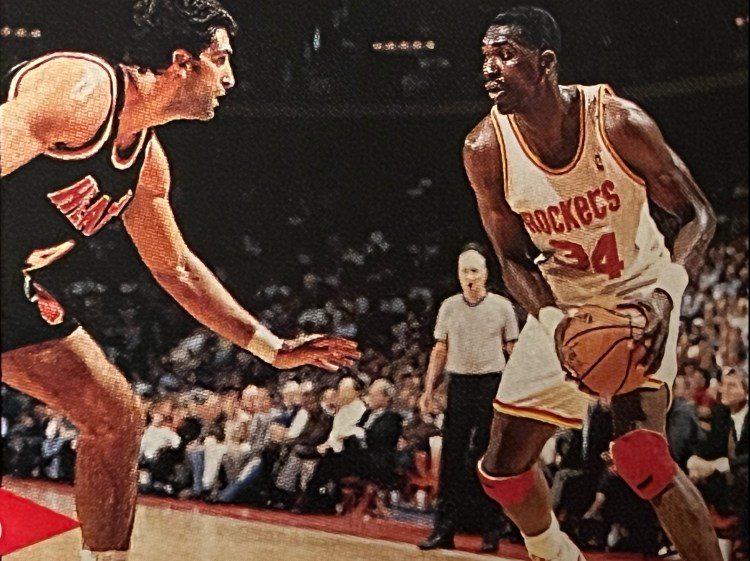
He doesn’t have to do anything anymore. The rest of the world has finally discovered him.
“He’s always been a great player,” says Phoenix center Mark West, who has spent years chasing Olajuwon around the paint. “The difference this year is that he’s getting more recognition because he’s surrounded by better people. I’m sure there were years when he could have been MVP but was never given any real consideration because the Rockets just weren’t very good.”
This year, the Rockets have been very good, mostly because of Olajuwon, but also because of a supporting cast that added one very crucial role player this season—swingman Mario Elie. The 6-5 Elie has a toughness about him that Olajuwon likes. The pair has fed off of each other, and Olajuwon is quick to hand off praise to Elie.
Even so, it is Olajuwon who remains the signature Rocket. Through this coming-out season, Olajuwon has maintained a calm attitude and a firm focus on an NBA championship. Though he realizes a lot must fall into place, he says he feels better about the Rockets now than he has since the 1986 team made it to the NBA Finals.
“We have a true team now,” Olajuwon says. “And it’s important that we have a good, business-like attitude. We get along on and off the court now. When you walk with your friends, you walk a lot easier. It’s a family atmosphere. And we have two things that you need—a commitment to success and a feeling that everybody is willing to sacrifice for the good of the team.”
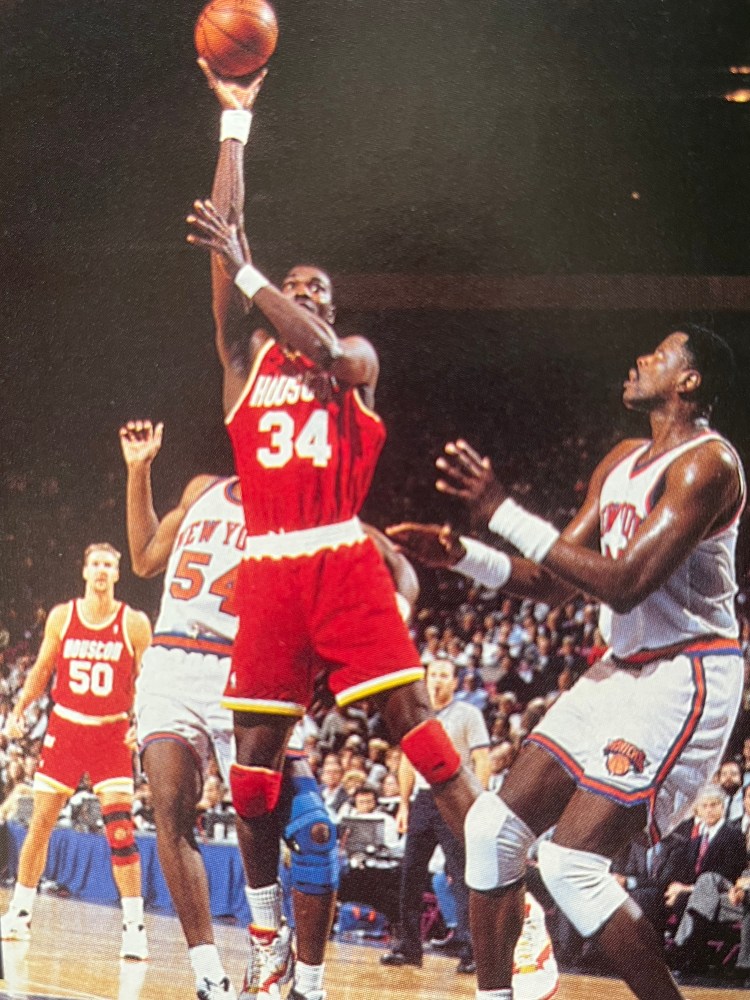
Olajuwon knows about sacrifice. He has done his share in terms of his personal life. After living in the NBA lifestyle to its fullest during the first few seasons of his pro career, he went through many changes three years ago when he made a pilgrimage to Mecca. A devout Muslim now, Olajuwon takes part in prayer five times each day and no longer drinks alcohol. His religion is very important to him. And Olajuwon says it touches every part of his life, including basketball.
“With my religion, you have to be pure in your heart,” he says. “That is why I treat the refs differently now. It’s okay to let them know your point of view. But yelling doesn’t help anything. It only hurts. As long as they know where you are coming from, that’s fine. Besides, you can’t fight city hall.”
Olajuwon led the NBA in technical fouls during his second season and ranks in the top five among active players, with more than 200 career technicals. But over the last three seasons, he’s had virtually no run-ins with officials.
“I can count on one hand, the number of technical fouls he’s had in the last couple of seasons,” Tomjanovich says. “The guy really seems like he’s at peace with himself. On the court, his temperament is such that he never gets too high, and he never gets too low.”
That’s a trait Olajuwon carries in every aspect of his life. “I’m a simple man,” he says. “My life is very simple. You work hard, you thank God for the gifts he has given you, and you enjoy life.”
Olajuwon has been besieged this season with fans, reporters, and NBA insiders who now say he is the dominant player in the league with Jordan retired. It is a label he does not crave. “There are too many good players,” Olajuwon says. “Who is to say who is the best? There are five or six guys who are very good. Who is the best among them? That is for somebody else to decide.”
When it comes to his place in the NBA or basketball, Olajuwon doesn’t waste time worrying about it. “It’s not like I don’t get national recognition,” he says. “Even international recognition. I’m comfortable with my notoriety.”
What is important for Olajuwon is that he continue to challenge himself, in both his personal life and in basketball. “This is my career,” says Olajuwon. “It’s not just win one championship and then retire. I’m not here to prove myself to people. I’m here to make a career and take care of my family. It’s not for the money, because I’m set for life. It’s not for the championship. That’s what you shoot for, but I look at the big picture, the whole career. The point is to enjoy the journey. You’re only young once.”
Olajuwon’s individual career has been wildly successful. But when it comes to team success, he has never made it to the top. In this respect, Olajuwon’s career strangely parallels that of Portland guard Clyde Drexler. Both were on University of Houston teams that went to the NCAA Final Four, but they have yet to walk away with a big prize.
In the NBA, Drexler has been to the Finals twice and has come up short both times. Olajuwon made it to the Finals first, and when he did in 1986 (the Rockets lost to the Celtics in six games), he thought it would be an annual occurrence.
“I figured I’d be back every year,” Olajuwon says. “But it isn’t easy to get there. It’s something that you have to cherish when it happens. I thought I’d be back by now. But some things change over time.”
And some things don’t like Olajuwon’s awesome ability. It just took the world a little time to appreciate it.
 From Way Downtown