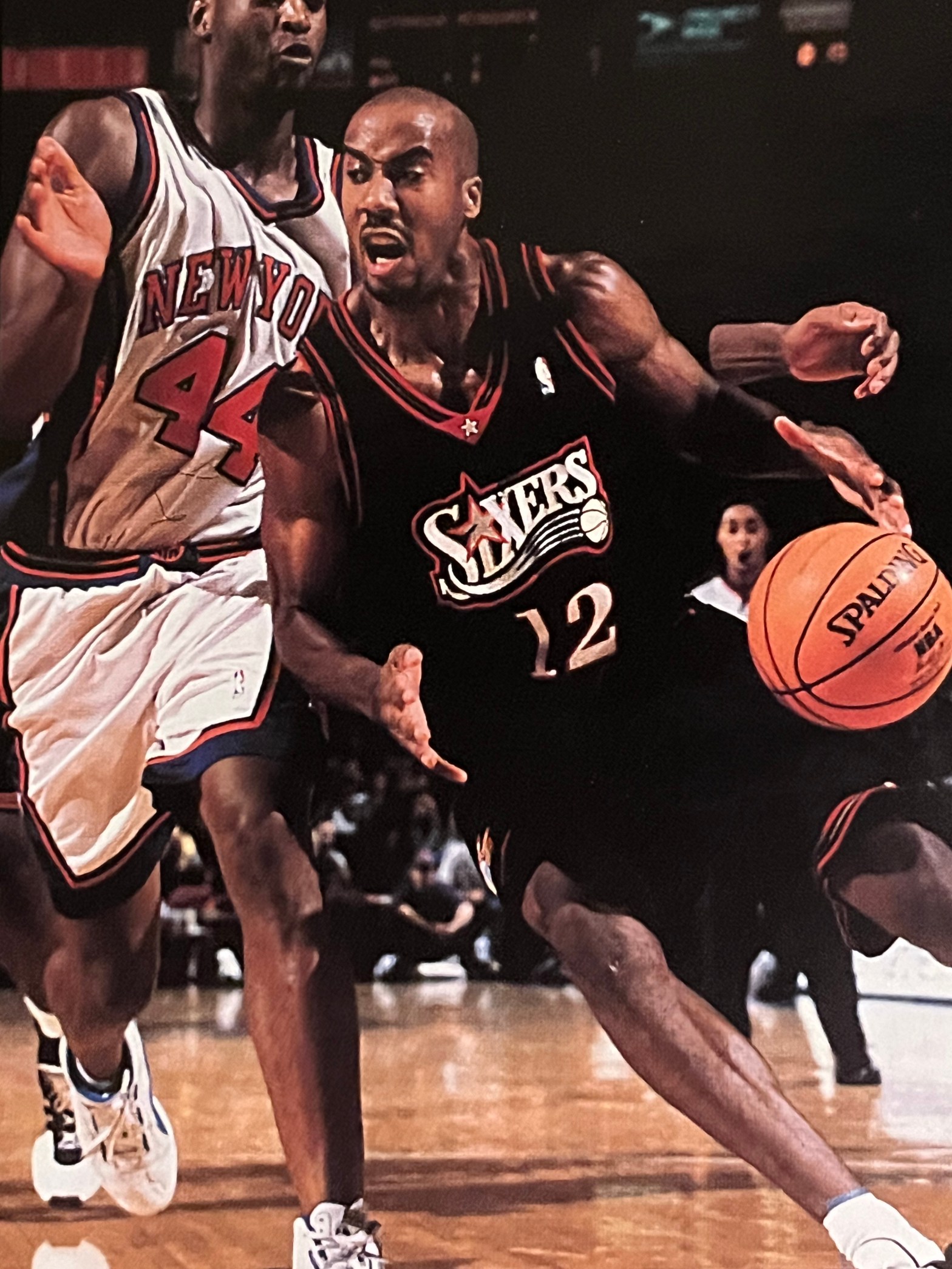
[After going undrafted in the 1993 NBA Draft, Bruce Bowen became the quintessential pro basketball journeyman. He signed on overseas for a few seasons, then tried the Continental Basketball Association (roughly today’s G League). That’s where Chris Wallace, then director of scouting for the NBA Miami Heat, discovered the agile, 6-7 Bowen and signed him to a team contract during the 1996-97 season. Bowen got into one game with Miami for exactly 32 seconds. No points, no rebounds, just the inevitable good luck from Heat officials as they showed him the door.
Bowen’s good luck came the next season when Wallace, now general manager of the Boston Celtics, signed him to a two-year, $935,000 contract (the first season reportedly guaranteed). Rick Pitino, then the Celtic coach, also guaranteed that Bowen would be in the Celtic rotation. He described Bowen as free-agent “steal,” referring specifically to his tenacity on defense.
The guaranteed money kept Bowen in Boston for a spell. But NBA rosters get shuffled, and Bowen was dealt around the NBA until he landed in the hands of the San Antonio Spurs for the 2001-2002 season. Bowen filled the role of a grabbing, tussling, lockdown (some claimed “dirty”) perimeter defender, and his hand-to-hand combat with the NBA’s top scorers became legendary on the championship Spurs teams of the 2000s.
In this article, however, we check in on Bowen’s NBA career, pre-San Antonio and during his pitstop in Philadelphia (1999-00). He lasted just 42 games there before his name was added to a three-way deal that sent him briefly to Chicago, then back to Miami, and finally upward and onward to San Antonio.
Though Bowen was strictly a bench player in Philly (averaging 7 minutes and 1.4 points per game), he always stood tall on the court for his hustle and off the court for his maturity and humility. That really comes across in this story from staff writer Dan Dunkin of the Bucks County (PA) Courier Times. His piece appeared in the January/February 2000 issue of the magazine Hangtimes.]
****
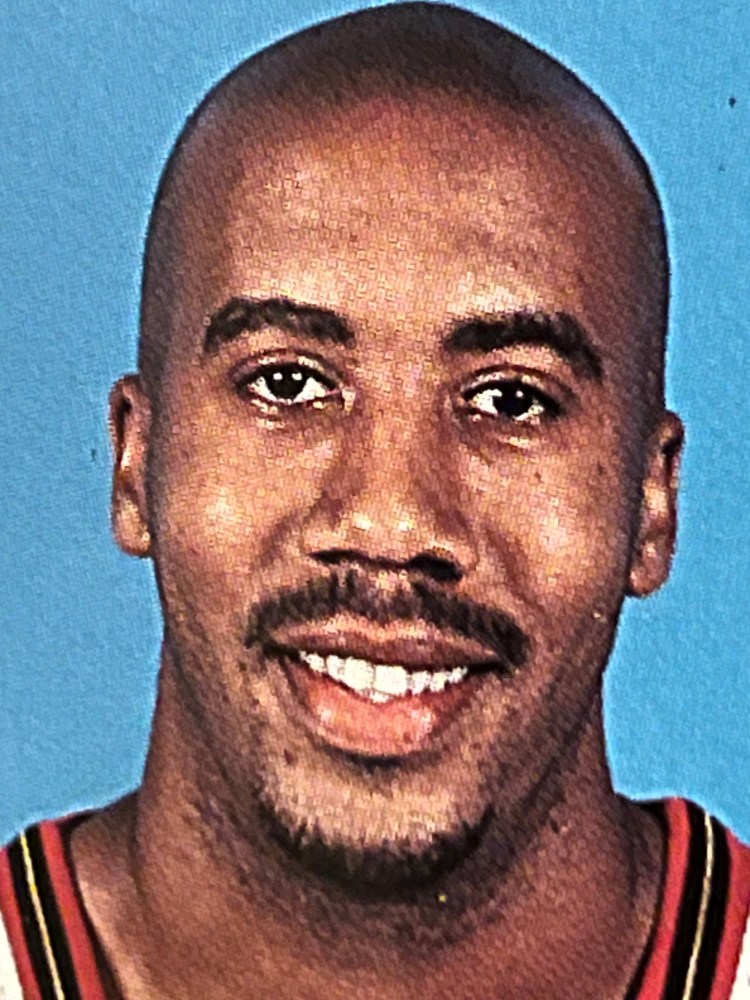
Rick Pitino loved his defense, effort, and attitude so much, the Boston coach all but swore that Bruce Bowen would become as ingrained in Celtic tradition as the old parquet floor.
Bruce who?
Sure, every team can use a perpetual floor-burn like Bruce Bowen, but it’s rare when a coach deems a low-scoring journeyman indispensable. Pitino said he would never trade Bowen. Perhaps that was Slick Rick’s way of driving up Bowen’s trade value because face it: When Bowen came to the Celtics, it only cost Pitino about a month’s worth of Armani suits.
The $70-million coach sounded as though he had discovered the second coming of K.C. Jones at Walmart. At the very least, the hard-working, dues-paying Bowen gave the ranting, raving renovator one less prima donna to scream at. Pitino even suggested that shoot-first, defend-last, and soon-to-be-ex-Celtic Ron Mercer use Bowen as a role model.
But like all those strange spots in the old parquet, where leprechauns used to jump out to steal game sevens, Pitino’s promise to never part ways with Bowen bounced hollow. No, he wouldn’t trade him, but he did release him last summer.
And maybe the Philadelphia 76ers got lucky when they signed Bowen as a free agent for the fourth-year NBA minimum of $485,000. Maybe they got a guy who will jump out of nowhere to steal a playoff game this spring. Pitino’s praise of Bowen resounds with promise and foretells a nice fit with a team that already has work and sacrifice as the foundation.
“He gives you the total game,” Pitino has said. “If Ron Mercer can learn to do what Bruce Bowen does, he will be a future all-star. But it’s a long way to Bruce Bowen.”
It’s been a long road for Bowen. He is an overachiever who began his pro career overseas. A Christian, Bowen summarizes his journey with a biblical analogy that hangs on the wall of his agent Steve Kauffman’s office.
“After Moses spoke to the Lord, he didn’t go out and lead the children of Israel out of Egypt,” Bowen said. “It was 40 years in the desert that he learned different things. That’s how I take my whole plan here. I didn’t come straight to the NBA. It was a process.”
Undrafted out of California State-Fullerton, the lithe 6-7 swingman played out two seasons in France, a season-plus in the Continental Basketball Association (CBA), and he had a cup of coffee with Pat Riley in Miami at the end of the 1996-97 season. In Boston, he averaged 4.5 points in 91 games spanning the last two seasons. In 1997-98, he charmed Pitino with 87 steals and 29 blocked shots in 61 games (a 21-minute average), and led the NBA in steal/turnover ratio (87/52).
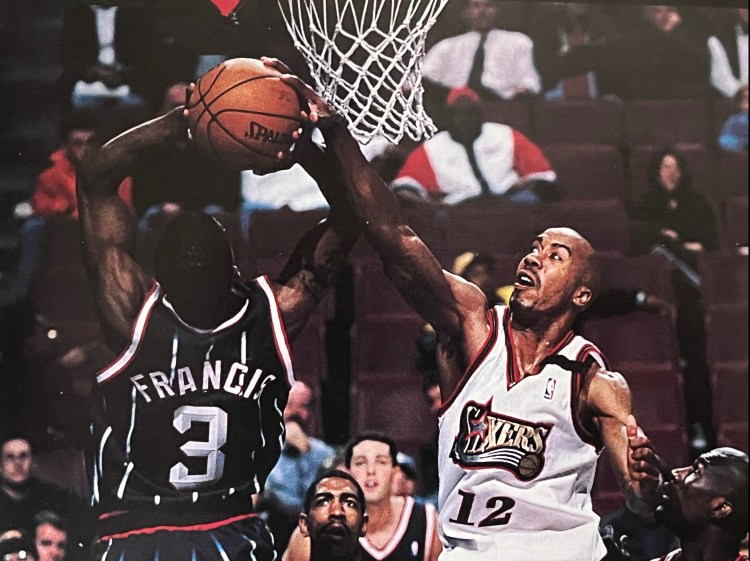
Bowen took his release in stride and couldn’t get to Philly fast enough. “You have to bite the bullet in the walk, I think,” Bowen said. “Coach Pitino’s a great coach, but we just couldn’t get it done there. His decision was to get rid of a lot of guys, and now look where I go—to a winning team, a team that can get better.”
Riley wanted him back; Seattle, San Antonio, and New York also expressed interest. The Sixers coveted his defense and athleticism. They see an upside in the 28-year-old Bowen, who also showed he could score in the CBA (17.3 ppg at Rockford) and France (23.2). But defense is his deal, which fits just fine with Coach Larry Brown.
“You have a lot of coaches in this league who are strictly offensive-minded,” Bowen said. “Some coaches just don’t really stress the importance of defense. My thing was that I could control the defense, and the coaches have to notice that. I’m just happy that Larry Brown would want to have me. He’s a great coach, and years from now I can say, ‘Hey, I played for him. It was truly a blessing.’”
Bowen grew up in Merced, California. His father, Robert, is a pastor; his mother, Sandra, is an associate pastor. He talks to them almost daily about spiritual things.
The first part of God’s pro plan for Bowen left him homesick in Europe. “It made me mentally stronger,” Bowen said. “That was really tough on me. I really love being around my family. Going over there, I had to keep in mind my goal of getting to the NBA, and if I didn’t attain it, I would be able to say I gave it 110 percent.”
The CBA, Bowen said, “is cutthroat. Only the strong survive. You have a lot of guys in the CBA that can play at this level but just didn’t get the opportunity.” Sure, Bowen got discouraged while pluggin’ away in the CBA. “We’re human,” he said. “Even though I am strong in my faith, there are times when you wonder, ‘Is God really taking care of me? Lord, you see how I’m getting overlooked.’”
But the heartache and hard work were worth it. The biggest reward for Bowen is the smile that success has put on his parents’ faces. “They are so proud of me,” he beamed. “Sometimes I look at my dad when I introduce him to certain players and see how excited he is like a little kid.
“I’m happy. I’m learning more now to be happy with the business side of basketball, because when you first get into the league, you don’t realize it’s like this. I know there will be times I’ll play, and sometimes I won’t. How do I react to all that? I still have to come in and give my 110 percent, and that’s what I’m going to do because I want to get better.”
That approach fits right in with Brown’s plan. A big part of Brown’s restoration of the Sixers’ tradition includes several determined journeyman like Bowen who don’t view the NBA as easy money. Having reached his destination the hard way, Bowen knows only one way—all-out every day.
“I do appreciate what I have,” Bowen said. “It could’ve been a situation where this may not have happened. There are so many people that wish they were in my shoes.”
 From Way Downtown