[Cat Man Do . . . or Cat Man Can’t Do Enough? That was the question in early 1991 for the then-expansion Orlando Magic. As highlighted in the story below, the Magic’s Terry Catledge had plugged himself into the starting lineup at power forward and lit up the young franchise, though expansion Orlando predictably still lost more games than it won. That was the Cat Man Do.
But just before this article went to press in the February 1991 issue of Magic Magazine, the Cat Man Can’t Do Enough started to purr. Catledge fractured his thumb, went on the disabled list, and watched his replacement Jeff Turner invigorate the offense and the Magic’s ability to win. Catledge came off the injured reserve and promptly landed on the bench, not the starting five. Coach Matt Goukas’ orders. Goukas felt Catledge and his aggressive play inside was good for the team; but Turner, a talented, but not great, jack of all NBA trades, made his teammates and team better.
Catledge and Guokas quarreled the rest of the season over playing time, landing Cat Man at the far end of the bench. Catledge, known around Orlando for his night-clubbing ways, got a DUI during the offseason, and that seemed to be the final straw. Guokas and the Magic aggressively shopped Catledge around the NBA. No takers. His six-year, $9.5-million contract was too big for other league payrolls to swallow. The Magic then pleaded with Catledge to try Europe. No go. He vowed to win back his starting job next season (1991-92), now reserved for the Magic’s No. 1 pick Brian Williams (a.k.a., the mysterious Bison Dele).
Hats off to Catledge. As vowed, he reclaimed his starting position and played quite well, averaging 14.8 and 7 rebounds per game. But the rap on Catledge remained the same: He was a little undersized for a power forward, challenged on defense, and a one-dimensional offensive player who never met a defender whom he couldn’t back down into the pain. And yet, he had a real nose for the ball and, man, could he battle inside for buckets.
By the 1992-93 season, Catledge would team in Orlando with the seven-foot super-rookie, Shaquille O’Neal. Shaq the rookie would even wear number 32, not his collegiate number 33, which already belonged to Catledge. “I’m not a crybaby,” Shaq monotoned. “Numbers don’t make a player.”
Said Catledge at midseason on teaming with Shaq inside: “I’m really not looking to score as much as when I first started here. That has been an adjustment I’ve made. I just try to stay active and get my shots when I can. I’m trying to do other things to help this team.”
But apparently, his help was not enough. By the end of the season, Catledge was back at the far end of the bench. The Magic were in a full-blown youth movement, and Catledge, pushing age 30, was yesterday’s news. “I’ve told them over and over again,” he said before the start of training camp for year two of the youth movement, “if they plan to put me through another season like that [last season], I don’t want to be there.”
The feeling turned out to be mutual. Catledge finally agreed for Orlando to buy-out the remainder of his contract. Catledge said he hoped to catch on with another NBA club. Instead, Catledge landed in France, hated it, and returned home after a month away to wait for the phone to ring with a fresh NBA offer. “He intends to play somewhere again,” said his brother and agent Bill Catledge. “He’s been working out and trying to stay in shape.” When the phone finally rang with a firm offer, Catledge found himself pounding away inside for the Mississippi Coast Gamblers of the ill-fated United States Basketball League. As the coming months would tell, Catledge’s NBA days were over. He was eight NBA seasons and done.
But here’s Catledge when his stardom was near its brightest in Orlando. Shining his light on Catledge posting up all comers is Magic Magazine staff writer David Volin.]
****
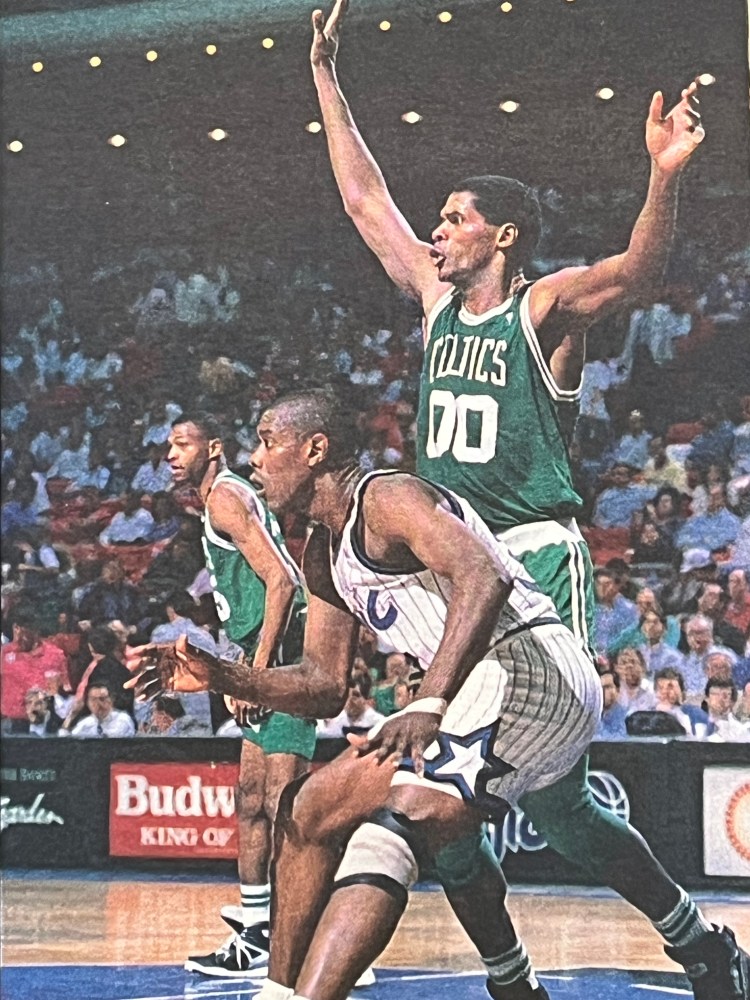
Karl Malone is licking his wounds following Utah’s war of attrition with the Orlando Magic as he considers the question. “What kind of player is Terry Catledge?” repeats Malone laughing, while a trainer treats his scrapes and bruises. “The kind of player I’m glad to be done with.”
He’s not the only Magic foe feeling that way this season.
Call him Cat Man, Cat-illac, or any other moniker, but never call Terry Catledge intimidated. It just doesn’t happen. Whether it be against Malone, Sir Charles Barkley, or even Hakeem “The Dream” Olajuwon, the Magic’s warrior under the basket isn’t afraid to mix it up.
After a monstrous mid-December western swing in which he averaged 25 points and 12 rebounds, Catledge found himself in a familiar position—leading the team in scoring and rebounding. Magic fans are accustomed to big numbers from the 6-8, 230-pound power forward.
But it wasn’t long ago [last fall, 1990] that Catledge’s game appeared to be in a downswing. During a tumultuous exhibition season, Cartledge was having more trouble than he had the entire previous season. Sure, he had knee woes, but the brilliant play of forward Jeff Turner forced Coach Matt Goukas to go with the hot hand. After all, when you are outscoring your opponents on a regular basis—as the Magic did during exhibition play—you tend to stick with what is working.
When the 1990-91 regular season opened with six straight losses, Goukas went back to his trump card—Catledge. It may be coincidental, but the Magic beat Dallas that night, and the rejuvenated Catledge was the game’s high scorer, ramming home 30 points.
The Magic—and Catledge—have never looked back. Catledge’s resurgence must have provided a few sighs of relief on the team. After all, the 27-year-old is the Magic’s best option in the low post. But his fearlessness also makes him prone to taking the ball to the basket, no matter how many defenders have converged on him. As the team’s No. 1 offensive option, Catledge often finds himself double- and triple-teamed when he gets the ball near the basket, and his first inclination is to shoot rather than try to find the open man.
Says teammate Scott Skiles: “I’m sure it’s frustrating for him now because he has been drawing so many double-teams, but he has to be willing to pass it back out.”
Catledge acknowledges that passing is an area of his game that needs improvement. “I want to be a team player, and I’m trying to pass the ball back out when I am double-teamed, which is something I didn’t do last year,” Catledge says. “It’s tough when I’m doubled and tripled, but I feel like I have to take the challenge. I have to pick my spots offensively.”
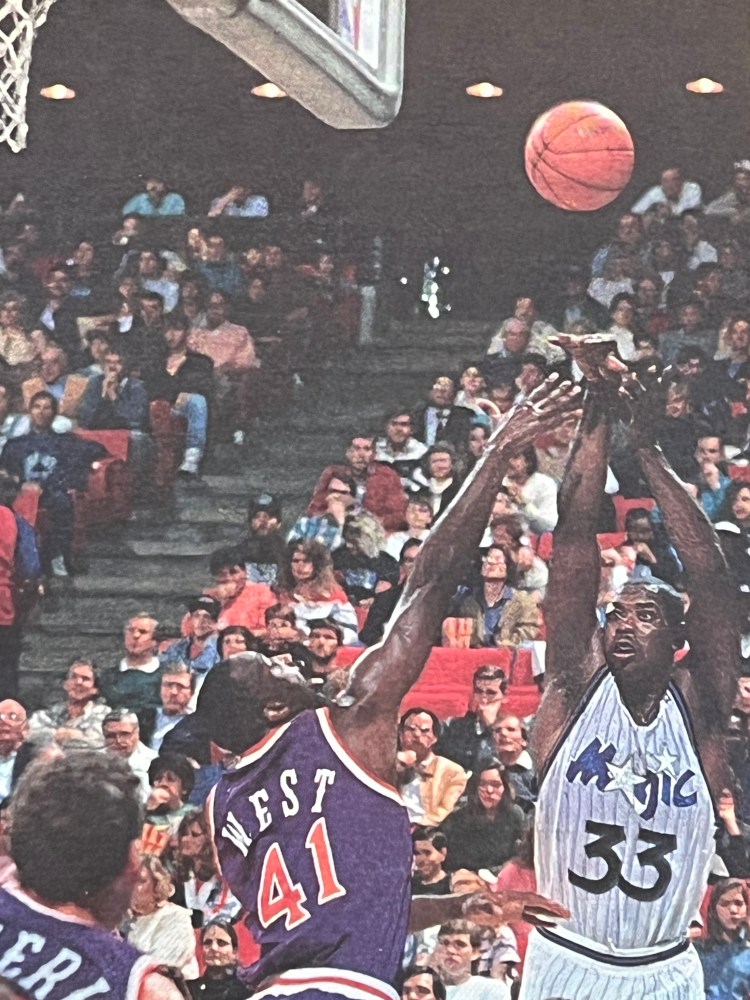
Still, his style of play served him well during his early years in Houston, Miss. When the population of your town is only 4,000, you have to find ways to entertain yourself, and Catledge used athletics to do so.
It was during these years that Catledge played a different kind of ball than we are accustomed to. “For six or seven years, I was really more of a baseball player,” Catledge recalls. “It was definitely my favorite sport. I pitched and played a lot at first base.”
Mother Nature had other things in mind for Catledge. He sprouted up six inches during his freshman year of high school, and it became apparent that he was better suited for the Houston High basketball team. The transition wasn’t a difficult one. “When I was growing up, I always loved to watch Moses [Malone] and Dr. J [Julius Erving]. Moses was so intimidating—his style really impressed me,” Catledge says.
Catledge dominated opposing schools. But being from such a small town, it hardly seems surprising that there were few recruiters in the stands. After biding his time at Itawamba Junior College in Fulton, Miss., he finally got a chance to bring his game to the big time when the University of South Alabama recruited him.
Following three years of terrific play—including a senior season in which he led the nation in rebounding—the best was yet to come. “When Philadelphia drafted me (21st overall), I could barely talk,” Cartledge says. His heroes Malone and Erving were going to be his teammates.
Catledge only had one season to enjoy the realization of his dream before he was traded (along with Malone, ironically) to the Washington Bullets. In retrospect, it provided a better opportunity for the Cat Man. “I was playing behind Charles Barkley in Philadelphia,” Catledge says. “Now I was going to get the chance to improve my career.”
Catledge flourished on the Potomac, scoring in double figures and averaging 6.7 rebounds during his three seasons with the Bullets. It now seems surprising that the Bullets neglected to protect Cartledge from the 1989 expansion draft. Catledge, however, wasn’t too surprised. He knew the Bullets were trying to increase the playing time for many of the young players, and he had a feeling he was expendable.
The Orlando Magic were more than happy the Bullets left him unprotected, and they plucked Catledge with their third pick in the draft. The newest power forward on the newest basketball team in Florida wasted little time in showing his appreciation.
By the time the Magic’s inaugural campaign had drawn to a close, Catledge had won himself a home. Catledge led the Magic in scoring and was second in rebounding, a contribution his teammates greatly appreciated. “I remember him from his days in Washington,” Skiles recalls. “I was with the Pacers, and Terry would get down under the basket and totally frustrate us. I’m glad we’re on the same side now.”
Of course, no player is perfect. Besides working on his passing when he is double-teamed, Catledge says he’d like to improve in other areas. “I have to admit my defense could use some work,” Catledge says.” I sometimes lack concentration on the defensive boards, but I have been focusing on that problem for over a month now.”
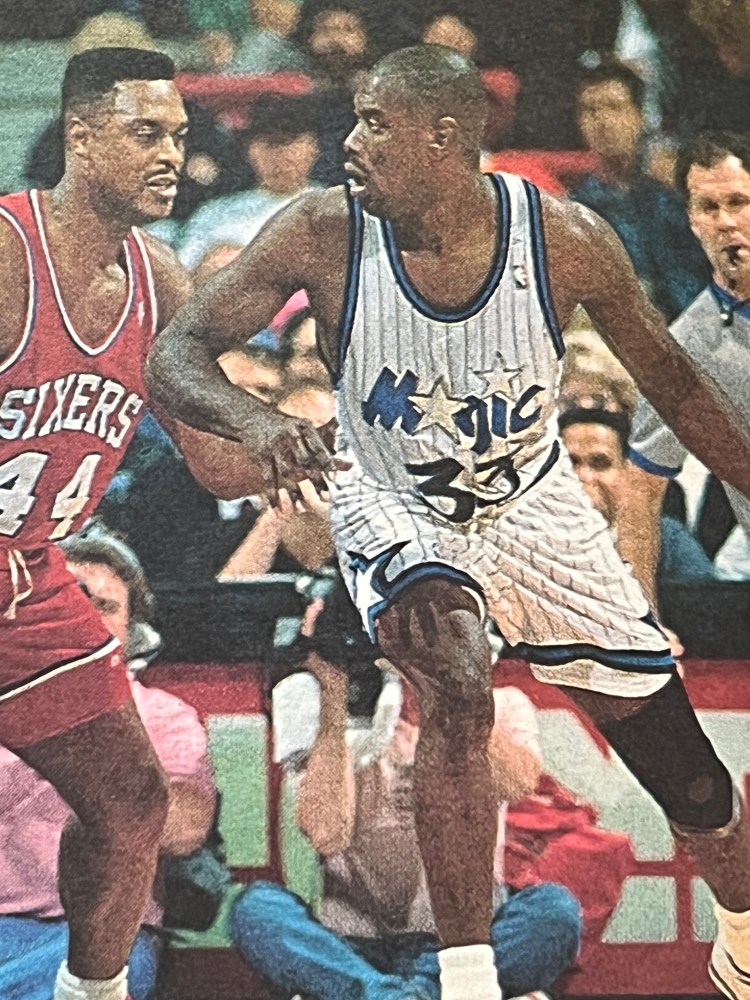
Concentration is the key word. There are times when Catledge seems apathetic on the court, and it usually corresponds directly to his offensive production. “As long as Terry is involved in the scoring end of things, everything is fine,” Goukas says. “But on nights when our opponents take him out of his game, he becomes frustrated, and it shows. Terry is certainly not the only player in the league this happens to, but you have to look for improvement in that area.”
Guokas feels that Catledge’s added concentration is already paying dividends. “So far he seems to be handling it better,” Guokas says. “He is not the easiest player to post up, but we have been getting him the ball, and he has been delivering. Not many players on this team have Terry’s ability.”
In one recent 20-game stretch, the Cat Man clawed out 10 double-doubles (points-rebounds) as he continued to strive for on-the-court excellence.
Off the court—and in the locker room—he also has achieved success. For example, when a player joins the NBA, there is usually a period of adjustment. Dennis Scott is the new kid on the block this season, and things haven’t been as easy for him as they were at Georgia Tech. It is nice for Scott and other young players to know that there are teammates like Catledge who are supportive.
Last season, Catledge took rookie Nick Anderson under his wing. “Slick Nick” can’t say enough about the Cat Man. “What I appreciate most about him is that he is always happy and joking,” Anderson says. “He kids around on and off the court. What you see is what you get. If everyone approached life like Terry, the world would be a better place.”
According to Guokas, Catledge is the leading needler on the Magic. “He definitely likes to get on his teammates. Of course, it is only in a fun way. That is really invaluable, the way he keeps everyone on the team loose. Once he starts laughing, it’s contagious.”
Unfortunately, there is a converse to the happy-go-lucky lifestyle Catledge leads—the attention that fans and media at times give to his off-court activities. Catledge is single and often frequents Orlando area nightspots. Because this is a one-professional-sport town, word gets around. After all, he is one of the Magic’s most eligible bachelors.
In Philadelphia and Washington, there was never as much scrutiny given to his off-the-court pursuits as there is in Orlando. “When I played in Washington D.C., you could go out and have a good time,” Catledge says. “I never found myself being harassed about going to clubs, but here it is different. I just have to be a professional off the court wherever I may be.”
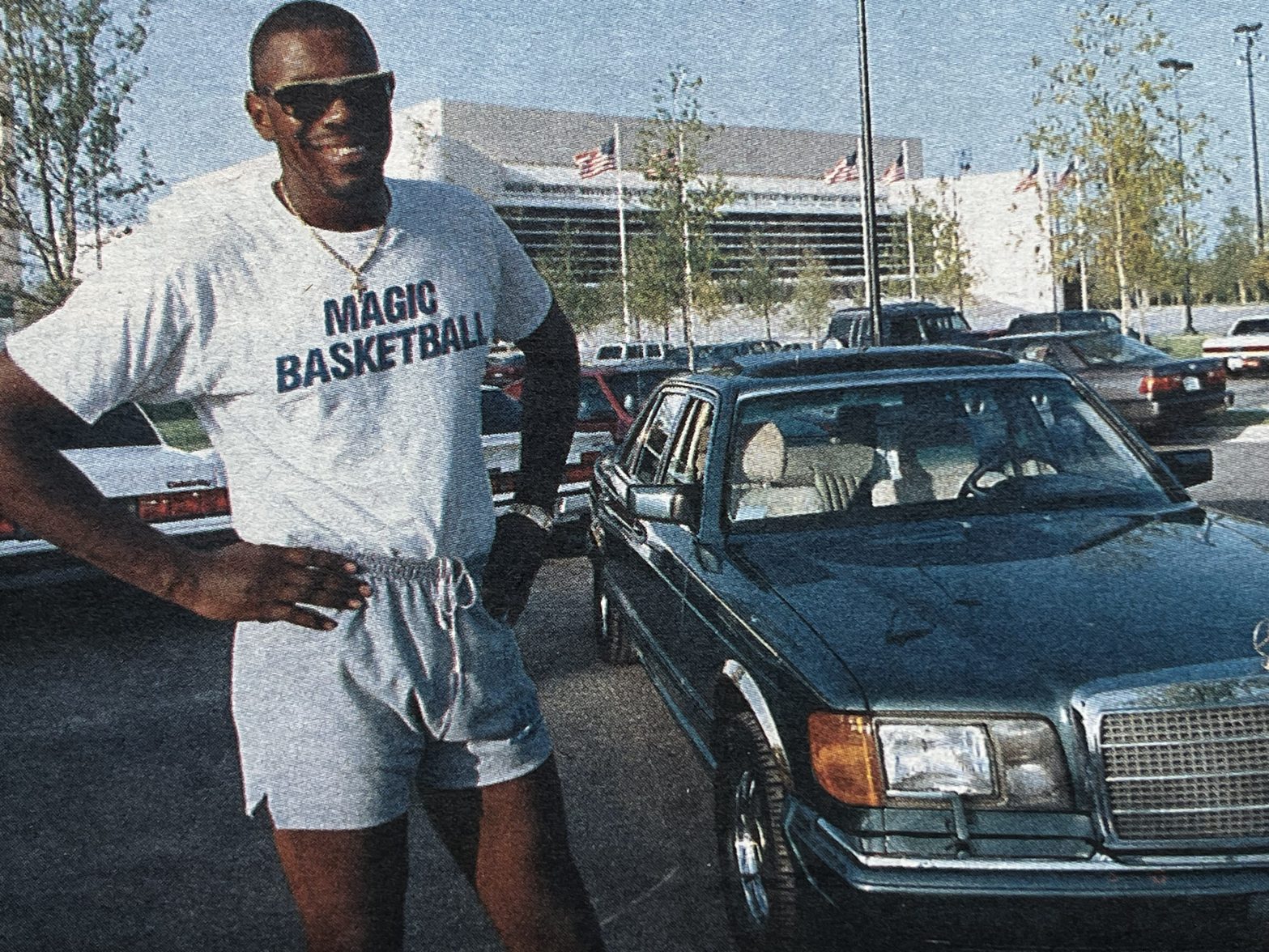
Catledge’s personality is a reflection of his game—pedal to the metal. He drives an ostentatious Mercedes, which he says cost him a cool $65,000. He also wears more than his share of gold jewelry. It is hard to imagine Catledge changing his lifestyle significantly.
Can he alter one part of his lifestyle without affecting another? He has been trying out of necessity. “You guys in the media need to sell papers,” Catledge says. “There is a need to use someone in the spotlight to do it, and I can accept that. Now I’m just going to have to be low-key and laid-back.”
Terry Catledge low-key and laid-back? One thing is for certain, Karl Malone will welcome the day Catledge allows himself to show up on the court in that frame of mind. After all, it would mean considerable less time in the training room after the game for the Mailman.
But don’t bet on it. Catledge has come too far, and he badly longs to play for a winner. “I want this to be a successful organization,” says Catledge, who is in the second year of a six-year, $9.5 million contract. “The management has shown their faith in me, and I want to put this team into the playoffs. This franchise is already first class, but I want to be here when the winning comes. Orlando fans deserve it.”
 From Way Downtown