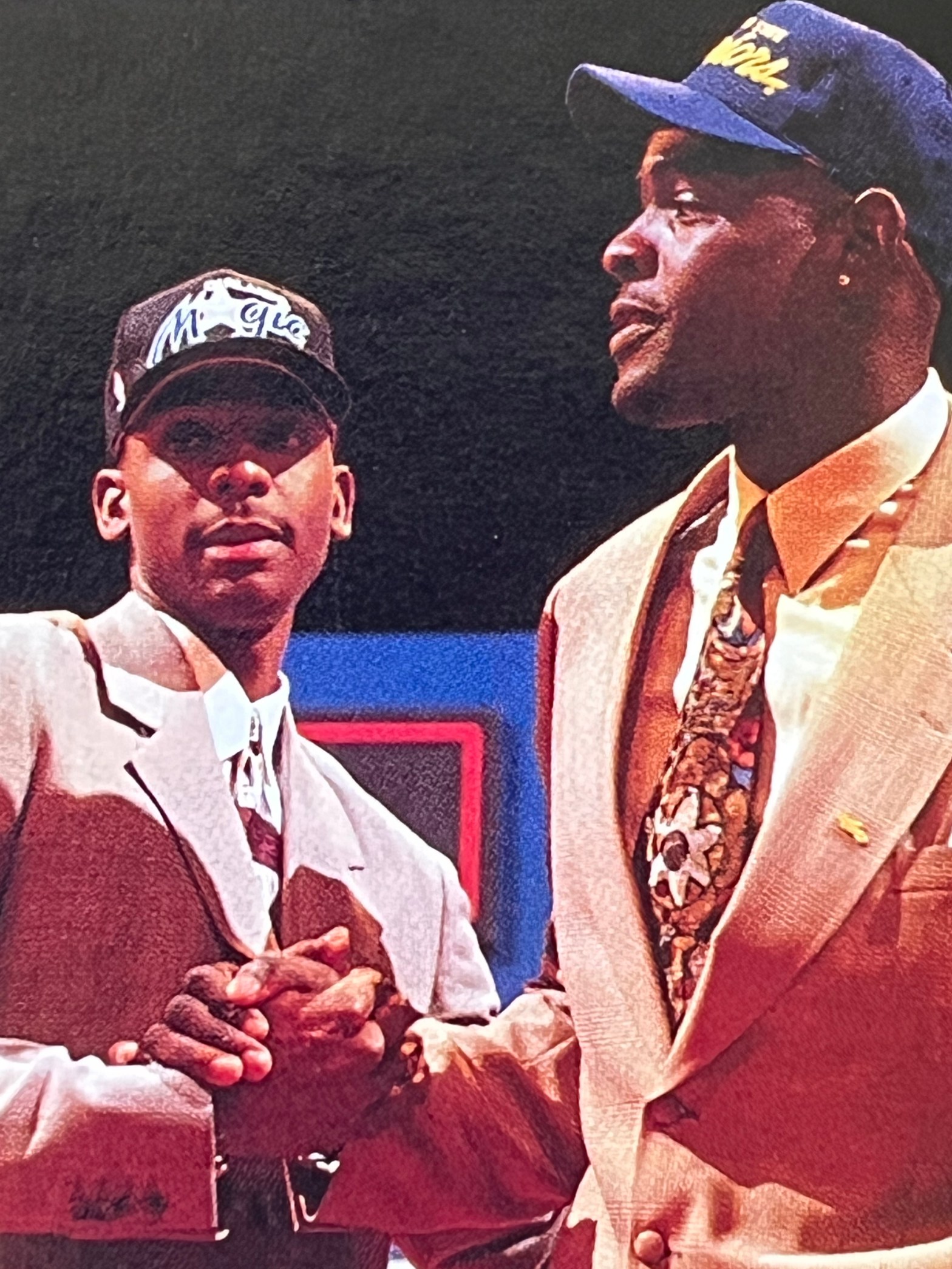
[In the 1993 NBA draft, the Orlando Magic traded the No. 1 pick overall, Chris Webber, to Golden State for its first-rounder, Penny Hardaway. For NBA observers, this blockbuster trade (the Magic’s frontline, after all, would have featured Webber and Shaquille O’Neal) linked forever the two rising stars as arch NBA rivals. Not exactly Bird-Magic 2.0, especially since Webber and Hardaway didn’t play against each other in college, But competitors just the same who were anxious to prove which one was the better talent. AND which team was the shrewder? Orlando or Golden State?
“Forever” technically lasted just one season. Webber butted heads with Golden State coach Don Nelson, who referred to him as “Rookie” and didn’t treat his top pick “like a man.” So said Webber, who asked to be traded and got his wish to Washington.
Hardaway, meanwhile, thrived with Shaq in Orlando until a serious knee injury cancelled his fifth season. He rehabbed, returned for a strike-shortened sixth season, and was traded to Phoenix before the next year. By then, Webber was in Sacramento, and their early rivalry was mostly a thing of the past
In the following article, published in the December 1994 issue of the magazine Rip City, the rivalry is still worthy of some barber-shop talk. That talk is writer L. Jon Wertheim’s entre to profile both rising megastars. “Super Sophs,” he calls Webber and Hardaway. It’s clear that Wertheim filed his story well before it was published. After all, by the time that the story appeared in Rip City, Webber was with Washington, not Golden State. Nevertheless, Wertheim does a nice job of explaining the random circumstances underlying the rivalry, putting everything in just the right context and without overhyping the story. Here you go.]
****
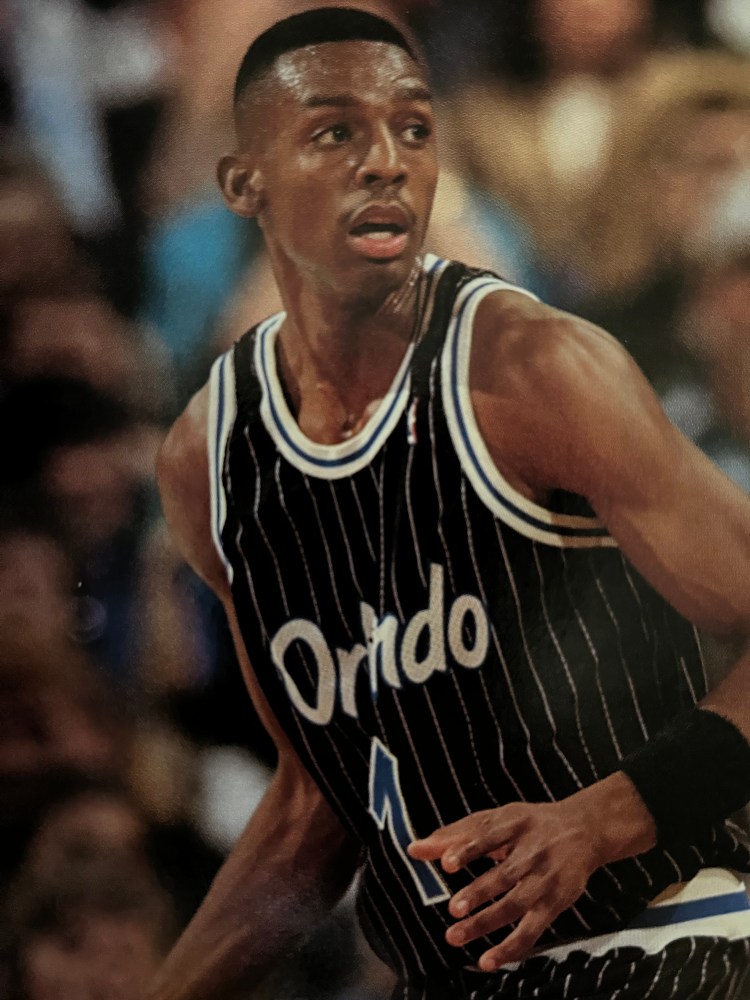
Chris Webber and Anfernee (Penny) Hardaway might try to juke comparisons to each other much as they would an overmatched defender, but there’s no dribbling around it: The two likely will be bound together for the duration of their basketball lives. Ever since the 1993 NBA draft, when the Orlando Magic selected Webber with the first pick and promptly dealt him to Golden State for Hardaway and three draft picks, the two future megastars can’t seem to escape each other’s shadow.
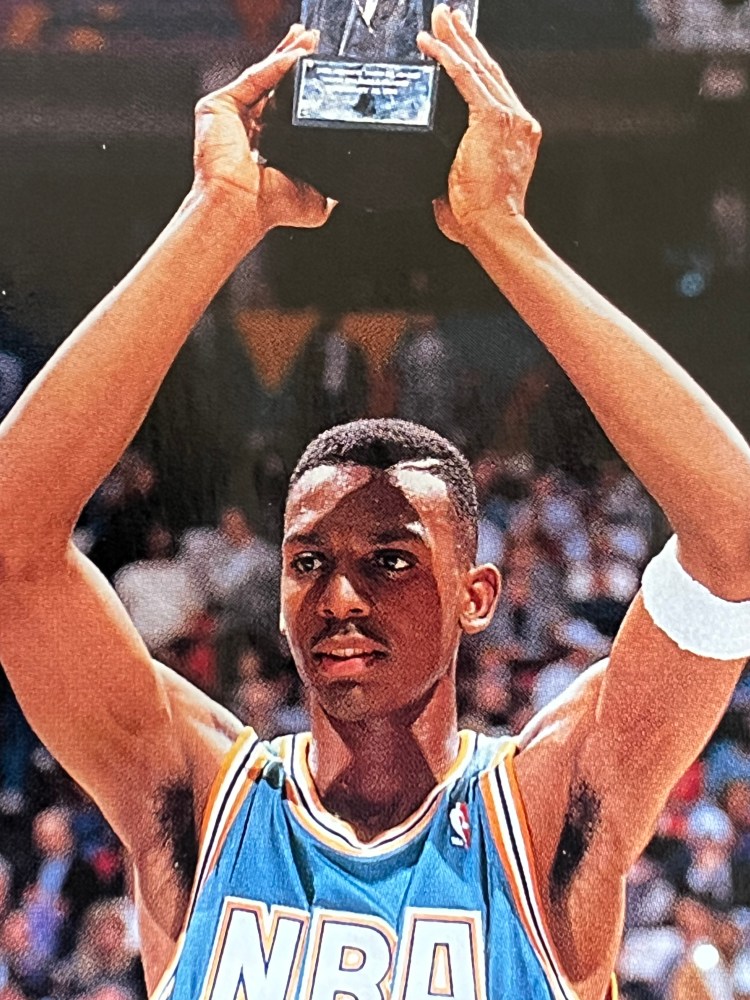
Far and away the top two rookies in the league last season, Webber and Hardaway signed similarly gargantuan contracts, were the de facto team captains at the All-Star Weekend Rookie Game (Hardaway was named MVP), boasted comparable stats and finished 1-2 in the Rookie of the Year balloting, the closest contest since 1981.
By no stretch are Webber and Hardaway the first pair of NBA players to be mentioned persistently in the same breath. In the 1980s, Larry Bird and Magic Johnson were a twosome rife with enough symbolic dualism to make Shakespeare proud. Their relationship crystallized the Celtics vs. the Lakers, New England savvy vs. L.A. panache, a 6-9 forward vs. a 6-9 guard, White vs. Black. In addition, Bird and Magic were college rivals, cornerstones of their respective NBA dynasty teams and categorically the two best players in the league—at least before a fellow named Jordan entered the fray.
By contrast, the symmetry between Webber and Hardaway hardly is as striking. Apart from playing with precocious confidence and skill, significant parallels between the two as players and people are difficult, if not impossible, to draw. In fact, where it not for the series of fairly random circumstances that united Webber and Hardaway, one would be hard-pressed to find a more incongruous tandem.
****
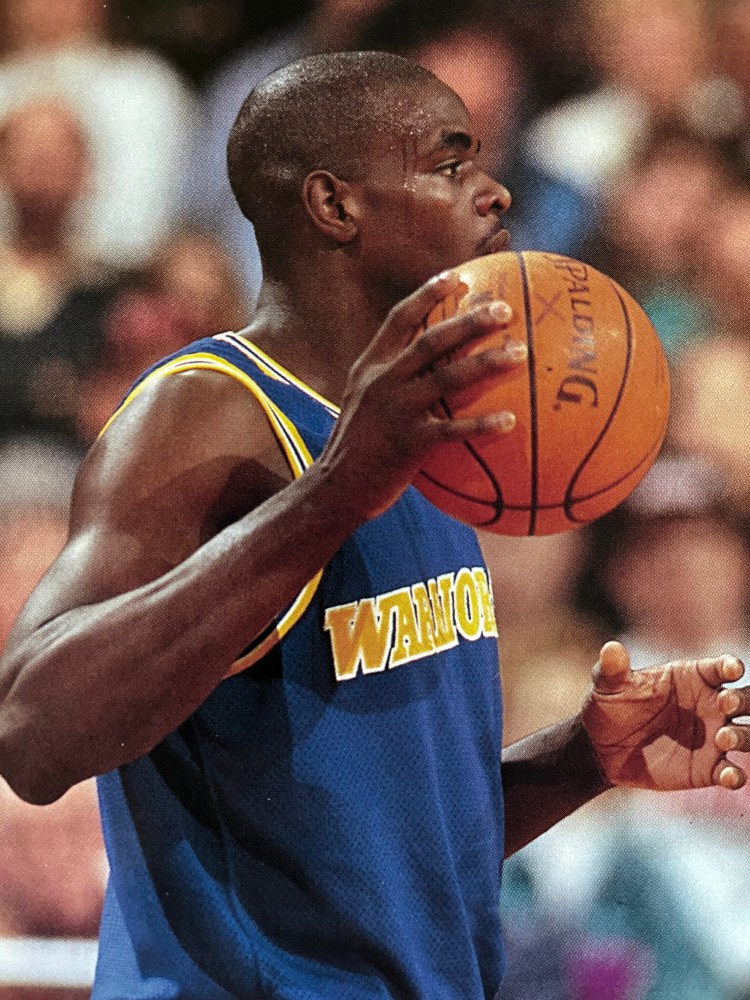
Detroit Country Day School is the kind of place where kids are surprised with candy-apple red convertibles on their 16th birthday. Though Chris Webber never knew this sort of affluence, he certainly fit in attending the largely white, suburban private school. Of course, he didn’t hurt his popularity by starring on the basketball team and being named the National High School Player of the Year in 1991.
Webber still was in middle school when he began receiving calls from college coaches trying to lure him to their programs. A less savvy teenager could have been corrupted by the plaudits and pressure, but Webber remained unchanged largely because of a family as rock solid as his chiseled physique. In fact, so strong were the bounds of Webber’s nuclear family that “when I was growing up, kids used to tease me and say we were like the Brady Bunch,” says Webber, the oldest of five siblings.
When Webber chose to attend the University of Michigan and anchor the legendary Fab Five recruiting class, he cited proximity to his family as the major factor in his decision. After two seasons at Michigan, where he helped the Wolverines to consecutive NCAA Final appearances—the latter forever will be remembered for the infamous “time-out incident—Webber was a surefire No. 1 draft pick.
While Webber the man-child was overpowering opponents, Hardaway relied on grace and finesse to establish himself as the biggest celebrity to hit Memphis since Elvis. By the time he was a star at Treadwell High School. Hardaway already was being likened to Magic Johnson with a better jump shot. Standing 6-7, the wiry Hardaway could score inside, shoot, rebound, and pass. And when Hardaway dribbled, it looked as though the ball never left his enormous hands.
Like Webber, Hardaway was a National High School Player of the Year who had to shoo recruiters off his doorstep at an early age. But the similarities in their formative years stop there. Hardaway, who has no relationship with his father, was raised in a small house in the rough section of town by his austere grandmother, a former sharecropper from the Mississippi Delta. “Everything I am today I owe to that woman,” Hardaway says. “If I have one dream, it’s to always make her proud.”
Even Grandma Hardaway’s presence couldn’t always ward off the evils of the neighborhood. Shortly after committing to play for Memphis State, Hardaway was mugged at gunpoint. Lying face down with a low-caliber pistol to his head, Hardaway found himself in a game of one-on- one with his mortality. “I thought he was going to kill me,” recalls Hardaway.
Instead, the thug ended up shooting Hardaway in the foot, breaking three bones. But within a year, Hardaway was in a uniform for the Tigers, cementing his status as a local hero and leading his team in virtually every statistical category. “I don’t think I’ll ever have a better player,” said his college coach, Larry Finch. Barely two years after being shot, Hardaway was the best point guard the college game had seen in years, a first-team All-American who had NBA scouts drooling.
****
It was a done deal. The Orlando Magic was going to select—and keep—Webber. To hear Webber tell it, “Shaquille and I were going to be the game’s most devastating front line.” Theories abound as to why this never came to fruition. One claims that the free-throw shooting of Webber and O’Neal (both shot less than 60 percent last season) would have made the Magic too vulnerable in late-game situations. Another alleges that O’Neal and Hardaway became fast friends on the movie set of Blue Chips, and Shaq lobbied heavily for the slender point guard.
But Orlando general manager Pat Williams offers the real story. In a 90-minute session just prior to the draft, “Penny Hardaway came in here and made passes and dunks that would have had crowds screaming in disbelief if they’d been there,” Williams chuckles, trying to contain self-congratulations for his foresight. “Never before, that I know of, has a team changed its mind so dramatically 24 hours before the draft.”
As expected, Orlando tabbed Webber with the first pick. But when Golden State, which already had an otherworldly point guard called Hardaway (namely Tim), selected Penny, trade alarms went off. Sure enough, within minutes, the deal was official. Chris meet Anfernee. Anfernee, Chris.
Before the first game of last season, Hardaway and Webber’s fledgling careers were assuming vastly different complexions. The Warriors training camp resembled a M.A.S.H. unit as Tim Hardaway, Chris Mullin, Sarunas Marciulionis, and Billy Owens were felled by injuries ranging from minor to the season-ending variety. As the youngest player in the league, a huge burden suddenly fell on Webber’s massive shoulders. “I didn’t expect to have come in and immediately play all the minutes and the different positions I did,” he says. “But it definitely helped mature me, and overall I think I did a good job.”
Good job? Consider that Webber became the first rookie in NBA history to total more than 1,000 points, 500 rebounds, 250 assists, and 75 steals. He scored 17.5 points per game and led his fellow-yearlings in rebounding and field-goal percentage. Beyond the numbers, it was Webber’s poise and versatility that had folks talking. “The things this young man can do are amazing,” says Warriors coach Don Nelson. “He has incredible skills and the poise of a veteran. Besides that, he’s just a real good guy with a great attitude.”
Webber’s on-court versatility and off-court charm didn’t escape the marketing whizzes at Nike, who immortalized both assets in one classic commercial. The ad, depicting Webber’s deft ballhandling behind-the-back-juke-and-power-dunk in Charles Barkley’s anti-role-model face is all you need to know about the man’s skills. Even the spurned Barkley concedes, “Honestly, I think it’s a funny commercial. When you see him make a play like that, you can’t help but like it.”
Meanwhile, in Orlando, Hardaway was off to a less auspicious start. O’Neal already had pronounced himself and Hardaway as “the Kareem and Magic of the 1990s,” but Orlando fans didn’t see it that way. At least not at first. In accordance with the team’s plan to nurse him along slowly, Hardaway began the season as a back-up to Scott Skiles, and his inconsistent play was met with a smattering of boos. “Penny would make a brilliant play but follow it up with a silly turnover,” says Magic coach Brian Hill. “Basically, he just needed to relax.”
As poetic justice, Hardaway’s coming out party was against Webber and the Warriors. With both teams eager to have their rookie selections validated, Hardaway led the Magic to victory by scoring 23 points, grabbing 8 rebounds, and making a host of dazzling passes. In the fourth quarter, Magic fans unleashed a banner reading: “We Picked the Right One Baby, Uh Huh.”
From that point on, Hardaway was a new player. With each game, he grew more confident, and it was only a matter of time before he took over the starting duties. Hardaway finished the season averaging a none-too-shabby 16 points, 6.6 assists, and 5.4 rebounds. He even got his own Nike spot. Most important, he and O’Neal jelled. “There’s no doubt in my mind we made the right pick,” Hill says.
Unlike Bird and Magic, who enjoyed a friendship predicated on mutual respect, neither Webber nor Hardaway—who, ironically, never squared off in college—claim to know (read: like) the other particularly well. And judging from an episode last season, the two never will be getting together for a round of golf in the offseason.
Perhaps a tacit acknowledgment that Webber was the favorite for the Rookie of the Year honor, the Magic launched a media blitz for Hardaway, sending voters video highlights, postcards, and chocolate “Penny” coins. This campaigning didn’t sit well with Webber, who posted a Hardaway flyer on his locker as inspiration. “I’m not running for President of the United States, so I’m not passing out flyers and posters,” Webber barked. “If I’m the best rookie, I deserve the award; if not, I’m not going to try to sell myself.”
If neither Webber nor Hardaway is crazy about having a ubiquitous benchmark—“Together Forever” was the title of a Sports Illustrated story on the pair—they are at least resigned to their fate. “People will probably go on comparing us,” says Hardaway. “I hope they’ll just be able to count up our championship rings.”
Webber is more rational still. “Both of us have shown we’ll be in the league for many years to come, so I’m sure people will continue to associate Anfernee and me. Like it or not, once people link you to someone else, it’s hard to break that.”
 From Way Downtown