[After the out-of-court settlement of the Robertson case in 1976, the NBA spent the next few decades expanding and working out its free-agent policy. This article, from the August 1999 issue of the magazine Fastbreak, offers an example of how the free-agent process evolved entering the new millennium. Our example is involves free agent Penny Hardaway and the offseason wooing that brought him to Phoenix from Orlando. Quick point. Fastbreak is the in-house magazine of the Suns, meaning the article is partisan, but writer Jeramie McPeak tells this free-agent “love” story in a classy way.
After McPeak’s story, I’ve added a brief excerpt from the Suns’ press conference that rolled out Hardaway to field questions the media mob. Hardaway’s answers are honest, but mostly superficial. Nevertheless they add some perspective in our look back to free agency in the 1990s.]
****
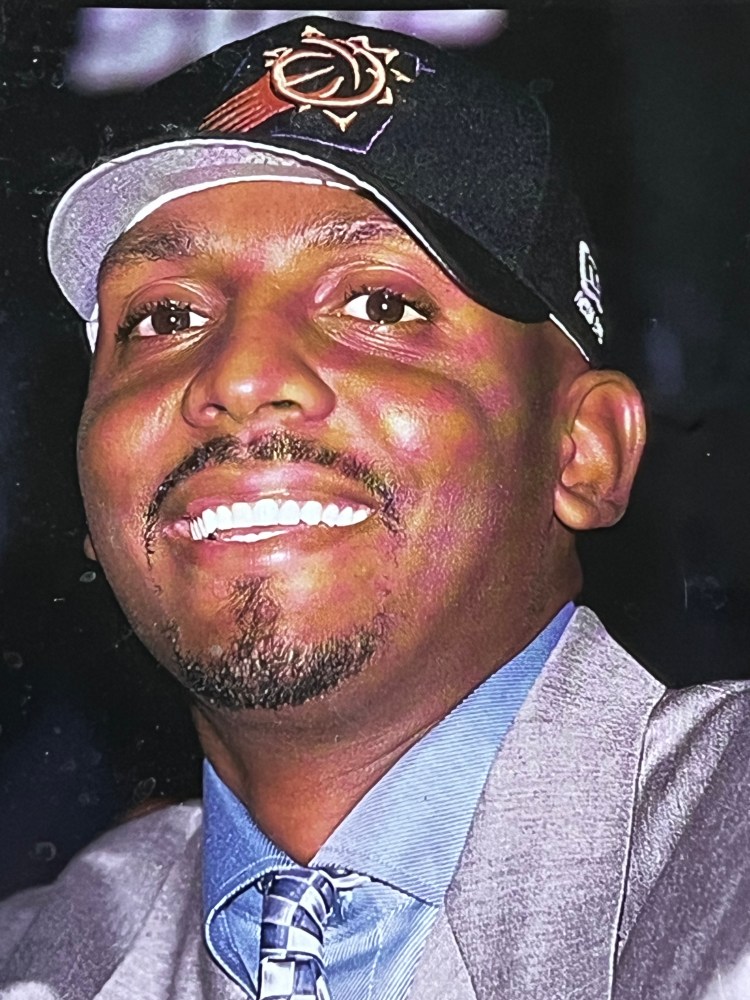
One of the most talented and popular guards in the National Basketball Association today, Anfernee “Penny” Hardaway was easily considered the most-attractive name of the more than 150 available in the free-agent market this offseason. Although there were few teams, if any, that had the salary cap space necessary to sign a player of Penny’s caliber, a number of clubs lined up, all hoping to swing a sign-and-trade deal with the Orlando Magic, should Hardaway share their interest.
So why did he choose Phoenix? And what role did Fastbreak Magazine play in this decision? We’ll get to that second question in a paragraph or three.
“Until I visited Phoenix, I was still sold on Orlando,” Hardaway says. “But I wanted to go out on the market and see what I was really worth, and I came here and they showed me what I was worth and how much they really loved me and wanted me.”
Hoping to impress upon Penny just how much love the Suns had for him, Executive Vice President/General Manager Bryan Colangelo enlisted several members of the front office’s staff, who were given the “top secret” assignments to assist in delivering his message.
Suns Productions, the multi-talented crew behind the team’s pregame television program Suns Gametime, was asked to create a special video focusing on the storied history and reputation of the organization. The 10-minute presentation, which was hosted by Suns alum and community relations representative John Shumate, also included some carefully edited footage of Jason Kidd driving up-court and lobbing the alley oop to . . . you guessed it, a dunking Hardaway, complete with play-by-play from the Voice of the Suns, Al McCoy.
The Suns’ publishing department was also invited to join in on the fun and created a complete issue of Fastbreak, specifically geared towards Anfernee and his interests. The 24-page publication, boasting a computer-enhanced cover of Hardaway and Kidd with the headline, “Backcourt 2000,” was chockful of information about the city of Phoenix, including listings of the top golf courses, restaurants, and shopping attractions. There was also an article on past free agents who’ve chosen Phoenix, a profile of Kidd and his knack for assists, a column about Hardaway written by coach Danny Ainge, and a fictional feature looking back on the 1999-00 season, as if it had already taken place with Penny on the Suns’ roster, of course.
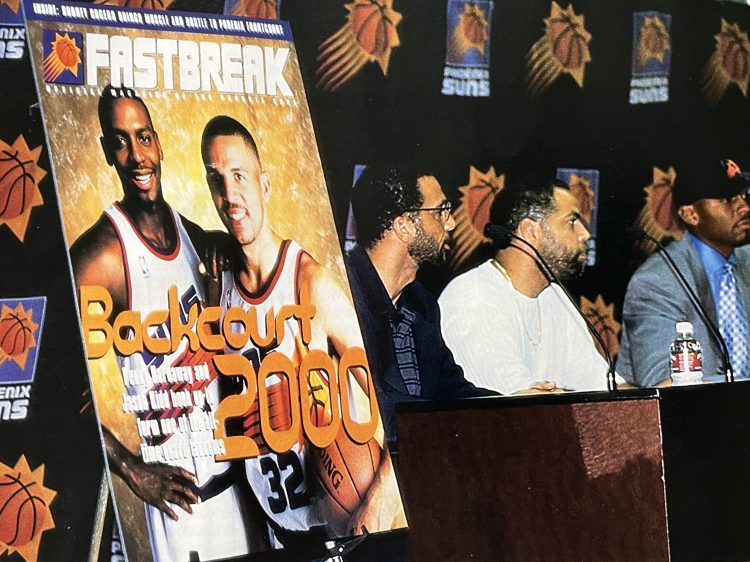
Oh yes, and throughout the issue, there were numerous photos of the all-star guard blended with photos of former Suns to give Hardaway an idea of what he’d look like in a purple-and-orange No. 1 jersey.
The video and magazine were then shipped to Hardaway at his Memphis home, and it wasn’t long before he was on the phone with the Suns’ front office. “When I saw the magazine, I jumped,” Hardaway says with a laugh. “I was like, ‘Whoa, how’d they do this?’ I thought it was very creative, and it was funny, very funny.”
The laughs and the creative recruiting didn’t stop there. In late July, with the opening of the free-agent signing period quickly approaching, the Suns’ brass fueled up their new, luxurious charter plane, picked up Hardaway in Memphis, and flew him and Kidd to California for a round of golf. And when he traveled to Phoenix a few days later, they presented him with a shiny new set of golf clubs and a Suns’ golf bag with his name embroidered on the side.
During his visit to the Valley, Penny was also given a tour of the America West Arena, where his name was placed above a cubicle in the Suns’ locker room. He also toured the Bank One Ballpark, where another video of himself and Kidd was playing over and over on the Jumbotron in centerfield.
“The fun part was taking him to the Ballpark,” says Suns President and CEO Jerry Colangelo. “I mean, that was funny because the roof was closed, it wasn’t air-conditioned, it was hot in there. And as we walked in, he looks up at the Jumbotron, and here’s this footage of him in his Suns uniform, and he’s playing and the music is going, ‘And introducing the backcourt of the new millennium, Jason Kidd . . . blah, blah, blah.’ And then we had the roof music, and the roof opened, and he was just like, ‘I don’t believe this. I don’t believe it.’”
“It was an unbelievable effort,” adds Bryan Colangelo of all his help in the recruiting process. “You can’t do it without the right people in place to take jobs like that over.”
Although he didn’t edit any video, write any stories, or embroider any golf bags, the one person who may have made the biggest difference was Kidd, who Ainge said has earned the title of assistant general manager.
“He was huge,” Hardaway says of his new tag-team partner. “He was the assistant GM. He called me all the time. He called me from the [Tournament of the Americas] in Puerto Rico. He was asking me, ‘How are you doing? How are things going?’ He never pressured me to make a decision with Phoenix. He just said that they would love to have me, and he would love to play with me. So he did a great job.”
Though you might be surprised to hear it, Hardaway insists that the Suns’ elaborate courting process made a big impact on him and made his decision a whole lot easier to leave Orlando and head for Phoenix.
“That’s something that I really wanted,” he explains. “I wasn’t feeling wanted from anyone. A lot of people were saying that I was washed up. I didn’t have anymore basketball left. That I should just take whatever and just play with the Magic and don’t worry about it. I was feeling very lonely and very down.
“And when the Phoenix Suns came in and showed me all this energy, it kind of pepped me up a little bit, and I said, ‘Hey, I think I’m ready again, and this is where I want to be.’ Given the magazine and given the golf bag and golf clubs and all that stuff, it really hit me in the heart, and I couldn’t turn it down.”

[Now comes the promised excerpt from the Hardaway news conference. It starts with a brief intro (in italics below) that was ran in the same issue of Fastbreak as the article above.]
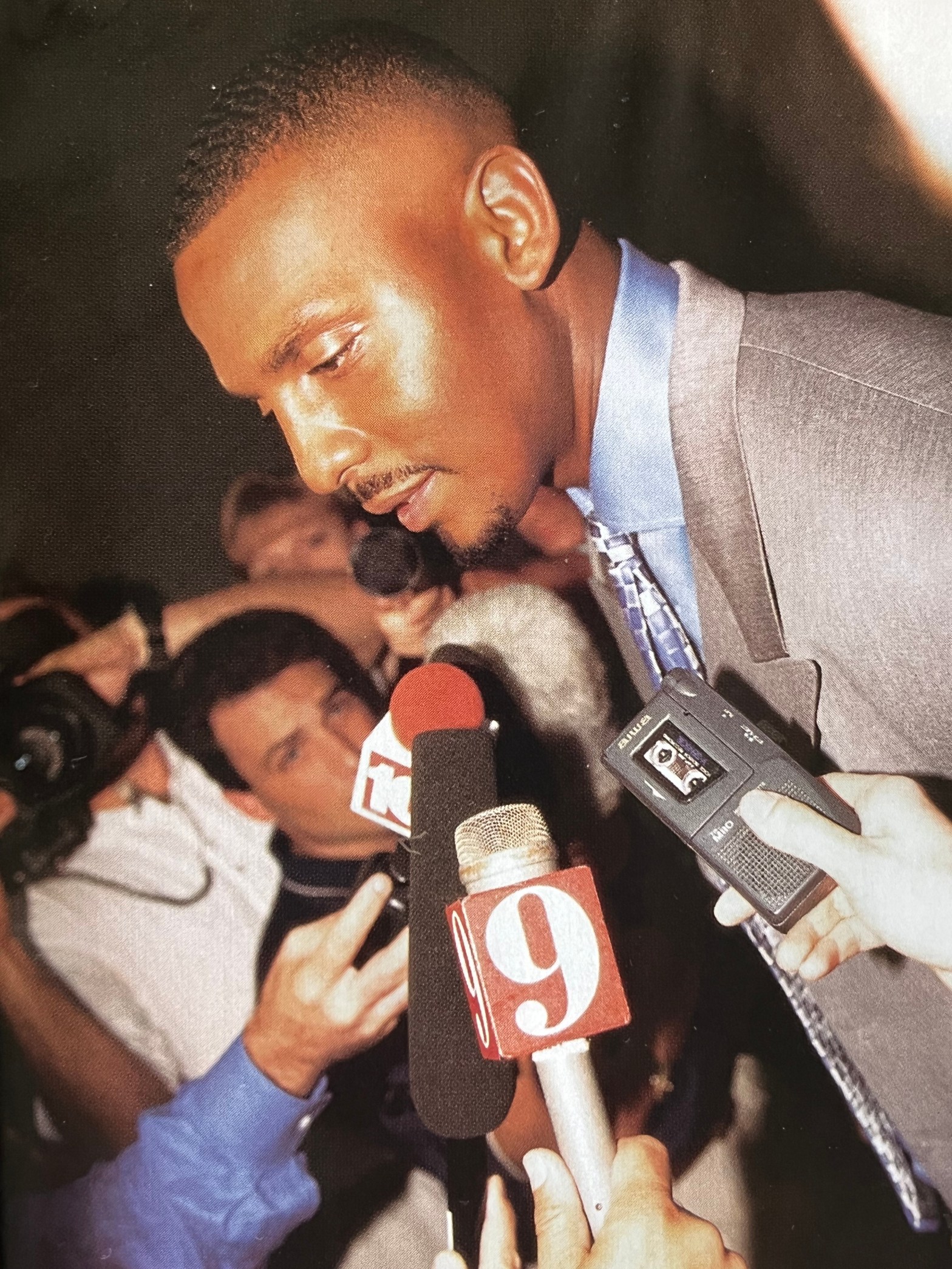
The news was anything but a surprise. The sign-and-trade deal with Orlando that brought Anfernee “Penny” Hardaway to Phoenix had been discussed in the newspapers and on sports radio for weeks before the big announcement of August 5th made all the rumors official. But that didn’t begin to quell the excitement and electricity which filled the America West Arena practice court during the press conference that summer evening.
In fact, dozens of sportswriters, broadcasters, photographers, and cameramen flooded the court almost an hour early, all there to cover one of the most significant transactions in Suns history. A bold transaction that could rank up there with the Kevin Johnson deal in 1988, the Charles Barkley trade in 1992, and the swap for Jason Kidd in 1996.
All of the media, along with all of the Suns’ front office personnel in attendance, were anxiously discussing the significance of this latest “blockbuster” and the possibilities it brings when the newest Sun himself made his way onto a specially set-up stage for his formal introduction to the Valley.
During his presser, Penny fielded questions about his new team, about the knee injuries which have hampered him in recent seasons, and about teaming up with Jason Kidd in the Suns’ backcourt. Question after question, he answered them all, and he answered them with a refreshing honesty and with a positive outlook on his new lease on basketball life. The following is an excerpt from the press conference, and the media availability session afterwards.
Question: Magic GM John Gabriel said in his press conference this afternoon that it wasn’t a matter of you wanting to leave Orlando, but was a matter of you really wanting to play in Phoenix. Can you elaborate on that?
Hardaway: I think John made a true statement there. I have nothing against Orlando. I just came to Phoenix and fell in love with Phoenix. This is where I wanted to be. The Orlando Magic organization was great for me. It took a chance on drafting me out of college, and I had six great years there. I just thought it was time for me to move on, and this was a great situation for me. When I visited here, I had a great meeting. And after meeting Mr. (Jerry) Colangelo and Bryan (Colangelo), it wasn’t hard at all to choose Phoenix. I mean, it was a wonderful situation, the family attitude that I really wanted.
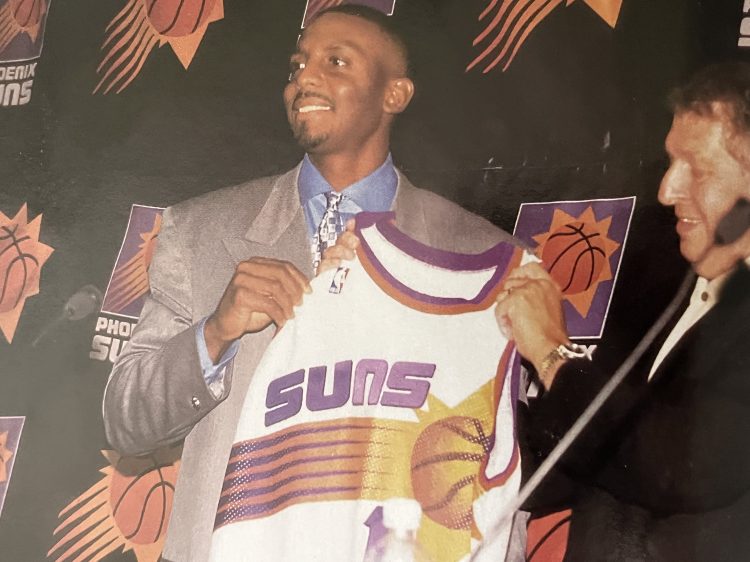
Question: Did the opportunity to play with Jason Kidd playing to your decision at all?
Hardaway: Oh definitely. Jason, by far, to me, is the best point guard in the NBA. He’s a great guy. He’s very unselfish. I’ve known him, and I’ve had a relationship with him before even thinking about coming to Phoenix. I’ve always thought in the back of my mind that I wanted to play with a point guard of that magnitude. Not trying to disrespect anyone that ever played for the Orlando Magic, but to play with a guy like that is heaven, and I can’t wait until the season starts.
Question: Obviously, you and Jason are going to make one of the best backcourts in the league. Can you talk about what that will mean to the team?
Hardaway: Well, I think you said the bar is set right now very high for what we want to achieve as a backcourt. I think going into every game, we have an advantage being above 6-foot-4 and having a height advantage over a lot of guards in the league. We’re going to really take advantage of some opportunities this season, and the fans are going to really love that. I don’t think they’ve ever had two guards that can play more than one position here and do it well. So hopefully I can complement Jason well, and he can complement me well, and we’ll just go along with the flow like that.
Question: The last couple of years, you’ve had some injuries. Can you talk about what it was like to go through that?
Hardaway: Well, getting injured, first of all, I have never had an injury before I came to the NBA. Getting injured really brings you back to reality. You take a lot of things for granted. Just playing basketball games, I took that for granted. And now, coming back for a second time around, coming to Phoenix, I’m really going to take advantage of all the opportunities that I didn’t take care of my first six years. After all of the injuries, I feel blessed to be back healthy right now, and I’m looking forward to starting a new career here.
Question: Can you talk about your play last season. Were you still recovering from your previous knee injuries?
Hardaway: I think last year, I was really protective because I had been out for a season and a half, and I really didn’t want to get injured again. So I played more protective of my knee, and I wasn’t the same player that I was in 1995. But working out this summer and feeling really good, I think that I am back to where I was, and it couldn’t come at a better time playing with a guy like Jason.
Question: How much of a personal drive do you have to get back to that level you were at a couple years back?
Hardaway: You know, I’m fighting for that. That’s what I think about every day. I want to get back to first team All-NBA. Injuries hampered that for a while, for a year and a half, and this past year I didn’t play as well. I’m going to come into the season playing harder. I’m healthier than I’ve ever been. My legs are stronger because I got a nice leg workout going, so the Phoenix Suns are going to get a healthy Penny Hardaway. And hopefully that means a lot.
Question: How do you assure the fans in Phoenix that those [injuries] were just bumps in the road?
Hardaway: Well, the only thing I can say is that nobody’s perfect. I can take everything that I did in the past and leave it there. I am coming to a new city, and hopefully they will embrace me because I will embrace them. They’ll have to judge me for themselves. What happened in the past, I can’t do anything about.
Question: You had a lot of success when you arrived in the NBA. But would success now mean more to you than it did then?
Hardaway: I think so, because I was so young [in Orlando]. I was just out there playing ball. When we went to the finals in 1995, we didn’t really know why we were there. We were just playing basketball. Now I understand what it takes to get back there. It’s just a matter of going back there and, if I had the opportunity again, I would do many things differently. Being so young, we were very talented, and we played off school, but we didn’t playoff common sense, you could say. The Houston Rockets had a veteran team, and that overcame our talent in the end. And the next time we go {in Phoenix], I’ll know what to do. I’m sure I will.
[Just to close the loop. As major as the Hardaway signing was for Phoenix, it never amounted to Western Conference dominance. The main reason: chronic injuries. In the 1999-00 season, Hardaway did indeed form a dream backcourt with Jason Kidd, averaging nearly 17 points, 5 assists, and 5 rebound per game. All those numbers likely would have been much higher, except Hardaway spent the regular season tending to a bad case of plantar fasciitis on his right foot and missed 22 games. Hardaway excelled for the Suns in the 2000 playoffs, but In May 2000, he had major surgery on his left knee. The surgery, a controversial microfracture procedure that he kept hush-hush, had an average recovery time of a six months that kept him sidelined in the preseason. While still on the mend to start the season, Hardaway made headlines for domestic violence, reportedly wielding a gun at his live-in girlfriend during an argument. Because tendonitis had now flared in his repaired knee, Hardaway appeared in just four regular-season games in January, and that was it for him during the 2000-01 season. In Phoenix, the bloom was off the Suns’ free-agent rose. Hardaway, entering his 30s and unable to turn off the constant ache in his left knee, would spend two more lackluster seasons in Phoenix before being traded to the New York Knicks during the 2003-04 season.]
 From Way Downtown