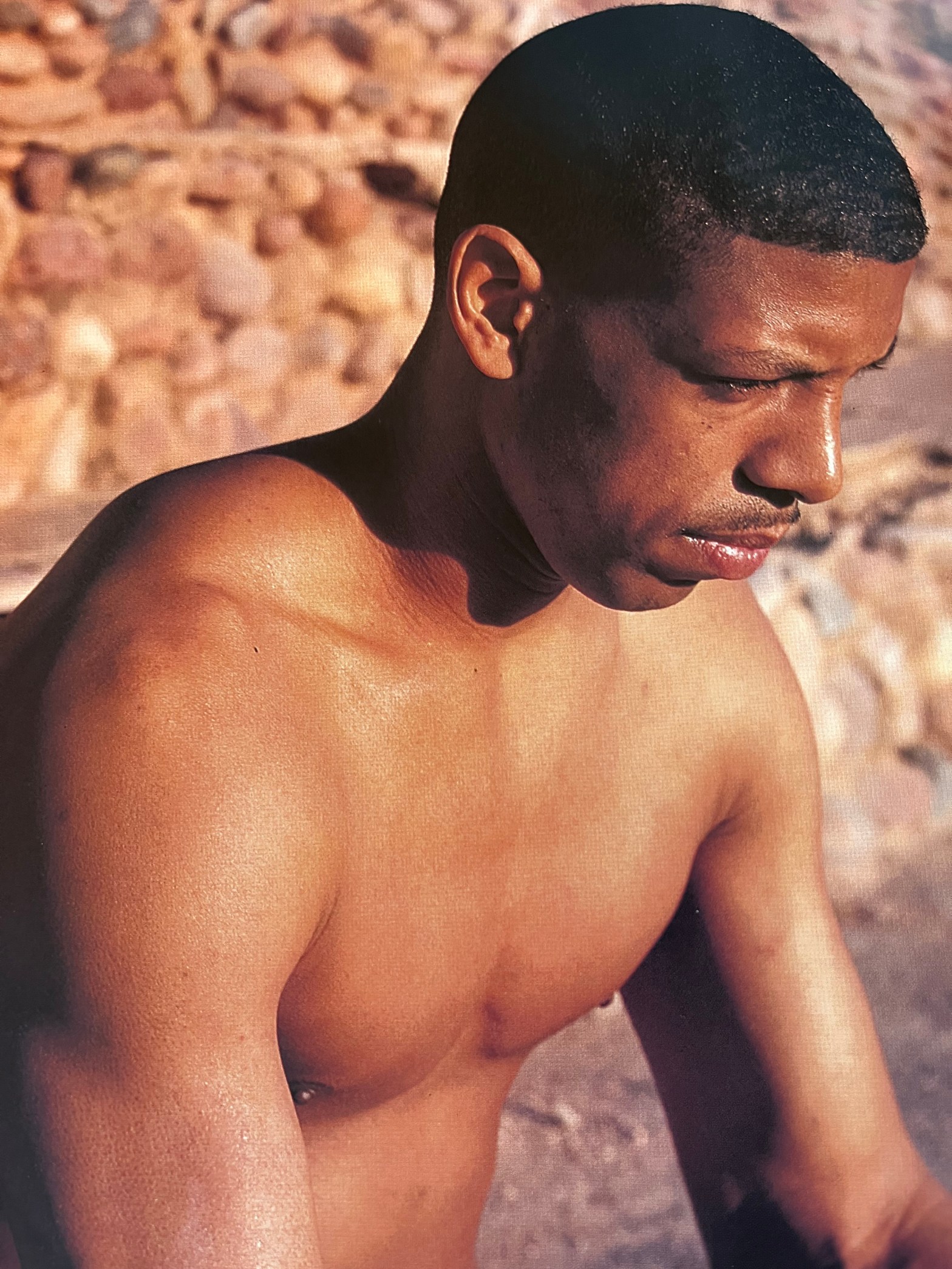
[Here’s a Q & A with Phoenix’s Kevin Johnson during his final go-round the NBA. The interview is long and multidirectional, so I’ve condensed it to just the big-picture questions and answers that readers today might find interesting, especially if you’re a Suns and/or Kevin Johnson fan. The Q & A ran in the 1997 playoff edition of Fastbreak Magazine, a.k.a., the official magazine of the Phoenix Suns. Handling the Q’s is writer Jeramie McPeak. But first, McPeak taps out a nicely done intro. Let’s start there.]
****
“How many questions you got?”
“A lot,” I answered.
“All right, then you’re gonna have to roll with me. I’ve gotta run a little errand before we leave.”
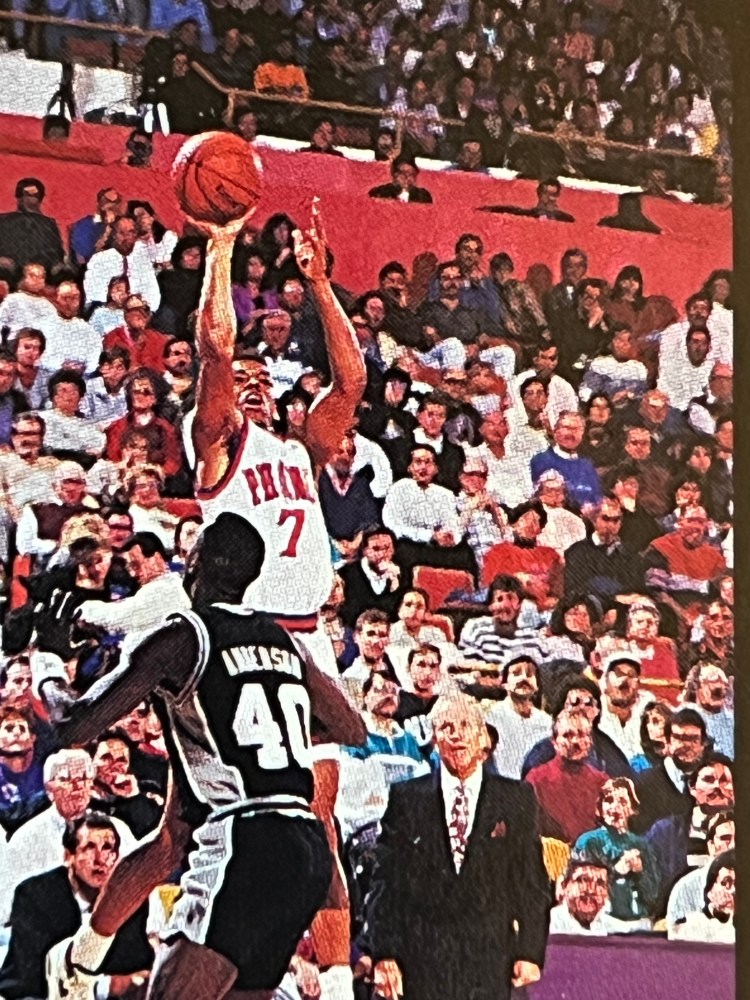
It was late March, and the Suns had just finished a short walk-through at the America West Arena. In about an hour, they would board a bus that would deliver them to their awaiting charter at Sky Harbor International Airport. They had an appointment with the Rockets the following night. But first, Kevin Johnson and I were supposed to hook up for a one-on-one interview. I wanted to sit him down and talk about his career, about the dreaded “R” word and about “What’s next?” I never imagined, however, that he’d do the sitting anywhere else than in front of his cubicle in the Suns’ locker room.
“So, where we goin’,” I asked as we glided up the ramp of the Arena’s parking garage and out onto Jackson Street in his slick black Land Cruiser.
“You’ll see,” he said with a coy smile.
As we traveled north on Central Avenue, I began to think maybe we were heading for a tiny coffee shop or perhaps a bookstore, two of his favorite places to relax and escape the limelight that comes with being an NBA star. But then he veered off the main road and turned down a bumpy alley. After parking in an empty lot behind some small buildings, he led me through a back door and into an old-fashioned barber shop—Uncle Jed’s Cut Hut.
A few young guys, probably 18-20 years old, were the only people inside. They smiled and slapped hands with their older friend as he sat himself down for a little trim—he had to get fixed up, the next night he would be playing his last game in Houston of the year. Make that, the last game in Houston of his career.
****
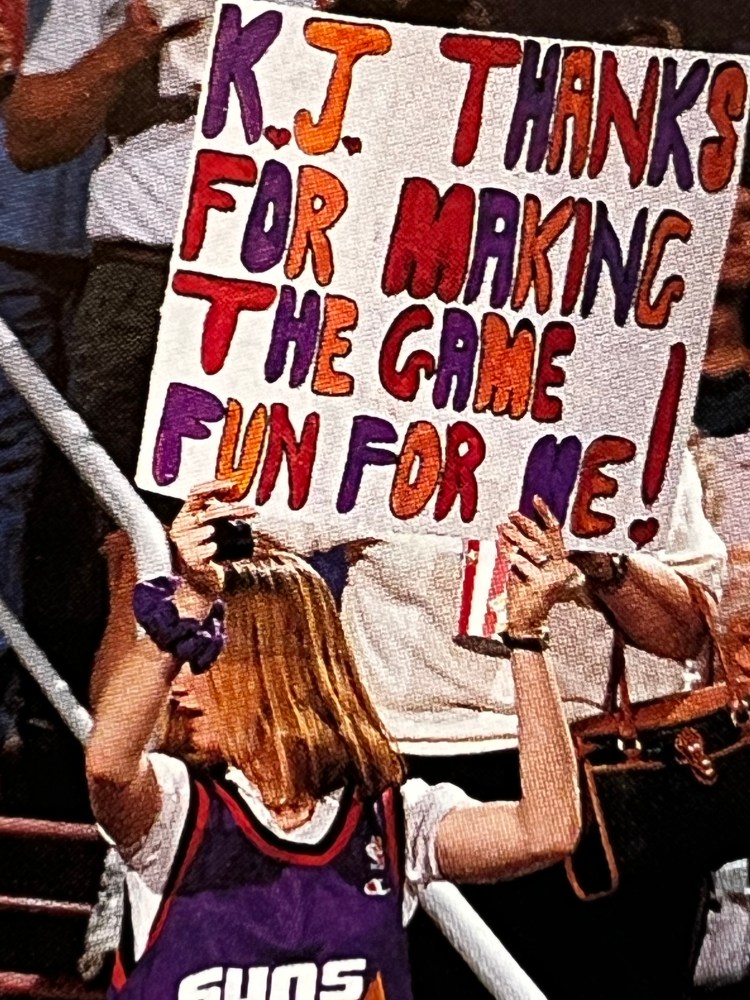
Question: Why are your instincts to walk away after 10 years?
KJ: I just felt all along that if I could get a certain amount of years in the league, have great years and still have my health when I walked away, that would be great. You know, I want to be able to run around with my kids someday and not have to ice my legs for three or four days. Health is such a delicate thing that I would really like to have. And another reason why I got to this point was that I’ve been injured previously for so long—those four years consecutively—that the rehabilitation and stuff just got so frustrating for me. It was something that I just don’t want to keep on doing at that same pace. And then, lastly, it’s always been a personal goal of mine to be able to walk away and not play just for the money and be at the top of my game.
Question: But don’t you think you could play another year or two and still be at the top of your game and still have your health?
KJ: I think I could play another year or two and be at the top of my game, but the health part—I can’t speculate on that. I mean, only the Lord knows that. I just have always felt that after 10 years, I’d have another challenge to embark on. I don’t know what that is today. I’m glad I don’t know what it is because it would probably be a distraction. I really want to focus on the season and getting into the playoffs and hopefully make a dent.
Then I’m hoping sometime during the summer, I’ll get an inkling of what my next mission may be. It may be to just rest the year, it may be to go back to school, or maybe start another [KJ’s educational nonprofit for underprivileged kids] St. Hope somewhere. I don’t know what it will be, but at this time I don’t have it yet. And during the summer, it will be that time for soul-searching.
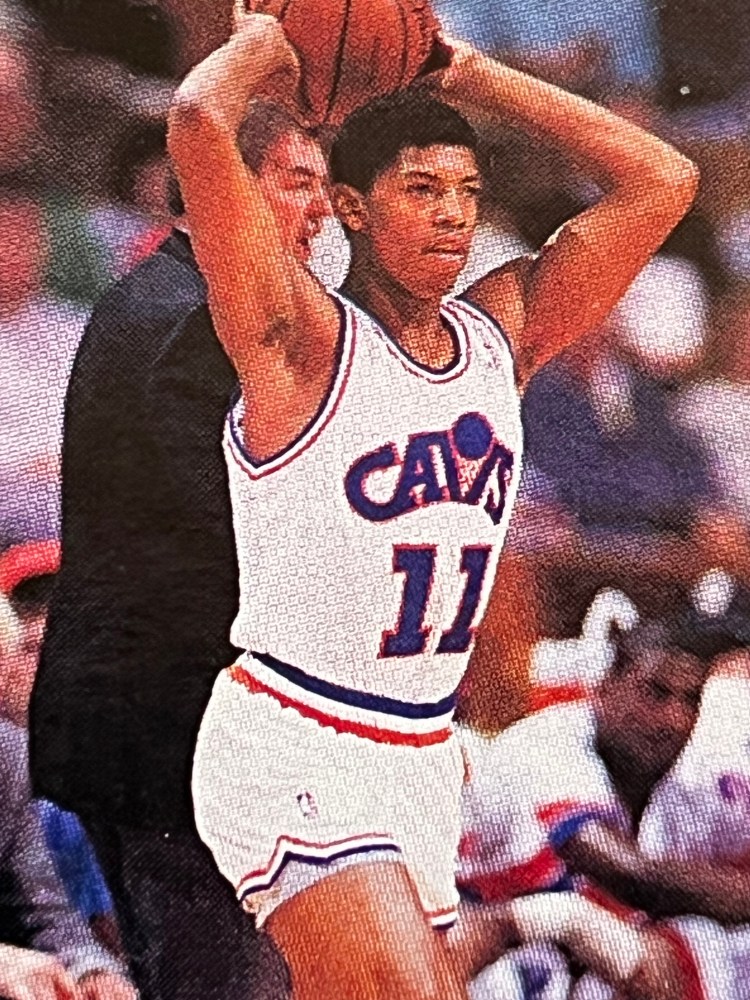
Question: Let’s go back to the beginning. When you were first drafted by the Cavaliers in 1987, did you have any idea what lay ahead?
KJ: No idea. To be honest, even to this day, when I look at the statistics and the success I’ve had, it’s hard to believe that I’ve done that. I think one of the reasons why I’ve been able to maintain it for so long is I’ve never rested on it. Because I really don’t think I’m that good. I mean, I’ve had to work hard to put up the numbers and to have had the success that I’ve had over the years.
I still say one of the greatest moments in my whole NBA career was getting drafted. And the reason is it gave me the opportunity to play with some of the greatest athletes in the world. To be able to fit in and excel and have some success at this level still is baffling to me.
Question: You were traded midway through your rookie season. What were your thoughts when you were heard you were going to Phoenix?
KJ: I loved it. I was excited. My body was convulsing a little bit in Cleveland. I’m from California and was used to sunshine and good weather, got out there for six gloomy months, and it was tough. When I got traded to Phoenix, it wasn’t just basketball I was happy about, it was the climate and the change of scenery . . .
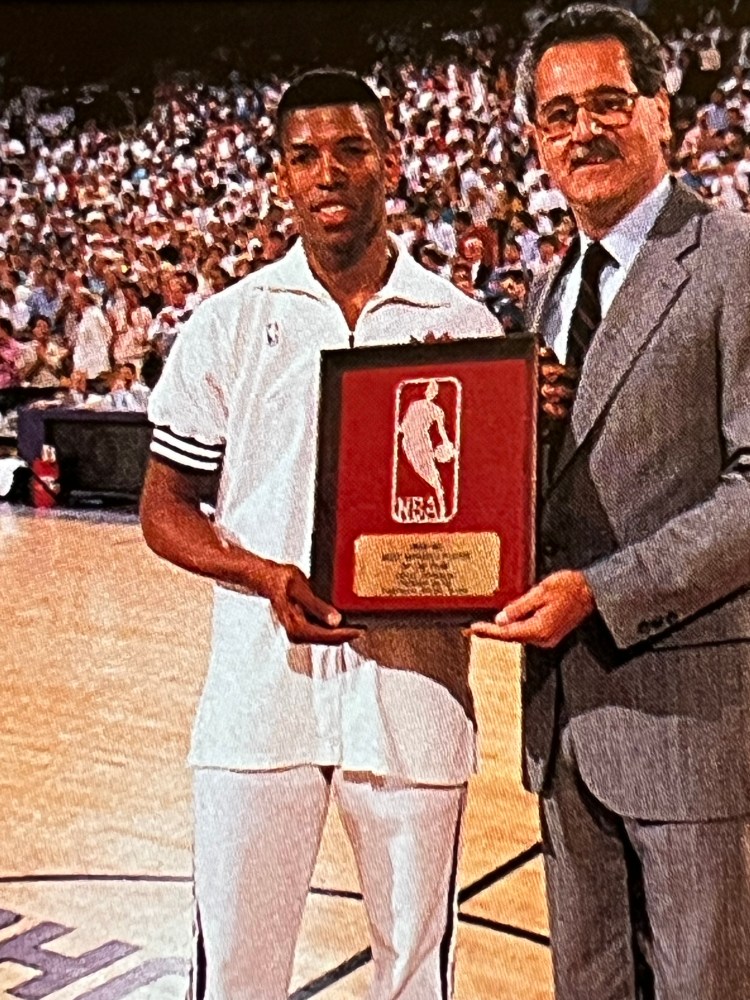
Question: You were named the NBA’s Most Improved Player during your second season as your points and assists more than doubled. What was the difference for you?
KJ: Four things. One, obviously God blessed me. Two, in Cleveland, I didn’t get an opportunity to play a lot—I didn’t necessarily deserve it either. But when I got here, I got an opportunity to play a lot, and if you have an opportunity, you’ve got to make the most of it.
Thirdly, I felt in Cleveland I didn’t let my real personality come out—I was kind of walking on eggshells. I was a rookie and kind of feeling my way through things, and I said if I ever get a chance somewhere else to start all over again, I’m just gonna go at it like gangbusters and let the chips fall where they may. That was kind of my attitude. Then lastly, it was [coach] Cotton Fitzsimmons just saying, “Here’s the ball. No matter how many mistakes you make, we’re going to ride you as far as we can—good, bad, or indifferent.” And you know, that kind of confidence at a young age really meant a lot to me.
Question: For three consecutive seasons, you averaged better than 20 points and 10 assists a game. Only three other players in the history of the game have accomplished that feat. In fact, only Tim Hardaway has pulled off a 20-and-10 season since, and he only did it once. Do you realize just how amazing that was?
KJ: Yeah, you know, if I’m looking at me doing it, it’s no big deal. It’s just my job, and you do what you have to do. The numbers or whatever happen or don’t happen. But as you get older, you kind of get a little more nostalgic, and you look back at the situations a little bit differently. I look at some of the statistics I’ve been able to put up and, if that was another point guard, I wonder what would I think. To put up 20 and 10 is impressive, but 19 and 9 or 18 and 8 for eight or nine years—there’s something there. To be a part of that, to be able to do that is something that, again, I’m very appreciative about.
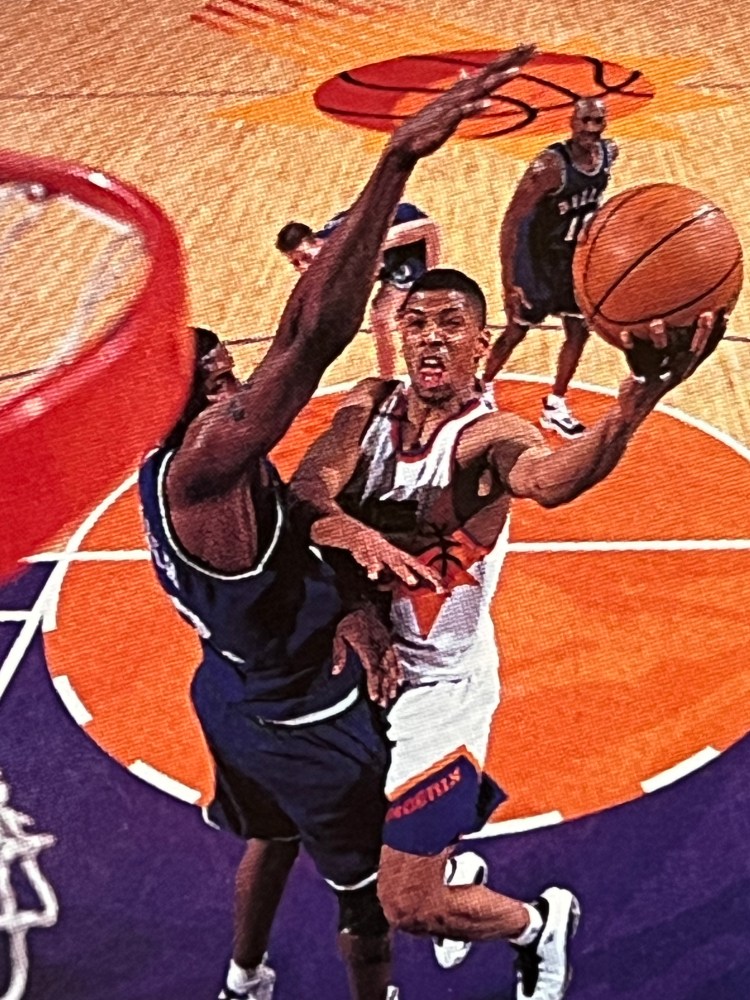
Question: Like you said, you’ve come close to averaging 20 and 10 for nine years now. Yet for some reason, it seems like you haven’t gotten the recognition that you deserve as one of the best point guards in the game. Do you have any opinions as to why that is?
KJ: That doesn’t bother me because if I won a championship, which is my goal, then no matter what kind of recognition you get—or don’t get—it wouldn’t really matter. But the reason why some of that happened is, I think, my second, third, and fourth years, I took over the NBA kind of like by storm—a kid out of nowhere. Putting up 20 and 10 and leading a team to 50-plus wins, the Western Conference finals, beating the Lakers and the whole bit—and then for some reason the next three or four years I had been injured. I think the expectations that not only myself, but other people had, for me weren’t able to be met. Durability and longevity are very important as it relates to carving your name alongside some of the great point guards to ever play the game. Unfortunately, I’ve been robbed a little bit of that. But when the dust settles, we’ll see where I stack up.
Question: You mentioned the injuries. Not only have you not been given the recognition you deserve, but you were criticized quite a bit during those three or four years of injuries. How hard was that on you?
KJ: I think it was hard more so for my family. It was frustrating for me personally because I couldn’t get out there and play. The criticism—I could live or live without. I mean, how do you criticize somebody for getting hurt, that’s pretty ridiculous for me. But the frustrating part for me was the rehabbing over and over again, spending two-thirds of my season for three or four years rehabbing physically and psychologically.
The other part is not being able to be there for my teammates night in a night out, where they could count on you. And knowing because I’m not out there, the team’s ultimately not going to reach the level that it was capable of reaching. That was what was frustrating—but not what was said.
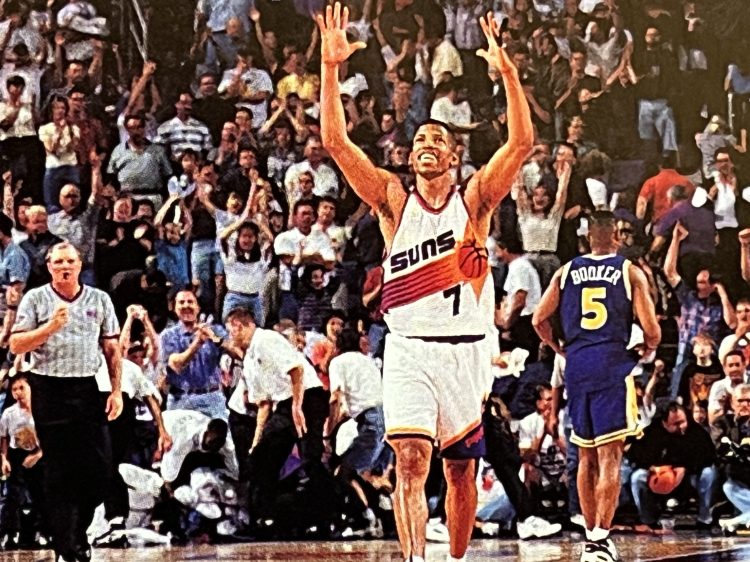
Question: You talked about your game changing over the years. This season, you’ve added the three-pointer to your arsenal. In fact, with only a few weeks remaining you’re contending for the three-point accuracy title. Why have you started shooting more this season and why didn’t you earlier on?
KJ: You know what? I don’t really know how it happened. I always felt decently comfortable shooting threes but never shot very many and, to be honest, my percentage was probably 28 percent. But a lot of those weren’t normal threes—there were a lot of full-court and half-court shots or bail-out shots. But when I took a three and got a good look, I usually hit it.
Another reason I never shot many threes is we had so many guys who shot threes—Danny Ainge and Dan Majerle, Eddie Johnson and people like that. That was one of our strengths, and I didn’t want to make it one of our weaknesses. As things evolved the last couple of years, because I shot so many times . . . and was a threat if I started shooting threes, [but] there would be other possessions where I would shoot the ball and would not get guys involved. Whereas now, I just pick my spots. I mean, sometimes I look to shoot threes, sometimes I don’t. It’s basically what the team needs, and I think it’s just another added weapon for not only my game, but our team.
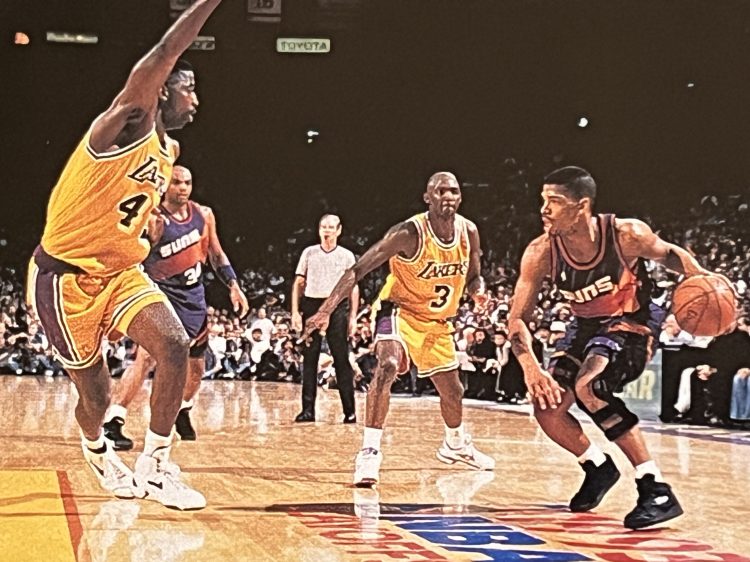
Question: What are some of your best memories of the past decade?
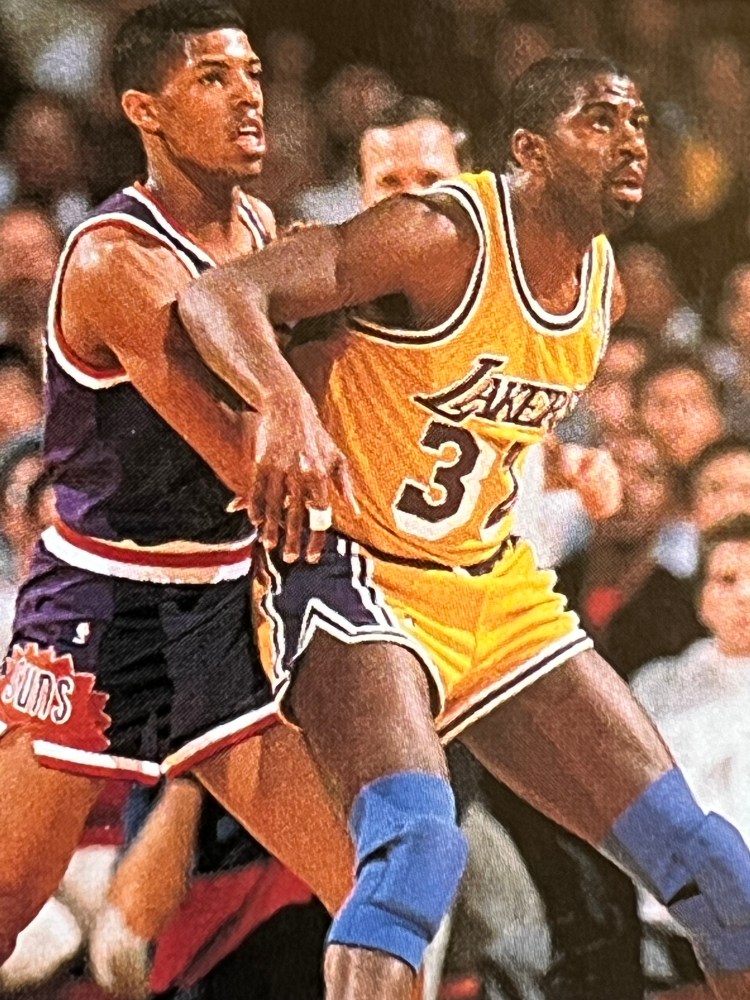
KJ: Well, I loved the Madhouse on McDowell {Arizona Veterans Memorial Coliseum]. I had a great time over there . . . There was a sense of innocence for all of us at the time—the young bucks with a couple of veteran players. One great moment was beating the Lakers in the semifinals. We beat them 4-1, and we beat them pretty handily. They weren’t injured and had all their players. I mean Magic, Kareem, A.C. [Green], Worthy, and Byron Scott—they had their five best, and we beat them twice on their own court, which was an amazing accomplishment.
Again, being drafted was a great memory. Being selected Most Improved was a special individual award, because when I speak to young people, I always try to tell them it’s not where you start but where you end up. It’s all about improving.
Paul Westphal’s prophetic statement about beating the Lakers when we were down 0-2 in the 1991 playoffs. He said, “We’re going to win the next game in L.A., and we’ll come back and win Game 5, and everybody will say what a great series it was.” That was truly one of the most special moments of my career. Playing in the Finals was another one. There’s nothing like it. I’ve played in a lot of basketball games at a lot of different levels, and nothing’s like the Finals . . .
Question: How about the worst moments?
KJ: There were probably three that were difficult. When I got hurt the first time with a hamstring injury against Portland—it was in game five or six at home—because we really still had a chance to get back to the Western Conference Finals and [NBA] Finals, and that was kind of the beginning of my injuries as well.
Obviously, the shot that John Paxson hit is another one. You know, I can still see that as if it was just yesterday. And the other moments were probably those Houston series, both of them when we were up pretty handily and had a chance to really control the series and play them out. We didn’t, and they go on each of those years to win an NBA title. It was a little frustrating.
Question: Let’s talk about the relationships you’ve had with some of your teammates throughout your career?
KJ: I’ve had a lot of them. You know, my two closest friends have probably been Mark West and A.C. Green. But the closest I was to all my teammates was probably, again, that old Madhouse on McDowell era with Jeff Hornacek, Tom Chambers, Mark West, Eddie Johnson, and that whole group. I mean, those were just some fun times, and we really had a great team chemistry and played very well as a team. Since then, we’ve moved into the Purple Palace, and there’s been great memories but, for some reason, whether it’s my injuries or expectations or things not being fulfilled, it’s just been a little more frustrating. It’s not quite as special as it was in those early days.
Question: You’ve given a lot to the game of basketball. What would you say the game has given you?
KJ: An excuse to not hold a real job for 14 years, 10 in the league and four in college. Financial independence where I’ll never have to worry about where the next dollar is coming from for my family or my children or even their kids. It’s provided me economic independence for two, three generations, and it’s been a tremendous platform to let people know I serve Jesus Christ.
Question: Are you going to miss playing?
KJ: Definitely. You know, when you come to the end of your career, you realize how much you love this game and how special it is. Sometimes you can get soured a little bit, whether it’s injuries, some of the criticisms, or the team’s not doing as well. But with all that said and done, this has been a great 10 years, and I’ve truly been blessed to be able to play.
 From Way Downtown