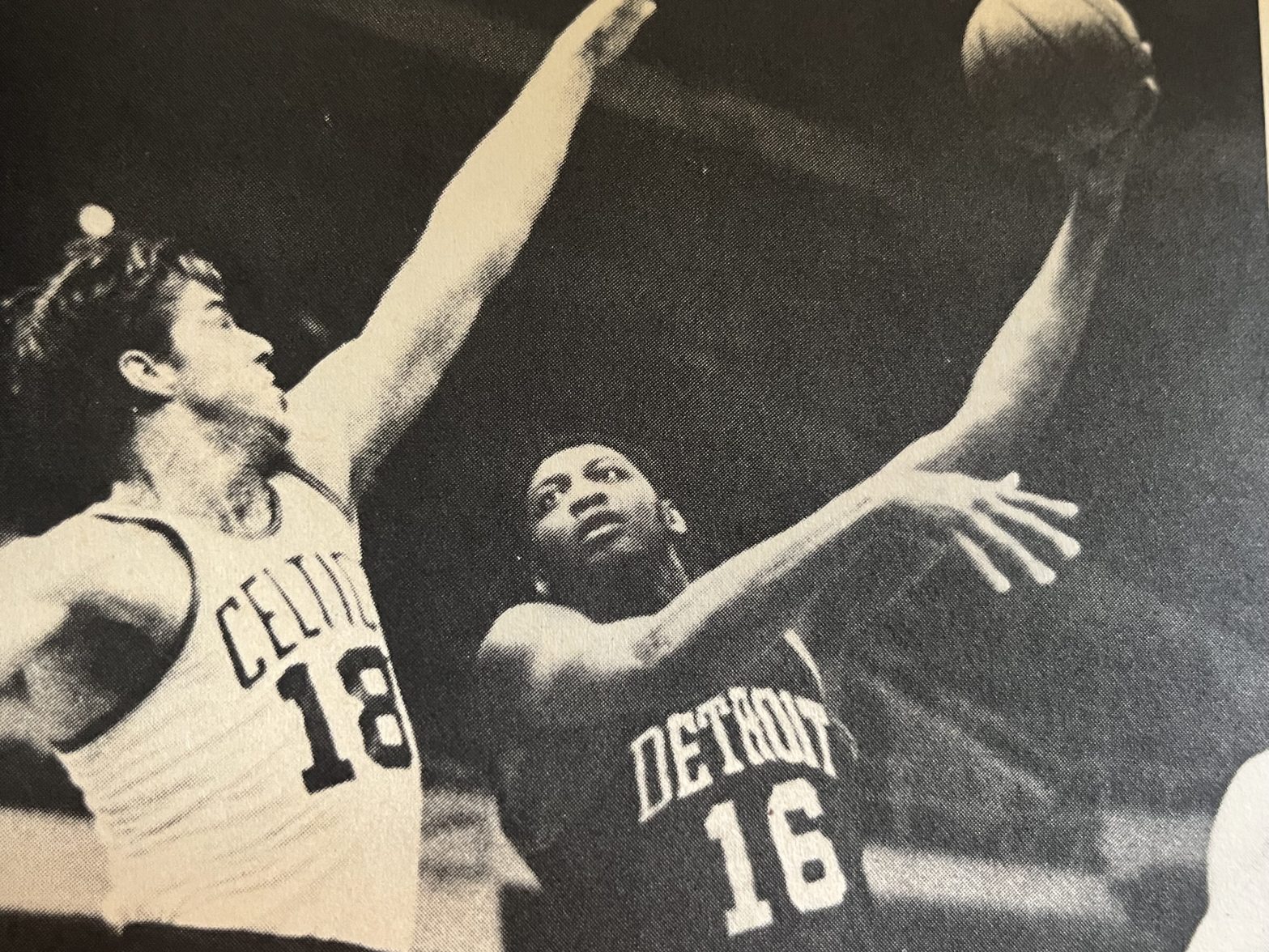
[The late Bob Lanier spent 14 seasons in the NBA, finishing up in 1984 and standing at the lectern in 1992 for his induction into the Naismith Basketball Hall of Fame. But as great as his career was, the brawny, 6-foot-11 Lanier didn’t hit the ground running, literally or figuratively, as a rookie with the Detroit Pistons and the first player selected in the 1970 NBA draft.
Lanier had surgery on his right knee after college, slowing him down considerably for months afterwards. In fact, Lanier spent most of his rookie season coming off the bench, weathering a growing chorus of boos, ignoring questions about his weight and poor conditioning, and deflecting rumors that he’d soon be traded to his hometown Buffalo Braves. According to his harshest critics: Big Bob would be a big bust in the pros, just you wait and see.
What follows are four articles that guide you through the ups, downs, and final rise during Lanier’s rookie campaign. Our first guide is Mike Morrow of the Associated Press. Here, he’s writing in the December 1, 1970 issue of Basketball News. Morrow is bullish on Lanier, bad knee and all. Note the classic Wilt Chamberlain quote to come.]
****
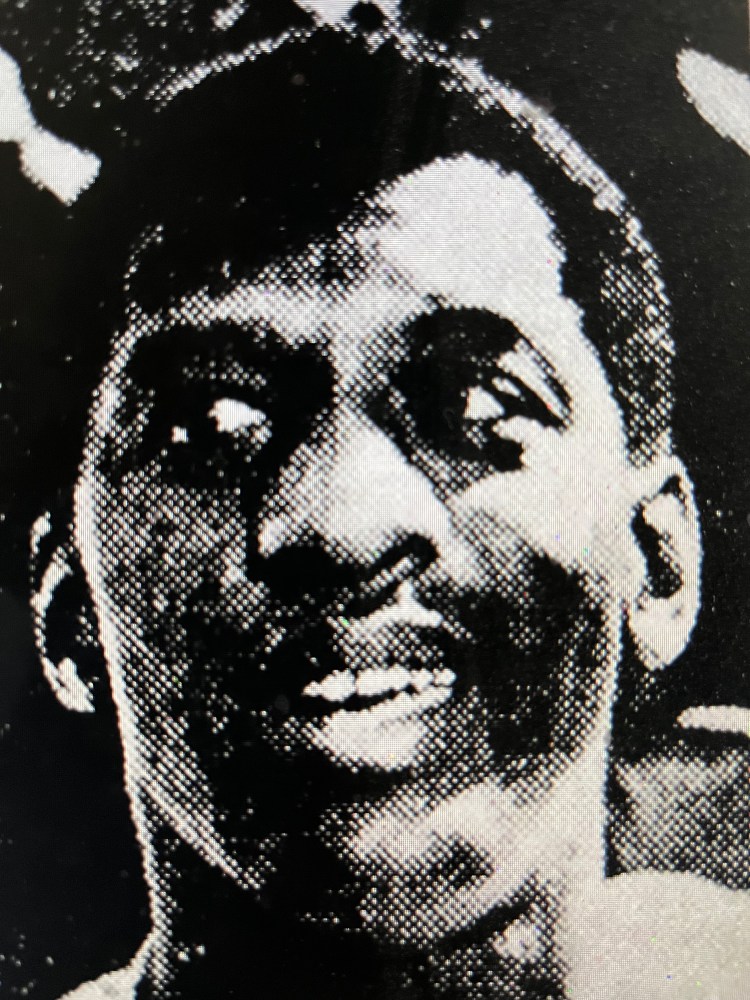
“He’d make a helluva bodyguard,” Les McCann, the jazz pianist, says about Bob Lanier, the Detroit Pistons’ rookie center.
McCann, a well-known Laker fan, was sitting at the bar at Shelley’s Manne Hole in Hollywood, waiting to open a two-week performance with his popular group. “My man says he’s gonna be a great player, and you know my man is never wrong,” added McCann. His man, in case you don’t know, is Bill Russell, and while McCann has not yet seen Lanier play, he’s already given him the stamp of approval.
“He’s apparently having problems with his knee, but he looks like a real good one,” is the evaluation of the Lakers’ Jerry West, who has seen Lanier play.
“He’s still learning, but when he gets adjusted to this style, he’s gonna be a real tough one,” says Wilt Chamberlain. “Right now, I could score 60 points a game against him. He’s got a lot to learn. He makes mistakes. But a guy with his size, his ability, and his attitude can’t help but be a big star.” And Wilt made sure there was no pun intended (Lanier is big, 6-feet-11 and 280 pounds).
“He wants to learn, that’s his biggest asset right now,” says Pistons’ coach Butch van Breda Kolff. “He’s played well, but he’s not satisfied. I like that in a player. He’s always trying to improve himself. He’s going to be a great player.”
So far, Lanier has played to so-so reviews because of his bad right knee and also because he’s still only a part-time player. Van Breda Kolff uses him in the second and fourth quarters, a maneuver which Lanier does not particularly go along with. But neither does Otto Moore, the other center.
“Sure, I’d like to be playing more,” says Lanier, “but I know what the coach is doing is right for now. I’ve got to be brought along slowly. It’s for my own good.”
Somehow, you imagine Lanier is reading from a prepared script. You want to ask him what he REALLY thinks about the situation. “I’m not happy with my progress,” he says. “I could be doing better. Both Wilt and Lew (Alcindor) did whatever they wanted against me. I’ve got to figure out some way to contain them. Wilt is so overpowering, while Lew uses his finesse. They’re two entirely different players.
“One thing that annoys me is the way those guys get away with things. You try to play defense, and the officials blow the whistle at you. It seems the officials are calling things against us that they don’t call against the other guys. I know that Bingo (Dave Bing) and myself get fouls when they mean a lot, when the important plays come. It happens over and over, so I know it’s just not happening.”
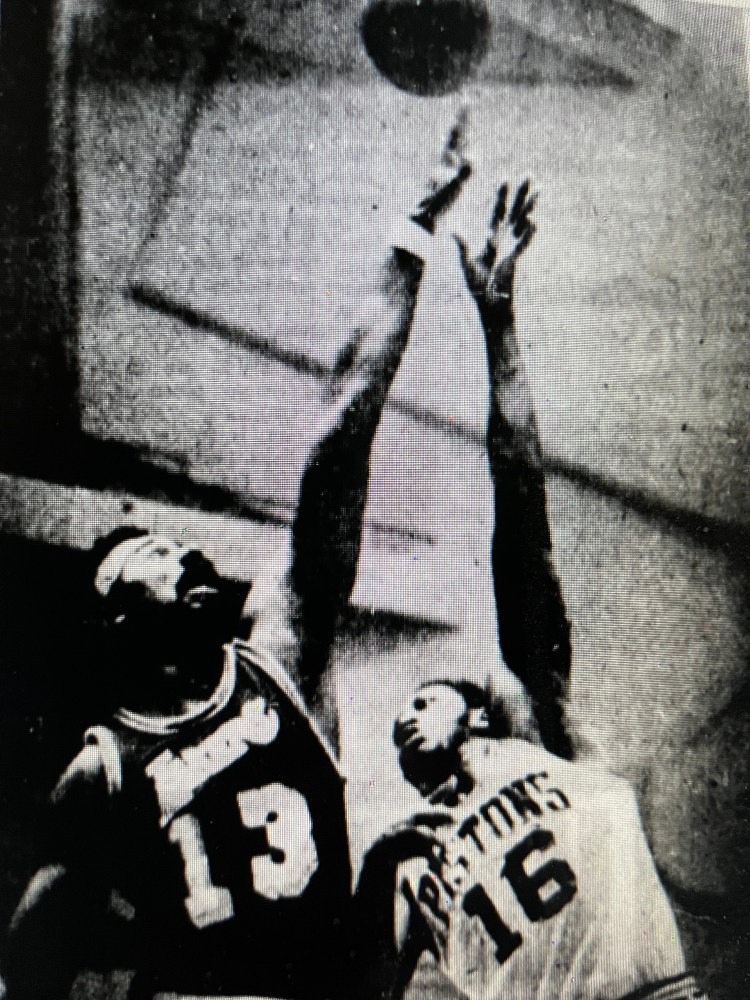
Lanier says his knee, first injured during last year’s NCAA playoffs, is responding well to treatment. He laughs at some reports that he is still injured, that he is overweight, and that he is unhappy in Detroit. “People get these ideas when they see me after a loss. Heck, no one is happy after a loss. Reporters are just trying to create problems,” Lanier said.
“My knee is not 100 percent, but it’s coming around, slowly but surely. I’d rather have it come around slowly than have to hurry it along. Coach feels the same way.”
Overweight?
“What’s overweight?’ asks van Breda Kolff. “He’s 280 now. Last year, he played at 290, and no one said anything about him being fat. Look at him. He’s not fat. He’s just a big individual.”
Unhappy?
“Only when we lose,” says Lanier.
The Pistons have had problems, of course, with the play of their pivotmen. Moore, a skinny, 6-foot-11 kid from Pan American, is playing very well, but he does not have the stamina or the stature to go 48 minutes. Should Lanier develop, you might look for Moore to play one of the forward positions on occasion.
“What they’ve lacked at the position is a winning attitude,” says one observer. “A guy can have all the talent in the world, but if he’s not a winner, then forget it.”
Walt Bellamy was the Moore-Lanier predecessor at the position, but he was traded. Why? Someone asked van Breda Kolff what the Pistons got in exchange for Bellamy. He replied: “Peace of mind.”
Bellamy had the talent, but it takes more than that, obviously. “Lanier is a winner,” says Lakers’ coach Joe Mullaney. “You can see it’s in the way he plays the game. He’s real mobile, he has a lot of grace, and he knows what to do with the ball. I imagine his leg has prevented him from being in top shape. Plus, he can’t put a lot of pressure on it. But he’s faking real well, and his fakes are genuine. When he beats you, no one is going to get in his way.
“Lanier shoots as well as Willis Reed, and he goes to the basket real well. He has to learn what to do with himself. When he does, wow.”
Lanier has a surprisingly accurate shooting eye. He’s not reluctant to take one bounce and shoot from 20 feet away. Nor is he reluctant to stand out there, fake a shot, and drive by the defender. His best shot is the soft left-handed jumper, but his smooth hook shot and his close-in shots aren’t bad, either.
Defensively, he appears a little shaky. A player like Chamberlain or Alcindor or Nate Thurmond could score at will. All it takes is a fake here or there. Like Lanier says, he’s still learning.
“Willis Reed has helped me,” says Lanier. “He’s a lot like I am, and he hasn’t really given me a lot of trouble. I’m not disappointed, because he says the guys that are giving me trouble are the guys that give him trouble.”
Defense is mostly anticipation, and Lanier does not know what to expect from people. He’ll learn. And when he does, wow.
“Don’t judge him right now,” says van Breda Kolff. “Wait, huh?”
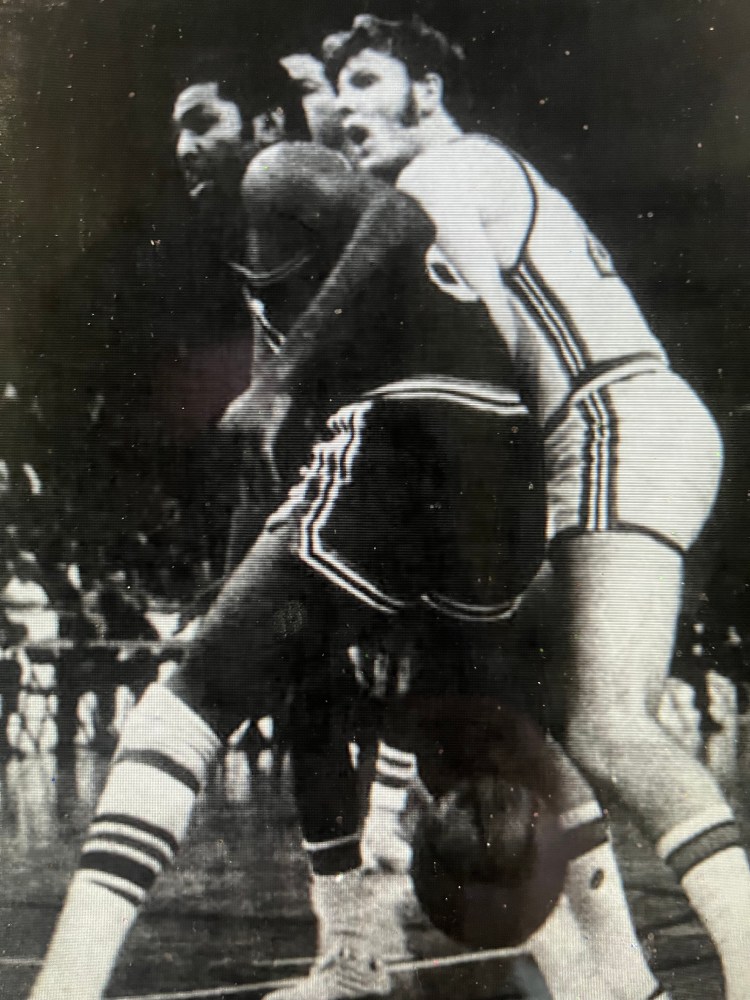
[Over the next several weeks, the Detroit fans ignored van Breda Kolff and started judging Lanier. The great Bill Falls of the Detroit Free-Press explains the popular verdict in a column that appeared in the newspaper on January 26, 1971. The headline that ran above his column reads: Is Bob Lanier a $1,000,000 Bust?]
Is big Bob Lanier turning out to be a “million-dollar bust” for the Detroit Pistons? Admittedly, this is a pretty blunt way to put it, but it’s a thought that has to be on the minds of the Pistons’ management. They’ve shelled out more money for this man than any player in their history—who really knows how much? But with the season more than half over, Lanier is no better, physically, than he was at the start of the campaign.
And those rumors that he may be traded to the Buffalo Braves at the end of the season may not be so wild, after all. Ed Coll, the [Detroit] general manager, was denying them in Cobo Arena Sunday afternoon, but that’s only to be expected. If he did anything else, it would show how much he knows about general managing. But no matter how they try to cover it, the Pistons have been disappointed in the play of the 6-11 giant from St. Bonaventure. They won’t admit it because it wouldn’t do anyone any good at this point.
Lanier’s morale is involved, plus the rest of the season, plus the playoffs, and this is no time to be rocking the boat. The truth is, though, that Lanier has not been playing nearly as well as the Pistons expected. He has a few good games, then he comes up with some real “bombs”—as in Sunday’s lackluster effort in the 117-105 loss to the New York Knicks.
It is simply a great effort for Lanier to make it up and down the court. He doesn’t limp, but it is a constant labor for him to make it around. He seldom goes up for a rebound, almost never uses his weight under the boards.
The Pistons may guard their words about him, but the fans aren’t being fooled. They’ve been booing the big guy in recent games, and they got on him several times in Sunday’s game. Once, in the first half, when Lanier finally went up for a rebound and got the ball, the crowd jeered derisively. Later on, somebody threw a tennis ball at him as he was standing guard under his own basket.
The tough thing to determine is how much of his ineffectual play is the result of his knee injury and how much is because he is not in shape yet. It is probably a combination of both. It’s a rather weird situation. He is not in shape, and the only way he can get in shape is to run himself into shape. But his knee won’t let him run, and so he can’t get into shape.
Even the players on the Knicks can see what’s happening with the big guy. They were asked what they thought about Lanier, and while there is an unwritten law that you never knock one of the lodge brothers, they zeroed in pretty well on some of Lanier’s problems.
Dave DeBusschere, still the honest character, said: “It’s only my personal opinion, but he’s just got to lose weight. He is just too heavy. This game isn’t like college ball, where you play only a couple of times a week. You go almost every night in this league, up and down the floor, and it can get to be a pretty trying experience.
“You can see he has great ability, but he just has too much trouble moving around. Look at Willis Reed on our team. He’s a big man, but he goes only 240. Lanier had to be carrying an extra 20 pounds, and it’s got to hurt him.”
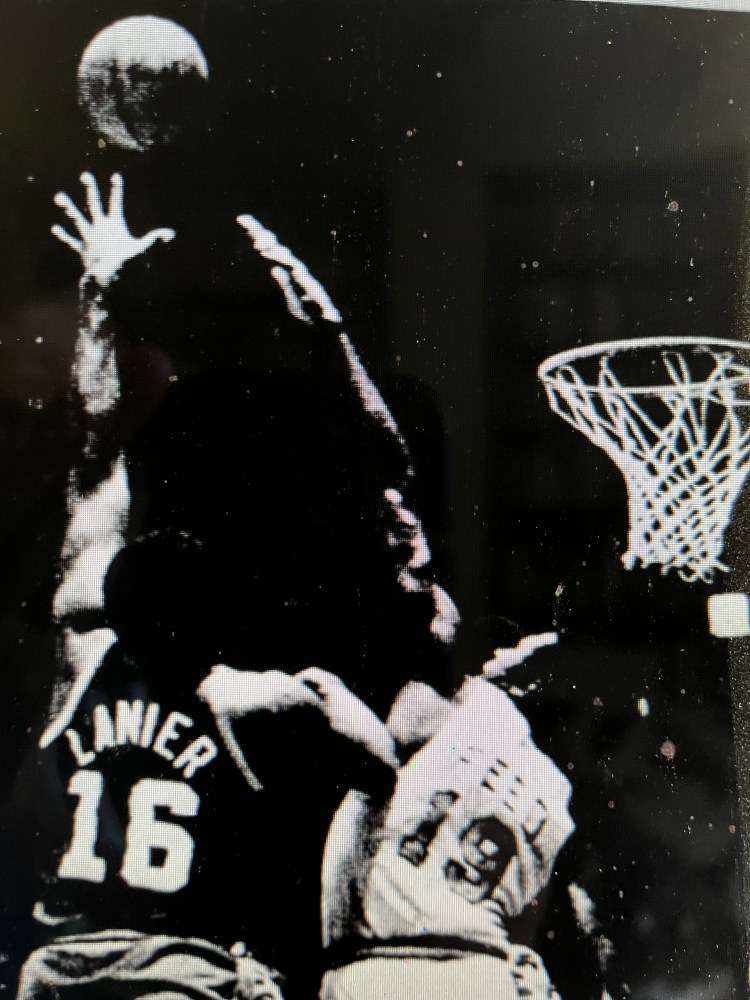
Reed, the premier center of the Knicks, blamed Lanier’s poor play on his gimpy knee. “Listen,” said Reed, “it’s a tough enough thing to come into this league when you are completely healthy. You’re always going up against seasoned vets, and it’s not easy. He’d have trouble adjusting on two good legs.
“But he is nowhere near the player he was in college. I know what he can do. He came to my summer camp, and I saw how he could play, those great hands, those quick moves. He doesn’t have those now, and it’s got to hurt his confidence.”
Cazzie Russell added, “All I know is he’s got to move better than he has—he just can’t seem to get going.”
The curious thing is that skinny Otto Moore is saving the Pistons—saving their center position and even saving Lanier from further embarrassment. Who would have thought that, after 52 games, Otto Moore would have played more minutes than Bob Lanier. It’s true. Otto has been in for 1,266 minutes, Lanier for 1,248. They’ve got the same shooting percentage (44 percent), Moore is outrebounding him by nearly a hundred rebounds (502 to 418), and Lanier’s only edge—the reason he had a 15-point scoring average to Moore’s nine-point average—is that Lanier has been more deadly from the foul line.
At the start of the season, coach Bill van Breda Kolff alternated the two men, splitting the time almost equally. It was thought he was doing this to give Lanier’s knee a chance to come around slowly. But now, nearing the end of January, they are still splitting the time down the middle, and Moore has been far more consistent than Lanier. Only Otto’s slim physique keeps him from playing more.
According to Dr. Russell Wright, the Pistons’ team physician, Lanier’s knee is “85 percent normal.” He said he had “great hopes” that the big guy will make a complete recovery. Dr. Wright said that Lanier has been working out in his gym up in Highland Park two or three times a week. He said, “His attitude is good, and he really wants to play.”
Dr. Wright admitted, though, that Lanier’s weight isn’t where it should be. He said he started out at 278 this season and is down to 263—and should be at 250. “He’s had a sinus infection, and this has hindered his breathing. His blood pressure also has been down, and so he really hasn’t been able to turn it all on yet,” said Dr. Wright.
Still, the Pistons are paying the big guy something like $3,000 a game, and while Fred Zollner can afford it, he still isn’t getting his money’s worth yet.
The question is, will he ever?
[Also in January 1971, Bob Lanier started to crack from the fan pressure, the still-gimpy knee, his own frustration with his play, and the rumors of an imminent trade. In this article, published on January 31, 1971, Lanier sings the rookie blues to Curt Sylvester, the Detroit Free-Press’ NBA beat reporter. The headline: Lanier Says He Hit Rock Bottom.]
Bob Lanier is a little confused, a little angry, and a little discouraged.
He’s confused over how a man with one good knee and a six-inch scar on the other is supposed to be the savior of a ballclub. He’s a little angry over two weeks of rumors that say the Pistons will try to unload him in a trade. And he’s a little discouraged because he hasn’t played as well as he wanted to in his first season in the National Basketball Association.
But Bob Lanier, 22, the 6-foot-11 rookie center of the Detroit Pistons, is not ready to throw in the towel . . . although a week ago, he might have felt a little differently. A week ago, he ran head-on into the resurgent New York Knicks and their veteran center Willis Reed and came out of the nationally televised ballgame with his most-embarrassing performance of the season.
“I really looked so lousy in the game,” Lanier admitted. “I was kicking myself in the butt all afternoon. I was really bad. I just couldn’t seem to do anything right. The last time we played the Knicks, I killed Willis . . . it was no contest. But this time, I was just all nervous. I don’t know what it was . . . maybe that the game was on television or something.
“Maybe it was one of those things,” he mused. “You’re just trying too hard and everything goes wrong.”
That game marked the season’s peak in mounting pressure on the young Piston center—and also his low point of the season. “Only once I gave up,” he said. “In the past two weeks, I just felt like giving up. I felt like I was a useless cog in the wheel. Right then I felt like if I was useless, they should give me to somebody who can use me. But that’s just a stage you go through.”
In addition to his bad knee, Lanier has been battling his constant weight problem, a situation that left him so weak in the 129-112 victory over San Diego Friday night that he had to leave the court because of dizziness after playing just 20 minutes. “It was just light-headedness,” he explained. “I didn’t know where I was going. I told the coach, and that’s why he took me out of the game. That started a couple of days ago.
“I was supposed to meet Bingo,” he said, nodding at teammate Dave Bing across the locker room. “But I got dizzy at my house and fell. This is about the third time it’s happened.”
Although Lanier will say that the public pressure has had no effect on his weight, he has taken his biggest drop of the season in the past two weeks. “I weigh 258 now,” he said. “People say I’m not as mobile as I should be, but I’ve been trying to lose weight. I’ve lost 12 pounds in the last two weeks, and the doctor said that three pounds a week would be good. I’ve doubled that.”
So far this season, Lanier has played in all 54 Piston games, averaging just over 15 points and just under 8 rebounds a game while sharing the center post with Otto Moore. In those 54 games, he has shown everything from brilliance to what happened in the Knick game. He just has not been consistent, and it didn’t take long for the impatient Cobo Arena crowds to get on him.
Is Lanier satisfied with his rookie season?
“No, not really,” he said. “But if my weight had been lower when I started, it would have made a big difference.”
He blames the weight problem on the knee operation, which left him unable to exercise enough to keep his weight down. “I was in the hospital and then came out of school at 280 pounds. I must have gained 10 or 15 pounds just sitting there in the hospital. I couldn’t run until I got here in August. Then I could just try to keep up with Otto a little, and Dr. Wright had me doing some crisscross running exercises to strengthen my knee,” Lanier explained.
“Everybody was assuming my leg would be 100 percent. But my doctor in Buffalo and Dr. Wright had said it would take a complete year. Everybody twisted it around . . . like I was supposed to come in here and be a superstar or something.
“All year long I haven’t been physically ready,” he added. “Next year, I’ll be ahead of the battle. If I don’t succeed next year, it will be my own fault. I’ll be ready to take the blame then.”
And how about the Detroit fans?
“This is a bad town for fans . . . it’s a strange fan town,” he reasons. “They’re for you—don’t get me wrong—but they want the impossible all the time.”
But Lanier insisted he does not want to be traded. “I like Detroit,” he said. “Eventually, I have to prove myself to the fans. I haven’t lived up to what I know I’m capable of doing. I figure my day will come. I’ll be able to do more of what I want to do then. But it’s hard because I still owe it to the coach to prove I’m ready now.”
[Late in the regular season, Lanier finally proved that he was ready. Curt Sylvester reports the story briefly on March 3, 1971 in the Detroit Free-Press. Lanier would finish out his rookie season strong, including in the playoffs.]
Bob Lanier is just like a lot of other people . . . he wakes up with a start. And, when he woke up Tuesday night, he gave the Pistons a pretty good start toward their third victory in the last four games.
It was Lanier’s 38 points—the highest game in his rookie season–which led the Pistons to their 128-122 win over Portland. Surprisingly enough, he said that he hadn’t felt very inspired about the game. “I didn’t even like playing,” he said later as he held the ice pack to his still touchy right knee. “I was sleepy.”
Something must have happened at the opening tip, however, because he came out to score 10 of the Pistons first 14 points. That was just to wake up. “Usually when those dudes are running,” he grinned, motioning across the room at Dave Bing and Billy Hewitt, “I run just to keep up with them.”
Lanier may have been sleepy, but his Tuesday night performance is right in line with his past three games, and something is obviously very right with the big guy. He has started the last four games, and in those contests he has scored 31, 23, 28, and, finally 38 points.
“Just starting . . . playing more time,” he explained. “That’s a big factor.”
“My leg has been feeling pretty good for the last three weeks, “ he added. “Before that, it was coming along . . . it was at one of those levels. It seems to go from one level to another. First I couldn’t lift anything. Then I could lift 20 pounds with it, and it stayed at that level for a couple weeks, and then all of a sudden it went up to 40 pounds.”
The improvement in the knee can be seen in Lanier’s performance in the past couple weeks, although he maintains it isn’t what it should be yet. “Oh, no,” he said, shaking his head. “I still have a long way to go for the mobility and speed I had before. Look how many games it took to get this far.
“See, I shouldn’t have even begun the season, but there was so much pressure on them (the Piston front office), and they bring it onto me. It’s been a fouled-up year for me, and it’s not over yet. I guess I’m through the most of it, though.”
 From Way Downtown