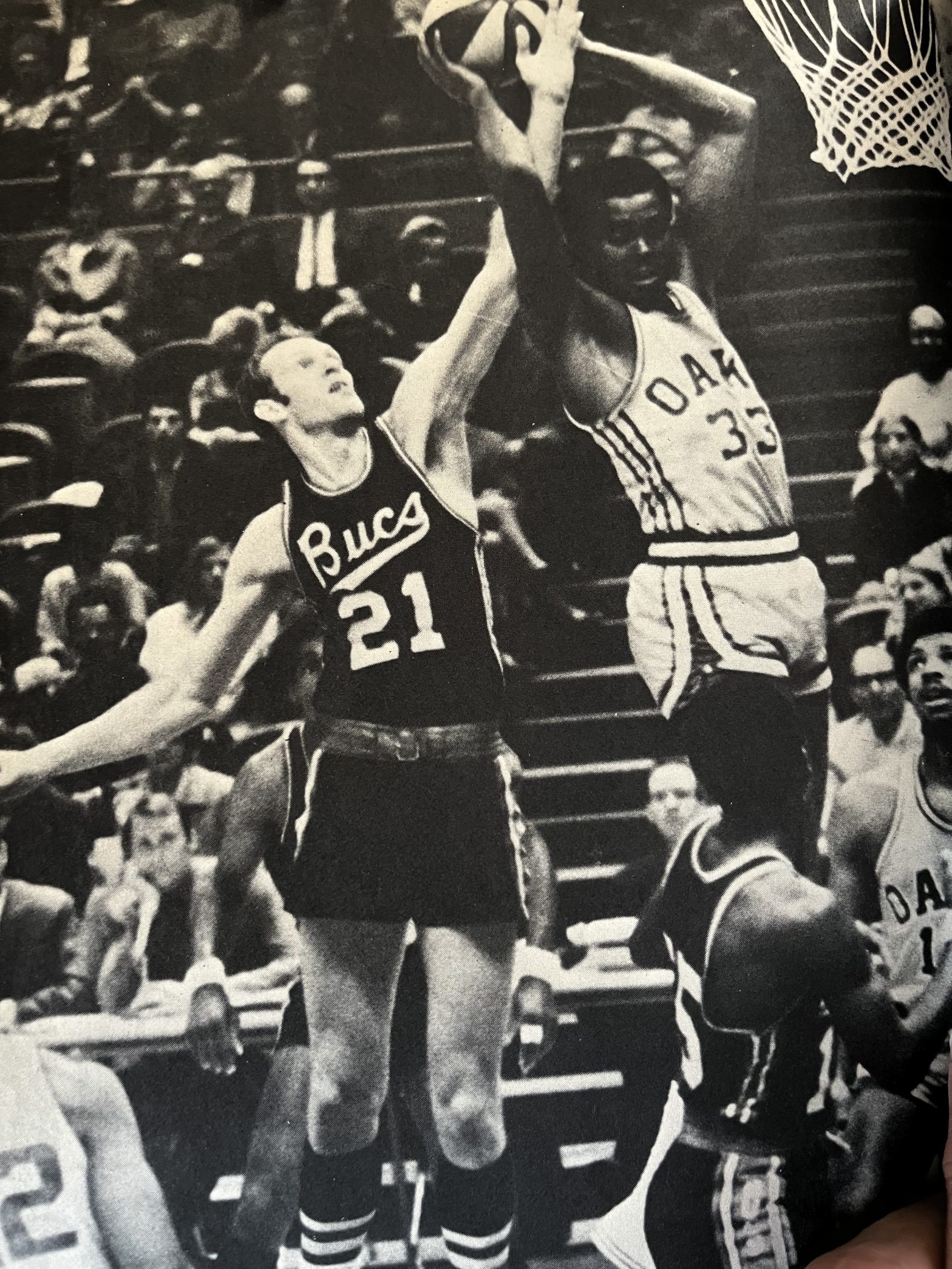
[Red Robbins played for several ABA teams in the 1960s and 1970s. The “again” in the headline above refers to Robbins’ 1973 return to Salt Lake City, where for two seasons he’d been a mainstay on the Utah Stars. Robbins was beloved former Star for his mild-mannered, string-bean physique and his awkward, but clutch, play. As an ABA defender once claimed, “Guarding Red Robbins is like trying to catch Hoyt Wilhelm’s knuckleball.” Robbins flitted his way into the paint but, more often than not, somehow hit the mark.
Robbins also was beloved for his Southern charm and wicked sense of humor. For example, Robbins once was ejected from an ABA game for picking up three, not the standard two, technical fouls. “It all started,” he said, “when I told the referee he couldn’t officiate a roller derby.”
The following article comes from a 1973 game program put out by the Utah Stars. Dan Pattison, a reporter for Salt Lake’s Deseret News and a veteran ABA scribe, has the byline. His story ran originally in the Deseret News on April 6, 1973, and it was strangely reorganized in the game program, with whole blocks of text moved around from the newspaper version. Because of all the editorial flux, I went in and tightened up some of the story. Though I enjoyed reading Pattison’s piece, it was definitely rough in places and needed a light editorial fix. Anyway, here’s a worthy remembrance of the late Red Robbins, who passed away in 2009 at age 65.]
****
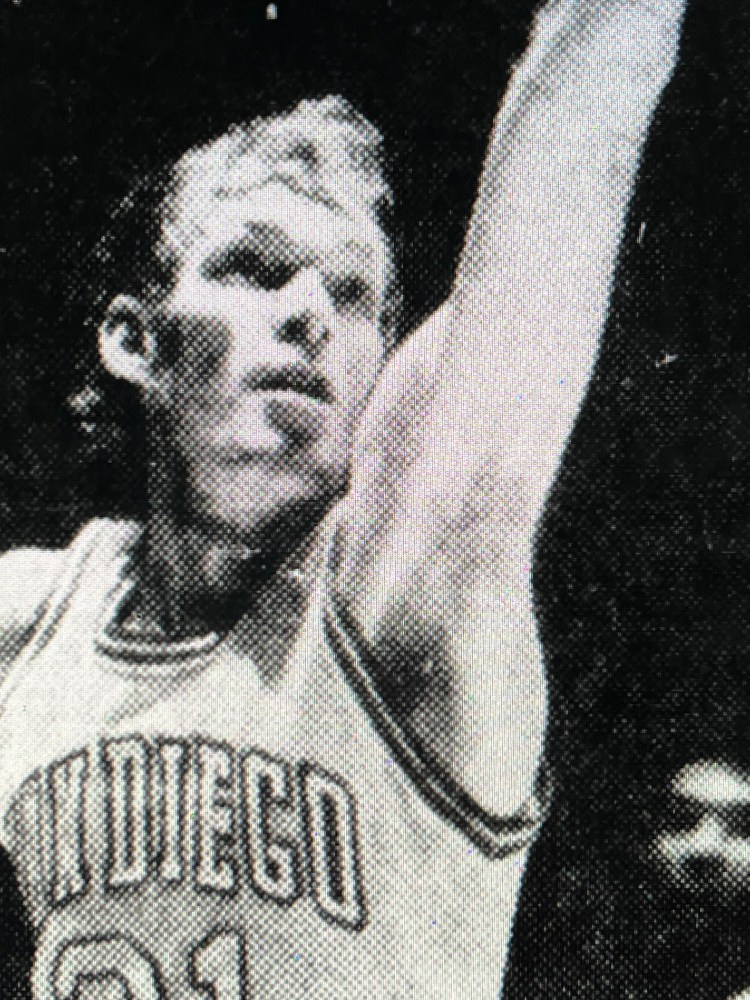
One of the ABA’s originals, Red Robbins, who two years ago hit 11-of-12 shots to help the Utah Stars defeat the Indiana Pacers in the seventh game of the Western Division playoffs, just paid a visit to the Salt Palace. His visit marked another Western Division playoff contest. Only this time the 6-foot-8, razor-thin forward wore a different uniform. The redhead donned the uniform of the new expansion ABA club—the San Diego Conquistadors.
Nevertheless, Red was still one of the most popular players on the court with the Stars fans. The big guy never divorced his fans, and the fans never divorced him either. To Salt Lake fans, Red was the boy next door, the player all the fans could identify with. His big grin, homespun humor, and friendly handshake, won him many friends among those who paid to watch the Stars play. It was like a love affair. Red couldn’t walk down the streets of Salt Lake without being recognized. Red and his wife, Jeannie, adopted Salt Lake City as their home. And for two years, it was until last summer when Robbins was plucked off the expansion draft list by the Qs.
At one time, there wasn’t a golf course in the State of Utah where Robbins couldn’t golf for free. That’s one reason why he can golf in the low 80s now. He has been described as a walking one-iron because of his golf skills—and slim stature. But Red repaid them at the Salt Palace, where he helped the Stars to the 1971 ABA championship and a Western Division crown last year.
Redbird, as his teammates refer to him, shot 51.5 percent from two-point range, 42.3 percent from the three-point circle, and 84.5 percent of his charity tosses. All these figures would have ranked him in the top 10 last year, and his three-point percentage would have led the league. But Red, who is an unselfish player, didn’t shoot enough shots.
Last year’s playoff series between the Stars and Pacers proved to be his downfall. He had a bout of viral pneumonia, and it sidelined him for most of the series. And the Stars’ brass felt Red’s illness was the chief reason the Stars didn’t repeat as ABA champs in 1972.
So when the expansion draft came last summer, Stars president Vince Boryla decided to risk putting Robbins up and protect Ira Harge. Boryla was, in a way, hoping San Diego’s Alex Groza and company would think Robbins was on his way out because of the pneumonia. But that didn’t happen. San Diego snapped Robbins up faster than Superman could share his clothes.
Red, a four-time ABA all-star, arrived feeling unwanted among a bunch of castoffs on a castoff team. But like he said, “I can’t blame Utah or Boryla for what he did. It’s a big business. I enjoyed my stay in Utah. It’s one of the great franchises and cities.
“At that time and with Z’s knees (Zelmo Beaty) in the condition they were in, I would have probably done the same thing as Boryla if I were in his situation. And if it wasn’t for all my nagging injuries, I would have enjoyed my season more with San Diego.
“As a city, San Diego offers me a lot,” Red continued. “In how many cities can you go out golfing in the middle of basketball season?”
And yet, this season in San Diego hasn’t been one to write home about to his mother in Groveland, Fla. Red started out the year by missing three months because of a freak accident in training camp. The big guy, while fighting for a rebound with Dan Sidle, got a finger in his left eye and was sidelined with a detached retina.
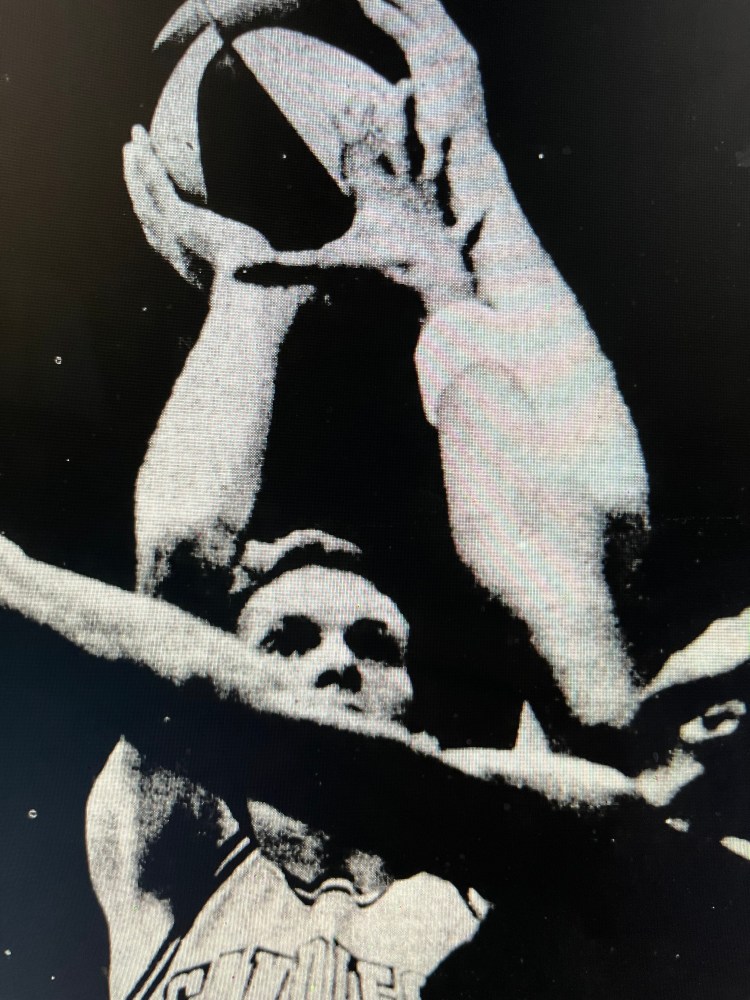
Shortly after he came back, he was just rounding into shape with games like the one he had against Dallas, hitting 13-for-13 at one point for 36 points, when Robbins tore a calf muscle in his left leg and had to miss more games.
“They’re only paying me for half a season, and that’s all I’m going to play,” Red joked with his teammates to show he still had a sense of humor through all his setbacks.
During the time he was out with a muscle tear, Redbird had an opportunity to try another facet of basketball. San Diego coach K.C. Jones was ejected in the Carolina game (the next-to-last game of the season), and Red took over the reins. San Diego was losing by 14 when Jones left, Red coached the Qs back to a seven-point deficit before the Cougars put on the brakes.
Robbins didn’t get into pro basketball six years ago with a fat contract and a big name. No, it was a long road from his hometown of Groveland, Fla., population 3,000. Red’s father, George, kept the town peaceful as a deputy sheriff. But about the biggest noise that came from the town was George’s own brood. He had eight children, and Red (real name Austin) was the youngest. George, in addition to being the town deputy and raising his children, worked in the orange groves like the rest of the town folk. He didn’t have the time for sports.
“Dad doesn’t know anything about sports . . . so he wasn’t the type to push me into it,” Red offered.
Major college coaches didn’t beat a path to Groveland. In fact, even a Seminole Indian would have had trouble finding the town, about 40 miles from Orlando. “Groveland is so small that nobody ever heard of it,” Red said of his quiet hometown. “But, actually, college coaches didn’t scout high school ball in Florida. It wasn’t too good at the time. I got only one offer, and that was to Chipola Junior College . . . so I took it.”
Red led Chipola to a 24-3 record and into the National Junior College Tournament in Hutchinson, Kan. He then made the major-college scene for Coach Ray Mears at the University of Tennessee. Mears told this reporter once that Red was “the most unselfish player I ever coached.” He also was an All-American for the Vols.
After his senior year, he was drafted in the sixth round by the NBA’s Philadelphia 76ers (1966). “They had Wilt Chamberlain,” Red pointed out, “and I didn’t think I had much of a future with the club . . . so I decided to play in Milan, Italy.”
After a year in Italy, he was contacted by Babe McCarthy, who had taken over the reins of the ABA’s New Orleans Buccaneers after formerly coaching in the Southeastern Conference, where Robbins starred. The rest is history. The steady six-year veteran has averaged nearly 15 points and 13 rebounds throughout his career. He has been a winner. That’s why Salt Lake City fans were sad when Red was plucked off by San Diego and why they always welcome him back to the Salt Palace with open arms.
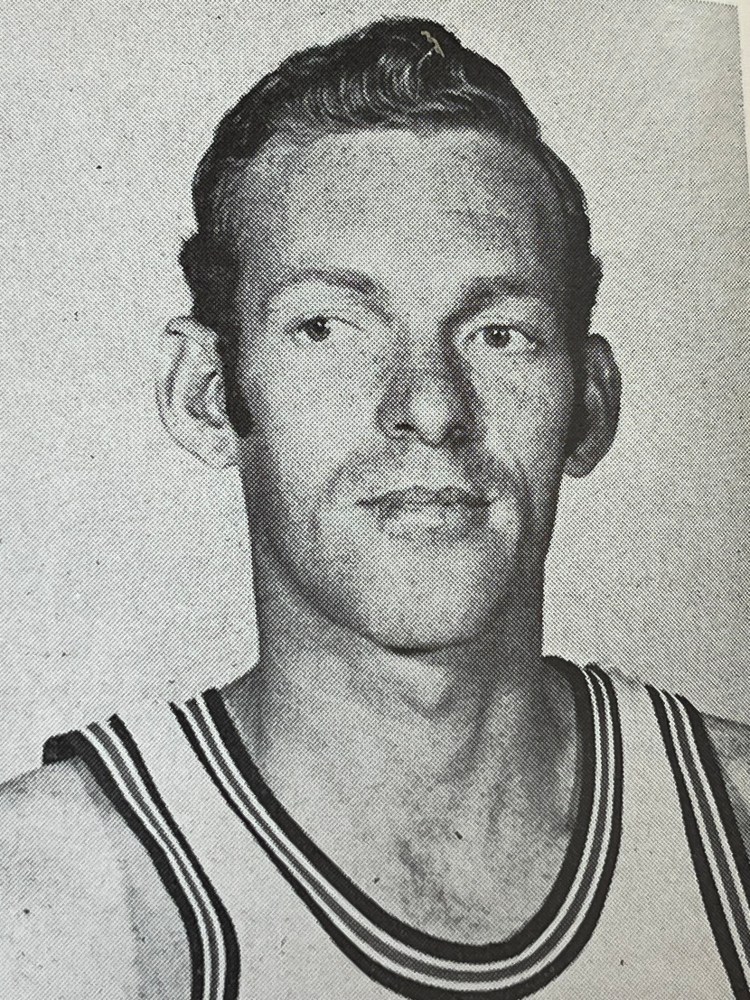
[BONUS COPY. Make that, a bonus sports column from the Salt Lake City Tribune written by the great Steve Rudman. Here, Rudman offers some humorous praise for Robbins as a Utah Star. The column ran in the newspaper on December 21, 1971.]
Take a good look at Red Robbins of the Utah Stars, and you get the distinct impression he seems more suited to floating down the Mississippi on a raft with a bamboo pole and light tackle than playing pro basketball. He has medium length spikes of orange-red hair, and if you didn’t know he was an All-ABA forward, you’d swear he was invented by Mark Twain, or that he just arrived in town on the last bus out of Sleepy Hollow.
At 6-foot-8 and a feathery 200 pounds, Red has been described as a walking one-iron. That’s an understatement. If he ever stood behind Mel Daniels for longer than 30 seconds, the Stars would immediately dispatch a search party to find him. Red is so slender compared to the other brutes in the ABA that you could mail him anywhere in the United States or Canada with a two-cent stamp.
While Red may not exactly look like a guy who has pulled down more rebounds [in the ABA] than anyone but Daniels, he plays the game with all the rage of a sailor let loose on shore leave.
One player, asked to describe Red, said, “He looks easy, and you can’t wait to get the ball and put a move on him. You try a shot, and that sonuva gun slams it right back in your face. You work on him on defense, and all you get is six elbows, bruises, and wounded feelings. He ends up with 20 points, and you end up with a tongue lashing from the coach.”
Red Robbins is so vital to the interior clockwork of the Utah Stars that it would be virtually impossible to list the ways he contributes to the overall success of the ABA champions. Last year, when everybody was sweating the seventh playoff game with Indiana and wondering whether or not Zelmo Beaty and Willie Wise had eaten their Wheaties that morning, who tore up the Pacers by sinking 11 of 12 shots and keeping his man, Bob Netolicky, out on the street all night? Red Robbins, that’s who.
In this season’s first meeting with Kentucky, who put the clamp on Dan Issel in the second half and snared three big rebounds in the final minutes? Again, it was Red Robbins.
Later in the Salt Palace, when the Stars defeated the Colonels again, Red had Issel so far out of the game that a couple of times the ushers looked suspiciously at big Dan and asked accusingly, “Hey, you got a ticket, bub?”
When Red came down with the flu in the playoffs last year, did the Stars win? Most certainly not. When he got back in the lineup, did they win? They most certainly did.
When the Stars were 6-6 earlier this season, was Red playing regularly? Not much. What happened when he got back in the lineup? The Stars won 17 of 20 games, that’s what.
Red Robbins averages 11.4 points and nine rebounds a game, but he makes 48 percent of his shots from the field, 85 percent of his free throws, 43 percent of his three-pointers, and plays good defense. What other 6-foot-8 guy does that?
It takes a special kind of player to volunteer to spike enemy guns, string barbed wire, lay mines, and defuse bombs. You only hear about those guys when they fall. And Redbird doesn’t fall very often.
 From Way Downtown