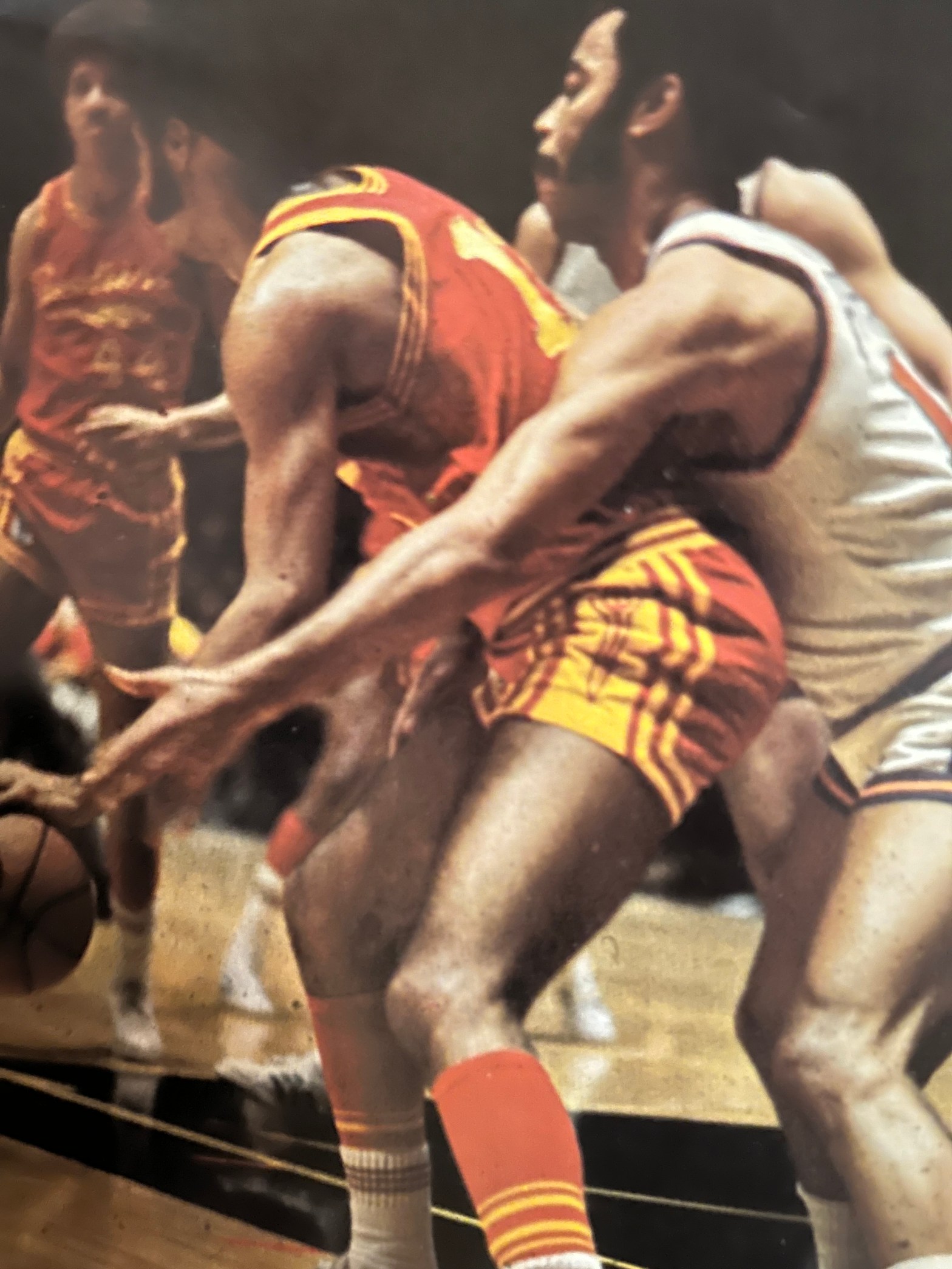
[The Philadelphia 76ers were “perfectly awful” in the early 1970s. But so, too, were the expansion Cleveland Cavaliers, especially in their maiden NBA season of 1970-71. In the article below, published in the April 1977 issue of SPORT Magazine, Cleveland sports columnist Bob Sudyk recalls the first season of comedy and woe. After his brief story, look for another story on the Bad Old Days. It’s a little longer, not quite as funny, but probably a better story. So, here you go. Let’s meet or revisit one of the NBA’s all-time worst.]
****
Even before the Cleveland Cavaliers began playing they were funny. Coach Bill Fitch and his assistant Jim Lessig were not hired until a week before the National Basketball Association “dispersal draft,” from which they were to select their team. The problem was that they had no scouting reports on the players and knew almost nothing about them. When Lessig bought a pack of bubble gum, he found a card inside of an NBA player, and it listed his statistics. Fitch had to go back and buy up every pack of bubble gum in the store.
“We wound up with a lot of gum and cards on 92 players,” Fitch recalls. “We took all the cards with us to New York for the draft. Our first picks (Walt Wesley and Luther Rackley) were off input from bubble gum cards.”
The Cavs’ home opener at the old Euclid Avenue ice hockey arena was canceled on account of fog after the air-conditioning failed. Later in the season, a game had to be called in the third quarter when the playing surface abruptly iced over. On his first visit to the dingy arena, John Havlicek of the Celtics said, “This is so bad, someone could catch a communicable disease here.” Jerry West of the Lakers said, “This place is so depressing. The Cavs have a home cave advantage.”
It didn’t help, of course, as the Cavs lost the first 15 games and 67 of 82 on the season. Fitch called on his sense of humor to maintain his sanity. “We can lose five in a row faster than you can say ‘five in a row,’” . . . “This team would stump the panel on What’s My Line? . . . “The only big-name player we have is Larry Mikan. Unfortunately, his dad, George, is the one who made the name famous.”
One day, Fitch complained that some of his players had thrown eggs at his house. How did he know his players have done that? “Because,” said Fitch, “they missed the house and hit my fence.”
Fitch arrived at the players’ entrance for one game in San Francisco after the team had passed through, and the attendant stopped him, “Who are you?” he asked.
“I’m the coach of the Cavaliers,” Fitch said.
“How do I know that?
“Who else in his right mind would admit it?”
“Come in, Coach,”
But Fitch was not the superstar of the freshmen Cavs. That role was filled by Gary Suiter, a 6- foot-9 substitute forward who was met at the airport on arriving in Cleveland by team trainer Ron Culp. When Suiter did not disembark from the plane in 30 minutes, Culp had the door reopened. Suiter was asleep in the back. He was later found to be missing when the team assembled on the team bus that would take it to a game. A search party went up to his hotel room and discovered him lying unconscious in the open doorway. He had smacked his head on the top of the door frame and knocked himself out.
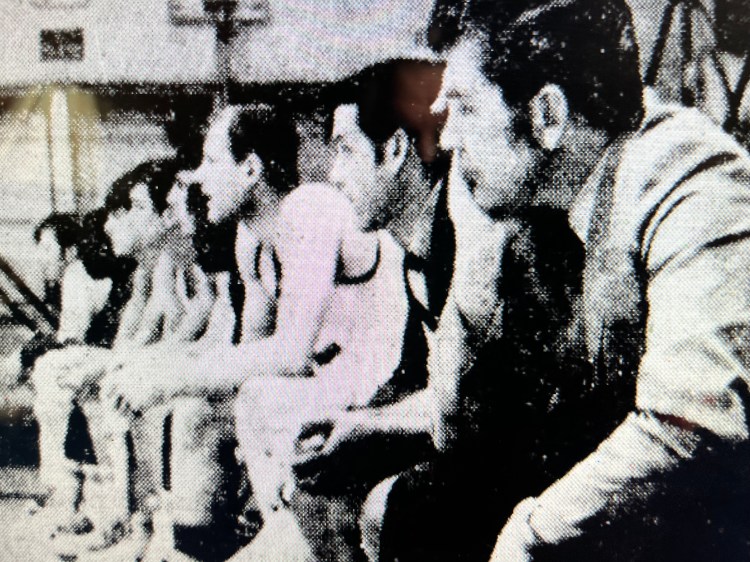
Suiter often called Fitch at his home and, disguising his voice very cleverly, identified himself as a loyal Cavaliers fan who demanded that Gary Suiter get more playing time. At midseason, Suiter was finally released. But he refused to accept the decision and continued to show up for practices and games. Eventually Suiter gave up and said he would go home to Texas, but he needed $450 airfare for himself and his wife.
“What wife?” asked Fitch, who understood Suiter to be single.
“The next day,” Fitch recalls, “he shows up with this 5-foot-2, 200-pound woman he must have dragged off the street. ‘This is my wife,’ he said. We gave him the money.”
Then Suiter walked to the funeral home across the street from the arena and ordered a casket for “my dear now-departed mother.” After signing the necessary papers, he asked if he might use the “bereavement room” telephone to notify his relatives around the country of the sad news. He closed the door and phoned every NBA team attempting to line up a tryout. The Cavs paid the bill.
The Cavs also paid Fitch’s medical bill after, angered by a call in a game, he slammed his fist on the scorer’s table and broke a bone in his hand. The coach grimaced in pain, and Dave Sorensen went over to him. Sorensen was a rookie from Ohio State who had been beset by so many injuries that Fitch had told him: “You’ve got to learn to play with pain in the NBA.”
“Coach,” Sorensen now said to the injured Fitch, “in this league , you’ve got to learn to coach with pain.”
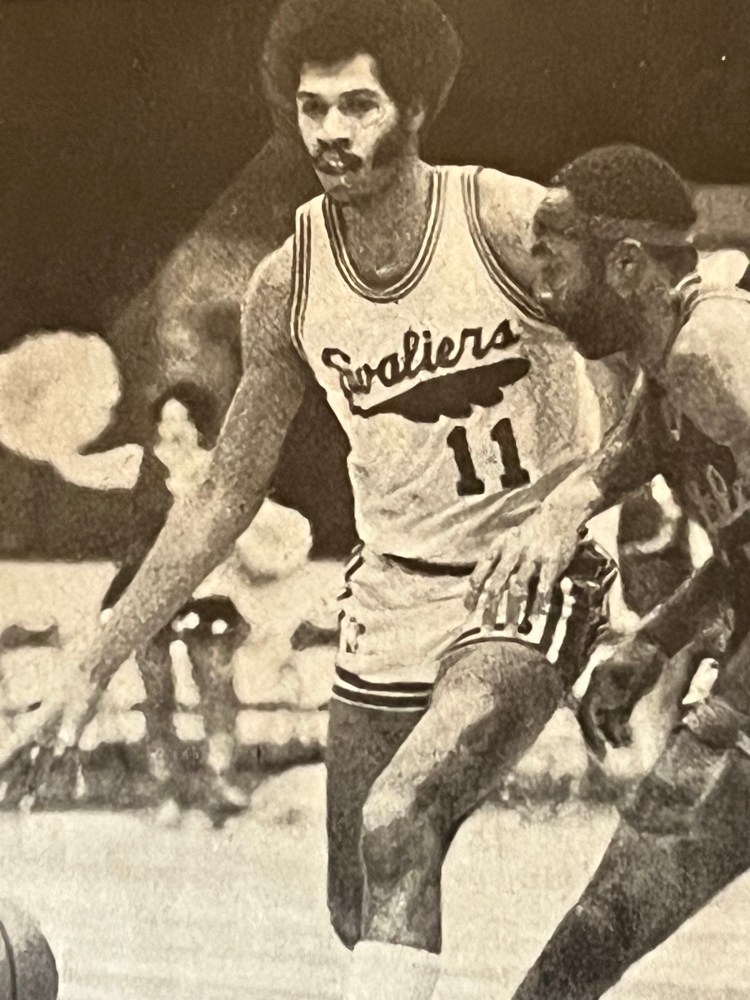
The most memorable play of the Cavs’ first season occurred in a game against Portland. Guard John Warren grabbed a tip-off, got turned around, and drove toward the Portland basket. Bingo Smith also got confused and raced downcourt with Warren. LeRoy Ellis of Portland, equally disoriented, dashed back under the basket to block the shot. Smith called for Warren to pass him the ball. But Warren stopped short and shot over the leaping Ellis—scoring a goal for Portland.
Fitch said, “I’ve been telling our boys that as long as we have the ball, the other team can’t score. But now that formula is gone down the drain.”
Later, he wondered: “What would have happened if the officials had called Ellis for goaltending?”
The coach looks back on that first season today and says, “By the end of it, we were not the worst team in basketball, even though we had the worst record. That might have been the greatest job of coaching I ever did. After January, nobody beat us by more than 10 points. I knew we were better when people stopped leaving our games at halftime.
“Today, off course,” says Bill Fitch, “the Cleveland Cavaliers are an entirely different story. Even Gary Suiter has stopped phoning me.”
[Here’s the promised second take on the 1970-71 Cleveland Cavaliers. It comes from Bill Nichols, who covered the Cavs from day one for the Cleveland Plain Dealer. He published his recollections in the Plain Dealer on December 23, 1979 to mark 10 seasons of Cavalier basketball. It ran under the headline: A Season to Remember.
Nichols, too, tells stories about the infamous Gary Suiter. One is the classic tale of Suiter downing a few hot dogs at a concession stand. Nichols says Suiter went on his hot-dog binge in Buffalo during the pregame warmups. Interesting. Sudyk, in a 1979 column about the first-year Cavs, recalls the story this way: Suiter “was found standing in line for a hot dog at the old [Cleveland] Arena in full uniform while Fitch was conducting his halftime pep talk in the locker room.” Terry Pluto, who also has covered the Cavs forever, tells the Suiter hot-dog story this way in his book Vintage Cavs, “Suiter finally was cut when Cavs trainer Ron Culp found Suiter in line at an arena hot dog stand—in his Cavs uniform—about an hour before the game.”
It just goes to show you, the devil is in the details when repeating these old, familiar NBA tales. Often, they end up all over the place. I mention this all-over-the-place just a word of warning, even though these crazy tales are true and worth remembering. Enjoy!]
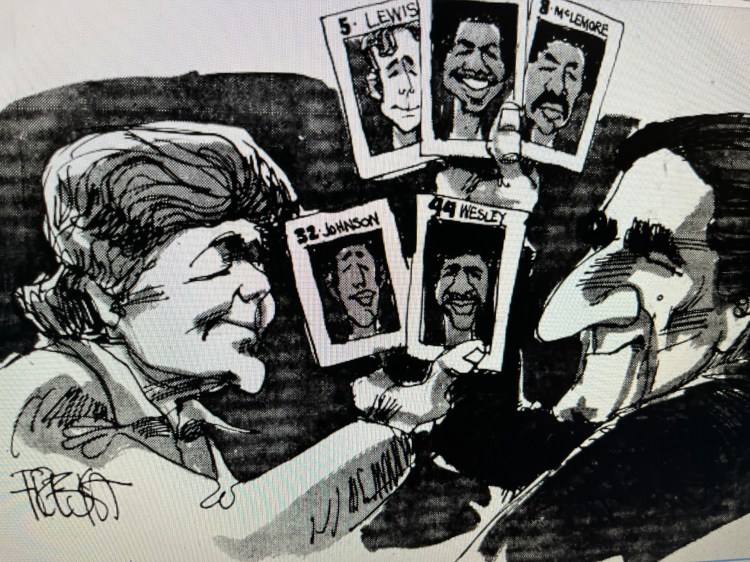
Basketball teams are built on capital, faith, and hard work. But in the case of the Cavaliers, you can add bubble gum cards, too. Now, in their 10th season, it’s time to reflect on that first winter when the Cavaliers were the joke of the National Basketball Association, if not the talk of the league.
The Cavs, Buffalo Braves, and Portland Trail Blazers entered the NBA for the 1970-71 season. And, in many ways, they suffered growing pains together. Cleveland played both Portland and Buffalo 12 times each that winter. In fact, the Cavs and Blazers had two games with each other after the rest of the league had completed its regular season. Portland and Buffalo were moderately successful or moderately unsuccessful, depending on your point of view. Portland 28 games, Buffalo 23.
But it was the Cavs who grabbed the headlines with their 15-67 record, tying the worst mark in the league’s history. Pressure was on until the that excruciating final game to see if they could match or better the mark for futility.
It all started with $12 worth of bubble gum cards. “That bubble gum card story is true,” says Jim Lessig, an aide to Cavs coach Bill Fitch that first season. “Being at Minnesota, we both were familiar with the college players. But we weren’t that close to the pros. We were looking at basketball magazines, newspapers, and anything we could get a hold of to get some insight for the expansion draft.
“Then one night, I took my son to the store to get some milk,” continued Lessig. “He came out of the store with a package of bubble gum cards. I thought they were baseball cards at first. When I looked on the back and saw the player’s career and season statistics, I called Bill, who was in Cleveland, and told him about it.
“He then said, ‘Buy all you can.’ When I was through, I think we had 92 of the 140 players in the league.”
Fitch and Lessig , with a briefcase full of bubble gum cards, traveled to NBA headquarters for the expansion draft. From those cards came Walt Wesley, Luther Rackley, Len Chappell, Johnny Egan, Bobby Lewis, John Warren, McCoy McLemore, Loy Peterson, Bobby (Bingo) Smith, and others.
Former Iowa star John Johnson was the first college draft choice. Ohio State’s Dave Sorensen the second pick. On September 7, 1970, the collegians, free agents, and bubble gum card pros all gathered for the Cavaliers ‘ first-ever varsity practice at Baldwin-Wallace College.
It seems like ages ago . . .
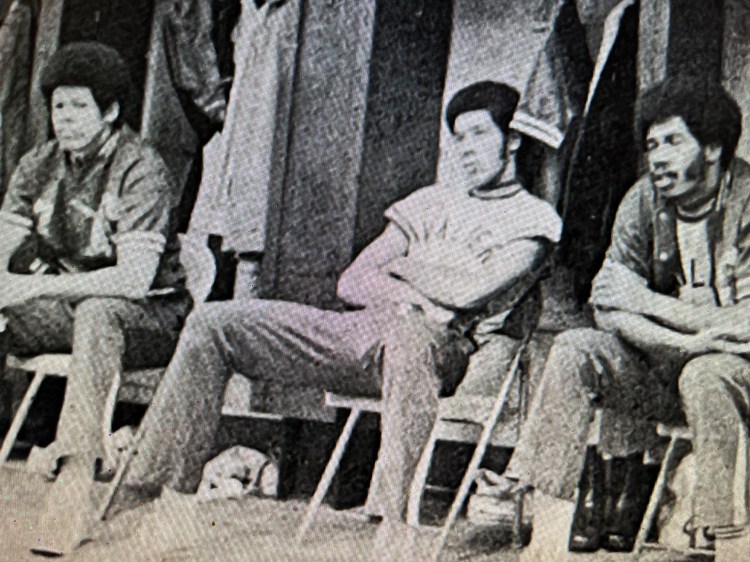
The Cavs’ first ballboy, Jimmy Tressel, is now an assistant football coach at Miami of Ohio. Johnson and Smith are aged veterans of the NBA. Everyone else at that camp has long since retired.
The rookie camp that year featured Stephen F. Austin’s dynamic duo of Surry Oliver and Narvis Anderson, a one-eyed player; refugees from The Cleveland Plain Dealer Class A League, and a man-child named Gary Suiter.
After the first practice, Fitch said, “It’s going to be awful tough trying to find out if we have enough players ready to play with the pros when we’re not even sure yet whether or not we have a coach capable of teaching them.”
In rookie camp, Fitch zeroed in on Sorensen nearly every practice. He needled the former Buckeye to play hard and play hurt. It sounded like a broken record.
When the Cleveland rookies beat the Buffalo first-year players, Fitch inadvertently slammed the scorer’s table after an official’s call. He broke his hand. On the bus ride home, Fitch had his broken hand in a bucket of ice. Sorensen leaned forward and said, “Hey, Coach, you have to coach hurt in this league.” Even Fitch smiled at that one.
He should have savored the humorous moment. There weren’t many that first winter.
Suiter, who became a legend for his zaniness, talked Fitch into a tryout. But when Suitor arrived in Cleveland, he fell asleep on the plane and no one could find him for a while. Later on in Dayton, he was knocked cold when he hit his head on the motel-room door. And as long as he was with the Cavs, he asked everyone even remotely connected with the team to tell Fitch that he could take the Cavs to the playoffs if he played.
Suiter was cut midway in the season. He eventually tried out with every pro team available and currently is back home in Albuquerque. One time, he was cut by the Houston Rockets three times in three days. He finally got the message when coach Tex Winter sent him a registered letter telling him never to show up again.
His career with the Cavs was brief, but historic. In a pregame warmup once in Buffalo, Suiter asked Braves coach Dolph Schayes if he needed a good white forward. On another occasion in Buffalo, Suiter, in full uniform, was at the concession stand devouring hot dogs while his teammates were going through pregame warmups.
Suiter stories are legend here. But in a way, he epitomized the first year of the Cavaliers. Frustration probably describes it best.
It all began with 15 straight losses. The first seven games were played on the road. The Cavs lost the opener in Buffalo and then went to the West Coast, losing six more. Flying home after the last West Coast game, Hopkins International Airport was fogged in, and the team detoured to Columbus. While waiting for a flight to Cleveland and thinking of losing seven in a row, a newspaper man traveling with the team said to Fitch, “Now you’re zero and eight.”
Fitch countered, “I’ve had to sneak back into town before after losing streaks, but this is ridiculous.”
Fitch’s one-liners kept the situation bearable that first season. He kept it up all winter, hoping everyone would ignore the Cavs’ sad plight. They set a league record by losing their first 15 games. The first victory was at Portland on November 12 when the Cavs edged the expansion Blazers, 105-103.
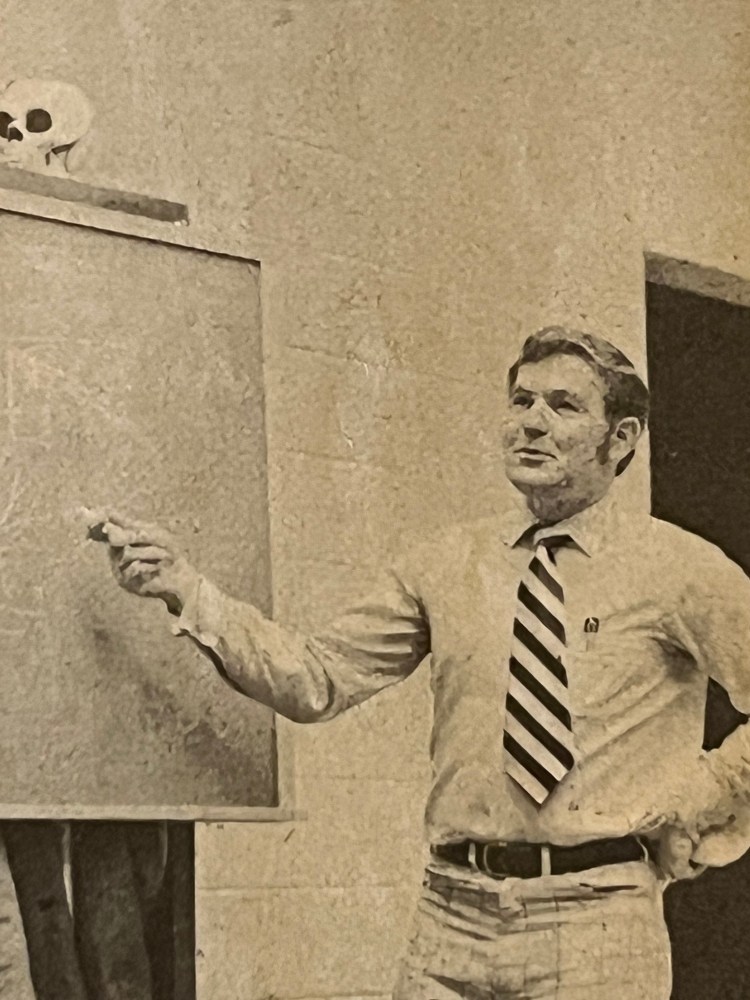
And it took a skull Fitch purchased in Portland to provide the impetus. The skull remained behind Fitch’s chair for weeks, but most of the luck it attracted was bad. After that first victory, McCoy McLemore said, “It was a pleasant distraction to what we’ve been going through.”
Fitch said, “We’re the best thing that ever happened to Cleveland. The people never will have a better opportunity to support a team like us. We could be the Mets of basketball. I hope they take advantage of it.”
The Cavs were notorious, even in New York where the New York Post ran a contest to see who could guess the date of Cleveland’s first victory. In those days, the Knicks were defending champions and darlings of the NBA and filled Madison Square Garden every game. When the public address announcer gave Cavaliers scores, the crowd would roar.
Then in December, the Cavaliers made their debut in the Big Apple. The fans couldn’t wait and were excited about the visit of the new antiheroes from Cleveland. Wesley, the 6-11 center, led the Cavs out on the court that night. He went directly to the ball rack. Instead of taking a ball from the top row, he selected one from below. It was stuck. He shook the stuck ball until it came loose, but all 10 of the basketballs went astray. They were rolling all over the court as the helpless Cavs tried desperately to track them down. They received a standing ovation.
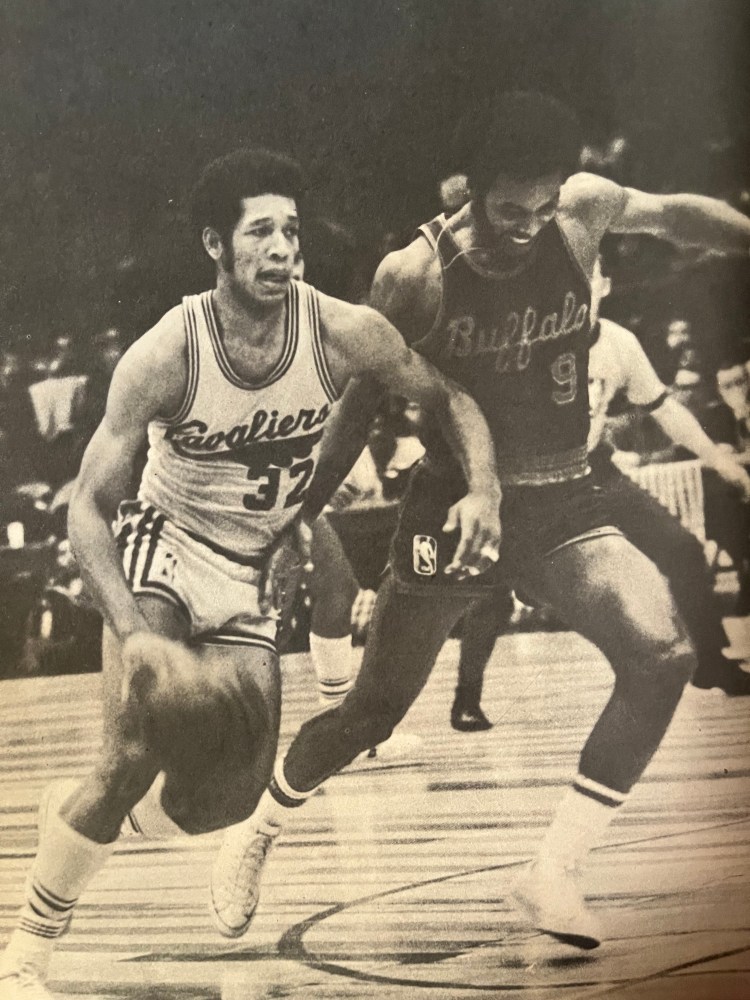
Speaking of standing-O’s, the Cavs’ faithful at the old Arena stood as one at one game and cheered every time their heroes came within five points of the opponent.
After the first victory ever, the Cavs proceeded to lose 12 more in a row. During the streak of ineptitude, they lost a 110–108 decision to Lew Alcindor and the Milwaukee Bucks. Alcindor had 53 points. ”If we would have held him to 50, we would have won,” declared Fitch.
When the Cavs were 1-22, Fitch lamented, “Momentum has really caught up with us.”
John Warren, on the championship Knicks team the previous winter, was asked what it was like playing for Cleveland. “I guess we’re like the Mets, but I don’t know if the Cleveland fans are crazy about us losing,” he said.
Egan, traded to San Diego early in the season, said, “The players hate all those names (“Loveable Losers,” etc.). It’s not humorous the way it was with the Mets. They were drawing thousands. In Cleveland, we got 2,000 out to a game. It was depressing. The coach jokes a lot with sportswriters, but he’s laughing on the outside. To players, he’s very devoted and serious.”
Another historic loss that early season was a 54-point blowout at Philadelphia. Fitch fined every one of his players $54. He later gave it back when the Cavs whipped the 76ers at the Arena.
After that first victory at the Arena, 108-106, over Buffalo on December 6, Fitch said, “I think I’ll fly to California so I can enjoy it three extra hours.”
Cavs president Nick Mileti broke down and cried. He would have wept even more if he had known what was to happen three nights later. That was the night Warren made the infamous wrong-way basket. It was against Portland, which tried to play six players later in the game. “Not even the Mets ever hit a home run for the other team,” a Portland writer began his game story.
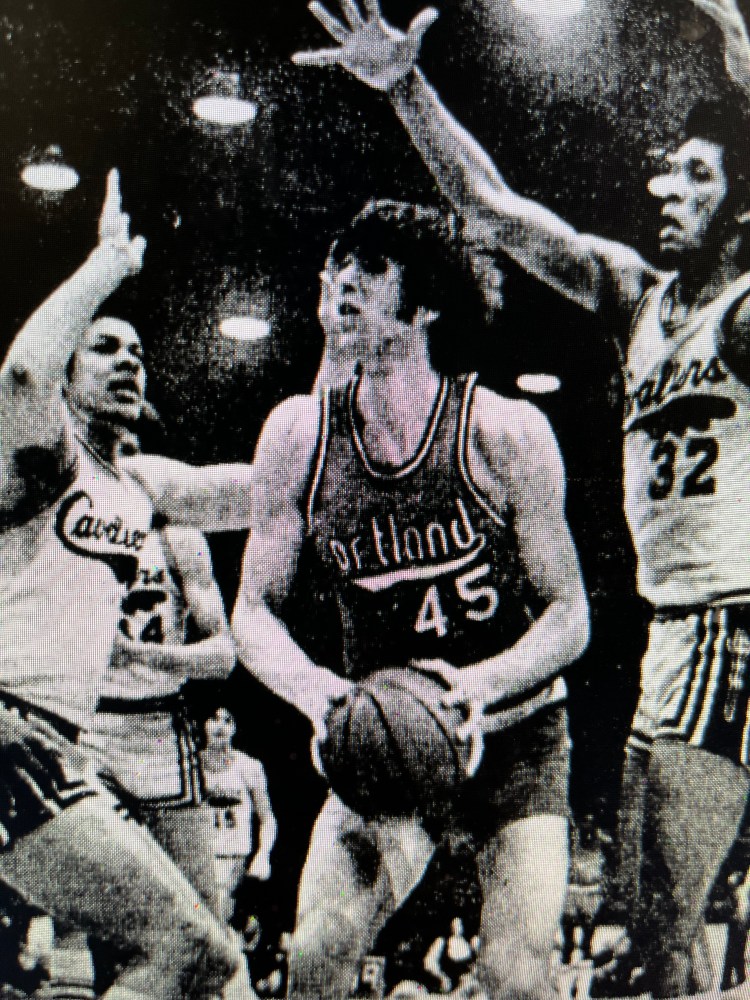
The infamous moment came at the top of the fourth quarter with the Blazers leading, 84-81. In those days, each quarter started with a center jump. The Cavs won the tip and, after some jostling, the ball finally wound up with guard Bobby Lewis. With the precision of a Swiss watchmaker, Lewis, facing the Cleveland basket, whirled and threw a long pass to the streaking Warren, who went up for an easy two points—in the Portland basket.
“I thought I had a basket,” a dejected Warren explained afterwards, “but when I heard a whistle, I thought I had been called for traveling or something. Oh boy. When it rains, it pours.”
Explained Lewis: “I had my back to John. When I turned around, I saw him breaking for the basket and threw the ball. When I see a gold shirt going to the basket, I throw it to him. It was a typical Cavalier trick.”
Portland’s LeRoy Ellis was trying to block the shot, and Smith was in the corner yelling for the ball. He thought he had a better shot than Warren’s layup. Portland was hoping Ellis would foul Warren so he could have a three-point play.
Fitch yelled, “Don’t do it! Don’t do it! He did it. I couldn’t believe my eyes.”
Warren was a fine guard, but he will always be remembered for this colossal mistake. A few years later, Fitch was forced to cut Warren and still says it was the toughest cut he ever made.
As the losing continued, Fitch remarked, “Teams get up for us like they do for the Knicks. No established team wants to be the first to lose to us. Never in my life did I think one in a row was a lot.”
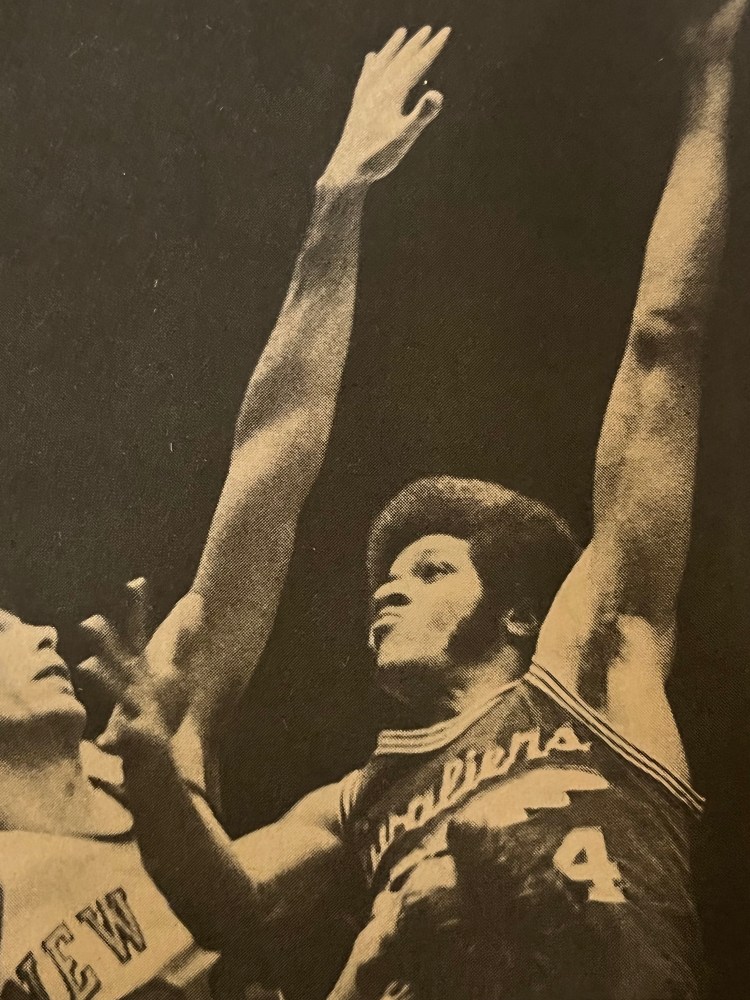
The Cavs did manage a couple of two-game winning streaks that season, one other victory stands above the rest. That was the night Wesley scored 50 points against his former team, the Cincinnati Royals. It remains a club record. The thin man from Kansas made 20 of 34 floor shots and 10 of 14 from the foul line.
“I think back to that night of February 19, 1971,’ Wesley said the other day by telephone from Lawrence Kan. “That game was one to remember.”
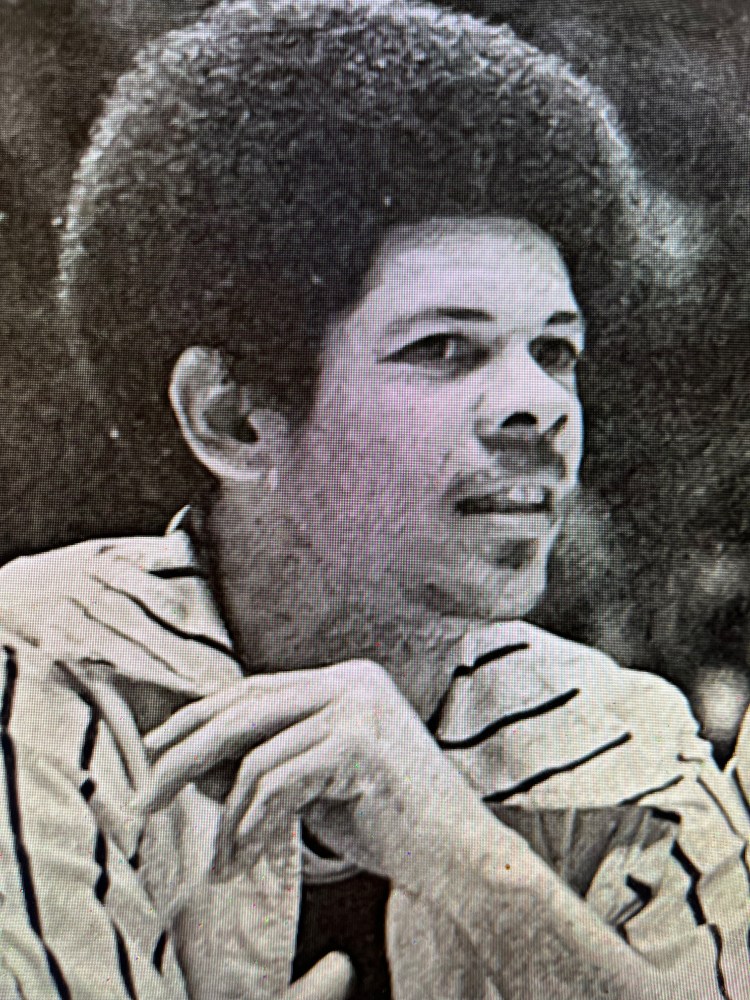
About that season, Wesley added, “It was hard to enjoy losing. That team had to stick together. It was a year when I got a lot of playing time, which was good from a personal standpoint. But as a team, it was a downer.”
Wesley is now in graduate school at the University of Kansas and hoping to land a coaching job.
Smith fondly looks back at that season. “All we had was each other,” he said.
Many of the losses were 40-point blowouts early in the third quarter, only to wind up as 10 or 15-point losses when the reserves, called the Firehouse Five, would make a run at it. There was one game Sorensen will never forget. He hit on a 22-foot jumper to beat Boston, 117-116, with one second left. “If I knew the time, I never would have made it,” he joked later. “I jumped right into the shower to calm down.”
Lessig would like to see a reunion of that first team now that the Cavaliers are in their 10th season. The players scattered since then. Smith and Johnson are still playing. Egan is with Mutual of New York and based in Houston. Bobby Washington, the Little General who threw up before every game, is an assistant coach at Eastern Kentucky.
Warren is a pharmacist in New York. Lewis has his own business near Washington D.C.; McLemore is with Merrill-Lynch in Houston; Sorensen is playing basketball in Italy; and, according to Suiter’s mother, “Unfortunately, Gary isn’t doing too much now.” [Ed. Note: In 1982, Suiter was murdered, presumably over a $275 gambling debt.]
There were many memorable moments that first winter. Fitch once had his three centers vote on whether to play Nate Thurmond and the Warriors. They voted yes, but it wasn’t unanimous. Another time, the Arena lights went out and delayed the start of a game with Buffalo 45 minutes. And when Cleveland and Buffalo were on television, one cynic commented, “They should be arrested for indecent exposure.”
The Cavaliers have had their moments in the sun, but never will the season rival the first one. It was sort of special. Happy 10th birthday, Cavs.
 From Way Downtown