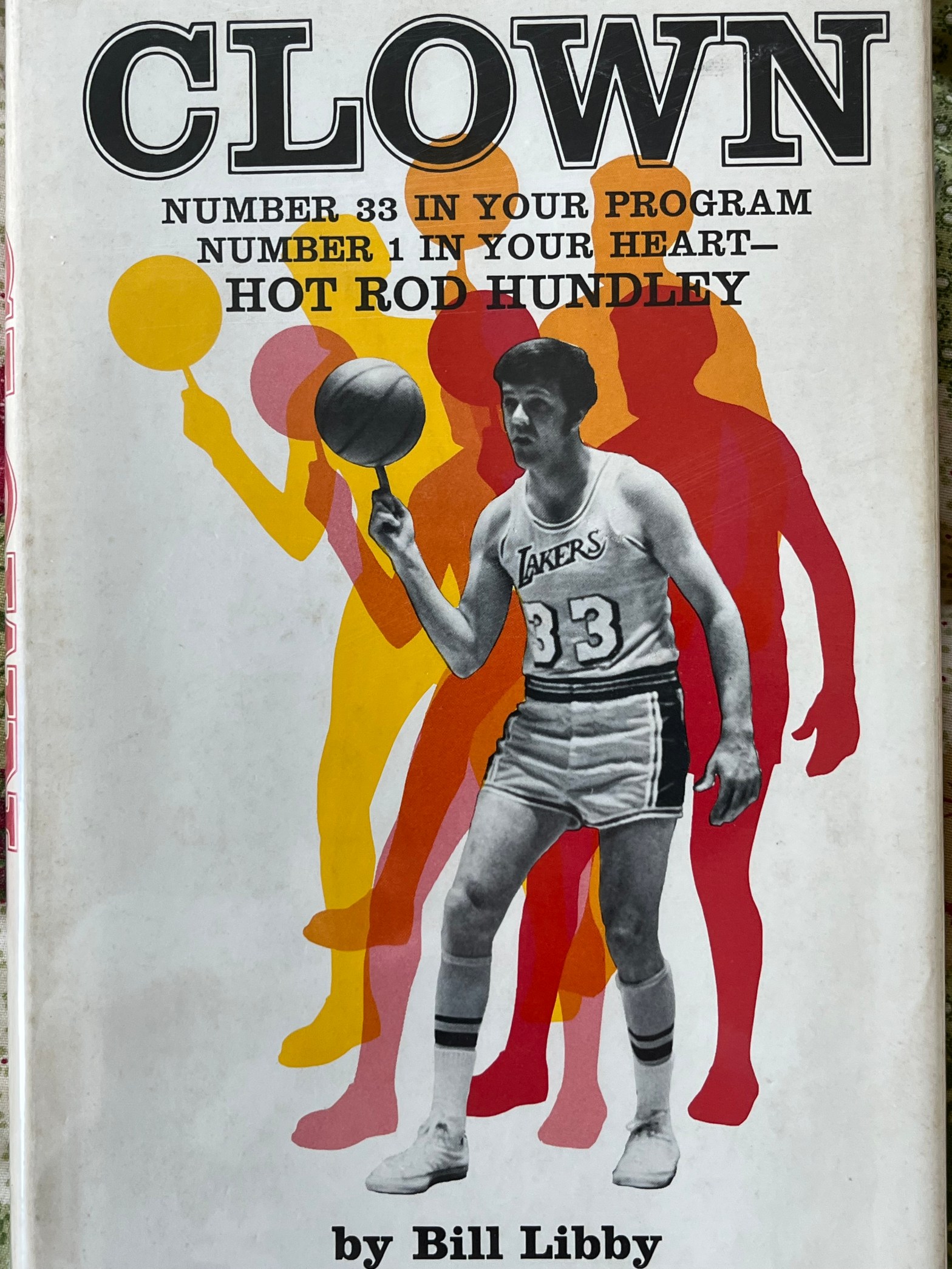
[Some NBA die-hards still may have a copy of Bill Libby’s 1971 book Clown on their bookshelves. Most probably don’t. But you should. Rod Hundley faltered as a pro, but he was immensely popular, one of his era’s great basketball showman, and a beloved raconteur and folksy personality from West Virginia. “You’ve got a pretty good fix on Hot Rod Hundley,” wrote columnist James Murray, “if you begin with the fact his boyhood idol was Errol Flynn. Not Babe Ruth or Bob Cousy or President Taft. Errol Flynn.”
Clown captures that indominable Errol Flynn spirit. The book also tells the semi-tragic tale of Hundley’s career-derailing excesses off the court and his tears of a clown when no one was around. True, Hundley was no Jerry West or Oscar Robertson. But speaking as a long-time West Virginia resident, he should have better as a pro.
If you don’t have a copy of Clown, here’s an excerpt published in the March 1971 issue of SPORT Magazine. The excerpt is just the right length, and it should give you a few good laughs and a few good stories to remember from the days of the vintage NBA.
The article begins with this brief editor’s note and introduction to the man known as Hot Rod: As a kid, Rod Hundley was abandoned by his parents, became a statewide high school basketball hero in West Virginia, made All-America twice at the state university, and gained national renown as the player who clowned in serious games. He also brought out the parental instinct in every adult who came in close contact with him, because they realized that behind the smiles and jokes was a deep and terrible sadness. In the following excerpt from a most unique, candid book, we pick up Hundley’s career as he is about to enter the pros.]
****
Rod Hundley was drafted by the Minneapolis Lakers in April 1957, and by the Army in May. Owner Bob Short and the Lakers set about trying to get him out of a service uniform and into a basketball one. They succeeded in September, swinging a medical discharge on the basis of Rod’s bad knees.
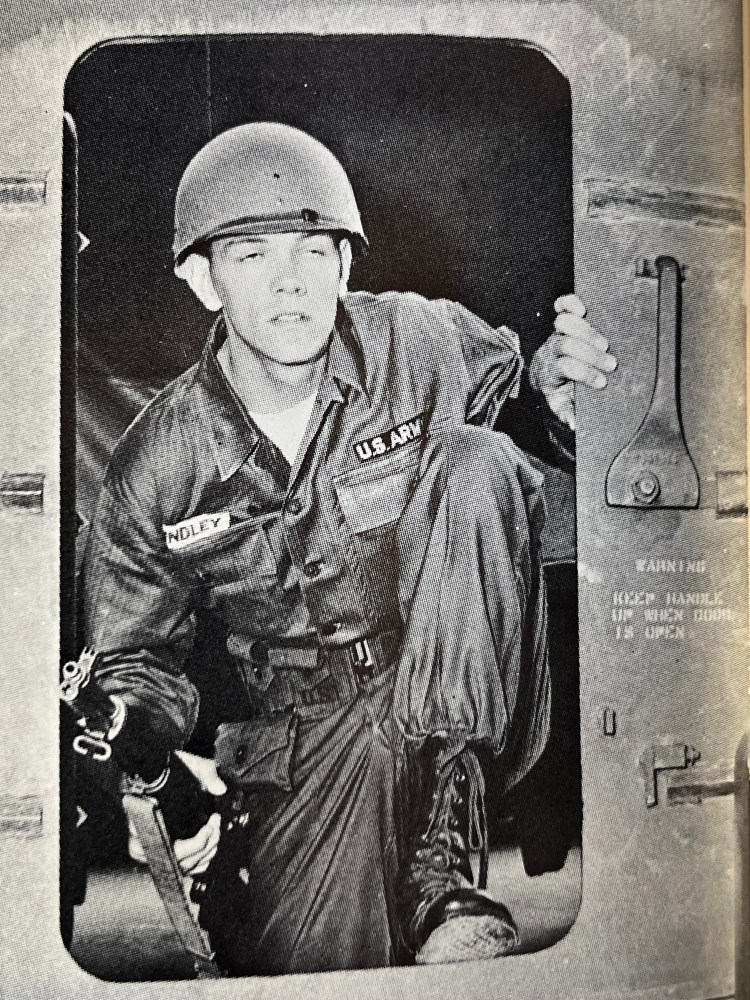
During Hundley’s brief army career, he was assigned to Fort Hood in Texas. “It was one of the glamour spots of the world,” Rod recalls. “It was desert country, summer, and blazing hot. We’d go to drink from our canteens and lizards would spill out.“
His life was saved by instructions to hike over to the base orthopedic clinic. Here, medics examined his knees. How had he gotten into the service with such knees, they wondered? He wanted to serve his country if he could, but it’s been hell, Rod said. Did he think he’d be able to play pro basketball on such bad knees, they asked? It would be agony, but he would try, Rod said.
“I got my discharge and drove to Minneapolis,” Rod recalls. “I met Bobby Leonard. He asked me, ‘Wanna go have a beer with us?’ And I was off and running. The fact is, I really wanted to make it big in pro basketball. I was all excited, like a kid. If I had an idol, it was Bob Cousy. The greatest ballhandler and passer who ever lived. I wanted to be just like him. Fancy passes, but good passes, no clowning.
“I had no thought of clowning. This was for pay. The big time. Oh, I was cocky. I thought I was the greatest. I had a lot of desire to prove it. It was a shock to find out I wasn’t the greatest. And the pros weren’t gods. We all have feet of clay.
“Maybe if I’d gone with a better team, I’d have gotten off to a better start. We were the worst pro team I’ve ever seen. George Mikan only lasted 39 games as coach, of which we lost 30. Mikan was a nice guy, but he had let the game go by him. He had played the only game he knew when he was the best center in basketball and dominated the game. The ball was always thrown to him, and he shot it or fed it off.
“As a coach, he wanted to play the same game. But he didn’t have himself at center. And even if his big men had been good enough, that game wouldn’t have been. That game went out with George Mikan. Hell, it went out with George Washington.
“Our team would always be in trouble when I’d go in. I’d make a mistake, any mistake, and George would pull me out and put me on the bench. Oh, Christ, he’d get mad at me. So did some of the players.
“One time in Detroit, Larry Foust started yakking at me at halftime because I hadn’t thrown him the ball in the first half. I said that with those boards he had for hands, he wouldn’t have been able to catch the ball if I’d throw it to him. He started to come after me. I picked up a chair. He told me to put it down. I said he was 6-9, 270, and that chair was my equalizer. Mikan came in and broke it up. He just stood there all frustrated and finally said, ‘Why don’t you each pick up a chair and go after Detroit, for Christ’s sake?’”
“George also would get mad at [center] Jim Krebs. He didn’t think Krebs was rough enough. My star rookie, he’d say, my star center, and he doesn’t even know how to use his elbows. Mikan used to work out with Krebs, and Krebs would put on every sweatshirt he could find to pad himself to keep the dents off his chest. So his wife would love him, he used to say. And Mikan would dent you. Old blood-and-guts. George thought he was heavyweight champion of the world. He’d be introduced on the road, and he’d clasp his hands over his head like a heavyweight champion bowing to the crowd. Then he would argue with the fans behind the bench during the game, and we’d yell at him, ‘For Christ’s sakes, George, the game is on the court.’
“We all laughed at the games and laughed harder after the games. The team was 1-13 when we had our Christmas party. I proposed a toast to ‘George Mikan, the greatest coach in the NBA.’ Mikan was furious. But we didn’t care. It was very sad. George was Knute Rockne in the dressing rooms, tearing them up, calling us a bunch of bums, trying to pep us up, and we laughed at him. He tried to make it up by being one of the boys afterward, and we walked all over him.
“I’ll never forget when he got fired. We were in Cincinnati. George got a telegram. He read it to us. It said, as I remember it, ‘This is to inform you that you are relieved of your duties. John Kundla will take over immediately.’ And it was signed, Bob Short. George had tears in his eyes. We felt terrible. We were a bad team, and there wasn’t much any coach could do for us.
“We got to Kundla the way we had to George. Once on national television, Larry Foust was being interviewed along with Kundla. Larry was very upset at being played only periodically. ‘Damn it, John,’ he said, ‘I won’t play Yo-Yo. Thousands of my fans are watching me.’ He was serious. We were screaming with laughter. Later, Kundla was screaming, but he wasn’t laughing.
“John didn’t like my passing behind my back. Hell, it was the only way I knew. John played me, but we had our disputes. At halftime of one game, we had an unbelievable argument. I really liked Kundla, but I lost my temper. ‘Damn it, John, I can’t stand you,’ I said finally. And he said, ‘Get dressed and get out of here.’ I said, ‘Fine,’ and went to take a shower while the team went back out on the court. I was putting on my civvies when John came back in and told me to put my uniform back on. So I did, and when I got back to the bench, he put me in the game. I was embarrassed to ask, but I think Short had gotten upset when I didn’t show up for the second half, checked with the bench, and had ordered Kundla to restore me to action. I always felt bad about it.
“Years later, Kundla wrote me a letter telling me he regretted the fact we’d had problems, but he thought highly of me and wished me well. Not many coaches would do that. He’s a hell of a man.”
****
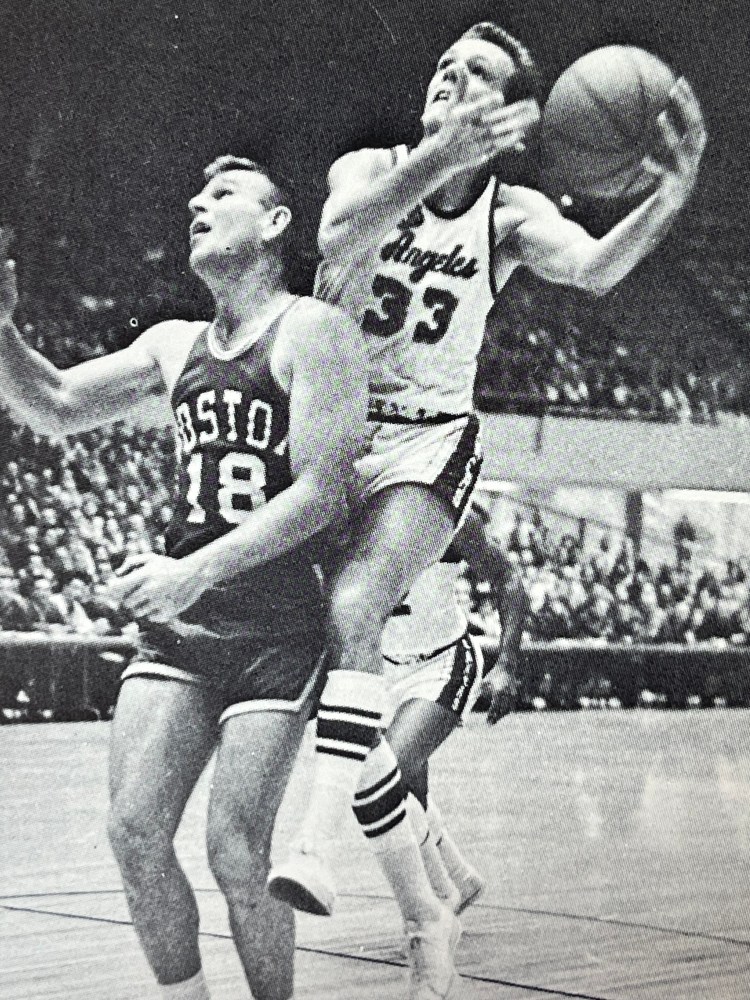
“It got to be enjoyable in my second year. Elgin Baylor came along and made us a better club. And I got to play more. But I no longer was as ready to go straight as I had been going into my first year. I had set my pattern, and I couldn’t change. I wanted to play good basketball, but I wanted to enjoy life, too. I wasn’t in the mood to change to save my marriage, which was coming apart, and it wasn’t in me to change to save my career. I never thought my career was in jeopardy. I was just starting, and I was just coming on.
“But I was never in shape. It was ridiculous. I’d bang around with broads and booze it up every night. I’d just get to sleep when I had to wake up for practices. I told myself I could play just as well drunk as sober, out of shape as in shape. I still think it’s true. I mean I had to be loose to play my best always, and with a little fun under my belt, I was loose. But oh, God, how tired I used to get looking at the coach and pleading with my eyes to be relieved.
“Still, I did improve as a player. I found out what I could and couldn’t do in this league. I found out about the other players, I had a good man to work with in Baylor, and I began to let it all out. We also had a helluva playoff. We beat Detroit and St. Louis, and I averaged almost 12 points and six assists, and that made it all right for me to go on my way, living it up.
“The traveling’s always been tough in pro basketball, but it was worse than it is now. We went barefoot on shoestrings. The last man out had to pay the cab. We killed each other getting out of those cabs. I used to grab a guy’s hat and throw it back in the cab. Going back to retrieve it, he’d get stuck for the bill. One time we all got out so quick, no one remembered to be the last man. The cabbie went screaming into the hotel that we’d hustled him.
“Management had no mercy on us. The coach put his cab on expenses. We’d be waiting outside some dark arena freezing to death, and Kundla would come blowing out just as a cab pulled up and hop in and slam the door, saying, ‘See you, boys,’ leaving us out in the cold. We never wanted to ride with John anyway. He’d never tip a quarter. On a five-buck ride, he’d blow a dime. He had eight or 10 kids and had to practice economy, I guess. We got even, charging long-distance telephone calls to the club. We’d call anywhere—Zanzibar, Peru—anywhere.
****
“We made up nicknames for everyone. Baylor was the ringleader of this bit. Rudy LaRusso was ‘Deuce.’ Krebs was ‘Boomer.’ Leonard was ‘Slick,’ of course. Frank Selvy was ‘Pops.’ Ray Felix was ‘The Count.’ Jerry West, when he came in, was ‘Zeke.’ Elg himself was ‘Kingfish.’ I, having a nickname as my natural name, ‘Hot Rod,’ became ‘Rodney.’
“We passed time naming all-star teams, like all-ugly teams or all-chin teams or all-coachable teams. Wilt Chamberlain was the star of that one. I made the roster, too. We were always clowning around, doing anything to kill the miserable monotony.
“In one airport terminal, Boomer and Deuce argued about whether a stuffed toy was a tiger or a lion. Suddenly, LaRusso was wrestling with it, rolling all over the ground, making horrible sounds. Everyone in the place stopped, startled. Rudy got up, brushed himself off, replaced the animal, and said it had jumped him when he asked it if it was a tiger, which proved it was a lion. The next trip in, he asked the saleslady for it. She started to quote a price. Deuce said he didn’t want to buy it; he just wanted a rematch with it.
“Larry Foust used to put on a drunk act. He’d stumble through hotel lobbies and airport terminals, groaning and falling in the laps of a little old ladies. On planes, he’d pretend airsickness and fake vomiting. Kundla would get furious. Foust used to put on a stocking mask and go around scaring people. He’d jump at Kundla from out of a hiding place. John had ulcers. I don’t think he had them before he became associated with the Lakers. He used to sleep soundly, silently. On one flight, we rushed back to the stewardess to tell her we thought he had died. She shook him awake, violently. He almost broke down that time.
“We spent half our lives in the air. A lot of the guys were scared to death of it. It’s not funny, but we made fun of them. Elg was one. He rode very straight, one hand clutching the armrest, the other his wallet. He is the world’s greatest all-star storyteller, but in the air, he’d be honest. In the air, he got religion. You could ask him anything up high and get a straight answer. We used to sneak up behind him and croon in his ear a couple of choruses of Nearer My God to Thee.”
****
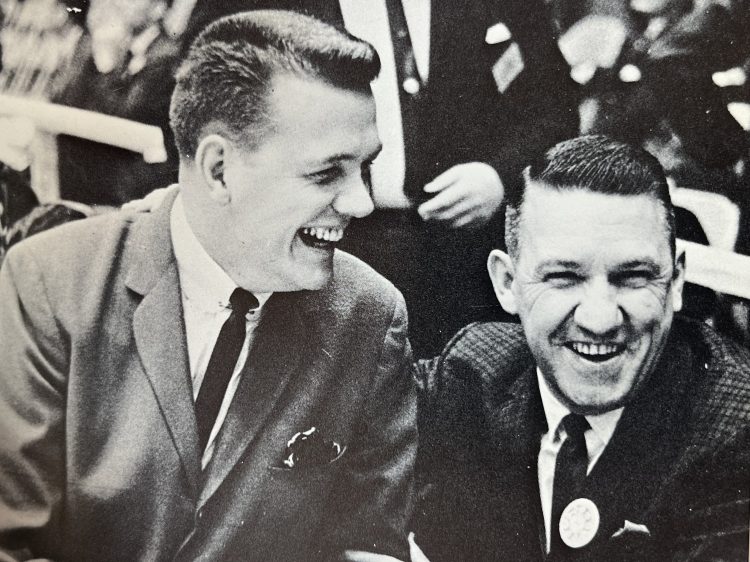
Rod’s basketball career began to come apart in the middle of the 1960-61 season, under his old coach from West Virginia, Fred Schaus. “I was averaging 18 at the all-star break,” Rod says. “I had a helluva all-star game. All of a sudden, I was right there. And then I came tumbling down. Schaus stopped using me. I don’t know why. He just stopped using me. All season it had been me and Selvy. West in spots. At midseason, he was under a lot of public pressure to use West. He should’ve used West. I mean even when he was a rookie, I couldn’t carry Jerry’s shoes. But Selvy! Schaus went to West Virginia, and Selvy and he stopped using me, and I don’t know why. Maybe it was because he resented my dissipations at WVU. He’s a straight guy, and maybe he resented my ways.”
Rod’s pro career lasted two more years. He clowned and cavorted and hung on. He made himself as popular as possible with the public in an effort to insure his place on the roster. He went in hock for a $45,000 house in the hills of Malibu, where Lana Turner and other movie stars were his neighbors, as though fate could not frown on him after such a daring gamble.
Life had been a ball, never to be taken seriously, and now it was in deadly earnest. “I’m the only Laker who never got a raise. I made $10,000 every year I’ve been with the team. They could play me six more years just on the money they should have been paying me these first six years,” he said softly.
****
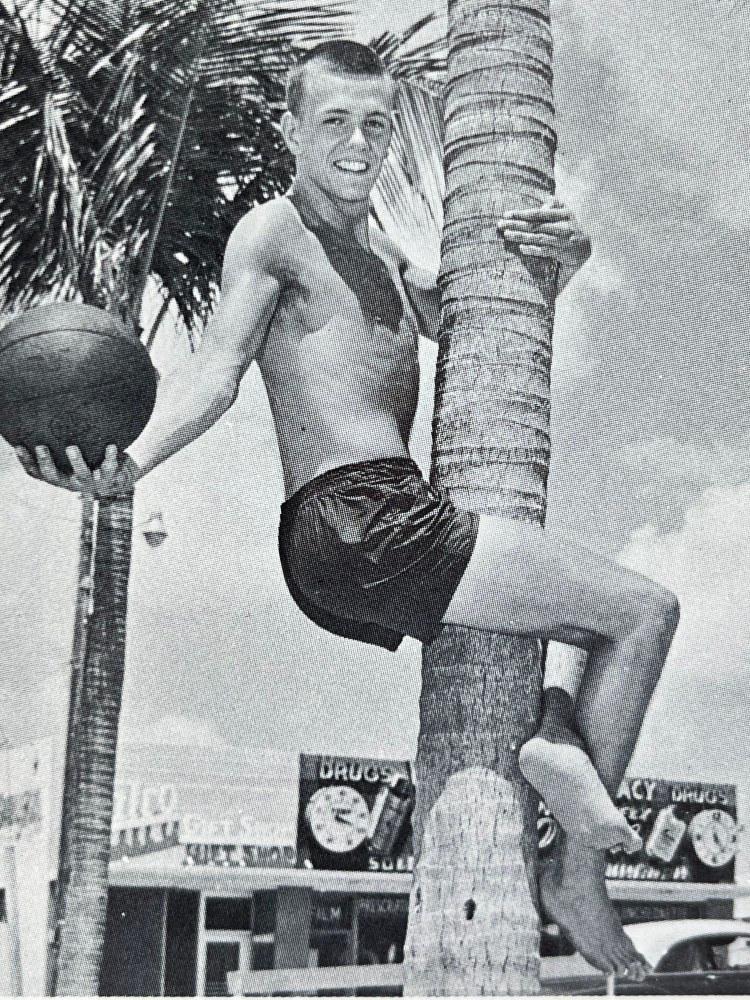
To make ends meet, his second wife Flo was working, though pregnant with their first child. “I want that baby,” Rod said. “You wouldn’t believe how much I want that baby.”
Flo said, “I don’t like for him to clown. I’m embarrassed by it. People think he’s a clown, but I know he’s not. But I think he really does enjoy it.”
“It’s expected of me,” Rod said. “What the hell. If it’s what they want, I’ve been doing it a long time. It’s easy for me now.”
He sighed. The mask has been set aside for a moment. The man behind the clown’s mask had emerged. “Don’t you know,” he said, “that some people call me Hot Rod off the court, too? They say, ‘Nice to meet you, Hot Rod.’ Can you imagine that! They think Hot Rod is my real name.”
The Lakers finished the season and came apart in the dressing room, beat in the finals again, as always. Someone said to Rod, “See you next season, baby.” And Rod said, “You can count on it.” But one day during the offseason, Fred Schaus told him they had no room on the roster for him for next season.
However, general manager Lou Mohs had arranged a trade to San Francisco for Rod, and it was a great opportunity with another team for him, Schaus said. Rod said no. He wasn’t going to start getting shoved around. He wasn’t going to leave L.A. There was too much here for him. This was his town. He’d make out fine, he insisted, really believing it then, too. He’d had it with playing pro basketball anyway, he said.
“You can announce my retirement,” he told Schaus. “Fill out the forms. I’ll pack up and leave.” He shook Fred’s hand. “How sweet it’s been,” he grinned. As he turned away, where Fred could not see him, his grin faded. What the hell. And then he packed up and left, walking slowly away from it.
****
Today, the names and faces still drift dreamily through Rod Hundley’s remembrances. “Bobby Leonard. Old Slicker. My best buddy. He had his faults. He snored like crazy. He’d come in late, rustling a newspaper, wake you up, tell you what was in the newspaper, then go to sleep and start snoring. And you’d lay there grinding your teeth. Once he fell in a great big metal container of beer and ice. He went straight and became a helluva coach. When he got traded to Chicago, it broke me up. That’s basketball. A trade. Whap. A piece of me gone, a big part of my life. I never let on, but I cried when he went. I couldn’t bear to say goodbye to him.
“Pops Selvy. He’d eat a bowl of chili, a cheeseburger, and a pizza just before a game, wash it down with beer, then complain to the trainer, ‘Jeez, I’m sick as hell. Can’t figure out why, either.
“The trainer, Frank O’Neill, was the butt of everyone’s jokes. We’d always steal the stuff out of his little black bag, hide skeletons in his closet. He’d go crazy.”
Gene Wiley. Ols stoneface. Great painter, but the man never said a word in his life. For a while later, he was out of work and got a job as a janitor at the Forum. A great talent, but no drive.
“Wayne Yates. A wild man. A real wild man. Once we were in a nightclub in Syracuse, Andre’s, along with a couple of other Lakers. They had an entertainer on stage who was doing imitations. He was really bad, and Yates ridiculed him, which annoyed some of the other patrons. The guy imitated Tony Bennett. When he was done, Yates yelled up, ‘Now do Tony Bennett.’ Anyway, we left, and some guys followed us out of the club, drove around until they spotted us, hopped out, and cornered us in an alley. One guy went up to Yates and challenged him. Yates was 6-8, 240 pounds, and the other guy was about 5-10, 160. It was ridiculous. Yates laughed and handed me his coat.
“Yates threw a big roundhouse punch, missed, and the fight was over. This guy lit into him and took him apart. Some big guy punched me in the mouth and pulled Yates’ coat over my head. I hit the ground and lay under the coat, pretending I was dead. When they left, I came out and I had blood all over me, and Yates was laying there and his head had been split open like a watermelon. They stitched us up, and the next day as we were blowing town in a cab, the cabbie told us those guys had been the DeJohn brothers. Mike and Joey, pro fighters. Joey was a middleweight, Mike a heavyweight. Joey spotted Wayne 10 inches and 80 pounds and absolutely ate him alive.
“Jerry West. Zeke from Cabin Creek. A country boy who became a sharpie. Straightest guy I ever knew. It’s incredible that we became buddies. Opposites attract, I guess. He says he wishes he could be more like me. Sometimes I wish I could be more like him. But I dunno. He’s done 10 times as much with himself as I have, but he’s one-tenth as happy. He suffers through success. He’s never satisfied. A great athlete and a great guy. Mr. Clutch. But I’d rather be me.”
 From Way Downtown