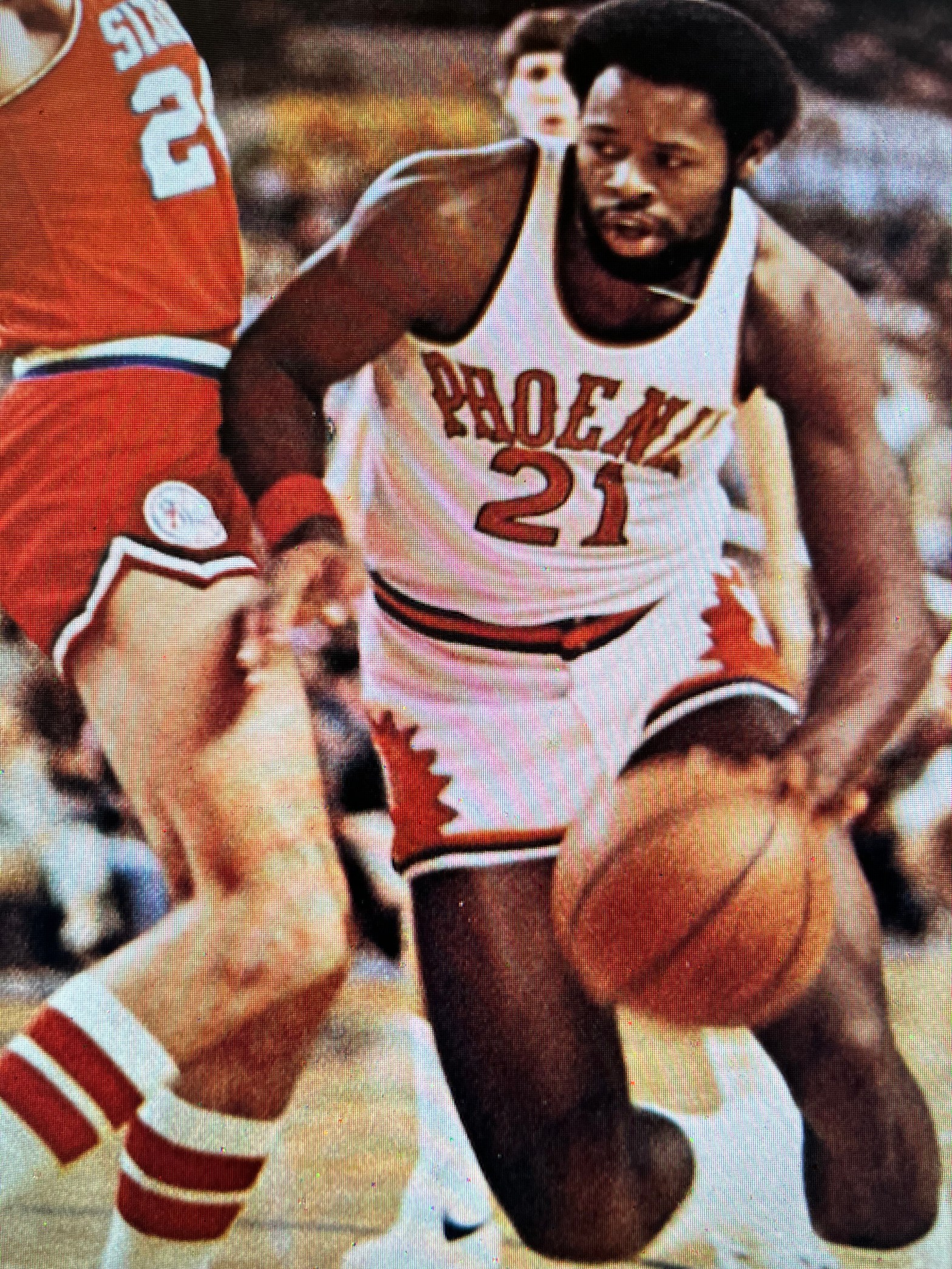
[Truck Robinson didn’t sit down for many in-depth interviews during his NBA playing career (1974-84). However, whenever Robinson agreed to sit down and tell his story, he spoke his mind honestly and often colorfully, seemingly never evading the tough questions with throwaway responses. That’s the case in this profile, published in the May 1979 issue of SPORT Magazine. Robinson tells it like it was to journalist/novelist Robert Ward, adjusting to his fourth NBA team in five pro seasons. Interestingly, Ward also shined as a TV scriptwriter for series such as Hill Street Blues, Miami Vice, and New York Undercover.
If you’d like to sample a more recent interview with Truck Robinson, I highly recommend this one from two years ago on the Bill Cartwright Show. Honest and colorful it is, definitely worth the click.]
****
Tee-ruck. Truuuuuuuuuuck. Big Truck, 6-foot-9, 258 pounds of black onyx, the most feared power forward in the game. Nasty Truck-a-roo whooshing down the lane like a semi highballing through a blizzard. Beeeeeg and baaaad, mean enough to mash your medulla going to the boards. And Truck Robinson, the leading rebounder of the 1977-78 National Basketball Association as a member of the lowly New Orleans Jazz, is now powering the slick, smooth Phoenix Suns.
Wrong. That’s the legend of Leonard “Truck” Robinson. The only truths in that first paragraph are that Robinson is a very tough man to beat for rebounds, and the fact that he now provides that service for the Suns. Which makes Phoenix coach John MacLeod very, very happy. “He gives us a whole new dimension,” MacLeod says. “The element that we lacked. Power and strength inside.”
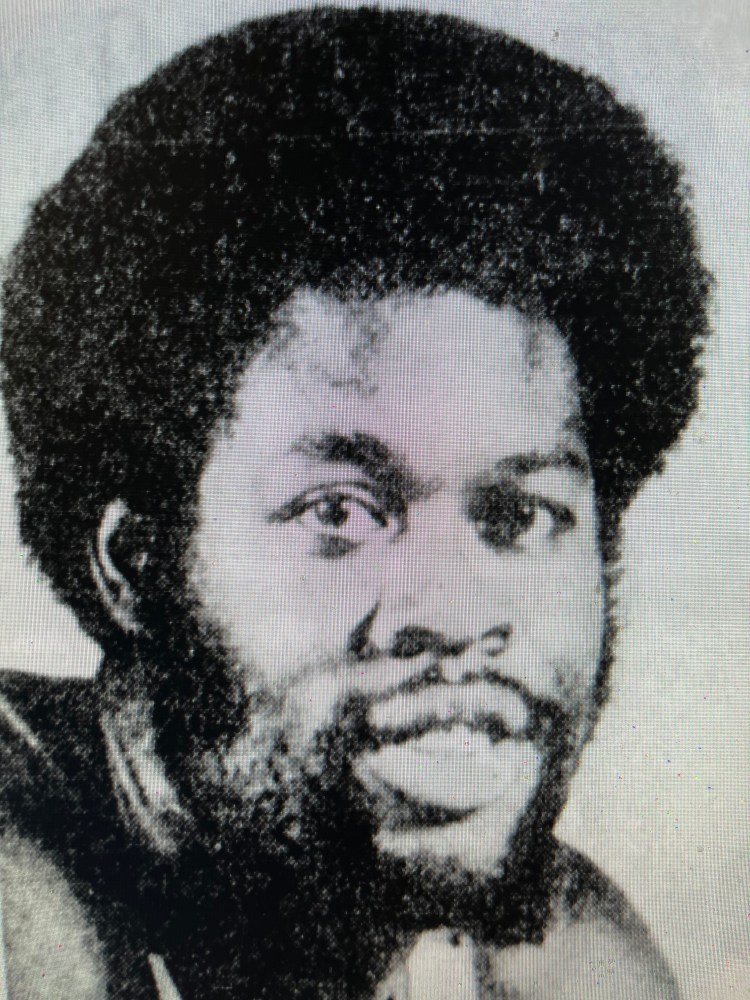
Which is true, but which still doesn’t begin to separate fact from the legend of Truck R. As Robinson himself puts it: “Everybody talks about me like I am The Hulk. Well, I’m not like The Hulk. I’m not built like The Hulk, and I don’t move like no monster. I’m 6-foot-7 and weigh 235, and I do what I do in a variety of ways. I ain’t looking for nobody to kiss my butt. I just would like people to see me for what I am and who I am. I just want to be treated like a man.”
With the Jazz, Robinson does not feel he was so treated. Last season, he averaged 22.7 points per game and led the league in rebounds with 1,288—normally a feat reserved for 7-foot centers who clog the lane like stalled Winnebagos.
And this year he was doing nearly as well. Yet, he failed to make this year’s all-star team. Some attributed the injustice to Robinson’s switching from east to west in the trade. But others, Robinson among them, blame it on his bad rep. Somehow the word had gotten out that Robinson got rebounds only because he played off his man, implying that he cared mainly about his own stats or that he was simply too big and slow to guard anyone.
It wasn’t only hack sportswriters and TV color guys who belittled him. The New Orleans Jazz, an organization not noted for its brilliance in anything save catering to Pete Maravich, traded him to Phoenix for Ron Lee and Marty Byrnes, neither of them starters. They also got two No. 1 draft choices and some cash.
But it still seemed strange, so I flew to Phoenix to hang out with Leonard Robinson, the man who has played on four teams—Washington (1974-76), Atlanta (1977), New Orleans (1977-79), and now Phoenix—in his five years in the league, and who is perhaps the most misunderstood player in the game.
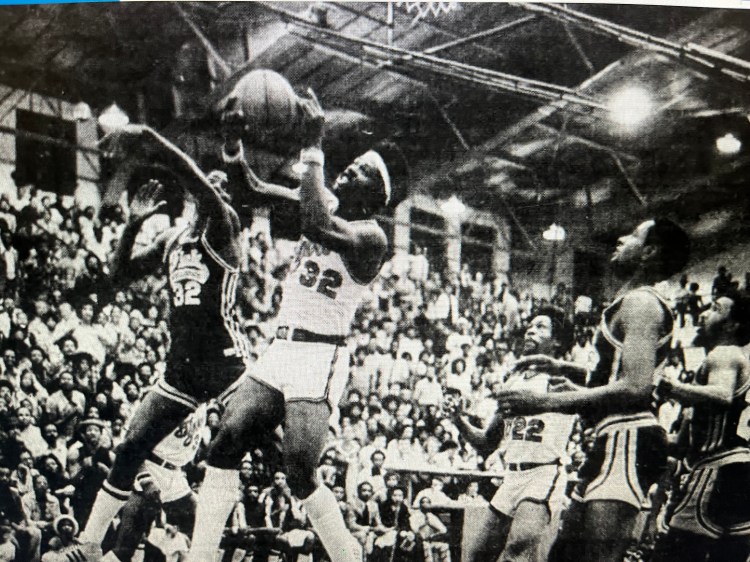
Robinson’s game is as good a place to start as any. Over the past month, I’ve watched Robinson’s game on television and in person, and the shocking thing I’ve noticed is the absurdity of his nickname. Like all media shorthand, it sounds nice. Especially on the big Black man. Big strong TRUCK. Powerful as a machine—turn the key, and it starts rolling. But Robinson never tries to overpower a man unless he happens to be facing a physically domineering opponent like Trail Blazer Maurice Lucas. Then Truck will muscle, fight, and perform like the proud bearer of his name.
“That’s because against Lucas,” Robinson explains, “you have to play that way . . . He’s tough, and he’s all over you. So you fight back. But generally, in spite of what they write in the papers, most forwards in the league don’t play with that kind of aggression because mostly it don’t work. You tire yourself out, and you’re not as effective.
Does that sound like Moose Malloy talking? The more I watched Truck Robinson and the more I blocked out the stereotype to really watch him, the more I decided that he was actually one of the shrewdest operators in basketball.
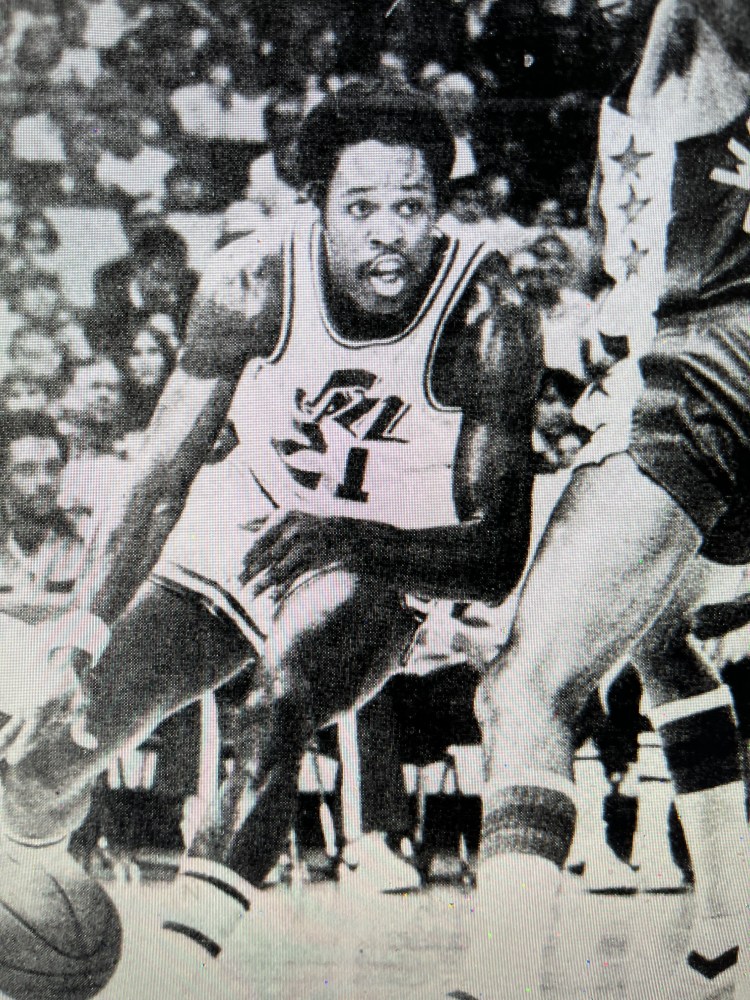
To wit. The Phoenix Suns are playing the Milwaukee Bucks, and Robinson is matched up defensively against Marques Johnson. The quick, fluid Johnson penetrates to the inside as slickly and effectively as anyone in the game, and these days his outside game has been nearly as deadly. Tonight, he gets his 25 points (his average is 26.3), but he also gets his share of turnovers because Robinson wears him out by pressing him closely. Robinson, supposedly slower, scores 18 points—six of them at crucial moments down the stretch in the Suns victory.
He has played only seven games for the Suns, barely enough time to learn MacLeod’s complex offense, but he spends the game teaching the Bucks defenders lessons in finesse. On fastbreaks, he clears the boards, not so much with muscle as with precise timing and good boxing out; on an outlet pass, he hits guard Paul Westphal waiting at the key, who passes to guard Don Buse for an easy two. On a set play, Robinson switches with center Alvan Adams, who goes backdoor against anteater-slow Kent Benson. Robinson himself constantly feints, darts and moves without the ball—which results in six of his points coming on easy layups. “Easy” because he worked for them, running his man into Adams, then ending up free beneath the bucket. His other points come from a finely-honed bank shot, which he shoots almost flatfooted, hardly the Truck-like image thrust on him by the media.
As Robinson describes it: “I stand on the perimeter, look at the man right in the eye, and I let him bump me a little. I learned that from Earl Monroe with his spin shot, though I don’t spin. When he bumps me, I arch up on my toes a little and shoot the banker. I seldom jump when I shoot—that throws me off. You see, I came to basketball late. I didn’t start playing until junior high, and I still don’t do things in an unconventional way.”
Indeed, Robinson’s funky, self-taught style often looks awkward. Alongside the gazelle-like grace of Walter Davis, he can look lumbering. Truck Robinson doesn’t float anymore than he mows people down. He is a craftsman. His usual game is to outhustle his opponent—and sometimes outmuscle him—but mostly he outthinks adversaries.
“I look slow,” he says. “I have a heavy build. But I don’t have the muscular definition that guys like George McGinnis and Darryl Dawkins and Maurice Lucas have. Compared to them, I’m a very small forward. I’m heavy, though, big-boned, and I can move quicker than most of them. So if they play up on me, I can go by them; and if they play back, I’ve got the bank shot.”
So why don’t people perceive the self-evident? Is it Robinson’s personality?
****
I first sat down with Truck Robinson at the Piccadilly Cafeteria, a homey place which caters to senior citizens (in fact, on Sundays, I got the impression that the whole city of Phoenix was populated by senior citizens and young people practicing up for their shot at being old). Robinson, seated with guard Ted McClain, is eating gumbo soup, a steak, and drinking a glass of lemonade. As he talks, Robinson tends to look up at the ceiling a lot, as if to suggest the old I’m- talking-to-you-because-I-have-to-but-I’m-really-beyond-all-this shtick.
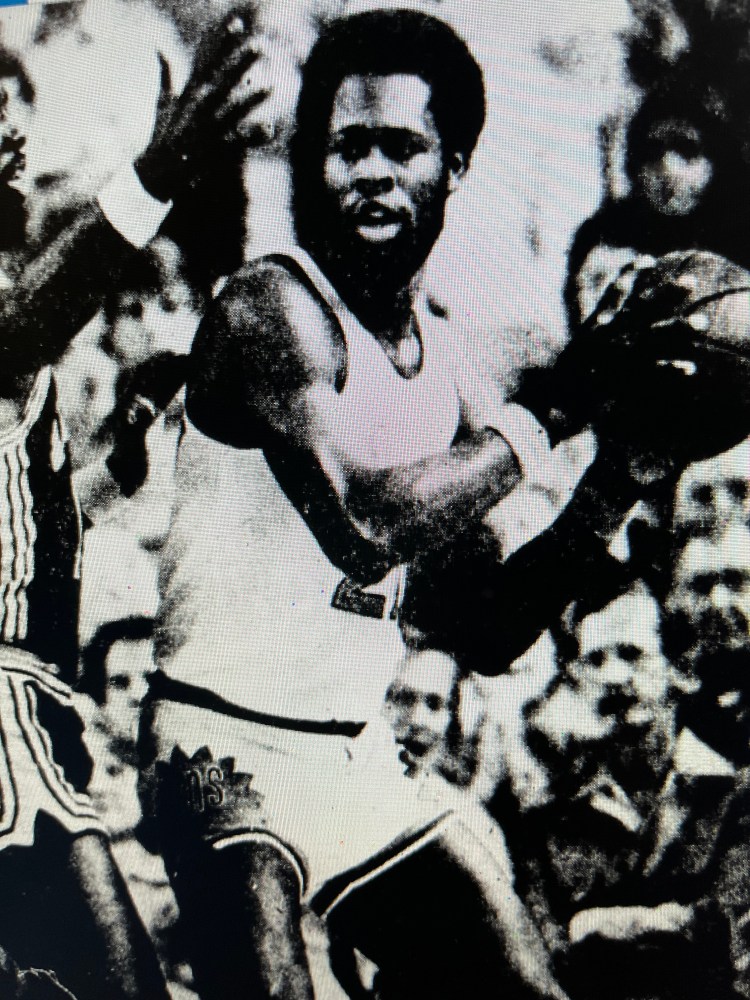
But as the three of us warm up to one another, Robinson’s eyes stop rolling, his voice becomes firmer, and I understand the habit was merely a manifestation of shyness in the man . . . coupled with more than a little bitterness. “It’s hard for me to talk to writers,” Robinson says. “Because sometimes they make stuff up. There was a woman writer in Philly who asked me a lot of questions and I answered them straight, but it came out all different. You get burned so many times.”
Ted McClain, who has seen all the wars, nods his head in agreement but smiles warmly. Robinson looks over at him, as if taking his cue from the eight-year veteran. “Like New Orleans,” Robinson says. “Now that was the most embittered experience I’ve ever gone through.
“I still don’t understand it all. Pete Maravich wanted me on that team. Coach Elgin Baylor, Mr. Battistone, the owner, all of them, asked Pete who he wanted on the team, and he said, ‘Get Robinson,’ so they did . . . but the way it turned out was like a nightmare. What I did for that team was far and away the most important contribution; [it’s] only the third time in 22 years that a forward has led the league in rebounding. But what do I get for my efforts? Nothing but trouble.
“The writers down there crucified me. They wrote that I played off my man—that’s why I got so many rebounds—but you look at the stats. There was only a very, very few games that any man of mine got his season’s average, and I can only think of maybe three of four games all season I let a guy get over 30. The Suns must have noticed it, but down there . . . nobody said a thing to me.
“Do you realize that not once during the entire time I was with New Orleans did the owners come into the locker room, shake my hand, and say a simple thing like ‘nice game’ or just pat me on the back? But if Pete got 20 points, hey, they were all over him.”
I look over at Ted McClain, who nods and smiles with faded resignation. “It was always ‘Pete this and Pete that,’ and I didn’t mind, except he didn’t deserve it. I mean, they say the man is a shooter. Well, let me tell you this: There are very few pure shooters in the NBA. Brian Winters is one, Marques Johnson is one, there are a few more, but Pete isn’t [a pure shooter]. Sure, he’s led the league in scoring, but check out his shooting percentage. Sheeit, he only shot about 43 percent . . . but down there in New Orleans, nobody paid any attention to that.
“Start of the year, I used to see him in a bar drinking beer. He is a big beer drinker, and he would buy me a can and we’d talk, and, man, he knew just about everything about basketball. I mean, he would make a great coach, and I thought we was going to get along fine. But then later, he started saying stuff to the press about how all I wanted was the ball.
“Man, he got a problem. Hey, in hotels he don’t even stay on the same floor as the other players. You check it out—if you ever cover a game with the Jazz, look at the register. It’ll say. ‘Mr. Maravich is not to sleep on the same floor as the rest of the team.”
“I don’t know why,” Robinson says. “It be one of two things. One, he just don’t like the other guys or, two, he be some kinda damn Howard Hughes.”
He stares up at the ceiling again, as if declaring his confusion to the gods. “Well,” I say, “that’s all behind you now. Everyone seems to like you here in Phoenix.”
“I think so,” Robinson says. “But it’s not easy to forget how you was treated. It ain’t easy at all. It takes all the fun out of the game.”
McClain smiles and shakes his head. “Let’s get outta here,” Robinson says, “I gotta go buy me a car.”
****
We are driving toward a Mercedes-Benz dealership. Robinson and me in a red 450 SEL that’s been loaned for a test drive, and McClain behind us in the Cadillac convertible which Robinson is about the trade-in for the new car.
“How do you like this city?” I ask.
“A little slow. I liked Atlanta better. That was a swinging town. And so was New Orleans. I liked that town. This town has so few places to go; you go out to the disco or one of the restaurants, and you see the same people every night. It gets depressing.
“Well, it can’t be too bad—I saw you the other night at Willy and Guillermo’s [a local disco and Mexican food restaurant], and you had a very nice-looking woman with you.”
“Sure,” Robinson smiles. “I like running with women. But I also like them as friends. I’ve been knowing some women for five years now, and I like them fine.”
“How about marriage?” I ask.
Robinson shakes his head firmly, earnestly. “Not yet,” he says. “In the NBA, you’ve got guys that was already married when they came out of college, and you got guys who are going to quit soon and they get married. But very seldom do you get a guy who has been in the league one or two years who decides to get married. The schedule’s too hard on a woman.”
His voice drops a few decibels, and I stare at the Phoenix sky, which surrounds us like a brilliant blue bubble, and think of who I am talking to. This man has been depicted as a cross between Godzilla and King Kong. Yet neither his game nor his personality have much to do with the image.
I begin to feel uncomfortable, not because he has been candid and sensible, but because I expected him to be less than that. In short, it occurs to me this brilliant sunny afternoon that there is a ghost hanging over the story of Truck Robinson; the ghost of racism, presumably banished in the late 1960s. What’s worse is that I recognize it in myself—I had expected to talk to a caricature. I hadn’t felt that way when I was assigned to talk to a white player, and I hadn’t felt that way when I talked to Black men and women six or seven years ago, because in those days, it was somehow out In the open—I was constantly reminded of the spectrum. But here I had been subconsciously racist In my idiomatic stereotyping, and I suddenly get a sense, as we glide by cacti in the dry sun, of why Robinson is so obsessed with his experience on the Jazz.
“Listen,” I say, “I don’t like to bring up unpleasant memories, but this thing about the Jazz, how much of your problems with them were due to racism?”
“Almost all of them,” Robinson says simply, in the same understated and controlled way he says everything. “I remember when we found out that the Jazz was giving Pete Maravich a free-gas credit card. Well, I got three cars; wouldn’t I like to have a gas credit card? I’d earned it, but no Black man was going to get that. And at the end of the year when I asked them for a raise, they said to me, ‘We think you’re earning enough money.’ I said to them, ‘Do you mean I’m earning enough for a Black man?’ But it wasn’t just the money.”
Robinson turns into the car lot, and we sit a minute waiting for McClain. “Here’s a typical example. Me and Aaron James were sitting on the bench one day in practice, and one of the Jazz coaches comes over and he’s talking about this new rookie, and he says, ‘You guys should see this kid. He’s tough, aggressive, hard-nosed, intelligent . . . really a team player.’ Aaron and I just turned and laughed and said together: ‘He’s white!’ We didn’t even have to see him. When they start running down the attributes of a Black player, they always say the same stuff: ‘He’s talented, he’s got a great body, he’s real strong, but wild, uncoachable.’”
McClain pulls in, and Robinson says, “Well, let’s go get my car. I gotta get some satisfack-a-tion.”
We enter the dealership. Robinson banters with the salesman about the 450 SEL, and after about four minutes, signs on the dotted line for the $35,000 Mercedes. The salesman, who looks like a piece of dough in a leisure suit, comes over to me, beaming smiles, and says, “Hey you’re doing a story on Truck . . . boy, he really fills out those shorts, huh?”
I look at Ted McClain, whose face reveals not one whit of expression. “Yeah,” says the salesman, “we sell ‘em all cars. Gar Heard, he’s got a 450, and Henry Bibby bought one from us—and he sent some of his friends, too . . .” He looks at Robinson . . . “and Paul Westphal, and we’re working on a deal for Alvan Adams. Yessir, everybody wants a good deal onna car. You know what I mean, pal?”
“Yeah,” I say, “I know exactly what you mean.”
Robinson drops off McClain at his home, and we exchange phone numbers. He shakes my hand and tells me if I’m ever in Nashville to give him a call. “We’ll have you out to the house for dinner.” It’s easy to understand why Robinson seems to look up to him. In parting, McClain says, “I can relate to what Truck says. It does seem like sometime a man can’t win. Truck gets all those rebounds and points, and they say he didn’t play defense. You’d think if you had a player who did what he did, you’d be touting him all over the country,” McClain shakes his head.
At his apartment, Robinson gets me a grapefruit juice, and we sit and talk. “I grew up in Jacksonville, Florida,” he says. “I was the captain of the football team.”
“What position did you play?” I ask, figuring he was probably a linebacker or an end.
“Quarterback,” he says. “Raines High School. Before me, the quarterback was Harold Carmichael, the end for the Eagles, and before him, double zero, Ken Burrough. We had a great tradition of good players come out of that school. I had a lot of offers to go to Big Ten schools to play football. I coulda gone to some big schools for basketball, too, but I never had a white coach before. It wasn’t until 1969 that we played our first high school game against an all-white team. I remember our coach saying to us, ‘Listen, don’t worry about it. They put on their pants the same as you.’ It was like the slaves’ sons against the slave-owner’s sons.
“We played ‘em, and it was so strange. Won, too . . . made it all the way to the finals. But I never saw many white folks before. I had 11 brothers and sisters. My daddy, who was a preacher and a porter, died when I was three. My older brother Zeke, he was a great player. I remember being eight years old, standing out by a banana tree peeking in through the high school window at him playing ball, and I thought he was terrific. My other brothers was already in the army, and only my two sisters and Zeke was left. But then Zeke go leukemia and died. I think about that a lot. All the time.”
There is silence in the room, and Robinson sips his juice, clears his throat. “Anyway, I coulda gone to those bigger schools, but I remember Kareem—Lew Alcindor then—saying stuff about how he wasn’t invited to the parties even after a big win, the white coaches didn’t want him messing with white girls. And I thought, ‘No sir, I don’t want to get mixed up with that,’ so I went to Tennessee State.
“That was fine, everybody treated me fine, especially the coach, Ed Martin, who was like a father to me—lending me his car, taking care of me. I was just a kid, never really been away from home. But I wasn’t scared so much as curious. About the only thing that scared me was snow. I’d never seen snow before, and I remember when it come down the first time, I couldn’t hardly believe it. I went outside with my regular shoes on and fell down. I didn’t even know snow is slippery. So I went back inside and got on my tennis shoes, thinking that they would stick to it better. Well that was wrong, too. Man, I fell down again, and this time it got on my hand and stuck there, and I got scared . . . I mean real scared. I be shaking the shit off trying to get rid of it. Snow was scary.”
We both laugh, and Robinson stops again, thoughtfully sipping his juice. “It’s such a long way from there. I guess I haven’t really wakened up yet. It’s like being in a dream sometimes. All the moving around I’ve done. The Bullets, they couldn’t use me. The Hawks wouldn’t pay me, and last season took all the fun out of basketball for me. No, not making the all-dtar team seems ridiculous to me. If any forward deserved to be there, I deserved it. But I got to be strong, not let it get to me.”
“A lot of players these days seem to find strength in religion,” I say.
“No, that’s just a lot of bull. I know a lot of them guys. I won’t mention names, but I know a lot of them are married and running with more women than I ever did, and they be doing that stuff for 10 years, you know, and then suddenly they think I’ve been a bad guy, and they feel guilty and they hide behind the Lord. Well, I say you treat people right, and you don’t hafta hide behind the Lord trying to hide what you done.
“Now, I ain’t saying all of the guys that are Christian is like that. Some guys feel that they’ve been lucky, that Jesus has been so good to them—making a lot of money and playing ball for so many years—that they want to do something in return, and that’s all right. But I don’t really believe in luck, neither. I earned whatever I got. My family put up with years and years of deprivation, just to get one of us over.”
The next night, Truck Robinson officially joins the Suns. Playing a tough San Antonio team, Robinson scored 13 points and grabs five rebounds in the first quarter. He makes a beautiful bank shot from the side of the key, he makes a tough tap-in, and a spinning one-hander, six field goals in all, each of them with more finesse than muscle. And as usual, the man guarding him, Mark Olberding, is two inches taller than he is. But Robinson is too quick. At the press table, everyone is buzzing about his play. This is easily his best game as a Sun. Kneeling next to the bench as he always does, John MacLeod shouts instructions and encouragement.
“Watch the lane, Truck, atta boy . . . that’s it. Take him, Truck. Spin him. Take him right now, Truck.”
And Robinson seems to respond to his coach’s intense, supportive enthusiasm. Finally, late in the quarter, he pulls off his piece de resistance—a blind, behind-the-back bounce pass from the low post to rookie Joel Kramer, who has just cut across the lane and for a second lost his man. More than any of his shots or rebounds, this one play exemplifies what is overlooked about Robinson’s game.
The play brings MacLeod to his feet, yelling, “Whoa, Truck. Right . . . Right . . .” and immediately afterwards the whole Sun team starts going into various magic acts. Don Buse and Westphal steal the ball from San Antonio’s guards three times in a row, and Buse makes a beautiful between-the-legs back pass to Walter Davis, who hits a 20-foot jumper. The Suns set a team record of 51 assists. The fans are going mad, leaping and screaming, and the final score is Suns 133, San Antonio 108.
In the Suns locker room, the players are smiling, shouting to one another. Davis gives Westphal a friendly bearhug, and Westphal smiles at me and says, every loudly, very comically: “You want a story? I’ll tell you what, print this: We had a pretty good team here until Robinson came and started getting all those rebounds and making all those shots. Well, this is an ultimatum. It’s either him or me.”
Truck Robinson, stuffing his shoes into a gym bag, turns and stares at the ceiling, getting that suspicious glazed over look. Then suddenly he looks down at the beaming Westphal and over at Alvan Adams and Davis, and he gives out a great deep laugh.
Coach MacLeod comes walking through the room saying, “Way to go, Truck. Great game, Paul, Walter, Alvan, all right, great!”
Davis turns, switches on the TV and sees the sportscaster replaying one of his impossible spinning layups, and he jumps in the air. “Look at that!” he says, laughing.
Robinson laughs again, the tension easing out of his face, his eyes lighting up. “Look at Walter,” he says to me. “He’s out there having fun. I never seen anybody have so much fun as him. That’s how it used to be for me, you know? Then it became just a damned job. But now, maybe it will get to be fun again, you know?”
He slaps my hand and smiles.
 From Way Downtown