
[Oh, Jack Ramsay. In my last book, Ramsay was a major character for several chapters, and I did a deep-dive into his early NBA years in Philadelphia. My dive included an interview with Ramsay (very pleasant on the phone) and several players from his Philadelphia days. All respected his basketball intellect. But most still had deep reservations about his judgment, even after all these years. They implied that Ramsay was, at his core, an outstanding college coach and strategist thrust into a pro league that ran on pure one-on-one talent. This pure talent didn’t necessarily need Ramsay’s miracle picks and back screens to create their shots. I mention this only to highlight that Ramsay’s following opinions on Clyde Drexler shouldn’t be read as definitive. Highly informative, absolutely; the final word, no.
Also of note, a decade before he died, Ramsay published one last book titled Dr. Jack’s Leadership Lessons Learned from a Lifetime in Basketball. The book includes a few pages on Drexler, which he clearly pulled from the article below and added a few more observations. They show just how strained his relationship with Drexler started out. Here’s Ramsay on the rookie Drexler:
“Clyde had never sat on the bench before and couldn’t understand why it was happening to him in the NBA. We talked frequently about his situation, but he wasn’t satisfied with conversation—he wanted to play. His practice habits, however, continued to be less than satisfactory. He arrived on court seconds before practice started and would leave promptly when it was over, unless I kept him for extra drill work—which I did. Clyde did everything I asked of him in those workouts, but his body language told me that he was only doing it because he had to.”
Ramsay closes out his section on Drexler with an I-told-you-so story from several years later. Drexler is playing in the NBA Finals, and Ramsay is now a broadcaster with ESPN:
“[I] had the opportunity to interview Clyde, following the final win in their four-game sweep of the Orlando Magic. As he came over to our broadcast site, he was absolutely beaming with joy. I started the interview by asking, “Remember all of those drills that I had to do in Portland? The ones you hated to do? Those were done so that you could have a night like this.” Clyde laughed and said, “I know that now.”
What does Drexler think of Ramsay? In his 2004 autobiography titled Clyde The Glide, Drexler (and his co-writer Kerry Eggers) wrote:
“I loved Jack Ramsay, but we didn’t have an easy beginning. Jack had his way of doing things. It was quite different from [my college coach] Guy Lewis. We had the same goals in mind, but we gave each other a hard time about that. If I saw him in a pool, getting a swim workout, I would go over and say, ‘Man, is that all you got?” He would crack up laughing. Consequently, in practice, if he saw me getting beat at something, he would say, “Is that all you got?”
“Jack was a real mentor, which is what a coach is supposed to be. He gave you good guidance on how to eat right, how to take care of your body, how to work out right, how to work on different skill aspects of the game. The guy was an amazing physical specimen, who always kept in great shape. In his 70s, Jack was still competing in triathlons. That kind of attitude and dedication was motivation for me. Looking back on it, Jack was a great coach for me. I knew it at the time. But as a rookie coming into the league, you think you know it all. In reality, there is so much you don’t know.”
Ramsay’s article below, which ran in the January 1994 issue of Rip City Magazine, also adds some perspective on why Portland famously passed on taking Michael Jordan in the 1984 NBA Draft. As often commented, Drexler and Jordan played roughly the same position, and the Blazers badly needed a center. Less noted, Drexler had scored so freakishly high on his 1983 pre-draft psychological tests. Ramsay must have thought, despite his early scuffling with Drexler, he had a once-in-a-generation player of the highest character and capable of leading Portland to another NBA title. Which turned out to be close to the truth. Here’s Dr. Jack to explain more.]
****
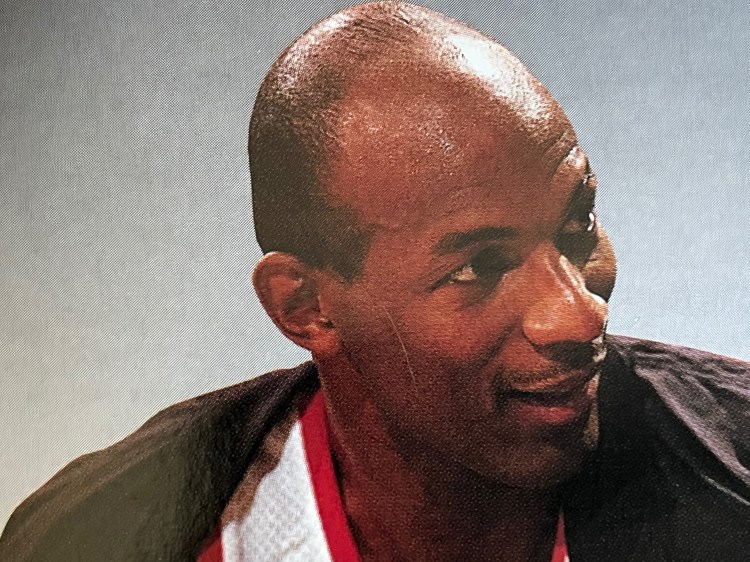
Prior to the 1983 NBA college draft, the Portland coaching staff, which included me as head coach, met with Stu Inman, the Blazers’ director of player personnel, to review the players likely to be available when the Blazers selected at number 14.
Inman was scanning a long list of players, when he stopped, cocked his eye, and gave us one of his patented quizzical looks. He had obviously come upon a name that intrigued him. “Who is Clyde Drexler?” he asked of no one in particular. Then, without waiting for a response, he added, “He might become a very special player in this league.”
Inman then proceeded to describe the skills that Drexler demonstrated during a brilliant college career at Houston and the positive personal information that Inman had gathered about him. The picture that he painted was so favorable that we agreed to bring him to Portland to be interviewed, have a complete physical examination, and take the motivational inventory test given to players.
I had a good feeling about my interview with Drexler. I came away with the sense that he was an intelligent person who wanted to win and looked forward to proving himself in the NBA. Since he was a strong competitor with leadership qualities. But I was unprepared for the information that came to me from Bruce Ogilvie, the psychologist that Portland used for its motivational testing. Ogilvie had a proven record of cutting to the psychological quick on players of all sports.
“This Drexler is outstanding,” he said. “The only player who compares with his test responses is Roger Staubach [the Dallas Cowboys quarterback]. Theirs are the highest scores I’ve ever seen.”
Management and coaches both were convinced that Drexler was their man. The only question remaining: Would he be there when the Blazers picked at number 14? Inman seemed to think so—and, as was his custom—he was right on the money. Thus, Clyde Drexler became a Portland Trail Blazer.
That was back in 1983. Do you remember who was in the draft that year? It was an interesting group. Take a look at the sidebar [at the bottom of this article] to see the players taken ahead of Drexler.
Drexler, like the Energizer battery bunny, still is going . . . and going . . . and going. If that same draft were to be taken over, knowing what we do about all those players, would Clyde be the number one pick? You better believe it!
****
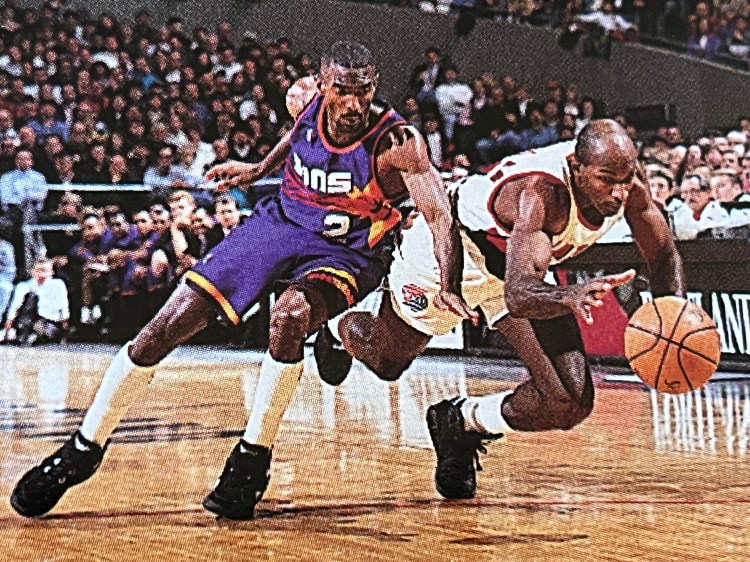
How did it happen that a player who has done so well would be selected so late in the draft? Let’s go back to Stu Inman’s favorite question and change it around to read: Who was Clyde Drexler?
From my perspective, Clyde came to the NBA equipped with tremendous athletic skills. His combined running speed, leaping ability, strength, agility, stamina, and reaction time were the best in any player that I had ever coached. But his offensive skills were not at that same level, and he had the usual defensive problems that players have when they first experience the NBA game.
On offense, while he was great in the open court, Clyde had to learn to shoot his jump shot from a higher hand position and with more accuracy. Then he had to find out how to use screens to get open so he could use his tremendous athleticism to score. And, although a strong driver and passer when going to his right, he lacked the same control with his left hand and was prone to turnovers going in that direction.
It was not immediately evident, therefore, that Drexler was a future all-star player. Add to that the fact that the Blazers had two excellent players, Jim Paxson and Calvin Natt, already in place at his positions. The end result was a frustrating experience for rookie Clyde Drexler in 1984. Portland finished that season with a 48-34 record. Drexler played in all 82 games, averaged less than 20 minutes, scored 7.7 points, had under three rebounds, and fewer than two assists per game.
Clyde was very unhappy with his rookie season. He felt he should have played more and, although he wouldn’t admit it, I sensed he was a bit puzzled why he was having problems adjusting to the NBA game. He and I had many confrontations during that year.
In the postseason critique that it was my practice to have with each player, I explained to Clyde what I thought he had to do to perform better and earn more playing time in the coming season. These involved mostly fundamental skills and better awareness of what makes teams win in the NBA. On defense, I told him that he had to defend his man more effectively, not just denying him the ball, but shutting off drives to the basket as well. On offense, he needed to learn to play with more patience as part of the team, and not get his points only from one-on-one situations.
Drexler listened intently to everything I had to say, and when we parted, there was no doubt in my mind that he would do everything required to be more involved in the team picture the next season.
The rest is history. In his second season, Drexler’s minutes doubled, his points soared to 17.2, his rebound average increased to eight, and his assists to more than five per game. From that season, the numbers steadily escalated.
But this isn’t all about individual statistics. Stats don’t mean anything unless the team wins. Drexler has helped the Blazers win 50 or more games in five of the last six seasons and has led them to the NBA Finals twice.
Who has Clyde Drexler become? Going into his 11th season, Drexler is the Blazers’ main man. He is the consummate professional who works hard at both ends of the floor. He is the driving force behind the team’s up-tempo game and a consistent scorer in their halfcourt game. In a sense, he anchors the defense with his weak-side help, his ball steals, his rebounding, and his shot blocks. He takes—and makes—the big shot, game after game. and is sure with critical, end-of-the-game free throws.
****
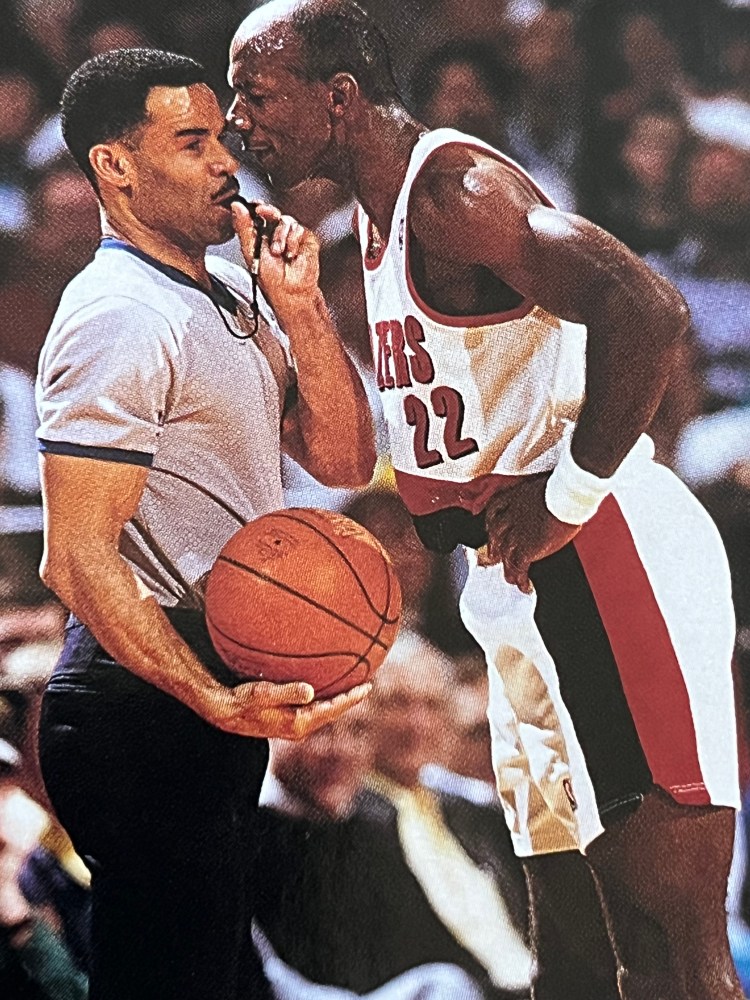
He has eliminated all those “weaknesses” that were in his game as a rookie player. That was only done by spending extra time on the practice floor and by forcing himself to acknowledge the problem, and then working to solve it. Bruce Ogilvie was right. This Drexler is outstanding!
Credit coach Rick Adelman for building a game compatible for Clyde’s skills and then giving him a comfort zone in which to perform. Drexler has flourished in that environment.
I recently was talking on the phone with Stu Inman, now a consultant with the Dallas Mavericks. “By the way,” I asked him. “Are you surprised how Clyde Drexler has turned out?” There was a pause at the other end of the line. Stu then responded: “I told you he was going to be someone special, didn’t I?”
Sidebar: The First 13 Players Selected in the 1983 NBA Draft
Clyde Drexler was the 14th player selected in the 1983 draft. Here are the 13 players selected before him, the teams that selected them, their history, and their current situation.
- Ralph Sampson (Houston): “The next Chamberlain” retired with a career average of 15.4 points. For $16,000 per year, he was an assistant basketball coach at James Madison last season; he now keeps a low profile and lives in Virginia.
- Steve Stipanovich (Indiana): After five seasons with the Pacers, Stipanovich had his career cut short by an injury. Now living in Grants Pass, Oregon, he farms alfalfa.
- Rodney McCray (Houston): An NCAA Final Four loser to Drexler’s Houston Cougars in 1983, McCray is now retired and living in Dallas. He closed out his career with the world- champion Bulls last season, averaging 3.5 points in 64 games.
- Byron Scott (San Diego): Traded for Norm Nixon after his first season, Scott was a member of the three championship Lakers teams. He was released by Los Angeles earlier this season. As of this writing, he’s still waiting for the phone to ring.
- Howard Carter (Denver): Hi-C was never too sweet in the NBA. He averaged fewer than six points in his 66-game career with Denver and Dallas.
- Russell Cross (Golden State): After leaving Purdue following his junior year, Cross went on to average 3.7 points in his 45-game NBA career. He now lives in Chicago and works for a cosmetic company.
- Thurl Bailey (Utah): Another connection to Drexler from their college days: He played for the North Carolina State team that beat Drexler’s Phi Slamma Jamma Houston team in 1983. A super-sub with Utah for years, Bailey currently occupies a seat on the Timberwolves’ bench.
- Antoine Carr (Detroit): The A-Train has made stops in Atlanta, Sacramento, and San Antonio, his current team. He’s a solid, if unspectacular, power forward.
- Dale Ellis (Dallas): Brushes with the law have tarnished this sharpshooter’s career. Still, the San Antonio Spurs guard is the most-prolific three-point shooter of all time.
- Jeff Malone (Washington): This former all-star has averaged almost 20 points per game for his career, but remains a defensive liability. Now with Utah, Jeff’s not even the best Malone on the Jazz roster.
- Derek Harper (Dallas): Best known for dribbling out the clock in a crucial playoff game with the score tied, Harper has spent his entire career in Dallas. Trade rumors have him going everywhere.
- Darrell Walker (New York): Have defense, will travel. Walker played 10 seasons with five teams, averaging 8.8 points. He’s now retired and living in Arkansas.
- Ennis Whatley (Sacramento): Now with the Atlanta Hawks, the consummate journeyman has played for numerous NBA teams, including the Blazers last season when—irony of all ironies—Portland needed someone to temporarily replace the felled Drexler.
 From Way Downtown