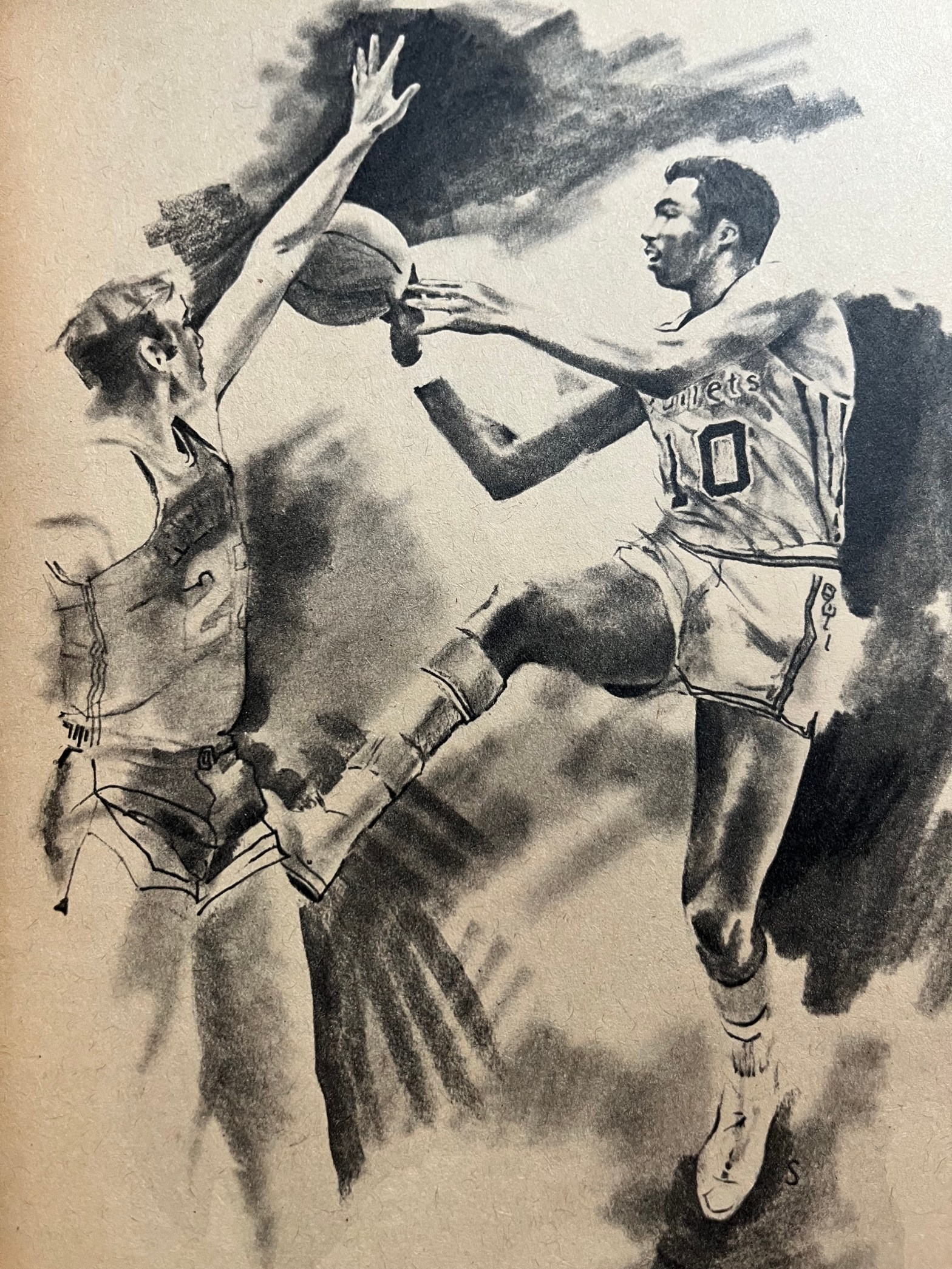
[Since George Mikan and the slower-moving days of the Minneapolis Lakers and the Fort Wayne Pistons, NBA players have complained that the season is too long and the travel is too arduous for them to excel night-in and night-out. The proof, they say, is written in the dreary stat sheets of teams enduring lengthy road trips or forced to play back-to-back-to-back nights.
Those dreary stat sheets could look especially bleak during the first three or four decades of the league. Back then, management staunchly assumed that if a player could lace up his high-tops and was well enough to trot up the floor a few times, he had to play. Load management? Fat chance. Front offices worried that fans would have a fit about paying regular price for a second-rate show.
But this play-at-all-costs mentality could backfire, too, especially if a road-weary team stunk up the court for all to see on the NBA’s nationally televised Game of the Week. In this short article, published in the April 21-27, 1973 issue of the TV Guide, writer Al Stump laments sitting through too many flat performances on the NBA Game of the Weeks, pre-load management.]
****
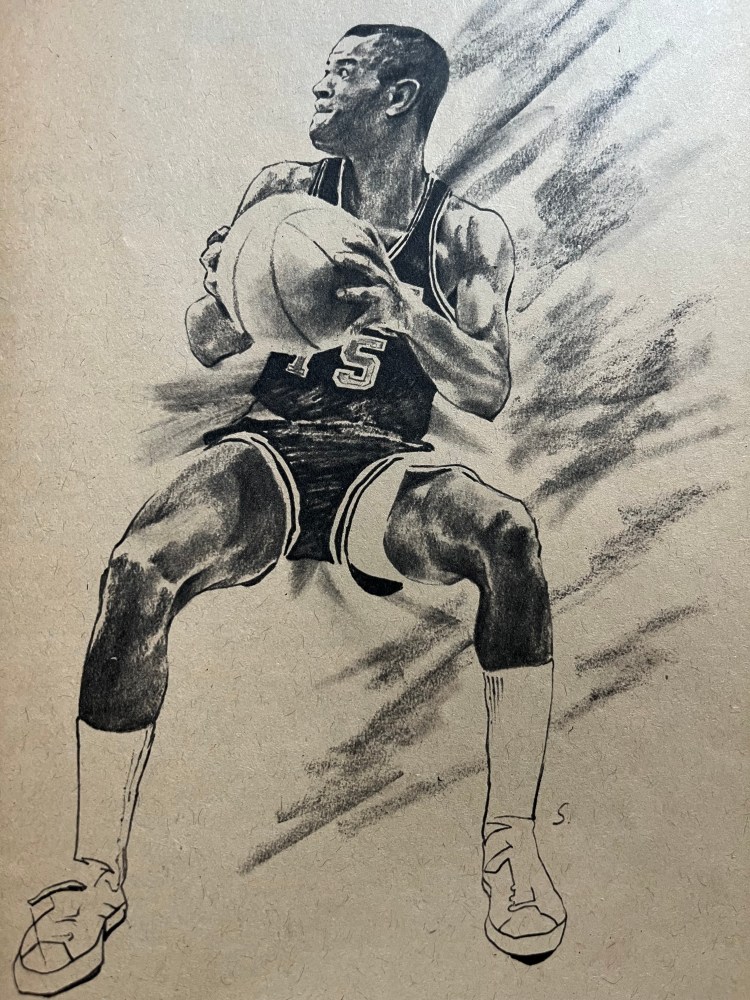
During the NBA playoffs a year ago, Wilt Chamberlain attended a practice at the Forum in Inglewood, Cal. Slowly, he removed his street shoes. “It’s too much,” he muttered. Taking the court in his stockinged feet and suit pants, the Big Dipper shot a few baskets and left for a sauna, bath, and bed.
That week, a network audience of more than 20 million had seen Chamberlain and the Los Angeles Lakers demonstrate the weariness of the long-season basketballer. Against the Milwaukee Bucks, the Lakers weren’t just bad—they were awful.
Pepless, they couldn’t run or pass and missed 75 of 103 field-goal tries. Their 72 points was the lowest total in a playoff in 17 years. “We were damned near as bad off,” said Oscar Robertson, captain of the Bucks. His team won, but listlessly.
Even the most-faithful fans groan at what they are handed in the late stages of a season that drags from mid-September to early May. Within today’s 17-team, country-beating schedule, poor play is frequent. Teams travel an average of 60,000 miles each regular season (playoffs add another 5,000 or so miles for qualifiers), which statisticians say amounts to 273 miles covered every 24 hours.
Not one, not two, but three seasons have evolved in the sport. The first section, about 50 games, runs to February 1, at which point more than half of the contenders have been eliminated. Section two—meaningless—lasts until the playoffs start in late March. Five weeks of divisional and conference jousting follow, until finally, a champion emerges.
Players’ protests on the matter are regularly filed; owners agree that it’s certainly a punishing program; but nothing happens. “We have to go along with it,” says star guard, Jerry West of the Lakers, “even though sometimes you’re so emptied out that you start downcourt and have to ask yourself which hand you’re dribbling with.”
The New York Knicks’ Dave DeBusschere: “It’s ridiculous. I’ve gotten awakened at a road trip hotel and had to ask my teammate what town I’m in.”
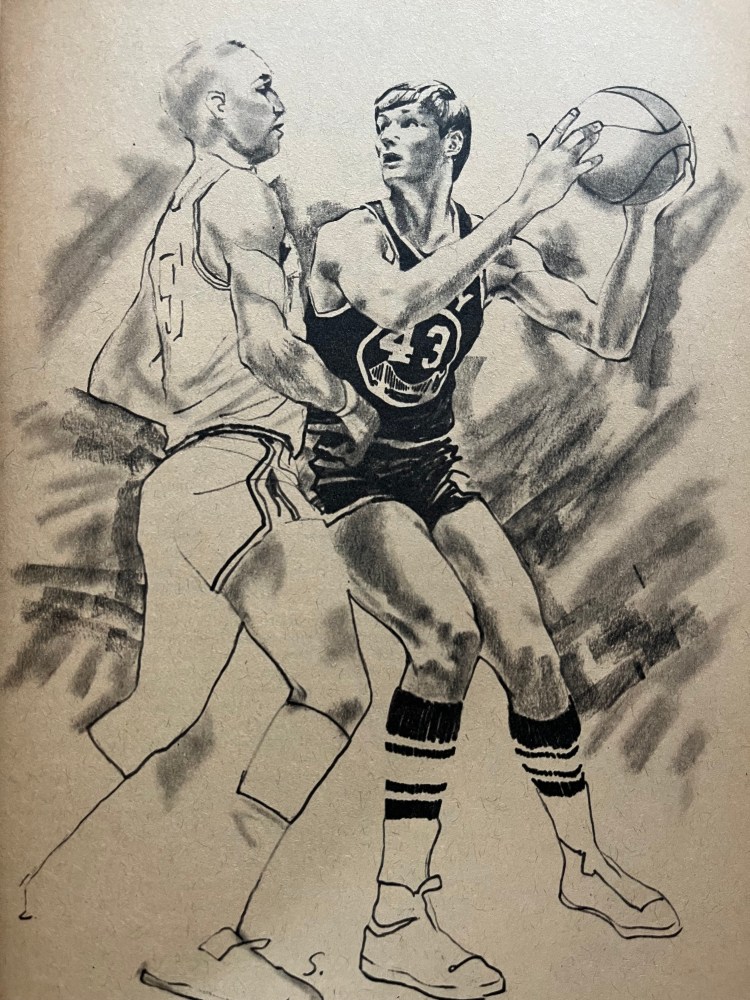
Athletes term it the Up-and-Down League—up at 5:30 A.M. to catch a plane, down in some time zone behind which their stomachs lag. It results in injuries, upsets, temper, eruptions, and flat performances.
Reasons for this marathon are numerous—imbalance of the loop, opportunism, method of splitting gate receipts, radio-TV income, increased operating costs, auditorium-booking problems, and availability of eager plungers to take over clubs that fail and fold. Basic to the situation is the fact that all but six or seven league members lose money, break even, or are only marginally successful. Some draw as few as 180,000 to 200,000 patrons annually and need to keep the store open longer to stay alive.
Over-expansion to towns not ready for the NBA caused the imbalance—that and huge player salaries brought on by costly feuding with the American Basketball Association. Prosperous clubs in Milwaukee, Boston, Los Angeles, and New York like extended play. Their attendance is high and, in the NBA, virtually all box-office income goes to the host team.
In coming weeks, ABC offers 15 playoff matches, seven of them in prime-time. Many of these ought to be thrillers rather than dogs. Take a network doubleheader presented not many weeks ago. In the opener, Baltimore vs. Los Angeles, ABC’s languid analyst Bill Russell spoke out plainly. “The Bullets are just standin’ around out there flat-footed, movin’ nowhere,” he said coldly.
Meanwhile, the Lakers appeared more interested in avoiding a leg sprain than in fast-breaking. No doubt hoping something would happen, ABC switched to Chicago, the Bulls against Milwaukee. In a no-hustle sparring match, Milwaukee collapsed, taking one of the worst beatings in its history, 121-99.
More and more these days, Russell and other sportscasters appraise the product pointedly, with such asides as, “If there’s a loose ball around here today, you can be sure those guys won’t go get it.” Welcome as honest descriptions may be, they hardly compensate for a home fan’s boredom.
Airline agents who shepherd clubs report that NBA and ABA teams journey 1.1 million miles seasonally, or a distance equal to four times the miles from Earth to the moon. One agent reports, “Tension among players is getting worse. During the playoffs, they blow up the smallest thing into an argument. If the coffee isn’t hot enough, they raise hell. One of the Lakers’ forwards sits there cracking his knuckles from take-off to landing. Kareem Abdul-Jabbar pulls a blanket over his head and won’t communicate. If they worked for me, I’d be worried.
“It’s depressing,” Players Association president Oscar Robertson says. “Once this year, we [the Bucks] played six games in six cities in six days, three of them within 48 hours.”
Paying $17.5 million to the NBA for three-year telecast rights, ABC hasn’t indicated displeasure at the quality of what it receives. Nor has CBS, which has agreed to pay $27 million for the right to telecast NBA games for the next three years.
Pressure to trim the season can be expected to develop elsewhere. Sponsors, viewers, and the athletes, if they object loudly enough, could bring a change. One solution suggested by the Players Association is to adopt a baseball-type series of several consecutive contests, replacing the present single-game, grab-your-bags, blow-the- town system.
The plan has its objectors. It would be preferable, however, to equipping a whole team with security blankets.
 From Way Downtown