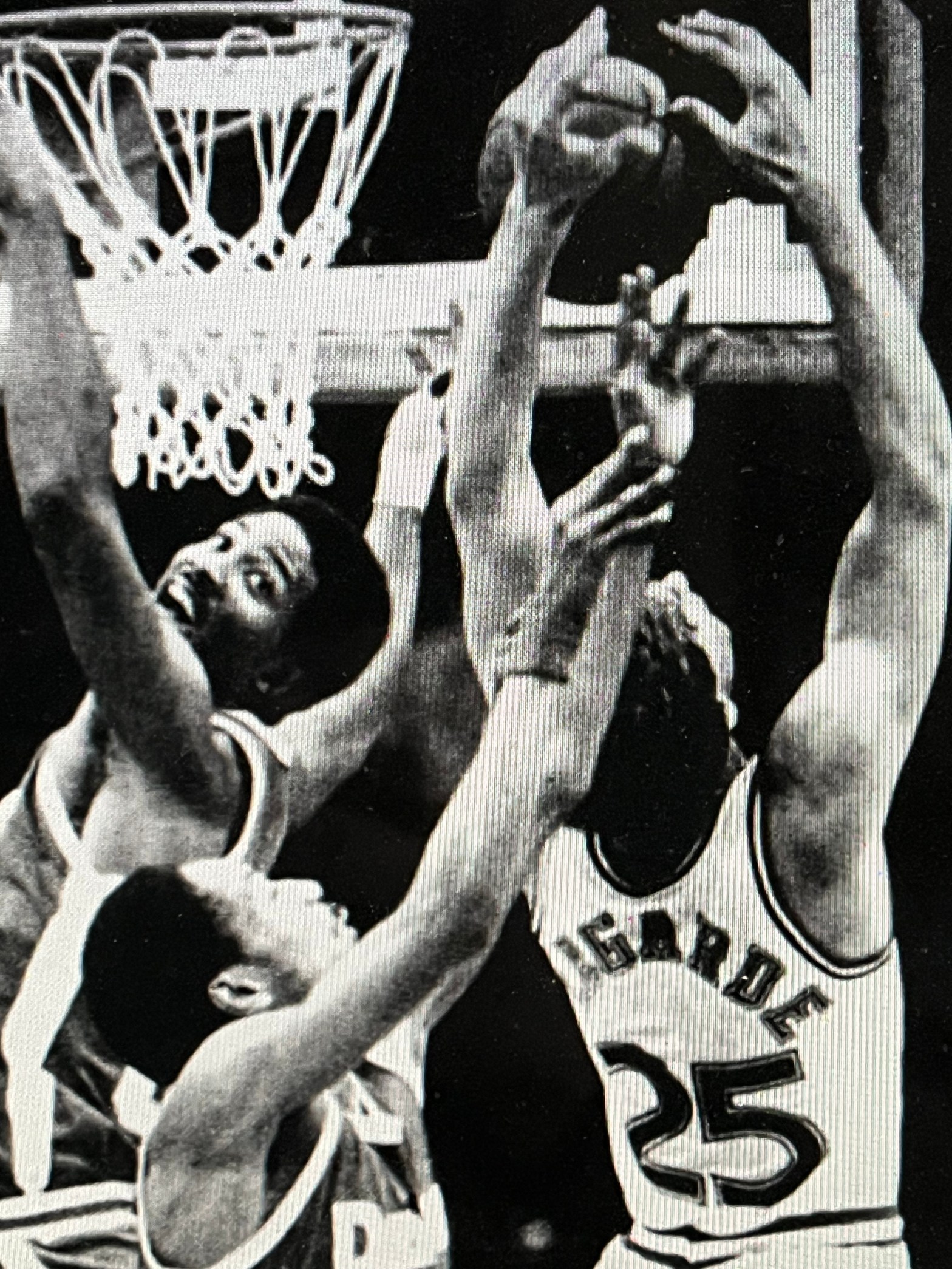
[The NBA expanded rapidly during the 1960s and 1970s, and coaches around the league used to hate giving up too many players in the expansion draft. Or, that’s what some claimed months later while trying to fill rosters and finalize their playing rotations.
But expansion drafts also had their pros and cons for players. What follows is a brief, and admittedly superficial, case study involving Tom LaGarde. The 6-foot-10 University of North Carolina star was the top pick of the Denver Nuggets (ninth pick overall) in the 1977 NBA Draft. With his UNC pedigree, LaGarde was considered a safe pick, even though he was scheduled for offseason knee surgery.
Things didn’t go well for LaGarde as a rookie in Denver. He signed late with the Nuggets and never worked his way off the bench and into the playing rotation. Before LaGarde’s second season, the Nuggets unloaded him to Seattle, where he ostensibly would back-up Marvin Webster at center. Except Webster soon signed a free-agent deal with New York, leaving LaGarde as the de facto starting center on a good Seattle team.
This first article, published in the February 1979 issue of Basketball Digest, tells the rest of the story. At the keyboard is A. J. Carr, a reporter with the Raleigh News and Observer. Afterwards, we’ll go to the expansion draft and why he LaGarde was left unprotected.]
****
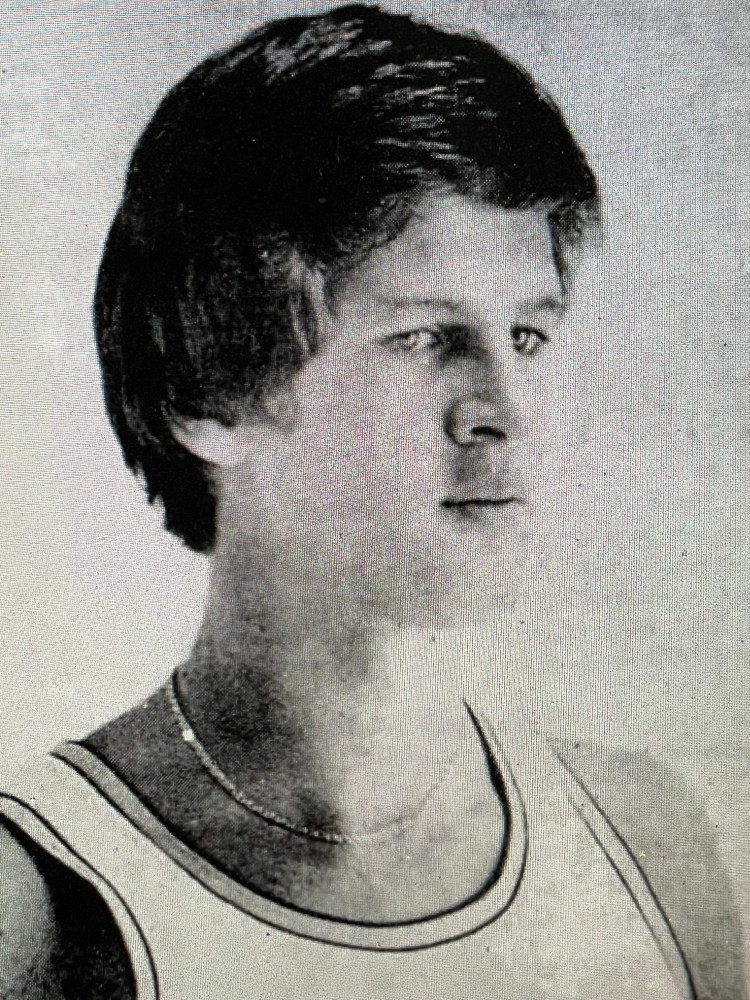
The sentences seemed to leap off the page and pop Tom LaGarde right in the face:
“Tommy’s going to surprise a lot of people,” predicted Seattle coach, Lenny Wilkens.
He will when they see how bad he is, retorted the cynical author.
Needless to say, those words, which appeared in Sports Illustrated earlier this year, stung LaGarde’s eyes like a handful of lye. They hurt so much that he clipped the story out and stuck it on his mirror.
Since then, the reflections have been one of a highly animated center who has contributed significantly to an early season Sonic Boom. “I didn’t appreciate that very much,” admitted the 6-10 NBA sophomore, referring to the magazine writer’s remarks. “It was kind of like hitting a guy when he was down. I thought it was very unfair. It was a real source of inspiration, though. Something like that fires you up.”
A short time later against San Antonio, LaGarde exploded for 32 points. Another evening against New Jersey, he ripped the Nets with a 16-rebound performance. That’s how “bad” Tom LaGarde is.
Yet, during the preseason, the skepticism surrounding the former University of North Carolina standout was, in part, legitimate. Seattle gave Denver, a first-round draft choice to bring LaGarde in as a back-up center for Marvin Webster. But Webster unexpectedly jumped to the Knicks and suddenly there was a panic in the Sonics’ pivot position.
While Wilkens predicted success for LaGarde, the records showed that he had been a reluctant rookie, averaging only 11 minutes playing time per night at Denver. What’s more, he had also been encumbered by leg surgery.
“The biggest difference then and now is my health,” said LaGarde. “Last year, I went into the season on a bad knee. This past summer, I ran a lot of miles and played a lot of basketball. I knew I could play well, and when Marvin left, it just open the door.”
Wilkens is showing paternalistic patience with his young center. And each night LaGarde seems to be gaining confidence while steadily converting the Doubting Thomases seated in the Seattle stands. “I’m far from playing the best I can,” admitted Tommy. “But I’m very satisfied. After 30 or 40 games, I think I’ll feel totally comfortable there.”
If LaGarde continues on his current pace, it’ll mark one of the neatest transformation since the frog turned into the prince. Offensively, he unabashedly takes the 15-foot jumper, maneuvers for inside shots and utilizes his quickness to drive past hulking centers. He also ignites the fastbreak with quick outlet passes.
Defensively, it’s tough. LaGarde admittedly has his hands full against the NBA’s powerful pivotmen. “My problem is with the big, strong guys like Bob Lanier and Artis Gilmore,” continued the serious, introspective SuperSonic. “When they get the ball down low, there’s not much I can do.
“The first and third quarters are really tough. But if I get through the first and third [quarters], I’m usually all right. I just keep going, and they get tired faster than I do. They have to keep up with me.”
Though LaGarde still must prove he can stand the test of time, he has won the early respect of his team and coach. “Tom’s teammates know he can do what I know he can do, and the opposing teams are finding out . . . He’s a great jumper, has long arms, and is an aggressive rebounder like Paul Silas,” Wilkens observed.
When he isn’t jumping for rebounds, he is often jumping around somewhere off the court. A scholarly man, LaGarde has Business interest around Seattle that consume part of his leisure time. He also likes to strum a guitar, an instrument he began fiddling with while at North Carolina.
On road trips, he might pack a couple of books, something to provide mental stimulation, something to think about other than picks and screens. Then, during the summer, leisure travel and sightseeing become an offseason pleasure.
But at the moment, few things seem as enjoyable as playing the pivot in Seattle, and beating just about every NBA team insight. Meanwhile, Tom LaGarde will keep plugging, hoping to show people that he really isn’t so bad. In fact, word’s out that Sports Illustrated is about ready to do a story on how good the young center and his Sonics are right now.
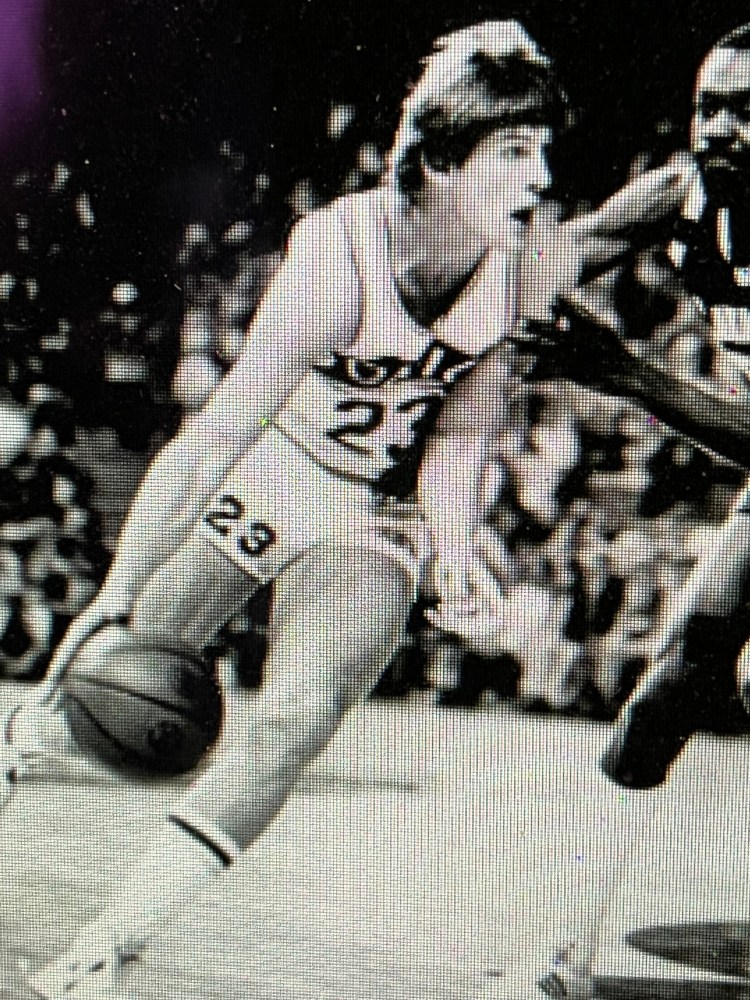
[A quick editorial note. As mentioned, the above article ran in February 1979. That’s due to the long lag time back then between submitting and publishing articles. That’s worth mentioning because LaGarde tore a tendon in his knee in December 1978. Surgery and eight weeks in a cast followed, ending LaGarde’s presumed big breakout season at just 23 games.
LaGarde was back in uniform for the 1979-80 season, though with bulky bandages and braces wrapped around his repaired knee. Even so, LaGarde stayed healthy enough to appear in all 82 games. He just didn’t play much anymore, about 14 minutes per game. In LaGarde’s absence, Seattle solidified its frontline with the outstanding Jack Sikma, Lonnie Shelton, and Paul Silas. LaGarde and his UNC pedigree and potential were no longer needed.
With LaGarde now an odd man out in Seattle, the Sonics left him unprotected in the next expansion draft. Here are the details from Dan Weaver, sports editor of the Kitsap (Wash) Sun. Weaver’s column, published on May 29, 1980, also shows how popular LaGarde was while he played in Seattle.]
Yesterday at 2 p.m., when most of the sporting public knew otherwise, Tom LaGarde was still officially the backup center of the Seattle SuperSonics. At that point, he had received no confirmation from the Sonics, that he was no longer a member of their organization.
Then the phone rang and, as expected, it was Sonic coach Lenny Wilkens wishing Tommy the best in his new venture: He was now part of the National Basketball Association’s new franchise. With a click of the receiver, Tom LaGarde, 6-10, 235, and 25 years old, officially became the property of the Dallas Mavericks, the NBA’s expansion team that at the moment is operating without a coach in a city that has never demonstrated much interest in indoor sports other than rodeo.
Saturday [in two days], LaGarde will check out of his Seattle apartment. Mount Saint Helens permitting, he’ll hit the road for Dallas, leaving behind a contending team that frolics in the most-livable city in the country. Considering that, and the fact the Sonics considered him expendable by tossing him into yesterday’s expansion draft, his spirits were high.
“It’s a business,” he shrugged at a 3 p.m. news conference in the Sonic office. “I’m ready to go.”
****
Two days ago, he was ready to stay. When he returned from Hawaii this week, he was “under the impression” the Sonics would protect him from the expansion pickings. “Yesterday,” he said, “it occurred to me that I was (on the unprotected list). I read the paper, and that’s where I first thought about it. I called some friends back east, who have pretty good sources, and they confirmed it. I thought, ‘Gosh, I’ll probably be gone.’”
At that moment, Tom LaGarde began thinking of advantages of leaving the Sonics. “There’s an opportunity in Dallas that maybe wasn’t here,” he said. “I didn’t play as much this year as I would have liked. That’s no revelation. Part of that was because I came off the injury (torn ligaments of the right knee suffered in Philadelphia on December 2, 1978), which is getting better and better. The second part was that we had a winning combination with Jack [Sikma], Lonnie [Shelton], and Paul [Silas]. I just wasn’t going to play much with them around.”
Perhaps not, but LaGarde does concede, “I might have played more next year because of the nature of the injury.”
He was the Sonics’ starting center until the injury interrupted his career. He is, then, something of a known commodity. Speculation already places him in the Mavericks’ starting lineup. The only other center whisked off to Dallas was Jerome Whitehead, late of Utah.
****
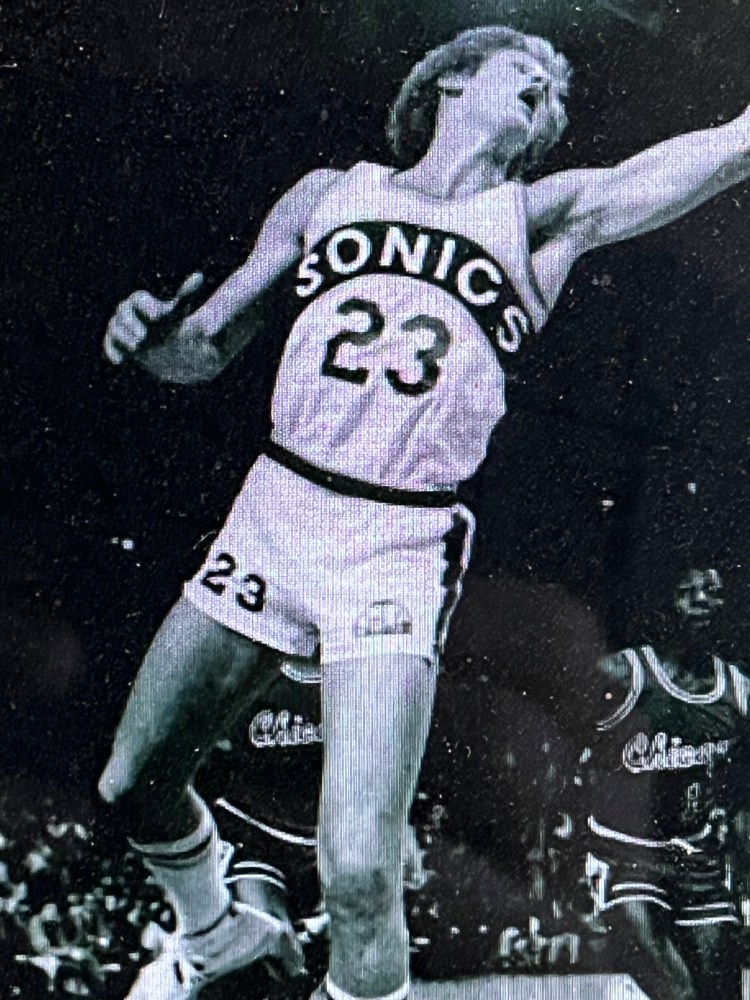
What was LaGarde’s first reaction to the news that he was headed to Lone Star country?
“First of all, you call the movers,” he said, ”and then you call Mom and Dad and tell them you’ll call ‘em from Dallas.”
LaGarde reveals no resentment that he was not informed of his status earlier. “It would’ve helped me plan better if I had known a month ago,” he added. “I’m sure there’s a reason for not telling me. I’m not questioning their motive. This is the nature of the business, and I’ll accept it.”
He’s just happy he didn’t plunk down next month’s rent. “I feel like a new kid. I am ready to go someplace new and play,” he said. “I hear Dallas is a great area—and I’ve always been a Willie Nelson fan.” Nelson, the country recording artist, is one of 24 investors underwriting, the Dallas franchise.
****
Does LaGarde consider himself slighted at being left open in the expansion draft? “Three (Sonic) players had to be exposed,” he said. “It ain’t like a rejection. The fact is, maybe (the Sonics) are going to sign Ralph Drollinger. Maybe they’re going to do this or that. Maybe I’m expendable, (but) I don’t look at it as a rejection. I look at it as an opportunity.”
LaGarde says the bruises of the season are gone. He has done little except rest since the Sonics were eliminated by the Lakers last month.
His stay in Seattle hasn’t been without its disappointments, “but I’ve enjoyed it. I enjoyed playing the amount I played when I first came here (from Denver in the summer of 1978.) That was an honor and a thrill. The fact we won a championship was a thrill, even though I didn’t get to play. I wish I could have played more and contributed more this year. The fact that we didn’t win it this year, when I think we could have, is a disappointment. Other than that, I’ve enjoyed it.”
Does he have any insight on the rumor that Dick Motta is ticketed for the Mavericks’ coaching job? “Whoever,” he said. “It doesn’t make any difference. The history of expansion teams is that they struggle. I imagine we’ll struggle a little bit, too. I’m sure the interest will be slack for a while, and we’ll have trouble putting people in the arena.
“It’s impossible to predict how we’ll do. You don’t know who’s going to be there (the players), who the coach will be, or what the chemistry is going to be. I can make no predictions,” he added.
Still, Tom LaGarde was smiling. He believes he is going to a land of opportunity and promises the fans in Dallas that he’ll “practice and play hard” . . .
In time, he’ll join in obscurity other backup Sonics who have come and gone, Vester Marshall, Kennedy McIntosh, Erwin Mueller . . . The difference is that when they exited, they were through. Tom LaGarde believes his career has only just begun.
[LaGarde took advantage of his big opportunity in Dallas during the 1980-81 season, though at a new position. Dick Motta thought LaGarde was a natural power forward. LaGarde went along with Motta’s brainstorm, averaging a career-best 13.7 points and 8.1 rebounds per outing and while appearing in all 82 regular-season games.
But LaGarde’s knees failed him again the next season, and he got off the bench in just 47 games. “Frankly, I think he’s now the 13th man,” a nameless Dallas official said heading into the 1982-83 season. “We like him so much, appreciate the things he did for us that first year, that I’m sure whatever he wants, whether that be bring him to camp, try to make a trade, or waive him so he can make his own deal.” A few days later, Dallas waived LaGarde goodbye. He played the next two seasons in Italy, then made his last NBA stand with New Jersey in December 1984 as a fill-in for the injured Darryl Dawkins. LaGarde, nursing a calf injury, limped onto the court for one game. The Nets waived LaGarde soon afterwards, ending his NBA career for good.]
 From Way Downtown