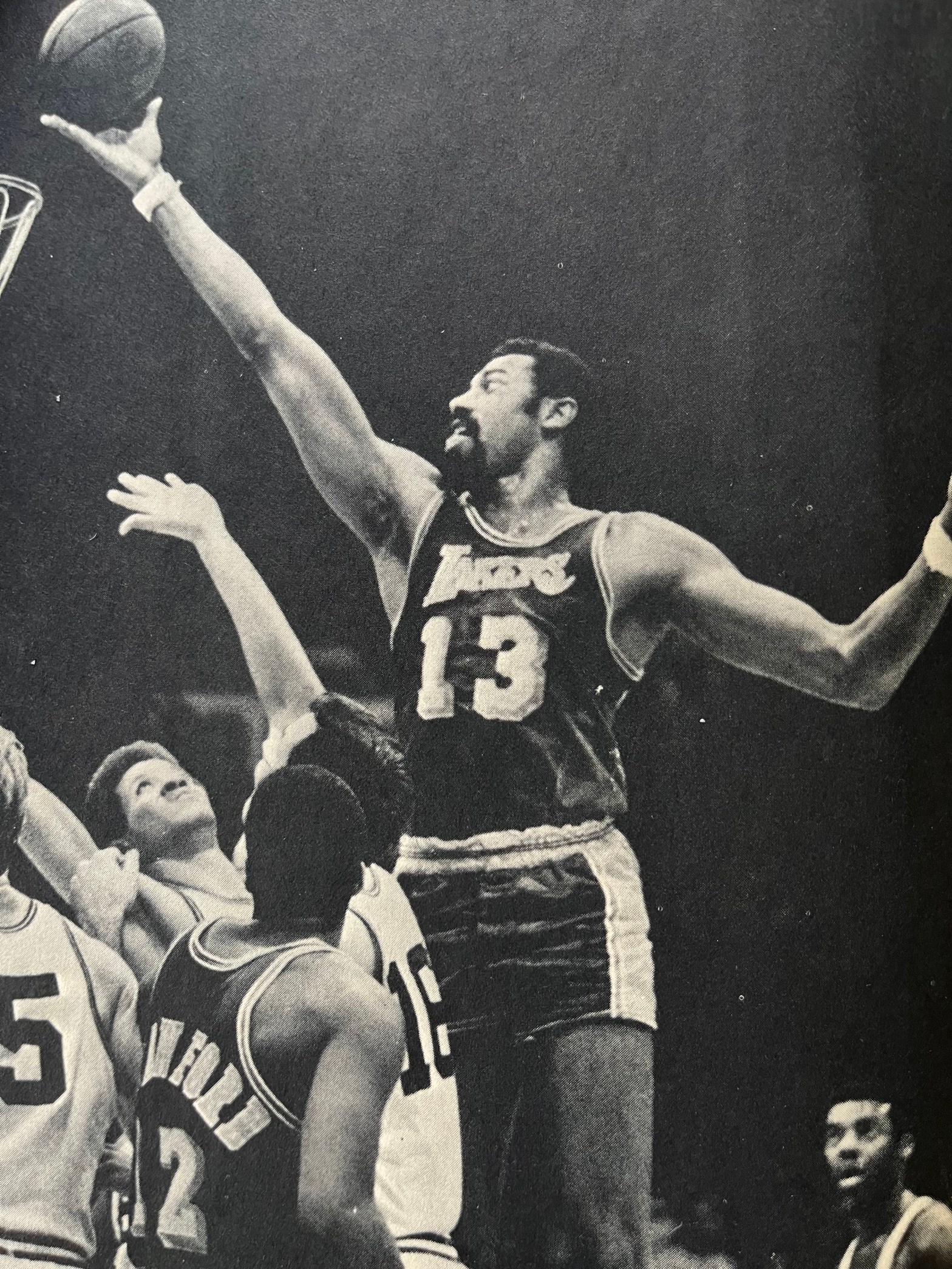
[In July 1968, the long-rumored NBA trade of the century was official. Wilt Chamberlain had become a member of the Los Angeles Lakers. Chamberlain, a.k.a., Goliath, the greatest scorer in the history of the game, would now team with superstars Elgin Baylor and Jerry West to form a “Super-team” for the NBA ages. Who could possibly beat them?
Not so fast, others argued. As great as Chamberlain was, he would turn out to be a rotten fit for Baylor and West. All three needed the ball in their hands to be effective. The Lakers had three dogs, one bone, and a self-limited bite. Plus, among other things, West and Baylor were extremely injury prone. Only time would tell whether all three would stay healthy long enough to work out the kinks and develop a dominant three-man rhythm.
As one reporter creatively captured the split down the middle of public opinion: “To some, having Wilt Chamberlain on your basketball team is a gift topped only by gold, frankincense, and myrrh. Others, however, equate it with a plague of daddy long-legs.”
The story that follows isn’t quite as creative. But it captures with much greater thought and detail the many opinions, pro and con, that greeted the Laker “Super-team.” No byline for this one. But it ran in the magazine 1969 Basketball Almanac.
Following the Basketball Almanac piece, I’ve got another Laker “Super-team” story from a year later. The New York Post’s Leonard Lewin is at the typewriter, and he offers his thoughts on Wilt, West, and Baylor after one NBA season. His story is well worth the read, mainly because Lewin knew his way around the NBA during this era as well as any reporter out there.]
****
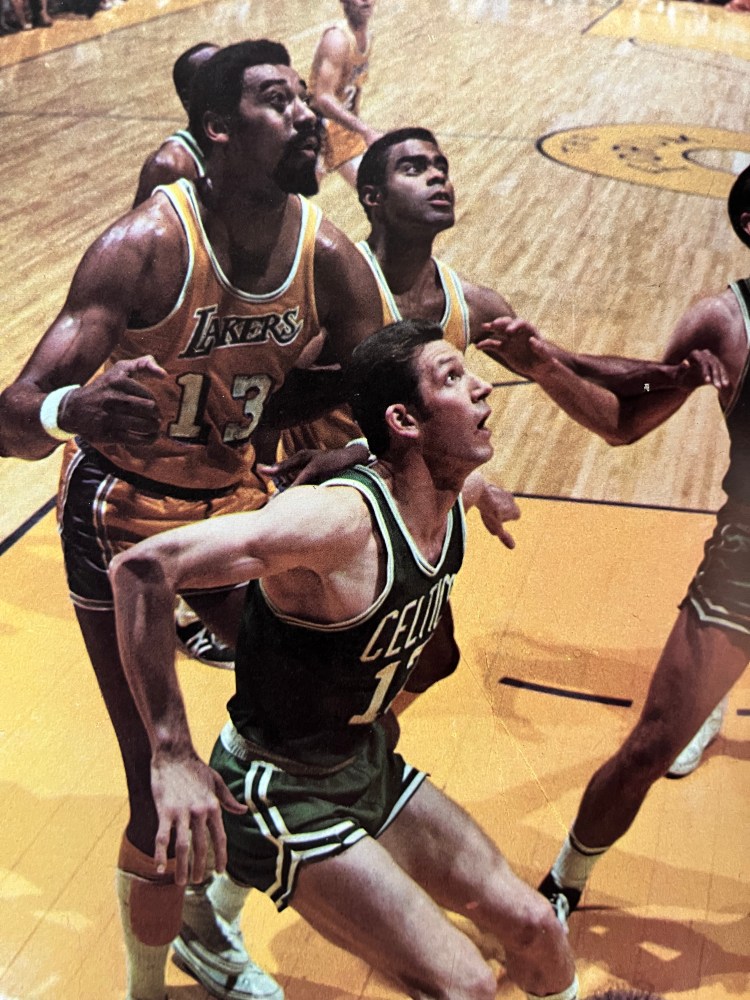
“With Wilt Chamberlain joining Elgin Baylor and Jerry West,” wrote a Philadelphia newspaperman, “Ronald Reagan and Doris Day could play the other two positions for the Lakers.”
That was the reaction of most people to the startling trade that saw Chamberlain—the greatest scorer in the history of the game, one of the greatest rebounders, and the only center ever to lead the National Basketball Association in assists—go from Philadelphia to Los Angeles this summer for Archie, Clark, Jerry Chambers, and Darrell Imhoff. For years, the Lakers had been an “if-only” team—if only they had a top center . . . Well, if only has disappeared. The Lakers have the center now to team up with Elgin Baylor and Jerry West. Three superstars playing on one team! It defies imagination and leads inexorably to the next question: Are the Lakers now a Super-team?
“Superteam?” exploded Boston’s fiery ex-coach Red Auerbach, now the Celtics’ general manager. “That’s a bunch of horsefeathers. No one wins anything in the summer.”
Said Baltimore forward Gus Johnson: “If they put it all together—forget it, they’re out of sight.”
Obviously, there isn’t a semblance of unanimity among the experts as to what Wilt will do for the Lakers. To find out how the men of the NBA feel about the “new” Lakers, PRO BASKETBALL ALMANAC surveyed coaches and players from every team. The results are surprising. Contrary to popular opinion, the Lakers and their opponents, though agreeing that Los Angeles would be formidable, had reservations about the Super-team label and scoffed at the thought that the Lakers had anything locked up.
Here are the chief reservations brought up by the experts who assessed the Lakers:
- A need for guards. With Gail Goodrich lost through expansion and with the departure of Clark, a potential all-star guard, all of the players and coaches surveyed felt the Lakers needed another good guard to complement West.
- Lack of depth.
- The possibility that Wilt would have trouble adjusting to his new teammates’ style and vice versa.
- Wilt’s history of rugged individualism and his frequent inability to get along with the coach.
- The relative senior-citizen status of the three superstars (Baylor is 34, Wilton is 32, and West 30).
- With three top shooters, would one basketball be enough?
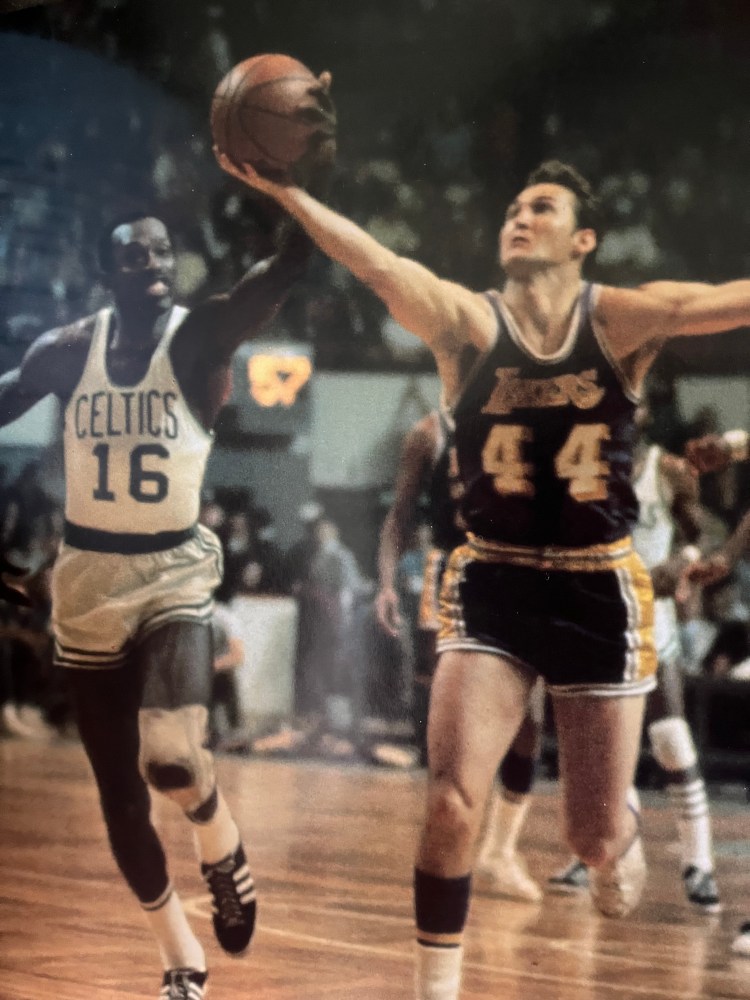
Is it really that bad? Listen to some people who regard the Lakers with awe.
Alex Hannum, ex-Philadelphia coach, says, “Last year the Lakers made the playoff finals, right? Well, my experience is that you’ve got a winner when you’ve got Wilt. They’ve always wanted a super center to go with their super forward and super guard. The only question is how [Coach] van Breda Kolff fits these guys together. But I’m sure he’s competent to do it. They have to be the favorites to win the whole thing.”
Agreeing is Atlanta coach Richie Guerin. “Right now,” says Guerin, “their backcourt looks a little thin, but I’m sure they’ll be trading for an experienced guard. Today, on paper, they look tops. Add a player of Wilt’s ability to Elgin Baylor and Jerry West, and you’ve got to have a great team going. A lot depends on Elgin and Jerry staying healthy, but there’s no doubt now that they are the team to beat.”
A bit more cautious is Philadelphia forward Billy Cunningham. “I think they’ll be great,” says Cunningham, “but we’ll have to wait and see how great. We’ll have to wait and see how well they play together. West and Baylor played a long time without a Wilt. Imhoff helped them out a lot by coming out and setting up picks and doing other things. But Wilt has to have the ball, and he has to stay underneath. I also don’t think they’ll be able to run as well as they have in the past. When you have Wilt, you slow down to let him get in position so you get maximum use out of him. He plays 48 minutes a game, so he can’t run hard up and down the court all the time.
“I’d have to say they are the favorites for the championship with a potential of being really great. But an injury would put them in tough shape—they don’t have much depth. But they’re going to have to change their style of play. The potential is there, but . . .”
Baltimore’s Gus Johnson takes the wary view, too. He says, “It could help them and could hurt them. Wilt has to have the ball 90 percent of the time, which will hurt Baylor because he’s a one-on-one kind of guy. He needs the ball, too, to be effective. On the other hand, it will help Elgin because it will take the rebounding load off his back. He’ll be able to sneak in on second efforts a lot more, too.
“I think it would help West 100 percent because he moves so well without the ball. Wilt will hit him with a lot of passes. It boils down to this: They have three superstars, and that’s a lot of power on one team. But can they play together? I’ll say this. When Wilt wants to play, he’s unbeatable. With that kind of talent, all the Lakers have to do is put it all together.”
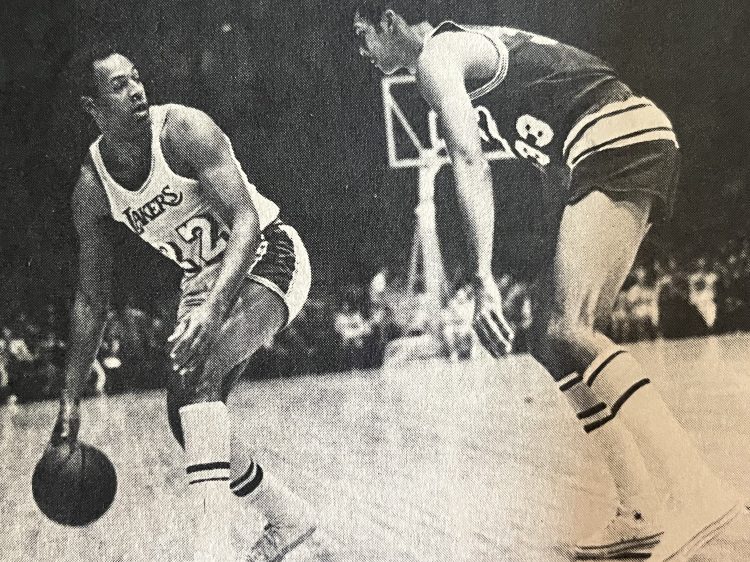
Ex-Laker Gail Goodrich, now with Phoenix, says that Chamberlain will be a big asset to the club, but he may still not be enough. “Obviously, Chamberlain’s going to help them. They’ve never had a center who could really dominate a game, and it has hurt them, particularly against Boston. But by no means are they a shoo-in. I have too much respect for Boston and Bill Russell to say that.”
Goodrich went on, “Getting Wilt will probably give Baylor and West another year in the league. It will be particularly good for Baylor because he won’t have to go to the boards so much. I’ve heard the comment about dividing the ball in thirds, but I don’t see it. They’re all team players. The tough job will be molding the three together because they’re so good individually. Right now, they’re very thin. I think they’ll have seven veterans and five rookies. But I look for them to trade for a guard.”
What does a teammate of the three think? Says Mel Counts: “Everyone’s expecting great things from us. Now all we have to do is do it. It’s like an all-star college player going to the pros. He hasn’t proved himself on the court yet. We haven’t played one game together, we haven’t won one game. We haven’t done anything yet.
“There’s a lot of pressure on van Breda Kolff. But if anyone can bring us together, it’s him. Working together as a team could be real tough, but we’re all professional people, we’re all men. We should be able to work it out. I don’t see how Wilt can do anything but help us.”
Darrell Imhoff, who was one of the pawns in the trade, and will now be pivoting for Philadelphia, says it’s all up to Wilt. “It could be one of the greatest team of all time,” says Imhoff, “if Wilt has the right attitude. He has to make practices and get along with his teammates. But I don’t think it will be a problem, as badly as he wants to play for Los Angeles and be a winner.
“Their defense will be terrifically improved, because they’ll be able to take more chances up front and be more aggressive knowing he’s back there. He’ll help on offense with his scoring power. The only possible problem there [might be] is if one ball will be enough [for all three]. But at the press conference, Wilt said he didn’t think he’d shoot more than Archie Clark did last year. If that’s the case, there’s no problem. I can see them winning 70 games.”
Philadelphia coach Jack Ramsay has his reservations. “The age of the players could be a problem,” he says. “Also, some of them are injury prone. And they’re not a deep squad.”
Detroit coach Donnis Butcher professes to be undisturbed by it all. “I don’t think they will be the overpowering club people seem to think they will be,” he says. “No one’s going to lay down for them, I think they’ll have all the fight they want in the Western Division, and if they get by in the West, they’ll have their hands full in the East. I don’t know who’s going to move the ball for them. They have guys who can put it in the hole, but who’s going to get it downcourt for them? And you can’t cut the ball in three pieces either.”

Red Auerbach will accept that analysis. He gets annoyed even hearing the word Superteam.
“It’s fairly obvious they’re going to be strong,” he growled, “but no one wins on paper. There’s quite a difference between the cup and the lip. I guess they have to be considered favorites in their division, but for all the marbles? I don’t know. They’ve counted us out so many times, but as long as we have Russell, Havlicek, Sam Jones, and the others, they can’t ignore us. Do they expect everyone to roll over and play dead for them? I doubt it. When you have a great team, it works both ways. Others respect you, but they want to knock you on your behinds. As far as I’m concerned, they’re just great on paper until they win a number of the championships.”
Bill van Breda Kolff, the man who must put all the combinations together as the Laker coach, just smiles at the reactions of his fellow coaches. He knows the other teams will be gunning for him—and he’s ready. “We should play something like we did last year,” he says. “We’ll run every chance we get. But when the play is set, we’ll work off the pivot a lot more. As for defense, last year we played a conservative, sound type of defense without much double teaming. But now we can take a few more chances, go for the steal more often.”
What about the players who will be most affected by the change? Here’s what Jerry West says: “If we could have kept the players we had, we’d have been unbelievably strong. But we don’t have much depth now. You don’t win in the pros with three players—or five for that matter. You have to have a bench.
“I’ve heard two things since the trade was made. First, people say we’re not going to lose a game. Second, they say we’re going to need more than one basketball. Both are stupid. I really resent the remark about needing more than one basketball. A basketball player doesn’t even think about that. I’m not just a shooter. No team ever wins just on shooting alone. You have to do other things. As for being unbeatable, I think Philadelphia has a better team on paper than we do.
“Don’t get me wrong. Wilt has got to be good for us. Our rebounding will be stronger and our defense better inside. It makes it easier to play defense when you know that if your man gets by you, he’s back there to pick him up.
“And I’m not worried about him getting along with the others. If you can’t get along with these guys, you can’t get along with anyone. We’re supposed to be a Super-team. Well, I don’t know. If everything goes right, it could be a fantastic year. It depends on two things. We have to stay healthy. Remember, we are one of the oldest teams in the league. And we have to get another guard somewhere.”
Elgin Baylor is more optimistic. He says, “It’s gonna be great, not only for the team overall but for me and my career personally. Always going up against guys bigger than you takes a lot out of you, and I’ve been averaging over 40 minutes a game for more than 10 years. I could use a few more breathers, and Wilt will be able to give them to me. And now, because I don’t have to worry so much about the boards, I’ll be able to concentrate on other aspects of the game, like my defense. Philly had Chamberlain and a lot of talent with him last year, and they didn’t win the championship. So I’m not overconfident. But I’ve always wondered how we would do if we had a guy with that height and that talent. I have to think our chances are now 100 percent better.”
We leave the last word to Wilt Chamberlain himself. “I feel like I’m coming back home. It’s great to be reunited with my family, who has been living in Los Angeles for the last seven years. I feel very fortunate to be playing with guys like Elgin, who I think is the greatest player in the world, and Jerry, who I think has the best jump shot in the game. Have you noticed how lovely it is at night when all the stars are out? We’ll simply have the best team in basketball history.”
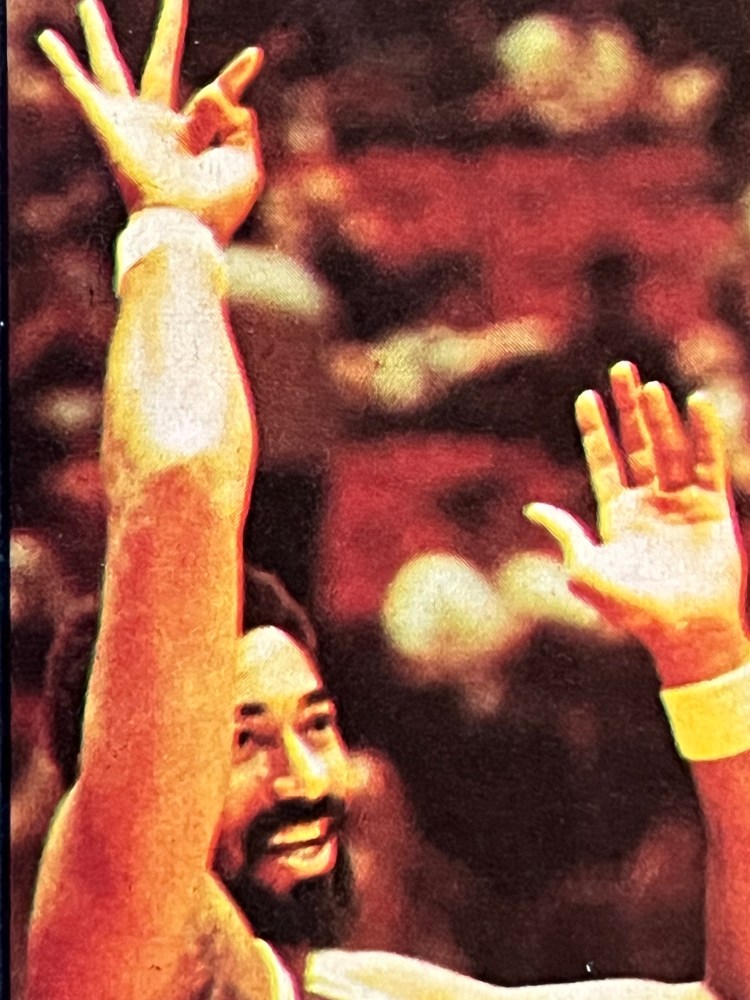
[And now on to Leonard Lewin, one year later. Lewin’s piece ran in the magazine Sports All-Stars’ 1970 Pro Basketball Exclusive. It ran under the headline: Why Don’t the Lakers Take It All?]
Wilt Chamberlain knew he was through in San Francisco. He was being dealt by Franklin Mieuli because the Warriors wanted to build around Nate Thurmond at center. Wilt leaked word that he would like to play for the New York Knickerbockers and promised to win their first NBA championship for them.
The Knicks turned him down, and the 7-1 strongman of pro basketball wound up back in Philadelphia and, a season later, brought the 76ers the title. It was Wilt’s first victory over Bill Russell and the Boston Celtics, and he was happy for a while but not too long. He never liked the idea of returning to play basketball in Philadelphia, and he decided he would prefer to win the championship for someone else.
That someone else turned out to be Jack Kent Cooke. The owner of the Los Angeles Lakers was happy to gain the services of a super-center, because everyone always said that was the only thing his team needed to go all the way. So Chamberlain joined Jerry West and Elgin Baylor, and the Lakers became a “super-team,” and it was generally agreed they would be tough to beat.
“People tell me you can’t win ‘em all,” said Cooke as he preened over his super-situation. “I always wonder why not.”
Well, the Lakers didn’t win them all. They did win 55 and lose 27 for the team’s best record in history. But they failed to take the NBA title once more last season. Bill Russell and the Celtics turned back “super-team” in seven games, leaving a trail of angry and frustrated Lakers.
“After it’s all over,” sighed Baylor, “the one question you keep asking yourself is why? Why does it happen like this year after year?”
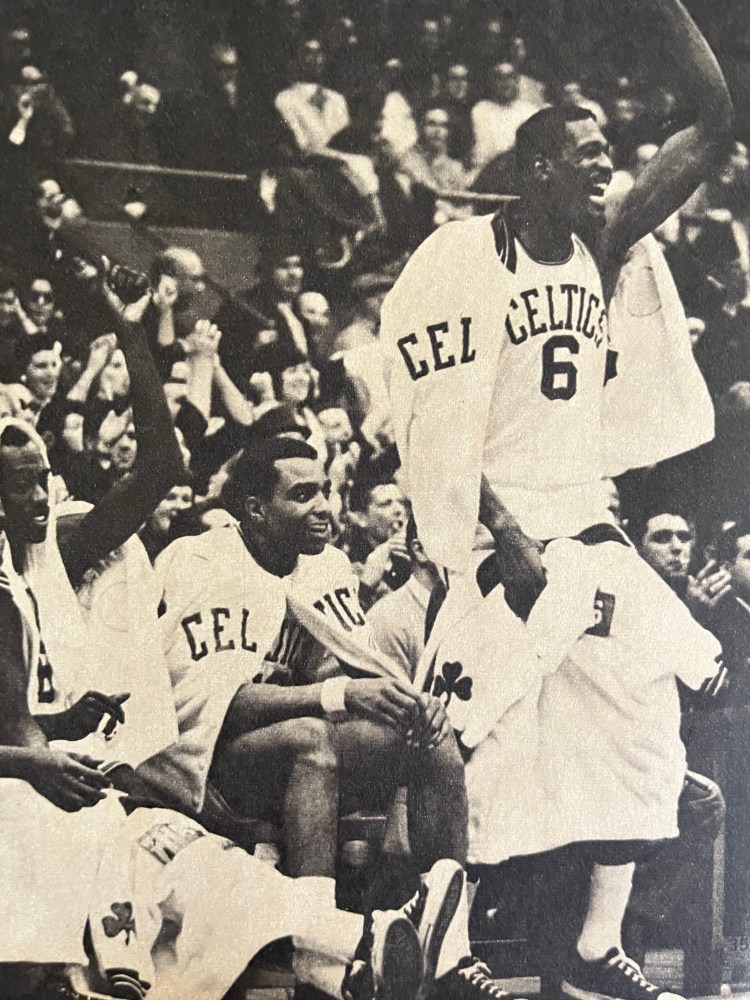
Baylor has been asking himself that question for a long time. Elg, now 35, came into the league when the Lakers were appearing for the last season in Minneapolis. That was back in 1959-60, and it was a team that included Rudy LaRusso, Hot Rod Hundley, Ray Felix, Tom Hawkins, Frank Selvy, and Steve Hamilton, the Yankee pitcher. It has been Baylor’s unfortunate destiny to have reached the final against the Celtics seven times and been beaten back every time.
Three times the Lakers carried the Boston juggernaut to the full seven games, including last season. The closest L. A. came to winning was in 1961-62 when Selvy bounced a short jumper off the rim as regulation time expired, enabling the Celts to survive in overtime, 110-107. In 1965-66, the Celtics hung on to take the seventh game, 95–93, and last season “super-team” made a rousing comeback only to fall short, 108–106, in the final game for the Lakers as well as Butch van Breda Kolff, their coach.
“Why can’t we win?” wondered Baylor. “You could call it luck, but it’s happened too many times now to attribute it to luck. Their teamwork is something you can’t take away from them.” He was speaking of the Celtics, and to Baylor and the Lakers, winning meant capturing the NBA crown and nothing less.
It was hard to understand for those who predicted Baylor and West would romp with the addition of Chamberlain. They had accounted for 60,000 points, 30,000 rebounds, and 9,000 assists. A team was lucky to have one superstar, so how could anyone stop a team with three?
Red Auerbach, the general manager of the Celtics, thought it could be done. He predicted problems. He did not think it would be easy for Chamberlain, West, and Baylor to adjust to each other.
“I don’t see why not,” offered Oscar Robertson, a superstar in his own right. “If superstars can adjust the way they do for an all-star game, why shouldn’t Chamberlain, West, and Baylor do it when they have a whole season?”
The Lakers were optimistic. They had just come off an outstanding close to the 1967-68 season. West and Baylor had started with 22-22 for the first 44 games but came home [to end the season] with 30 and 8, and Butch van Breda Kolff was proud because it was kind of his team basketball. Everyone was scoring in a fine display of movement. Archie Clark, Gail Goodrich, Tom Hawkins, Darrall Imhoff, and Mel Counts supported the super-West and super-Baylor in fine style.
So there was every reason to believe Chamberlain would provide the missing link that had always caused the Lakers to fall short of the league championship. No one, at the time, paid much attention to the fact that only West, Baylor, Counts, Hawkins, and Freddie Crawford were coming back from the previous season.
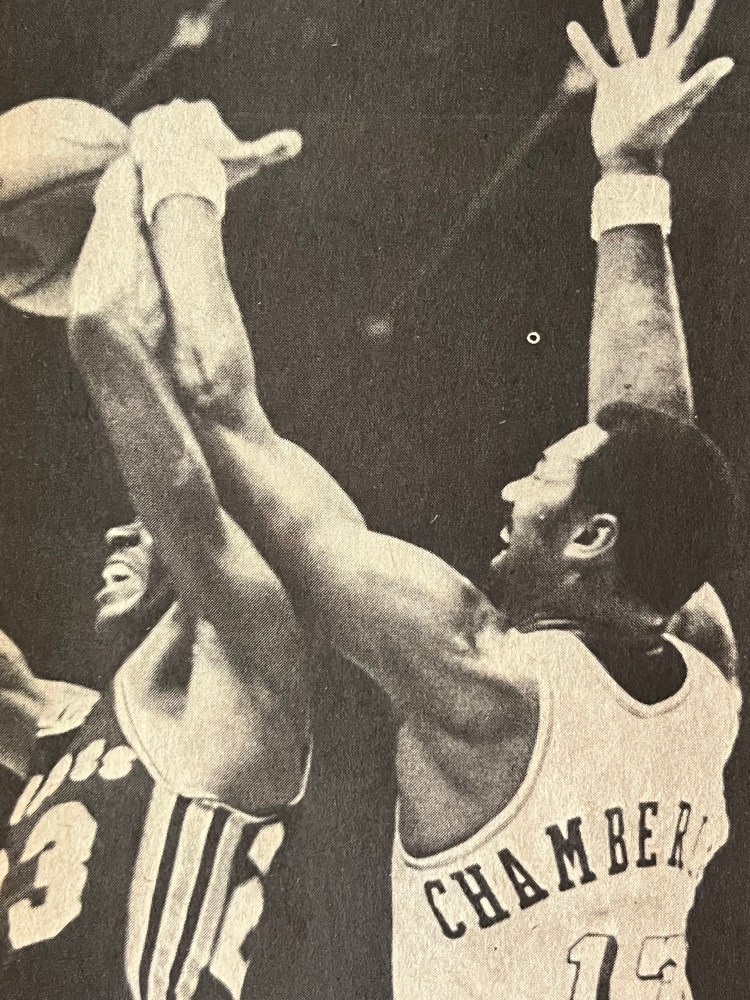
Goodrich, unhappy over the way Clark had shoved to the bench, asked to be dropped into the expansion pool and landed in Phoenix. Then Archie and Imhoff (plus Jerry Chambers, in service) went to Philadelphia for Chamberlain. “People didn’t realize we had seven players who didn’t play with us last year,” West was to say when it was all over and the Lakers had lost to the Celtics again. “I don’t go along with those who blame it on Wilt. They forget we won three more games with him then we ever won before,” he said.
True. But people expected more from the Lakers and Chamberlain and wound up confused by a complex situation that erupted at the start of the season. Opening night was in Philadelphia, where Wilt and the 76ers were desperately out to beat each other. Philly, with general manager Jack Ramsay coaching and Luke Jackson filling the Chamberlain role at center, won in a romp.
The next game was in Madison Square Garden, and the Lakers walloped the Knicks. “What do you think the difference was?” Chamberlain asked an individual who had attended both games. “You seemed to get the ball more tonight than you did the other night,” Wilt was told. “Tell that to the coach,” the big center suggested.
That was the first sign of a schism between Chamberlain and van Breda Kolff. The Lakers won 20 of their first 30 games, but at no time looked like the overwhelming aggregation some had expected. Pretty soon arguments broke into the open, and everyone knew that Butch was not happy because Wilt wouldn’t do what he was told. The coach wanted Chamberlain to move out at times to a high post to help screen for West and open the inside for Baylor.
“Baylor likes to set up on the left side, and so does Wilt,” a Laker explained. “If Chamberlain stays in deep, Elgin feels he is lost.” There were mutterings and then open expressions of discontent as the tension built in the clubhouse and inside van Breda Kolff.
Butch, a stand-up guy, decided to speak his mind once more to Wilt before things exploded. “There are three things we can do,” the coach was reported to have said to his super-center. “One, we can have a fist fight, and I’m not about to do that because you’re bigger and stronger and could kill me. Two, we take the whole thing to Cooke and tell him it’s you or me and let him decide. Or, three, we can work this out together like gentleman and do what is best for the team.”
That provided a temporary solution. Things got so bad, Freddy Schaus, the general manager, eventually called a meeting and advised everyone to confine problems to the clubhouse and stop griping publicly. Things went along smoothly until Schaus flew to Atlanta for another peace meeting which turned out to be a gripe session among the players. Schaus and van Breda Kolff were barred, and the players cleared the air among themselves.
It broke out once more between Butch and Wilt after a losing game In Seattle. The coach grumbled something about guys who don’t try, and Chamberlain took it from there. “It was embarrassing, the way they shouted at each other,” a player reported. “They wound up moving at each other, and Baylor had to step in.”
Through it all, the Lakers kept winning enough to dominate the Western Division. There were some nights Wilt and West and Baylor were devastating. There were others where they struggled to win and sometimes lost. Chamberlain was the biggest enigma. People could not understand how he could score 50 points in one game and then not shoot at all in another.
Eddie Gottlieb, the man who brought Chamberlain into the NBA as a Philadelphia rookie for the 1959-60 season, has an explanation. “He was anxious to break all scoring records and gain immediate recognition,” said Gotty, now the league schedule-maker. “I used to tell him I’d be satisfied if he’d get less points and more rebounds. But he wanted points, and he got them.”
Then something happened to Wilt and he went the other way. Alex Hannum started it when they were both in San Francisco, and the attack was built around Chamberlain’s passing in the low post. They refined it when they landed in Philadelphia, where Wilt had the shooters in Hal Greer, Billy Cunningham, Chet Walker, and Wally Jones and confined himself to passing off. Chamberlain not only wound up leading the league in assists one season but also won the league championship that had eluded him for so long.
There were times after losing games that Wilt confessed maybe he should have shot more. There were other times the Lakers won when he didn’t shoot. “They tell me that I played a great [game four] against San Francisco in the playoffs, but I got only four points in that game,” Chamberlain said. “I have read headlines that said: ‘Elvin Hayes Stars as San Diego Loses by 40,’ so what does scoring mean if you don’t win.”
Nobody doubted Wilt’s desire to win. Even Butch van Breda Kolff, before leaving Los Angeles for his new job in Detroit, conceded Chamberlain does things his way because he sincerely believes that’s the best way to win. But Laker fans and players wound up somewhat puzzled as to why Chamberlain goes to the hoop sometimes but ignores it at other times when L.A. seems to be in need of his scoring.
It still took a damaging injury to West before the sixth game of the final playoffs to help deprive the Lakers of the championship they so desperately wanted. Jerry injured his groin in the fifth game, which put the Lakers within a victory of defeating the Celtics going back to Boston. The incident moved Chamberlain to say: “The Celtics are the luckiest team in history.”
Wilt meant the Celtics have been lucky to escape a serious injury to a key player in the playoffs. He insisted he and the 76ers would have repeated in the 1967-68 championship if Cunningham had not fractured a wrist in the Eastern Division semifinal with the Knicks. Wilt also pointed out how Walt Frazier was hurt before the final game of the last season’s Eastern Division title match, and Boston went on to beat the Knicks by a point.
The Celtics were annoyed at Chamberlain’s remarks, which no doubt were partially responsible for Bill Russell’s surprising criticism of Wilt after the playoffs. “He talks a lot about what he’s going to do,” the Boston player-coach said of Chamberlain. “What it’s all about is winning and losing, and he’s done a lot of losing. He thinks he’s a genius. He isn’t.”
If it takes winning to be a genius, Wilt came darn close in that sixth game up in Boston. There was hardly any reason for the Lakers to even be close in that one. West, who had already had cortisone injections for his injured groin, was given a painkiller and came out heavily taped after a pregame workout indicated he could start. Hawkins, nursing a chronically bad ankle, also had to have an injection.
Yet the Lakers came within 15 seconds of winning the NBA championship, despite all the dissension and problems throughout the season. It was 88-87 in favor of Los Angeles, when the Lakers took the ball out after Emmette Bryant had made a foul shot for Boston. The pass-in went to Johnny Egan in the corner. He was double-teamed by Bailey Howell and Bryant, and little Em came up with the ball.
That led to a shot by Sam Jones that bounced on the rim a couple of times and dropped through for an 89-88 Boston victory. The series was tied, the Celtics went back to Los Angeles, where they took the seventh-and-final game and left everyone wondering how come the Lakers cannot win. Boston also left Chamberlain explaining how he asked his coach if he could go back into the deciding game, but van Breda Kolff kept him on the bench for the final five minutes.
Wilt had injured a knee and gone off limping, and the Lakers had come from pretty far back to make it a game. The comeback no doubt influenced van Breda Kolff to stick with Mel Counts and the lineup that made it possible. “Any injury short of a broken leg or broken back isn’t good enough,” Russell volunteered in his post-playoff analysis of Chamberlain the man and player.
“When he took himself out of that final game, when he hurt his knee, well, I wouldn’t have put him back in the game, either, even though I think he’s great.”
There’s never a dull moment, when Wilt is around. He is the most provocative individual the NBA has ever known. When he wins, they want to know why he doesn’t win more. When he loses, they blame him. “I don’t know if that’s really a tribute to me or what,” he has often said.
West insists it is not right to blame Wilt because the Lakers did not win last year. After all, he and Baylor didn’t win before Chamberlain put on a Los Angeles uniform, so they must have been doing something wrong themselves. “The primary reason why the Boston Celtics won was Bill Russell,” said West.
That’s probably the best explanation as to why “super-team” did not go all the way and compensate Jack Kent Cooke for the faith and money he invested in Wilt. The super-Baylor and super-West and the super-Chamberlain had been turned off by Bill Russell before, so what’s so strange about one more time?
“’Wait until next year’ has become a cliché,” Baylor said. “I don’t know what is going to happen next season. I suppose we’ll be giving it another shot.“
They will and under Joe Mullaney, who had a string of successes as coach of Providence College for 14 years. ‘He’s one of the few guys who could step right into our situation,” said Laker general manager Schaus, who screened six other candidates before deciding Mullaney was the man.
“For me,” said Joe, after he agreed to a three-year deal, “the time is right, the situation is right, and the team is right.”
Everyone in Los Angeles can only hope so..
 From Way Downtown