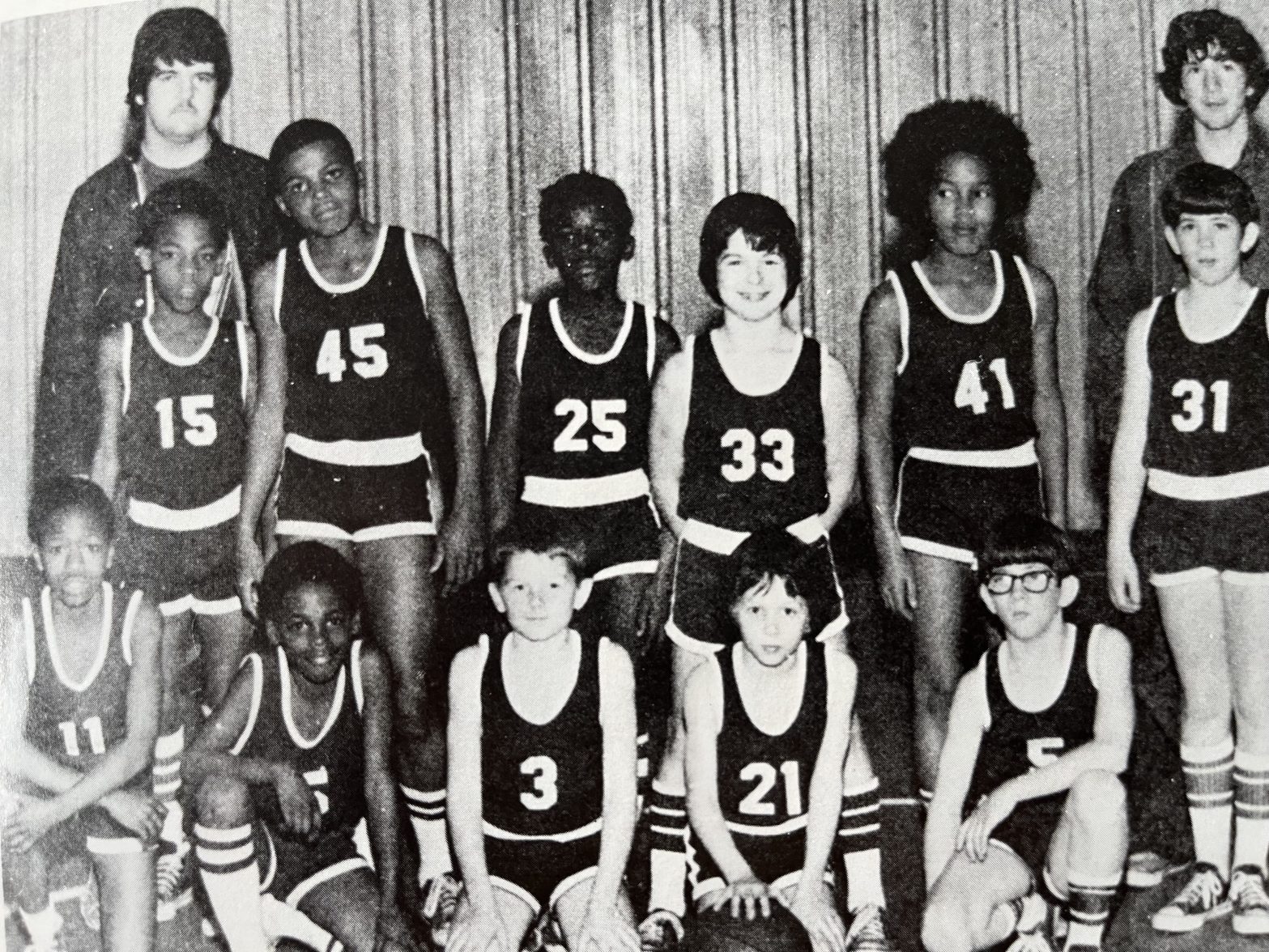
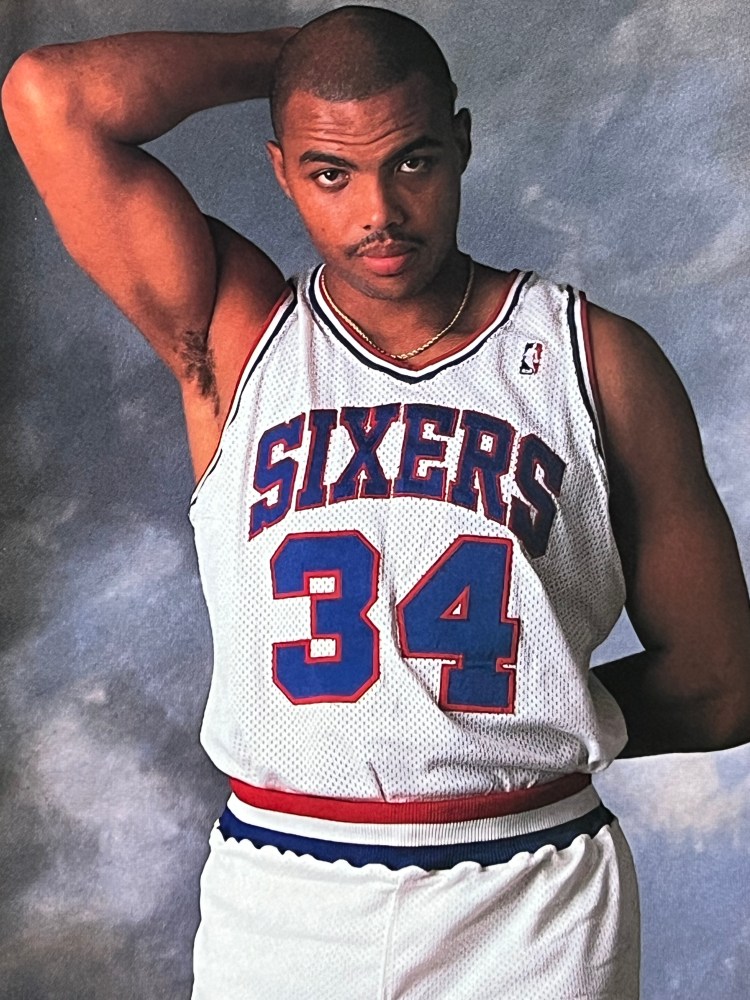
[Here’s some long journalism at its 1980s finest. It’s a fun profile of second-year pro Charles Barkley by Philadelphia feature writer Bruce Buschel. He’s an interesting and very talented writer whose byline has appeared over the years in just about all the major publications. Buschel also published in 2007 a fantastic book about Broad Street that’s a must-read for anyone who lives and breathes Philly. In the meantime, enjoy Buschel’s profile of the young Charles Barkley, which ran in the January 1989 issue of the magazine Philly Sport.]
****
“When you’re bashful you have that feeling of eyes following you and boring through you. And there at the sideshow were these people, the freaks—and the business, the work, of each one of them was to be looked at.”
–Carl Sandberg
Waiting for the opening tap-off, in that eternal moment before life begins, he stands motionless, his body achingly still, permitting only his eyes to move, hazel eyes darting around the arena, welcoming and fearing familiar faces and new ones, noting the loudmouthed gambler in the fourth row, the blonde with the little skirt, the kid with the Barkley for President sign at halfcourt. While the other athletes remain in a cocoon of cool, Charles notices all who notice him. And all who don’t. His menace masks his insecurity. Shy, he is a fat kid from Down South looking around the school auditorium for his mom and grandma, for his father who left home when his son was too young, just an infant. He hears his own heart, as he will soon hear every epithet, every encouragement. The former will burn, the latter soothe. The game cannot start too soon. Playing basketball is the easiest part of playing basketball.
The ball is tossed into the air. When it returns to earth, the child is a man.
Minutes into the second quarter, Charles is pissed. Called for a defensive foul, he smacks himself in the head in disbelief, twirls all 360 degrees of outrage, stomps the floor, emits loud agonized sounds, looks to the heavens for salvation. It’s a 270-pound temper tantrum. The man is a child. Why they do me like this? Had anyone not been watching him, they are now. He is the cynosure of every stage he stomps, the ultimate scene-stealer. Chewing scenery alone would cause weight problems. He is the roundball Brando Apocalypse now. If his paroxysms weren’t enough, the threat of remonstration defies you to look away. His hardwood emotions have no safety mechanism.
Does he really pack a pistol?
All eyes are on him, save those of his opponents, whose cast is downward. Charles stares with single-mindedness, a large cat at the ultimate pause of his stalking. “I’m warning you, sucker, don’t come near me again,” he seems to taunt his prey. “Next time, I’ll stuff you in the basket.”
Charles talks a good game, generously sharing his feelings with refs, enemies, and teammates. Bright moments as well as calamities inspire low comment or high-fives. Of two things he is certain before any contest commences: No one will outtalk him, and no one will intimidate him. Intimidation is his game. Of what can an observer be certain? Unpredictability? His physique somehow occupies more space than his 6-foot-4 ½ frame; he distorts our notions of big and little. Manute Bol we can comprehend and Spud Webb; back-to-back they may be comical, but each does what a man his size ought to do. They make sense. They make us feel normal. Barkley is a befuddlement, a miniature enforcer, a monstrous guard. What do we make of him?
The ball is inbounded, a jump shot is missed, Charles heists the rebound, and a behind-the-back dribble inaugurates one of those reckless, rambling, transcontinental excursions, the kind that begin with shirttail-flapping tremors, exciting the fans, sending scientists to their seismographs, and coaches to their pillboxes, the kind of rumble that will climax only when large chunks of humanity have given away, have parted, to allow the ball to be deposited, most violently, through the hoop. The Earth moves! Perhaps a ton of backboard. Aftershocks to come.
Hath his fury no bounds?
When you’re 5-foot-10 and an outcast sixth-stringer on a high school team, forced to practice by yourself, by moonlight, on a court behind the projects, you learn an angry, solitary brand of baskets; denied the ball and the spotlight for too long, once in possession, Charles refuses to relinquish either. He plays scared. And mean.
He is the shortest man to lead the NBA in rebounding. Ever.
Does he actually carry a loaded handgun?
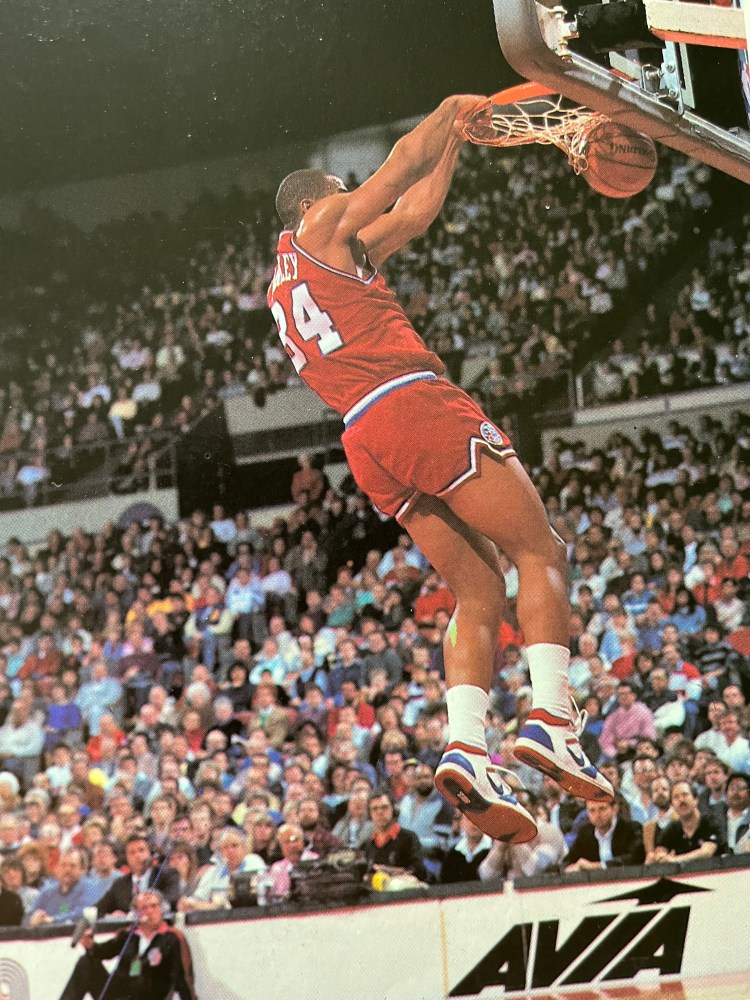
His splendid outbursts seem to follow a dainty three-pointer from the corner or a lull in the action. A crushing two-fisted slam will come on the heels of a Barkley boot, an ill-advised flashdance. His talent and his drive prevent you from staying mad too long; you can’t bemoan his narcissism as easily as Darryl Dawkins’ or World Free’s. He succeeds too frequently, works too hard to hate.
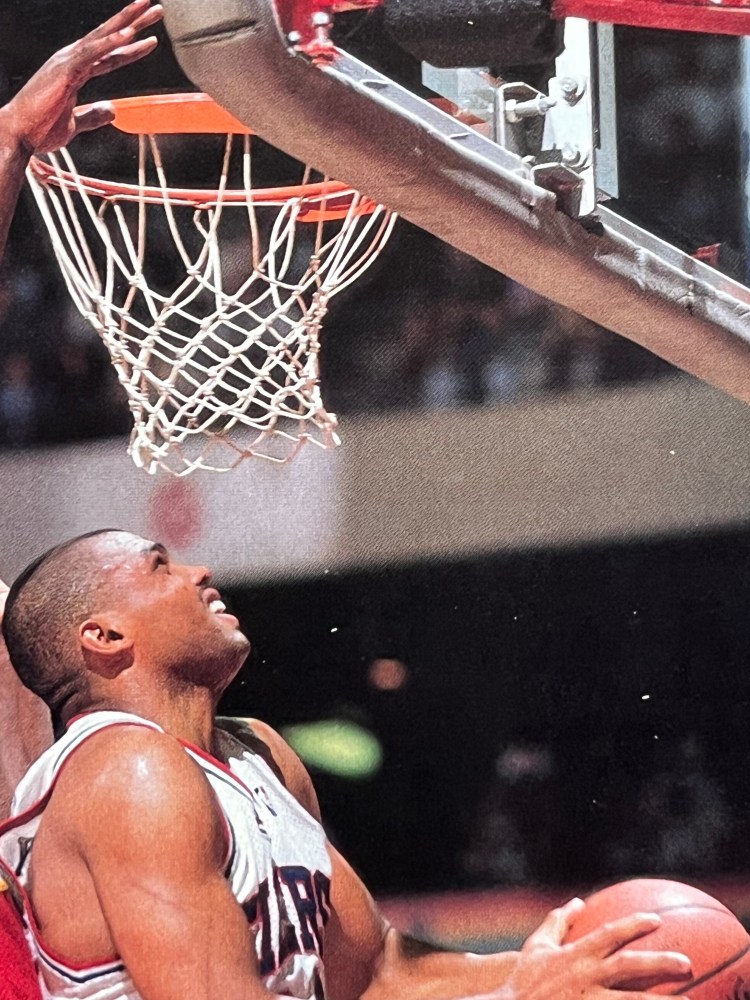
The terrible twos will pass. One of his whirling dervish routines is worth the price of admission, a cheap reminder that some primal force is still extant on this planet. And don’t think his teammates are immune to aggression so calculated and naked; they too stand in unholy awe, inflamed by the sheer audacity.
Who pines for Dr. J at these moments?
Forget fancy flights and arcing double pumps. That’s for spidery acrobats. Charles can’t even palm the ball! In yo’ face is too polite. He’s up your nose, deviating your septum and shooting out your skull. If Air Jordan glides over the masses—with tongue sticking out, mockingly—Ballistic Barkley slices right through you, dares you to become the immovable obstacle to his irresistible force. You can watch Jordan slither and snap his way to the hoop all night and be surprised to learn he scored 52 points. Every Barkley point is seen, felt, suffered. No one sleeps through a quake with an epicenter named Charles. Only 30 points? Damn—felt like 50. Few are cheap; fewer still go unregistered. If a mammoth home run is worth more than a single tally on the psyche, the value of a Barkley basket is more than a deuce.
Comparisons to Jordan are inescapable: Two distinctly solo performers who put up big numbers and pull down too few wins. Do they use more energy than they produce? Can you build a team of scarecrows around a wildfire? Last season, Michael sat Charles down and told him the word around the league was to let Barkley score as much as he wants—the Sixers would fall. Michael knew the feeling. In Chicago, they wonder if the Bulls can win with such a maestro; Jordan wonders how scoring less would help his team win more.
It’s an old question in these parts: It was asked when Wilt filled the middle and then when Erving first flew into town. Aficionados appreciated the Doc’s artistry, but suggested he was too idiosyncratic to lead a team to victory. How can anyone follow that stuff? They asked him to please pass more and please rebound and—for God’s sake—win. What good is inhuman hang time when you land in second place? It was like telling saxophonist Sonny Rollins to turn down his solos ‘cause the rest of the quintet can’t keep up and the records don’t sell anyway; Sonny tells him to get better sidemen or hire a different leader.
Barkley is painfully aware of the paradox:
“Everyone came at me last year with, ‘You’re the leader, so what’s wrong with the Sixers?’ I knew I was gonna get the blame. The first year without Doc, it’s my team. The Daily News says we can’t win with me as leader, because I’m not responsible enough. Charles is not mature. He loses his temper, and he’s not the leader type. Charles is this, and Charles is that. Damn. That shit works on you. You’re mad as hell because you hate losing, and you’re struggling for your life, and it’s brutal, just brutal.”
He’s 25 and accused of being young. He’s named co-captain and told he’s not a leader. He scores and rebounds and doesn’t know what else a leader is supposed to do; isn’t being the best player on the team enough?
“I don’t like being responsible for the team,” he says, “because I can’t carry it. Can’t be done. The normal knucklehead on the street doesn’t understand that it’s a team, a chemistry—not a one-man show. People say since I took over the team, it’s going downhill. I know this. I can’t do anything about it. I play my heart out every night. Damn, that shit hurts. All I know is I’ll never let happen what happened last year, not making the playoffs. I guess I didn’t do right. I should have done something. If you’re a great player and a leader and everybody feeds off you, you can always do more. I’m just not sure what that is.”
****
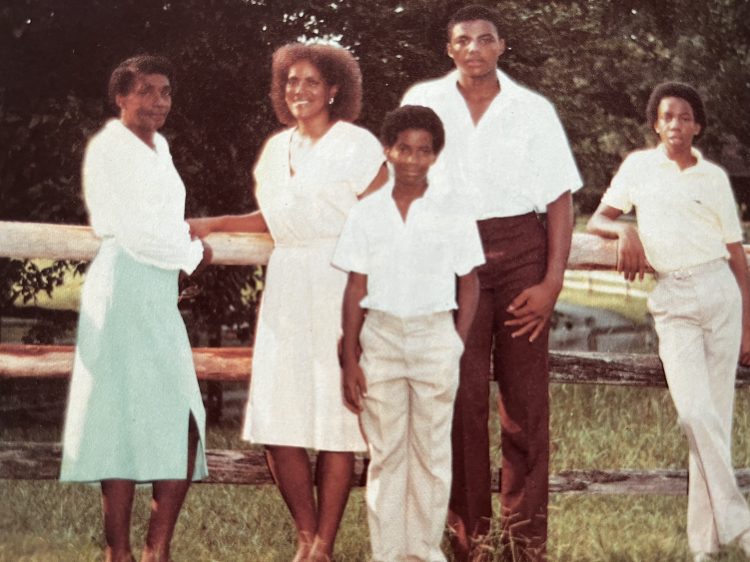
Early one morning this fall, Charles called his grandmother, Jonnie Edwards, and told her he was bringing some friends over for dinner that night. He called from an airport in Texas. His grandmother was in Alabama. At 7 PM, the entire 76ers team was eating barbecue butt with their co-captain’s mom and grandmom, his two best girls.
Barbequed what?
“Barbequed butt,” explains 63-year-old Jonnie Edwards, “is pork sliced real thin, like roast beef. Charles’ mama made fried chicken and baked beans—Charles loves his mama’s baked beans—and I took care of the barbecued butt. We all watched Monday Night Football.”
Jonnie Edwards is a self-described sports nut. Loves baseball, football, and basketball. Especially basketball. Played on her high school team, taught her grandson everything he knows. She likes it when Charles plays with aggression. Her favorite college team was Auburn. They were always the underdogs. No surprise where Charles matriculated. They still talk almost every day. Sports, mainly. She really liked Charles bringing the team to dinner.
“When I first got to the Sixers,” says Charles, “after the last game, everyone said, ‘So long, see ya next season.’ Next season? What the bleep is that? I thought teammates hung out together and were friends. This was not my idea of teams. I try to keep everyone on the same wave-length. I try my best. We have a close-knit team now, friendly, down-to-earth. I love my teammates.”
Mike Gminski and Chris Welp are probably Barkley’s best buddies on the team. He saw them, and others, often in the offseason. Charles allows friendship no summer vacations. And when Scott Brooks needed a place to stay, Barkley insisted he live with him. Charles remembered his own rookie year, when Philadelphia was cold and inhospitable. He lived in a hotel until he found an apartment in the Northeast. He rarely ventured out. Nowhere to go, and nobody to go with. He had never been so far away from home for so long. Auburn is less than a half-hour drive from Leeds, Alabama. He needed the comfort of a family, however makeshift.
“Charles has changed since he joined the Sixers,” observed his mother, Charcey Glenn, who still works as a housekeeper two days a week. “He has adopted a tough attitude, not like when he left home. Leeds is a small town where people wave to you when you pass their house. Charles was raised to trust people. He was very naïve when he moved to Philadelphia, very naïve. Here in Leeds, white and black work very nicely together. We still leave our door open. We’ve had our share of trouble but not like in other places. Not like in Philly. Charles used to think everyone was nice. He’s learned a lot lately.
“He’s growing up.”
****
When the World began, Stomach was outside of Man, quite content to be fed an insect a day. But Man got greedy and wanted Stomach inside him and has been tortured ever since with hunger and yearning and pain.
–An East African fable
“Two Diet Cokes,” orders Charles. He is having lunch with two former teammates—one white, one black, the former from Auburn, the latter from the Sixers, now trying out for the Rockets. A no-pro, a fringe-pro, and all-pro. The various levels of success are lost on no one, nor go unspoken. There is constant teasing, jockstrap japery. Charles dishes it out and receives it with equal felicity. Various parts of his body serve as ample targets for slings and arrows. In order to lose weight, it is suggested Charles should deflate the helium in his head, lopping off 30 ugly pounds, and then donate his head to science.
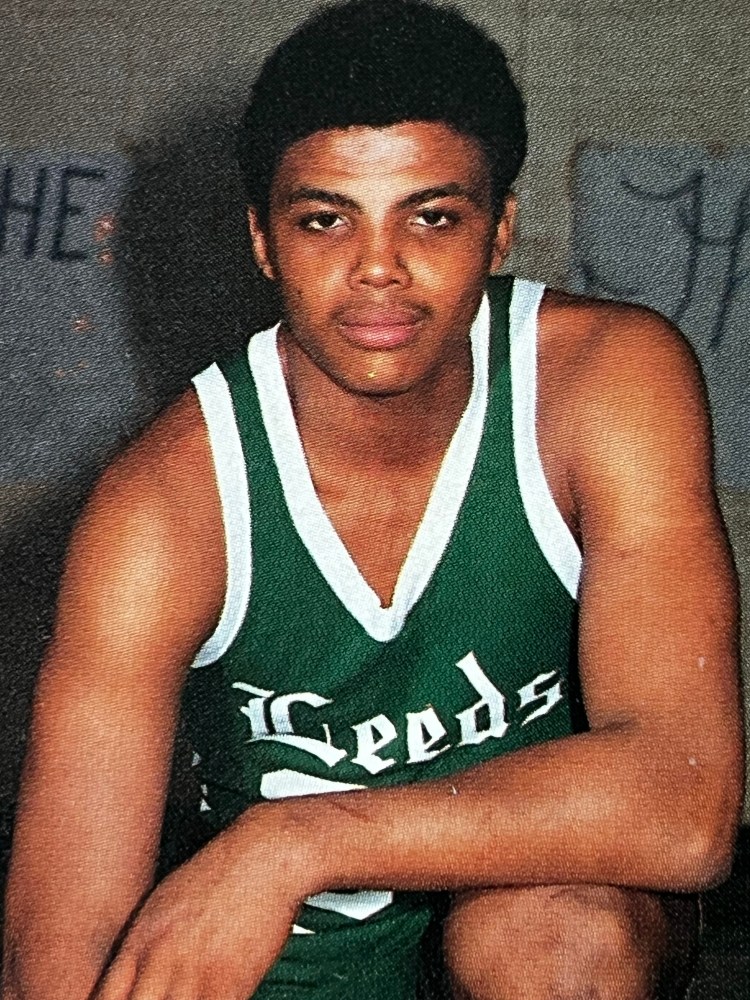
When not being taunted about his fluctuating poundage, his head takes a verbal pounding; he is addressed as Airhead, Melonhead, Big Baldie. Technically, he has lost no hair yet keeps it so peach-fuzz short that it appears painted on, the paint cut with thinner, so that light bounces off his dome. It matches his two-day stubble. The greatest concentration of a hair on his head, despite a pitiful mustache, can be found in his thick, caterpillar eyebrows.
“Four more Diet Cokes,” he tells the waiter, “and a salad, lettuce only, no dressing.”
Amazing that a guy can play full-tilt basketball, the most demanding of all professional sports, and have to worry about his weight. His new half-million-dollar house is devoid of exercise equipment, save a stationary bike and a pool. He resolutely refuses to play basketball during the summer. He’s too exhausted and too high-strung: “One day you’re playing against Larry Bird in Boston Garden, next day you’re playing against Sam Sausagehead on some playground.”
Currently, Charles is twohundredseventysomething. The Sixers brass bug him continually. They make comments in the papers. They say they fear his playing days will be limited carrying too much weight for his already rebelling back. What they don’t say is that Charles’ stomach is a measure of his mind, that indulgence at the table promises indulgence on the court. He went over 300 pounds at college. When he sulks, he fills the emptiness with food. When things threaten to eat him up, he eats them first.
“A plate of chicken wings,” he now orders.
“Why all that grease?” asks a friend. “Why not something healthy?”
“We’re all gonna die,” retorts Charles. “You be eating your whole wheat and sprouts, and you gonna die, too. I’m gonna enjoy myself.”
‘The question is not whether you’re gonna die, Melonhead, but when. You ain’t gonna see the year 2000 the way you eat; 1999 and bye-bye, Charles.”
“I ain’t afraid of dying. I live right next to a cemetery. I like it. I don’t lose sleep ‘cause of my neighbors partying. I got quiet neighbors.”
“I thought you said you didn’t sleep last night?’
“It wasn’t my neighbors—it was my girlfriend. I watched two movies, fell asleep about four, and then she woke me up. Morning sickness.”
He wants children. Lots of them. They talk of marriage, Maureen and Charles, and then they talk about bodyguards. Maureen is white. Charles is scared. He constantly worries about the Knuckleheads Out There.”
Oh Lord, why they do me like this?
Two women approach the table, timidly asking for autographs. Charles obliges, admiring, out loud, a black leather skirt. The wearer of the skirt is pleased. There will be, throughout the meal, a steady stream of autograph seekers and well-wishers. All will be treated graciously.
Adulation is a low-cal side dish.
Waiters stop by to kibitz. Charles eats out often. Mostly along City Line. He is on a first-name basis with maître d’s and busboys. They will attest to the sweetness of his disposition. The bartender at Al E. Gators provides a typical reaction: “Charles is the nicest athlete we get in here. Totally without façade. The direct opposite of those assholes from the Phillies, Von Hayes, and his arrogant bunch. Charles is almost respectful and friendly. He goes into the kitchen to say hello to the cooks. They go crazy.”
Pat Crane, the interior decorator working on Barkley’s new house in Bala Cynwyd, says he’s the ideal client—courteous, trusting, and funny. “A couple days after he was arrested for the gun incident, he left a message on my machine: ‘Oh my God—I get one phone call from jail, and I can’t reach my interior decorator!’ Charles is, without exaggeration, one of the nicest men I know. I think he’s shy. When we go to buy furniture—and his taste is very conservative, kind of gray flannel—it’s like going out with Ronald Reagan. People are drawn to him like a magnet. Especially children.”
Dave Coskey, public relations man for the Sixers and the kind of guy who chooses godparents for his children very carefully, chose Charles.
So how can this bashful kid with the Buddha nature turn the game of hoops into guerrilla warfare? Most won’t venture a guess. Journalists call him “complex.” Friends shrug and leave it at, “Charles is Charles.” Be certain that he fascinates in the deep, supernatural way of Jekyll and Hyde, King Kong, Superman. When he ducks into his locker and changes into his red-white-and-blue uniform, he alters his very nature. From man to animal. From fact to myth. Who among us does not yearn for so clean, so extreme a metamorphosis?
Another woman is approaching the table. Charles sees her coming. It is his turn to comment, discreetly, on someone’s physicality. She smiles as she saunters by. One wonders how Charles the Magnet has circumvented female trouble on the long and winding roadtrips. “Hell, the fans would turn on me in a minute,” he says. “I have to be careful. I refuse to get caught up in the nightlife, which basketball definitely is. You finish a game and can’t go to sleep. You go out to eat and stay up till three in the morning, easy. You don’t have to be at practice till noon the next day. And all the towns are jumping.
“The only real bad town for nightlife is Cleveland, real bad, with the hotel in the middle of nowhere. Portland is great and Seattle, too. Boston is easy. Los Angeles is the best—the women are something else. That’s a dangerous place. Philly’s all right, too. If you are an athlete in this town, you’d have to be blind and paraplegic not to get laid whenever you wanted.”
“I must be blind,” says the ex-Sixer, “’cause I know I ain’t paraplegic.”
“You just too ugly,” says Charles. “Anyway, I said athlete.”
“If you ain’t no athlete, how come I whupped you this morning, one-on-one?”
“I was tired, man. Now I got some food in me, you’re dead.”
After another Diet Coke, Charles announces, there is no such thing as a friendly game, not golf, not poker, not tiddlywinks. “As soon as you accept losing, you’re finished. You start a pattern. Coach can scream at me, and it don’t mean shit. But when I get mad at myself, then I’m ready. I’ll never have two bad games in a row, never. It makes me feel inferior. I don’t like that feeling. I want to be exceptional. And I know how it works: This society is so sick that you are judged purely by winning and losing. You lose, you’re shit; you win, you’re great. I can’t feel like shit. I don’t like that feeling. Personal honors are all right, I’ll take them, but without winning, you are empty. I don’t like empty.”
Charles runs from empty. Charles eats to avoid empty. Charles plays to fight empty.
The check arrives. Charles grabs it as naturally as a rebound sitting on a rim. He used to be generous to a fault. Now he’s wary: “People always want money from me. Friends and family come out of the woodwork. And I can’t say no. I have at least $50,000 out there that I’ll never see again. Friends ask me for $5,000 or $300, and they say it’s not a lot of money to me, and they’re right, but if I say yes 10 times, it adds up.
“My mother and my girlfriend say I’m the worst person in the world at saying no. I have just learned, just last summer, to say no. I have matured so much, it’s sad. I used to hear that you don’t change with money, the people around you change. I believe that. Everyone treats me different now. I want to help everyone because, deep down inside, I want people to say there’s been no change. I don’t like change.”
“Your change, sir,” says the waiter, handing Charles a plate of money.
****
Rebounding is like Christmas. They know I’m coming.
–C. Barkley
The players are wearing Santa hats. They are calling for Mo Cheeks. He’s shooting foul shots nearby. If he could avoid this, the shyest Sixer of all, he surely would. Harold Katz calls to him. Katz is on a ladder next to a Christmas tree. It makes him higher than any of his players. The owner is wearing the whole Santa Claus outfit for the team’s Christmas card. The photographer finally positions Cheeks. There is muffled laughter. The owner wants to know what’s so funny. Barkley takes delight in passing along the punchline.
“You look like Santa, but you sure don’t pay like him.”
It was Mo’s line, but Cheeks only whispers his witticisms. Barkley, though, wouldn’t pass up a chance to zing it to the man, proving that some things never change.
The first time the Round Mound met the Sultan of Slenderizing, the owner challenged the college kid to lose seven pounds by the NBA draft as a show of good faith and determination. The kid had a whole month. Katz didn’t know with whom he was dealing; maybe he still doesn’t. The Mound went off and got Rounder.
You don’t challenge Barkley by telling him what to do, but by telling him what he can’t do. Limit him, sell him short, cut him down, and he’ll die proving you wrong. As long as there’s a weight clause in his contract, he’ll have trouble making weight. As long as the Sixers fine him for criticizing the team, he’ll continue to speak his mind. Child psychology only works on adults.
“To be my own man” is a phrase Charles uses again and again and not without good reason: It is the expression of his very soul. Reared by two strong women since his parents’ divorce, he has had to be, in fact, his own man since he was a year old. He may charm civilians with his oceanic smile and inviting countenance, but he has a terrible time with male authority figures. No wonder he has never seen eye-to-eye with any coach he has played for. Not Sonny Smith at Auburn, nor Bobby Knight at his failed Olympic trials. (“I’d like to have 10 minutes in a locked room with Bobby Knight.”)
Asked what he learned when benched by Billy Cunningham during his rookie season, Barkley replied, “You can learn a lot just sitting, watching. Like I should be out there playing.” Matty Goukas couldn’t control him, and now Jimmy Lynam is reportedly enjoying a serious rift with his star. Joy to the world.
One hopes that Katz’s Barkley is worse than his bite.
Some pair they are, Charles and Harold, a talker and a tinker. They used to play tennis often until Charles gave it up for golf. He lost consistently to his boss, which might have contributed to the switch. He loathes losing. What a scene that must have been—the undisciplined banger in the gray sweats and high-tops against the methodical stroker with years of private lessons and formal whites, each trying to control the game, to outfox, outhustle his opponent. Two poor kids who scratched their way up to be rich kids who play nasty. They must respect each other. Millionaires tend to respect each other. Each secretly understands what the other is going through—that special sadness that comes from getting what you always wanted only to find it’s not the way you always wanted it to be. Ho, ho, ho.
****
The bigger the front, the bigger the back.
–A Buddhist saying
“I seriously considered not playing this year. I was going to retire. Or sit out the season. Last year was pure pain, horrible, just horrible. We didn’t get into the playoffs for the first time in 13 years. Then the trade business. My agent was under investigation. And then the gun thing. It was too much. A year without joy. A single bad call can cause Barkley to grimace and dance an anguished jig. Imagine what a season of bad calls in bad games with a bad team did to his psyche. He either conjured up a trade as a cure or was privy to inside information.
“I know the front office was discussing me with a few teams, and I said so, and everyone was pissed. I just happened to be in California for the Special Olympics when the Sixers were discussing me with the Clippers. The Clippers had a couple of first-round draft choices, and they like me a lot. I know that through friends who work for the organization. I want to stay here, I love Philly, but when I bring this trade thing in the open, the Sixers deny it, and all I hear on the street is, ‘We hope you get traded.’ Damn! I don’t understand any of that shit. I didn’t say I wanted to go.”
The Sixers denied they ever talked to anyone.
Lance Jay Luchnick is denying nothing, at least to the press. Barkley’s agent and financial adviser since turning pro is under investigation by both the NCAA and the NBA. Luchnick reportedly gave thousands of dollars in cash and gifts to high school and college coaches to help him procure clients. The NBA Players Association found Luchnick’s conduct in “flagrant violation” of their regulations and placed him on a year’s probation while their investigation continues. Luchnick is the first agent so monitored by the NBAPA.
Though friends had been cautioning Barkley about his agent—Mo Cheeks had already dropped him—it took this news to force him to audit Luchnick. Barkley says the process was ugly, but everything checked out. Though Charles reports all this calmly, uncharacteristically taciturn, his stomach churns at the prospect of losing his financial stability. “I built my whole life on not being poor,” he says. “We were so dirt-poor when I was growing up that we didn’t have a shower. I decided long ago never to be poor again. That’s why I left college early. I remember at the [NBA] draft thinking, ‘Now I’m gonna start earning some money, and I’m gonna get better and earn more money.’” He earns about $1.6 million a year now. He wants more.
With money comes fame, with the fame, power. In customarily contradictory fashion, while vociferously abdicating his status as a role model, Barkley happily lectures kids against drug use; with a crusader’s fervor, he scoffs at addiction-as-a-disease and blames it on weakness. Having seen friends fade away in a cloud of white dust, he invites random testing by the league, despite the players union’s caveat against it. Cocaine is easy for Charles to deal with: It’s illegal and, over the long haul, deteriorates one’s talents. Steroids throw him; he disapproves but says if someone wants to enhance his performance legally, he should have that right.
When the West Side Complex, an elementary school and community center in Atlantic City, invited Barkley to speak to kids about drugs, he accepted. There were about 500 kids in attendance and maybe some of them will say no. On his way back to Philly, the anti-drug crusader was pulled over by a Jersey state trooper. Desiree Simon saw a black man behind the wheel of a speeding $75,000 Porsche, and she thought drugs. She asked the driver to step out. She searched the car (illegally, It was judged). She found a loaded pistol. Why they do me like this?
“The media got me pissed off,” says Charles bitterly, no fan of the daily press to begin with. “Especially the Daily News. Some of their writers love it when things are going bad. I really believe that. It has to do with their personalities—they dig adversity. I don’t like people writing about basketball who never played. They can’t know what I’m going through. A lot of these guys are jealous. They try to control you—to make you and break you. All I ask is fairness. When I play a good game, say so; when I stink, say that, too.”
Beat writers and athletes share a weird love, laced with dependency and resentment. The players can be tight-lipped and thin-skinned, the scribes lazy and sensational. They usually know too much and print too little. Athletes steadfastly refuse to grasp the reason for journalists. Seen together, they resemble two groups of spoiled brats.
“I don’t appreciate people writing stuff without knowing the whole story. They wrote I was going 75 miles an hour with no facts, no proof. I never got a speeding ticket. Then they wrote I had the gun in plain view, and that really pissed me off. They invented that. I said I did wrong by not having a gun license in New Jersey, and that was it. What else could I say?”
Plenty. Like why you’re traveling companion is a loaded pistol.
If the stories were sketchy and frantic, it was understandable. The city gasped. Barkley with a gun? Oh no! Not another headcase, another tragic tale. Is Charles paranoid? The image of the power forward with a hair-trigger temper racing a Porsche down the Atlantic City Expressway with a semi-automatic, 9mm Hechler & Koch with 13 live rounds lying on the shotgun seat was too gonzo for even professional journalists to keep their cool. BARKLEY BUSTED barked the Daily News. Ironic intimations of drugs.
Could he kill someone? “I would never want to kill anyone, but I would never let anyone hurt me. I feel I can handle myself without a gun, but most people would be intimidated by me, and they might use a weapon. I get tested more than most people because I’m big and I play aggressively. At a club, let’s say, guys wonder if I’m as tough as I appear. I’ve had problems like that, a lot of problems. Everyone uses me to impress their girlfriends or their buddies. I’ve had guns for years, but nobody ever knew it. It’s not as if I will pull a gun every time I lose my temper or get into an argument.
“I never went hunting or anything like that. I usually keep it at home. I practice at a range in South Philly, and I’m getting pretty good. If I go on a trip, to the Poconos or Atlantic City, I always carry it. Just in case—you never know. People out there are crazy. I always carry a gun, since I’ve been in college. Everybody has the right, as long as they abide by all the laws of society. I think everybody on our team has a gun. You meet some serious knuckleheads out there. There’s a lot of racism, and people are envious.”
Charles Barkley changes his phone number every three weeks. And he still get threatening calls, macabre messages at all hours. And he gets ghoulish death-threat letters. On some hideously dependable schedule. Charles Barkley is scared. He should be. There are some Serious Knuckleheads Out There.
“Believe it or not, I wanted everyone to like me here. I really did. I put up this big façade that no one’s opinion bothered me, but that wasn’t true before. Now it’s true. I have become what I pretended to be. Now I’ve learned to say bleep them!”
It’s so hard to be a saint in the city.
****
“Whoever inquires into our childhood . . . will come to realize that we love with horror and hate with inexplicable love, whatever caused us our greatest pain and difficulty.”
–Alice Miller
There will surely be reporters and cameras when they get there, so his attorney suggests they go early, Early is too late—the Atlantic County Superior Court is filthy with media. The attorney whisks his client down the steps and into his car, and they drive around the block in search of a different entrance. His client is dressed up. He looks all grown-up in his suit. Possession of a deadly weapon is a serious charge.
They drive past an elementary school. It is recess. The client asks his attorney to pull over for a minute. The schoolyard is filled with kids, running and screaming and playing ball. The client wants to go join them. His attorney advises against such a move. The client insists.
“This is important to me, Mr. Kaplan.”
“Will you stop calling me Mr. Kaplan? Please call me Don or Donald,” says the former prosecutor and judge.
“I’m a poor boy from Alabama,” says the client, “and if my mama heard me call you anything other than Mr. Kaplan, she’d smack my face. I have to get out here, Mr. Kaplan.”
The client climbs out of the car, removes his suit jacket, and walks into the schoolyard as Gulliver traveled about Lilliput. He is instantly surrounded by seven- and eight-year-olds. They throw him the basketball, and he starts shooting. His tie gets in the way. The kids are giddy with excitement. They swarm about him now, touching his suit pants and his expensive shirt. He knows this place. It is safe. The small people harbor no grudges, demand no promises be kept. They will not judge him harshly if he acts childishly. They want only to be like him.
If they only knew how much he wants to be like them. Instead, he has to go to a very grown-up place to be charged for breaking grown-up rules. His attorney tells him it’s time to go. To a court where a basketball will not help. Charles says goodbye to the kids.
 From Way Downtown