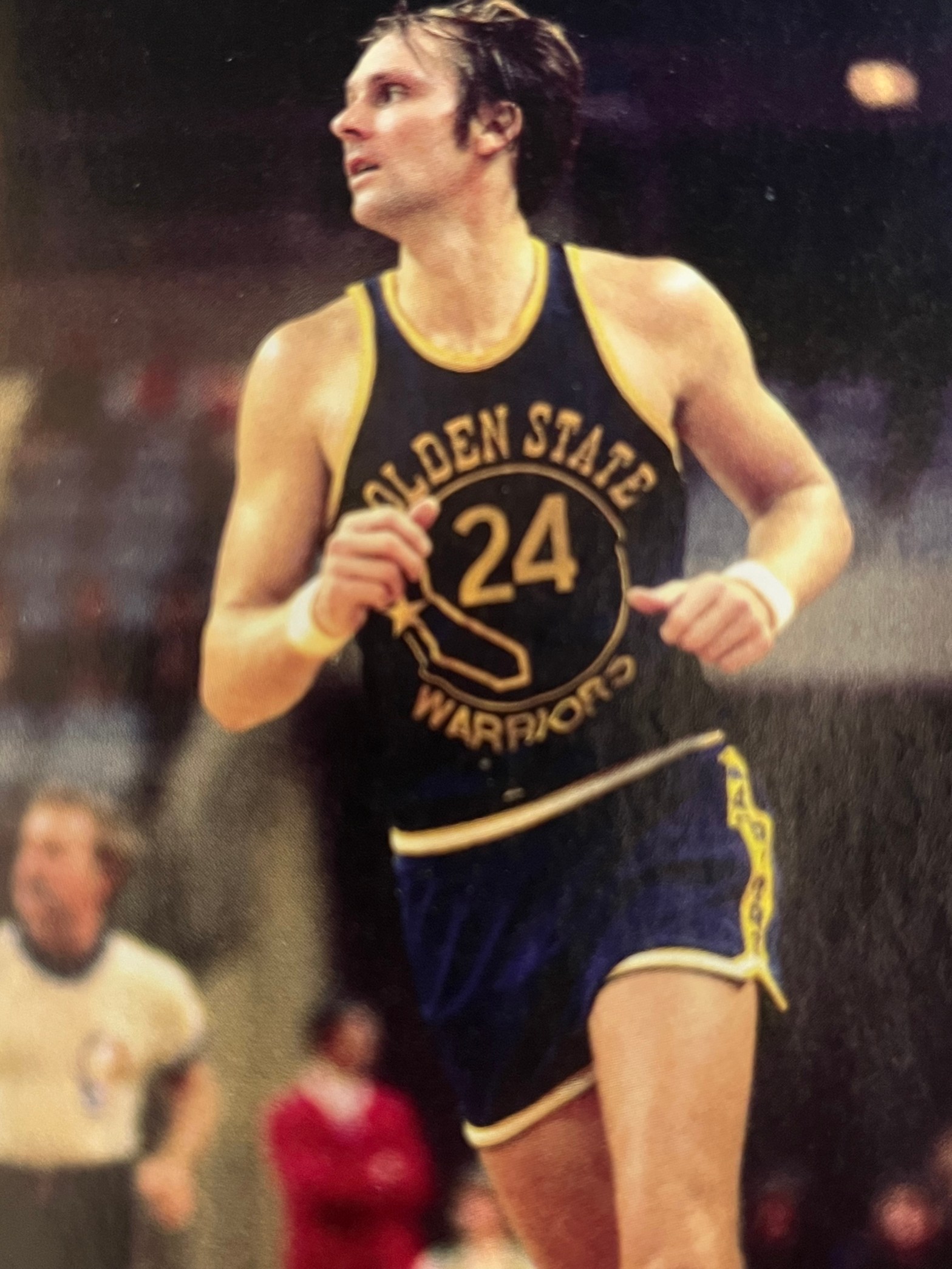
[Not all articles in old basketball magazines were created editorially equal. Some publications got the words and punctuation right; others clearly roughed it and hurried to press. The article that follows falls into the latter category. It’s rough around the edges, though I’ve tried to clean up the stray and missing commas. All that aside, the article stands the test of pro basketball time because writer Gloria Cummins spoke to all the right people to capture the Golden State Warriors’ unexpected run to the 1975 NBA championship. If the Warriors are your team, you should find interesting this article from Sports All Stars’ 1975 Pro Basketball Magazine. Give it a read.]
****
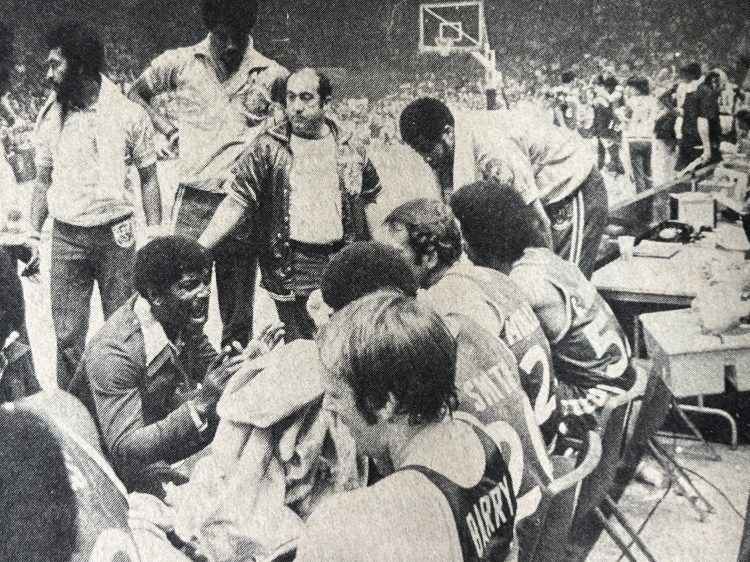
Coach Al Attles called the Golden State Warriors’ triumphant win over the Washington Bullets for the 1974-75 NBA championship “a team effort.”
How descriptive a phrase when applied to the 12-man team that Attles was speaking of. Every player on the Warriors’ roster contributed in the 17-game playoff series, leading to the unexpected NBA crown. Attles never shied away from using his entire team, and it was the Warriors’ depth that led to their most-successful season.
“Of course, it helped us win,” remarked Coach Attles. “We were able to call upon the entire bench, giving our starters a rest and wearing out the opponents’ starters.
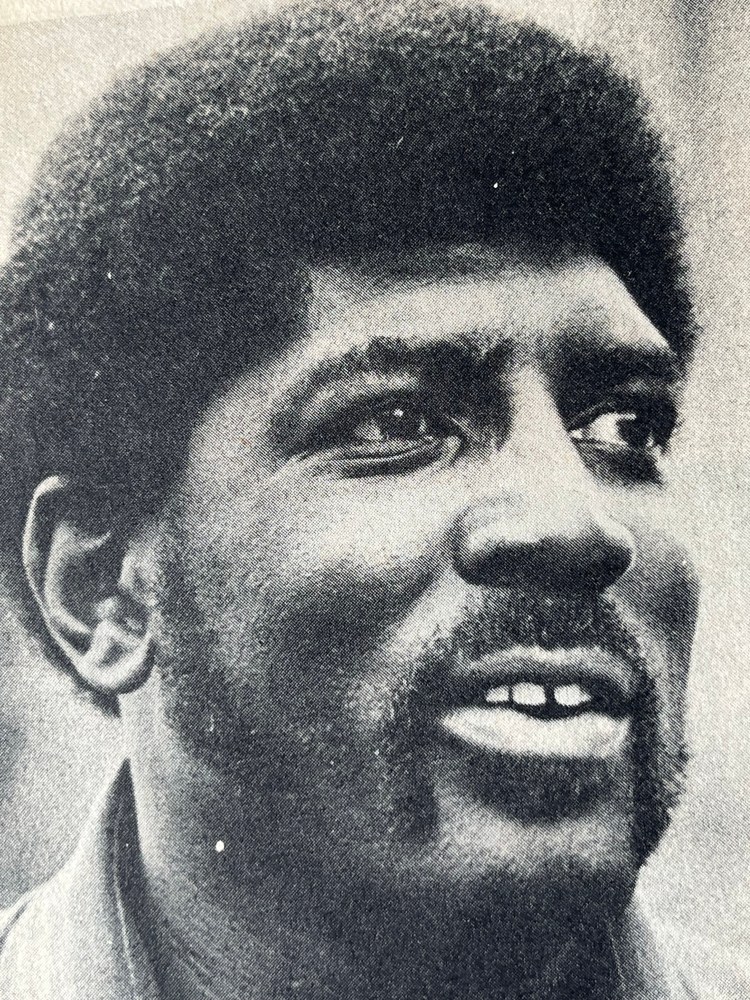
“But it’s really ironic that no one ever mentioned our bench before the playoffs or championship. I don’t think we’re revolutionary, we used our bench the same way last season. I strongly believe that you can’t expect players to give their best down the road, if you don’t give them a chance to play all season. It just happened that my philosophy became strategy to many people after we won the title.
“But the combination of the whole teams’ effort, working hard and working together was the key to our winning.”
The Warriors were not favored to win. Little, if any attention was given to the club’s determination and progression of improvement. And while the Warriors boasted superstar Rick Barry, who finished second to the Braves’ Bob McAdoo for the scoring title, it was assumed that he couldn’t win the whole thing by himself.
Even the team’s homecourt—Oakland Coliseum Arena—had been scheduled for another event in expectation of the Warriors fizzling out during the playoffs. The final series had to be played in San Francisco’s Cow Palace.
After all, the Warriors had lost key players in Cazzie Russell, Clyde Lee, and Nate Thurmond, and it would take time to rebuild and knit another unit together. Maybe in a couple of years.
But the players replacing those lost gave new life to the team, attributing speed and quickness. And Attles gave them playing experience. “People have been saying we were just lucky,” said Attles, “because teams like the Lakers and the Bucks didn’t have the stuff to win it with. It’s obvious now, we did.
“I, too, had doubts that we could make it all the way. I felt strongly that we had the team that could do it, but doing it was another thing. We had such a new team, a young team. It was just a matter of getting all the ingredients to work. And through everyone’s effort, it did.”
Last season, Golden State captured the Pacific Division title with a 48-34 record and posted the best regular-season record in the Western Conference.
It wasn’t an altogether runaway playoff series for the Warriors, until they met the Bullets in the finals. It took six games with Seattle in the semifinals before the Warriors took it, and seven challenging tilts with Chicago to win the Western Conference finals. “Winning the championship was kind of a dream,” added Attles, “because our main goal all season was to really just continue to improve.
“And I’m really happy for Barry. He’s been a boost to the team, and the players really responded to him. He took on responsibility like our third coach.”
There’s no doubt that Rick Barry, the 10-year pro forward, took the leadership in the Warrior title drive. Barry, named MVP of the championship series, played superb ball, as he’s done throughout his professional career. During the playoff series, Barry had a game high of 39 points and averaged 28.2 points per game, while also racking up 50 steals and 103 assists.
The title for Barry was also a dream.
“There’s no player who doesn’t dream of being on a championship team. And so few players experience it. When I came back to the Warriors, I didn’t expect a victory so soon. There were so many changes in the beginning, and it takes time to rebuild, change attitudes.
“I was elected captain and was really motivated. It was sort of a challenge, a personal satisfaction. It was just another piece of the pie.
“It was a great year. The guys were willing to listen. And the players that did sit on the bench, put aside ego and pulled together, which I think takes a lot of character. No one felt superior to the other.”
Captain, coach, and team were particularly proud of rookie Keith Wilkes’ performance throughout the season and during the playoffs. Wilkes, honored last season as the NBA’s Rookie of the Year and top vote-getter for the All-Rookie team, became a starter for the team when forward Derrek Dickey was injured early in the season.
The two-time All-American from UCLA quickly cemented his starting position by averaging over 14 points per game and showing strong rebounding and defensive ability. “Keith is tremendous,” said his coach. “He not only tries to be the best player he can be but also the best person he can be. He does his thing well and works very hard. We are all so proud that he won the rookie honor, he certainly deserved it.”
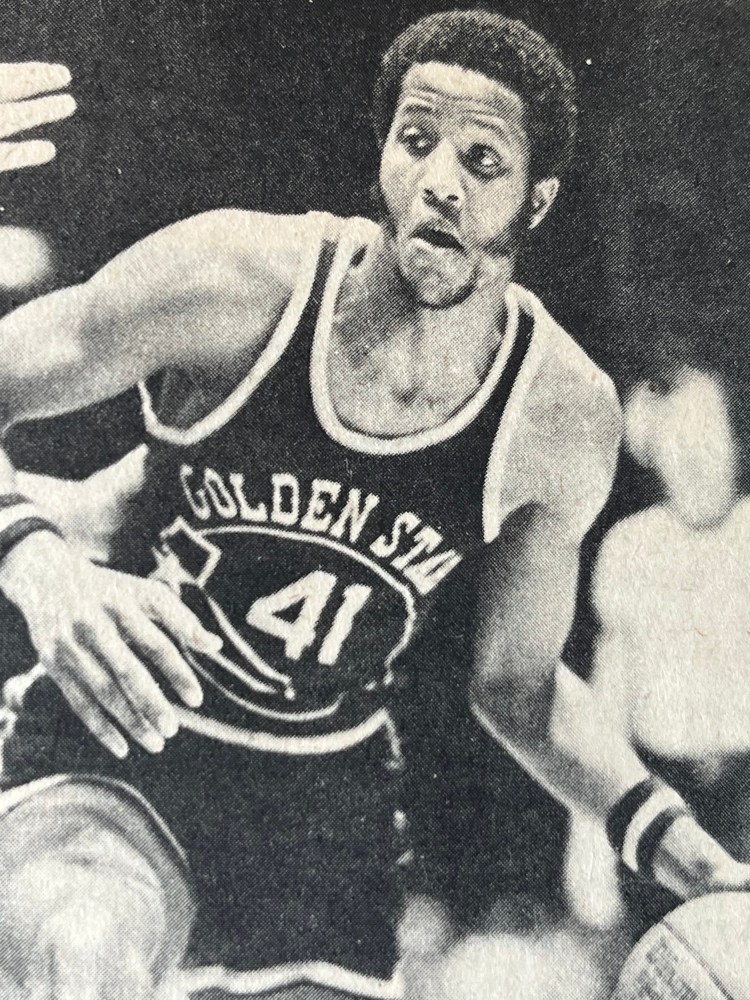
Clifford Ray and George Johnson dominated the middle for the Warriors throughout the season. Both pivotmen appeared in the same amount of games, but gave the club the benefit of their different strengths: Ray’s rebounding and Johnson’s blocked shots.
“Johnson and Ray have different skills, so we try to mesh them together to get what we need,” said Attles. “I feel that a great injustice has been dealt to Ray by the press and also the fans. He deserves a lot more credit for his outstanding ability than he gets. He’s probably the most dedicated individual I know. With Ray, we win games when he scores and we win games when he doesn’t.
“George Johnson also has great talent. George was a walk-on. He had played pro ball previously but had given it up and was working in a bank. I saw him playing in the summer pro league out here and asked him to join our club. George has only scratched the surface of his talent. But if he plays this season the way he played at the end of the last, he should go much further this year.”
And contributing equally in talent to the Warriors’ “dream come true” year was Butch Beard, Charles Johnson, Phil Smith, Jeff Mullins, and Charles Dudley manning the backcourt.
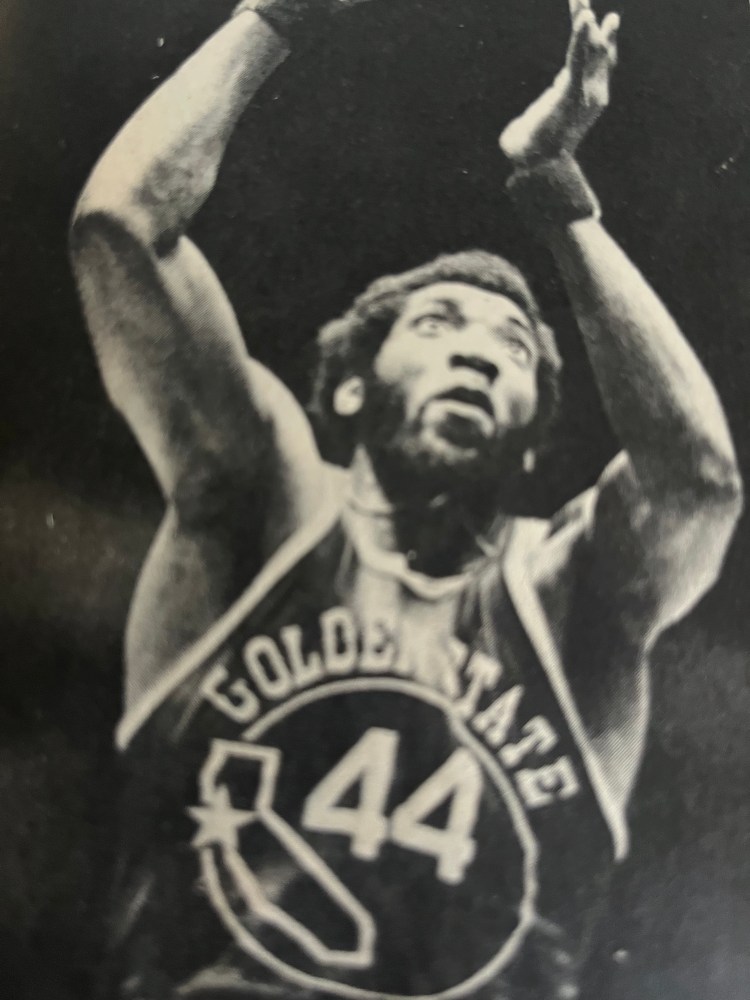
All in all, the Warriors displayed exceptional quickness, excellent defense, team unity, and a deep bench. But these attributes were lightly regarded, especially by the Washington Bullets who had beaten the Warriors three-out-of-four times during the regular season. In fact, the Bullets were predicted to win the title in no more than five games.
There wasn’t a fifth game. The Warriors rallied to win each game—four straight—by overcoming Bullets’ leads in each game.
The Washington team couldn’t understand it. They had just emerged as the “winners of the winners” by downing the young-and-hungry Buffalo Braves in seven games in the semifinals of the Eastern Conference. They did so in spite of Bob McAdoo’s 262 points in the series.
Then, with only one day’s rest, the Bullets shuffled off to Boston to outrun the Celtics, the defending NBA champs. Naturally, the Bullets’ confidence was somewhat watered. The Celts were not only healthy and more experienced, but they both played the same style game. And it didn’t hurt the Bullets to have former Celtic K.C. Jones coaching on the sideline.
“It helps to know a system of play,” said K.C. “They play fundamental basketball, the same as they did, when I was there. Only now, they have better shooters—White, Cowens, Havlicek— and Silas, a tremendous boardman.
“So you look for their weaknesses and capitalize on them. When you’ve been with a club through eight championships, you get an idea of what it takes to be a winning team. And it’s all the things you don’t see, as you watch the game, that wins for you.
“I’ve utilized the Boston strategy somewhat in coaching the Bullets—all of the fundamentals, offense, fastbreak, defense. Our team is younger and as quick.”
All of the fundamentals passed on to the Bullets from the coach helped to dethrone the Celts in six games.
Thirteen playoff games, and only Golden State to contend with. Will the fundamental works against the Warriors?
“Well, we’ll have to contain their fastbreak,” figured K.C. “They are the highest-scoring team in the NBA. So we’ll have to try to keep them off the offensive boards. Contain Barry. Keep Wilkes down.
“In brief, we’ll have to continue what we’ve been doing up to this point, making sure that we maintain a smooth offense when we come down rather than getting ragged. There’s no doubt in my mind, it’s gonna be rough. Teams are different when they play in the finals, and it’s gonna be a knock-down-drag-out series all the way.”
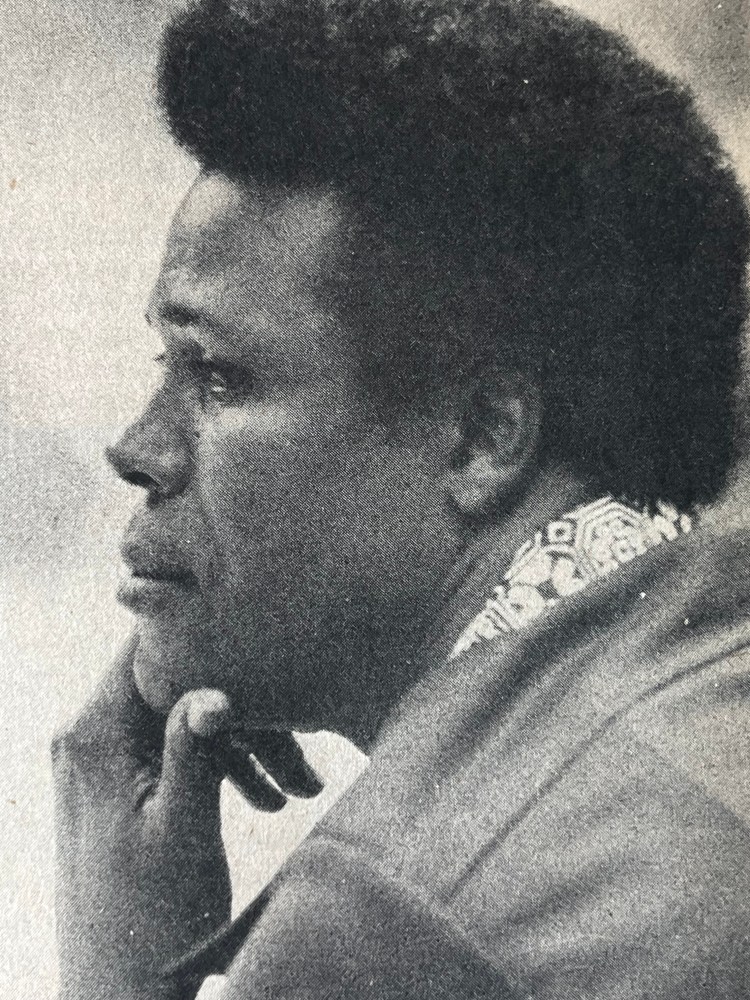
The Washington Bullets had an outstanding season. They were beat out in the final days of the regular season by Boston for the league’s best record. Although the Bullets suffered some injuries to their key players, namely Jimmy Jones, their talented personnel gave more than respectable contributions. Elvin Hayes, Phil Chenier, and Wes Unseld were among the top nine players in last season’s MVP balloting. The Bullet bench also was top flight.
“That’s a problem that bothers me,” said K.C. “We have such great talent sitting on our bench—right down to the 12th man. Gibbs, Spoon, Jones, Haskins, Robinson, Kozelko. And there’s no room to put them in. All of them could start for any team.
“But you can only play a certain amount of men at a time, and it’s normally seven or eight men. If you start running everybody in, you’ll lose some consistency. What helps is the attitude of the guys who sit through the games. They do feel a part of the team.”
The Bullet bench and its starters shared the grave disappointment after their finals fade-out. Phil Chenier, the Bullets’ all-star guard, said that the loss didn’t make sense. “We’re going to win this title one of these years.”
Wes Unseld added, “We didn’t play as well as we could, but that’s sour grapes, and nothing should be taken away from the Warriors now.”
Unseld, who teamed up with Elvin Hayes to make a devastating pair, played his seventh year with the Bullets, and he wanted so desperately to experience that championship feeling. Bob Ferry, the team’s general manager, was optimistic. “We went two steps further than last year. We proved we could get past the first round, and then we beat the Celtics. We wanted to win it all, but now that’s just one more thing we have to prove.”
K.C. Jones and Al Attles shook hands and back-slapped after the final game in Landover, Maryland. They acknowledged silently their mutual respect for one another and briefly remembered their previous encounters when they wore NBA jerseys.
And here they were, NBA coaches adding new pages to the record book. One of them receiving the cherished Walter A. Brown Championship Trophy for having the best team in the league. Both establishing a first in the league’s history: Two Black coaches competing for the coveted NBA crown.
They smiled.
The press was waiting.
 From Way Downtown