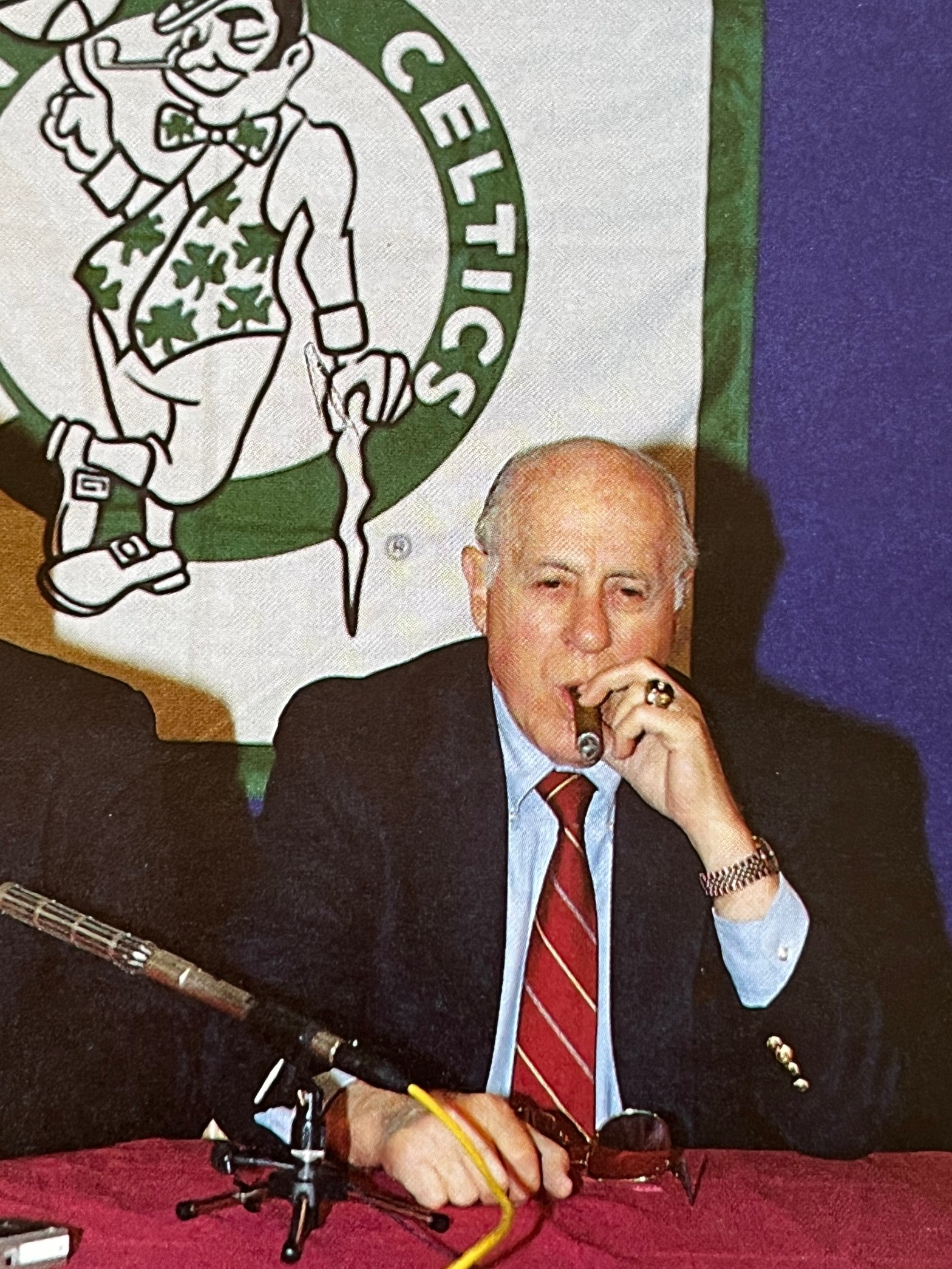
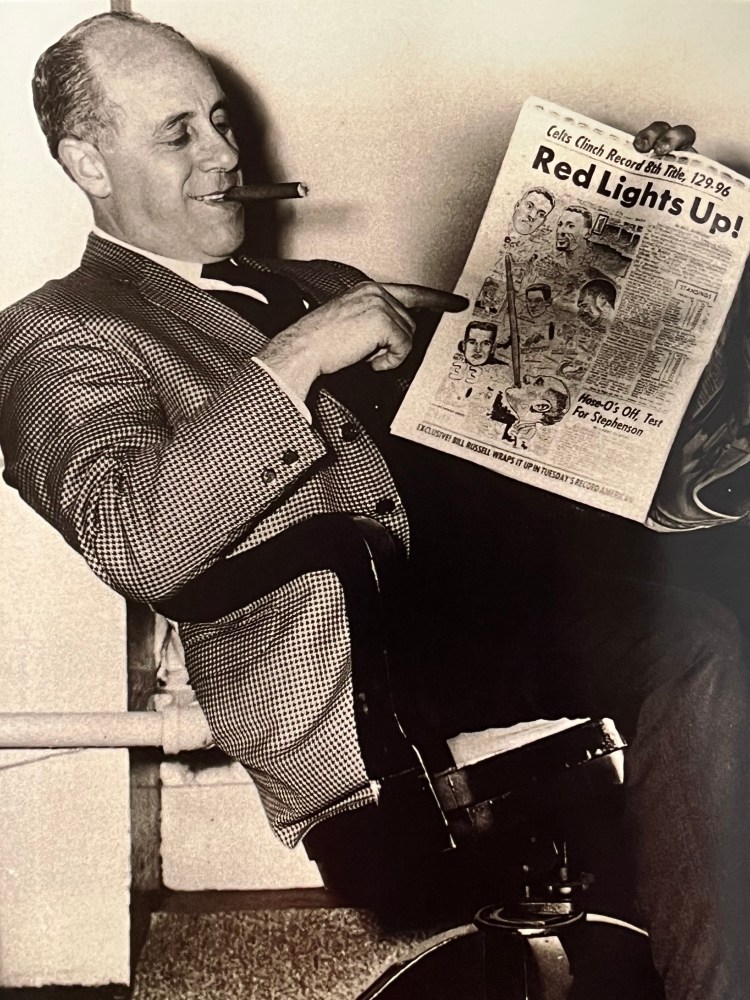
[This is a fascinating Q & A, historically speaking. In early 1978, the magazine Black Sports arranged an interview with Red Auerbach, then the Boston Celtics general manager. The editors envisioned the interview as a chance to get one of the NBA’s shrewdest, most opinionated minds on the record to speak at length about race and basketball. What’s more, Auerbach’s time-tested celebrity would bring instant credibility to his opinions, helping readers and activists to sort through the issues that plagued pro basketball in these troubled racial times.
But as you’ll read, all didn’t go well. Auerbach, though trying to be polite, seems to have hung up on his inquisitors. As payback, Black Sports ran the “aborted” interview, likely to make Auerbach look bad. What’s fascinating is the NBA had just rebooted its labor system following the NBA-ABA war that brought free agency and early entry to the fore. And yet, Auerbach starts this interview pining for a return of the good old feudal player reserve system. From there, the interview goes rapidly downhill, mainly because Black Sports forged ahead too boldly with its punchier questions. Auerbach didn’t appreciate it.
As a quick aside, Auerbach’s thinking on labor would evolve with the times. In the late-1990s, I interviewed him for my first book, Hot Potato, and I remember Auerbach taking a random jab at Duke coach Mike Krzyzewski for advising his then-undergrad star, Grant Hill, to stay in school. Auerbach rolled his eyes and said “the kid” would be one of the top picks in the draft. “The money’s there right now. What if he get hurt next season?” He said Krzyzewski was begin irresponsible.
That, though, is not where Auerbach’s head was for this aborted interview, published in the April 1978 of Black Sports. Enjoy!]
****
Q: What is different about the modern ballplayer?
Auerbach: Money. Of course, you know, they’re spoiled when they’re recruited for college, but, at the same time, they were always kind of spoiled, so that’s not the factor that people think it is. Today, people are playing ball with one eye looking up at dollar signs. They figure they cannot make it by playing defense and by being a sacrificing team player. They figure they have to bring out their own stats. That’s what’s affecting things, and that’s what the difference is.
Q: So you feel the team loyalty factor has diminished?
Auerbach: Not team loyalty, team play.
Q: Do you understand the new athlete and that new philosophy?
Auerbach: If I don’t understand it, I wouldn’t recognize it. Once you recognize it, you understand it; that doesn’t mean you can do anything about it.
Q: But how differently do you handle the new athlete?
Auerbach: You can’t, because it doesn’t happen here, it happens in college first. It affects their play in college. Then, when they become pros, they figured they’ve gotta do it on the stats. That’s why a lot of them fall by the wayside, because they’re not contributing enough toward victories.
Q: What do you think would change that?
Auerbach: The only thing that could change it is if no-cut contracts are out of the picture. Once they’re out of the picture, you’ll find players doing everything they can to win. As it is now, they do everything they can toward furthering their careers.
Q: But what would you suggest in place of the no-cut contract? A one-year contract renewable every year?
Auerbach: Yeah, but you can’t do it. You’ve gotta be competitive. Unfortunately, that’s the story. If a guy takes a fella and drafts him in the first round, early, and he gives him $100,000, you can’t take the guy you draft right after him and say, ‘Hey, I’ll give you $20,000. You just can’t do that. ‘Cause right away, they look to the courts.
Q: Are there any alternatives at all?
Auerbach: Right now, no. Right now, you’ve just gotta do the best you can and hope that you can turn the kid around to your way of thinking, as far as being a team player.
Q: Speaking of the money involved, we read that part of the problem as far as discipline is concerned is that the players are making so much more money than the coach. They feel they don’t have to listen to him. Do you feel that’s it?
Auerbach: Part of it, sure.
Q: What’s the other part?
Auerbach: I just got through telling you.
Q: Money?
Auerbach: That’s right. Stats. They play for their own career rather than for the team. And some coaches that can maintain control . . . and some general managers that can maintain control . . . can fight this off, to a certain extent. But a lot of guys can’t, and that’s where the problems come in.
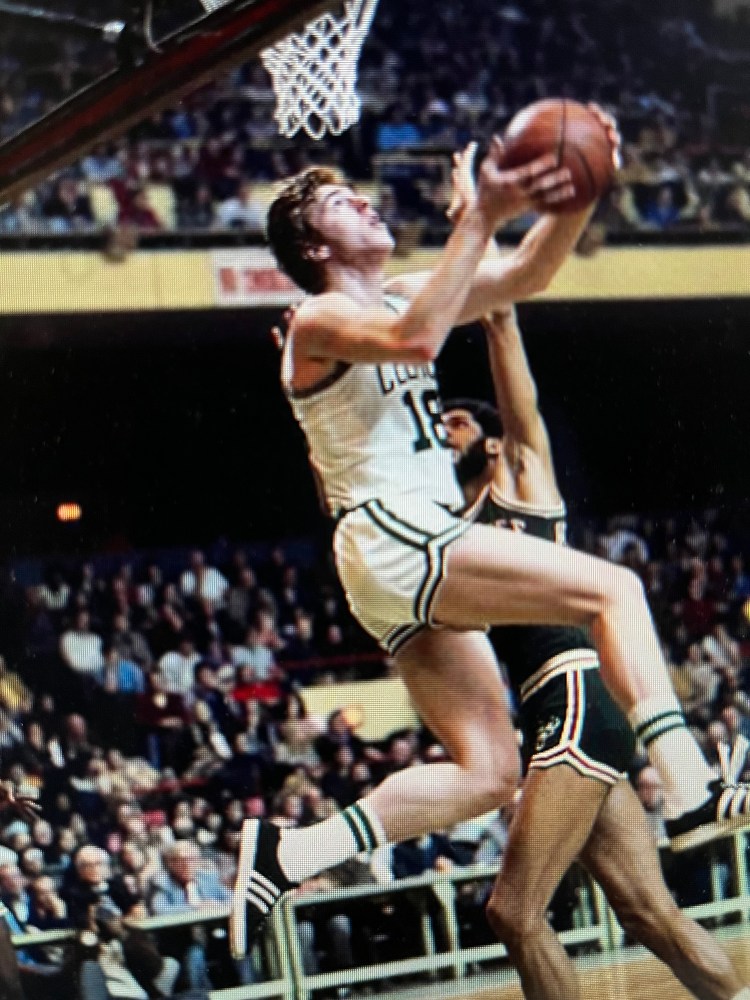
Q: Speaking of control, as far as [Celtic star Dave] Cowens walking away from the team—
Auerbach: Hey, I’m not rehashing old shit. Go on. Forget that.
Q: We were wondering whether you saw it coming.
Auerbach: No, I don’t even wanna discuss that. It’s over. That’s last year, what the hell are we going back there for?
Q: How about something more recent then?
Auerbach: Yeah?
Q: Was there any alternative to firing [Coach Tom] Heinsohn? Maybe trading . . .
Auerbach: That’s been rehashed time and time again. You can read all the papers, get the papers and read all the stories on that. What the hell’s the sense in me going back into all that again?
Q: We were wondering if perhaps trading another player . . .
Auerbach: That had nothing to do with it. It was just something that I had to do and did, and that’s all.
Q: We read where you felt he had lost control of the team.
Auerbach: Well . . . it wasn’t really control, it was communication and different things. It all stems back to what you were talking about.
Q: Money again?
Auerbach: Yeah. Listen, I got a go. I’ve got Satch [Sanders] and everybody sitting here waiting for me.
Q: But we wanted to talk to you about your image, your persona, and . . .
Auerbach: Look, now is a bad time. The deadline for the player draft is coming up, and we have a lot of things to do. Try me again in about a week, and maybe we can set something up.
 From Way Downtown