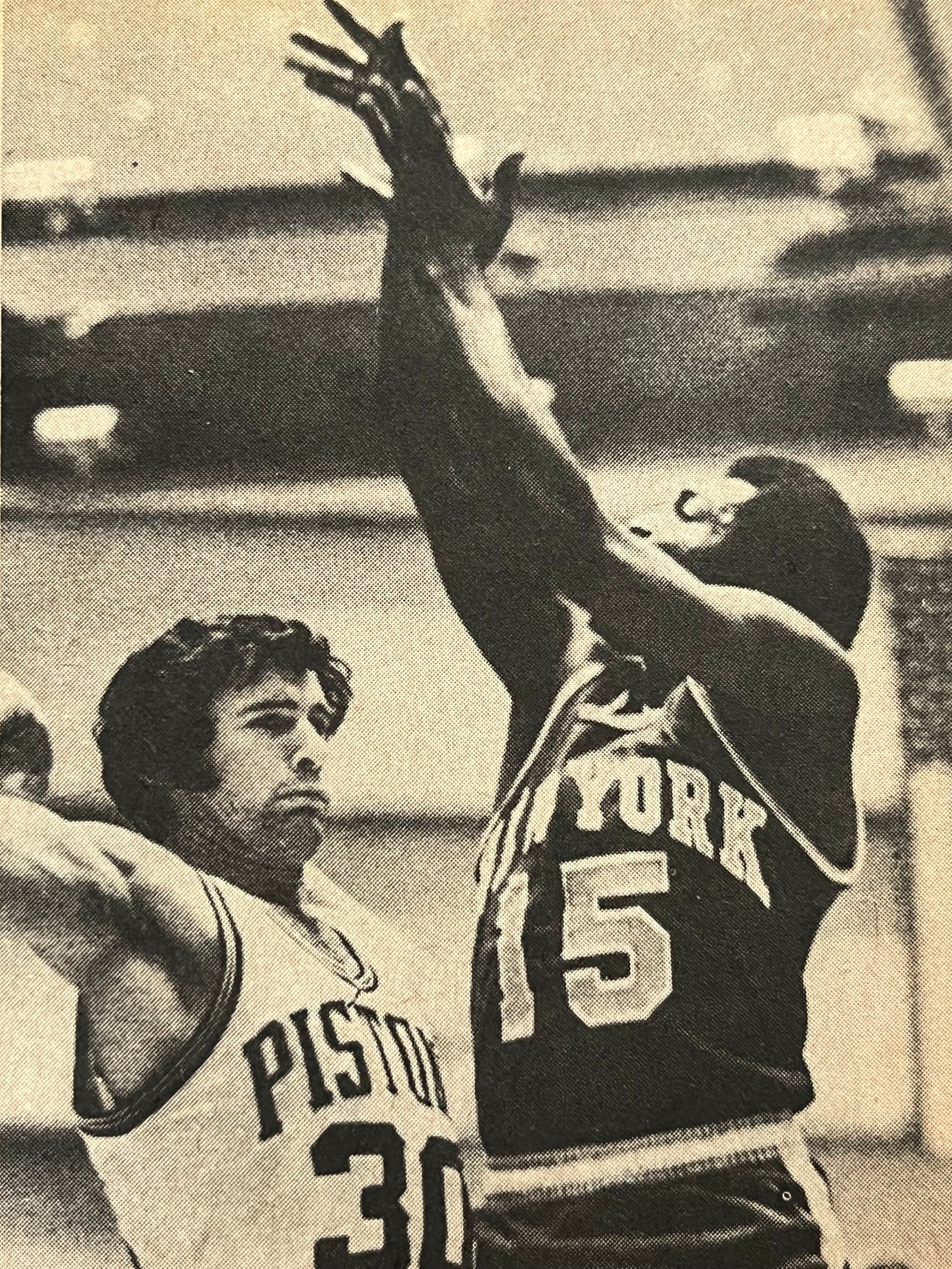
[A lot was written about Earl Monroe when he broke into the NBA in the late 1960s as “Earl the Pearl” with the Baltimore Bullets, deservedly so. Less was written about Earl the Pearl in the 1970s when he blended in masterfully with the team-first New York Knicks. Less can be more, though. I’ve stumbled onto some good stories about Monroe in New York. One of them follows in the words and excellent sourcing below. They are from the New York-based journalist Al Mari, who later would write for Gannett News Service. His story about “the man behind he moves” appeared in an April 1976 issue of Hoops Magazine. Enjoy!]
****
It was a typical Earl Monroe game, and after the man of a million moves had helped the New York Knicks beat the Washington Bullets, he heard a typical question and gave a typical answer.
“I guess,” Monroe said, flashing his toothy smile and winking at observers, “you might say it was just Earl Monroe being Earl Monroe.”
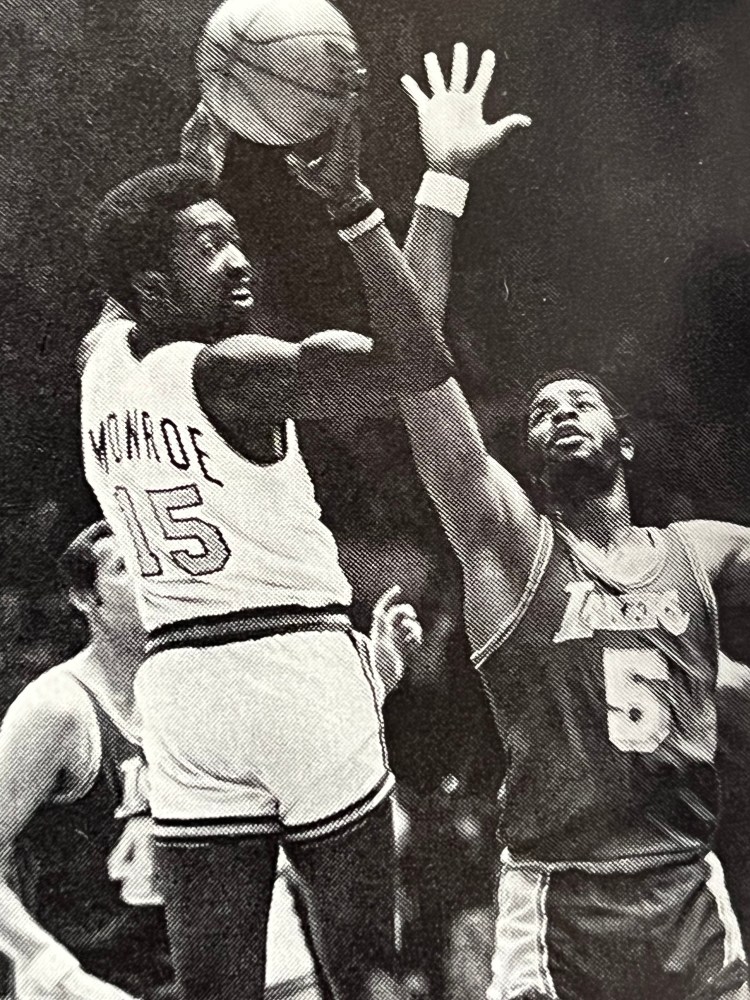
There was no need for further explanation. The world has come to know what Monroe can do when Monroe wants to do it. The high dribble, the quick change of pace to the low dribble, the spin, the ball here . . . then there . . . the drive to the hoop, the dervish whirl, the spectacular layup as players shake their heads and trot downcourt.
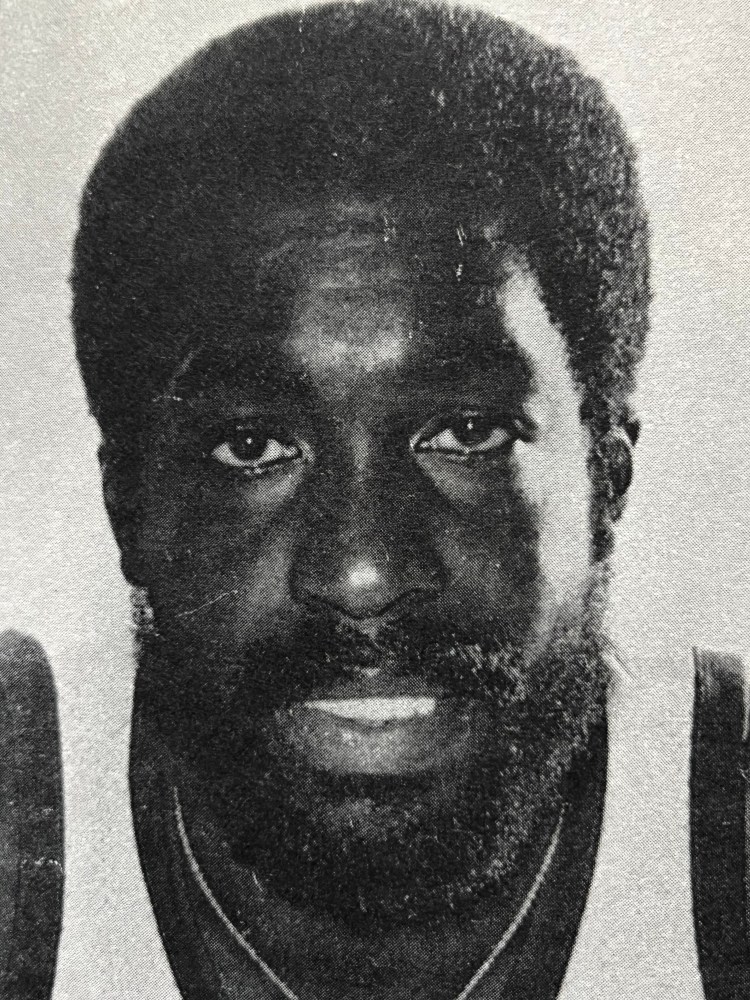
Yes, the fans and the players know exactly what to expect from the man they call “The Pearl” or “Puff-o’-Smoke.” They call him the former for obvious reasons—he glitters. They call him the latter because, both on and off the court, he’s here one minute and gone the next.
“You always get the feeling,” says Kevin Loughery, a former teammate of Monroe’s in Baltimore, “that Earl is somewhere hiding around the corner. We’d call a team meeting, and there was no Pearl. Just before it began, in he would walk. It was the same thing for bus rides, planes, and even games themselves. He’d show up at just the right time.
“What some people don’t realize is that Earl is a tremendous competitor. We knew it in Baltimore, and the Knicks know it. He’s easy-going, but a hell of a teammate. He’s the best one-on-one player in the league, and down the stretch, he’s the guy to go to.”
But somehow Earl Monroe, showman deluxe, is not Earl Monroe, showman deluxe. His life has taken many terms, some good, some bad. He has been in gutters, ghettoes, and gangs, just as he has been in the showcase of glory.
“What a lot of people don’t understand,” Loughery concludes, “is that Earl is a shy person. Through it all, he has done wonders by working with kids.”
“Working with kids” is a phrase that displeases Wes Unseld, another former teammate of Monroe’s. “That’s a cliché that writers dream up,” Unseld says. “Every time they want to praise an athlete, they say ‘he works with kids.’ In Earl’s case, I know that he was respected and liked in Baltimore, just as he was in Philly, where he grew up, and just as he is in New York. He did a lot for the community every chance he got.
“On the court, he’s something different,” Unseld goes on. “He’s probably the only guy in the league who can get off a shot anytime he wants to. Technically, there was no transition when Earl left Baltimore to go to New York. In Baltimore, the plays were designed for him. In New York, they’re not. It’s that simple. I’m thankful they don’t turn him loose against us.”
“Earl is one of the few players in the game who I’d pay to go and see,” Jerry West once said of Monroe.
Yet not many people know the man behind the moves. “A lot of people think I’m hard and callous,” Monroe says, “because I’m not outgoing. But I have a feeling, for both the game and for people. I think I can spot a phony and tell what’s what or who’s who. If I do spot a phony, I just turn him off.
“I’m a believer in predestination. I believe that in each lifetime, the souls of certain people will intermingle if they’re supposed to. I’m a believer in finding strength in other things. There were times I got down on myself, and I’d look for a source of strength. Many times it was my mother. She was the one who made sure I went to school and stayed out of trouble,” Earl goes on.
But it wasn’t easy in Philadelphia. “There were a lot of gangs there,” Monroe recalls. “It was tough staying out of them. Either you joined one or you got beat up, and I got beat up a lot of times. I guess maybe those years made me what I am today. I had a lot of energy, a lot of aggressiveness, but I was still shy. I would stand around at the playground, hoping to get into a game, and when I did, I let my aggressiveness come out on the court.
“A good influence on me in those days was a guy name Steve Smith, now a teacher in Camden. He was my alter ego, because I was a little bullish. I was like the devil, and he was like the angel. I’d get in trouble, and he’d get me out. It figured. We were compatible. We were both Scorpios. We understood one another.
“I began to take to sports seriously in high school. It was different then. No smoking, no drinking, no socializing. After high school, I was out of school a year, and then I began socializing more and learning more about life itself,” Monroe notes.
And he learns, and he has never forgotten his lessons. He has done his homework, helping people every chance he gets. Sonny Hill, Philadelphia-based broadcaster and youth leader, has known Earl for 10 years and says simply: “He is one of the most beautiful human beings I’ve ever met. An extrovert on the court, an introvert off the court.”
Off the court, Monroe helps others every chance he gets. “I do things by feeling, by impulse,” Earl says. “I don’t like showing up at dinners and things that are staged. I never write down a speech. I get a feeling for the kids or the people, and I go from there.
“The funny part about some staged events is that the kids in the audience aren’t really the kids who need help. Sometimes you walk out of those affairs, and you see kids standing around outside. They are the ones who need the help, and who need some strength. The letters I get from people I’ve helped make me feel good.
“Sometimes I’ll get a phone call, but I wind up doing all the talking. There have been times I’ve been hurt. Recently, I was helping a guy about 25. I gave him money, and thought I had him straightened out. Then his mother died, and something went wrong. He pretended he was my brother and stole the limousine I use for my rock group, Meng-us.
“Funny thing is that there’s always somebody telling somebody else that he’s my brother and trying to get into the dressing room. It’s funny, because I don’t even have a brother.”
We can forgive Monroe, the basketball player, for missing some jump shots. We can forgive Monroe, the human being, for making some mistakes. But we cannot forgive Monroe, the philosopher, for that last statement. Because the truth is that Earl Monroe has a lot of brothers.

