
[In 1980, the Atlanta Hawks’ young star Eddie Johnson was big news off the court. Over the summer, the fourth-year NBA guard had been chased and shot at by two Atlanta drug dealers. He’d also been busted for alleged possession of cocaine, a DUI, and for stealing a car. What everyone wanted to know: If Johnson made such good money with the Hawks, why was he running around the city ducking bullets and behaving like a common criminal?
Reporter Michael Haggerty lined up an interview with Johnson, hoping to explore the emerging NBA problem of recreational drug abuse. Haggerty’s editor green-lighted the story, only for Haggerty to suffer every journalist’s worst-nightmare. Johnson, a.k.a., “Fast Eddie,” for his quick first step, gave him the run around, then bagged the interview altogether. To his credit, Haggerty hung in there to complete the article below, which ran in the November 16, 1980 issue of the Atlanta Constitution’s Sunday Magazine.
Johnson, as Haggerty’s article mentions, had symptoms of manic depression that could play trick on his mental health. By September 1981, the two-time NBA all-star arrived at the Hawks’ first preseason practice looking disheveled and with his headphones blasting. He held an ice cream cone in one hand and a cigarette in the other. Though suspended to start the 1981-82 season to get himself together, Johnson rejoined the Hawks and averaged 17 points per outing.
Things wouldn’t end well for Johnson. Not at all. After his 10-year NBA career, he couldn’t stay off of drugs or stay out of trouble with the law. In November 2020, Johnson succumbed to an undisclosed illness in a Florida prison while pulling a life sentence. He was just 65 years old. “I don’t blame anybody for what happened to me but myself,” he said. “It’s not the money. People fail to understand, when you’re involved in the drug culture, it’s the hustle that goes along with it.” Johnson’s love of the hustle is a tragic tale, and Haggerty’s story offers some early insight, even if Johnson wouldn’t talk to him.]
****
Surrounded by 15,000 empty seats, Hubie Brown stood on the brightly lit basketball court at the Omni arena and, in the smoldering silence, surveyed the athletes gathered around him. It was just five days before the opening game of the Atlanta Hawks 1980-81 regular-season, and Coach Brown was about to start the morning’s two-hour practice with a few personal remarks to his players. I had come to practice to talk with Eddie Johnson. At just two inches over six feet, he is the second shortest man on the team, so it took a moment before I spied him among the knot of red uniforms, his hands folded in front of him while he chewed gum placidly and looked at the floor.
Hubie Brown was anything but placid. He had noted some deficiencies in the previous night’s intrasquad competition, and, as he quit glowering to speak, the tenor of his voice slowly changed from a false calm to an angry shout to a controlled rage. “We need to get something clear,” he began. “If you’re only going to shoot 46 percent of your field goals over the season, we need for you to draw the fouls and take the 78 percent shot from the foul line. To draw fouls, you have to be willing to make some contact. If you’ve got the shot, you musttry to score until someone tries to stop you. That’s the way we do it. We execute. We take a shot, or we pass for a shot and draw the foul if anybody tries to stop us.”
Brown paused momentarily. When he resumed, his voice had calmed down, and something like sympathy seemed to show through his anger. “Look,” he continued, “I’m not trying to intimidate you guys. I’m really not. So, for those of you who don’t want to make any contact, please: Come see me.”
Brown paused briefly and drew a breath, then suddenly he was shouting again. “I’ll trade you, goddamnit!”
I watched Eddie Johnson all through Brown’s tirade, wondering if I would detect any hint of the pressure on him, any sign of perturbation, or any indication that his vitriolic coach could anger him. But no, like all of the team’s veterans, whatever he felt was well hidden behind his stony gaze; he avoided all eye contact until Brown listed the drills for the day’s practice and disappeared the gathering. Moments later, Johnson proved to be the same beautifully muscled, strong, agile player he had always been, ranging up and down the court on the powerful pistons that are his legs, sinking his incomparable jump shot, making brilliant passes. It was amazing, I thought, that he could put his troubled summer behind him and play ball with the intensity of a champion.
By now, even many people who pay no attention to sports have heard of Eddie Johnson. He is the exceptionally gifted athlete, who last season made the National Basketball Association’s All-Star team, won the Atlanta Hawks’ MVP award, and helped lead the team to the Central Division championship. But what put Johnson’s name in headlines on a regular basis occurred during the offseason last summer; apparently, it had less to do with basketball than with one man’s battle in coming to terms with his personality and with the pressures of being a professional athlete of the highest caliber.
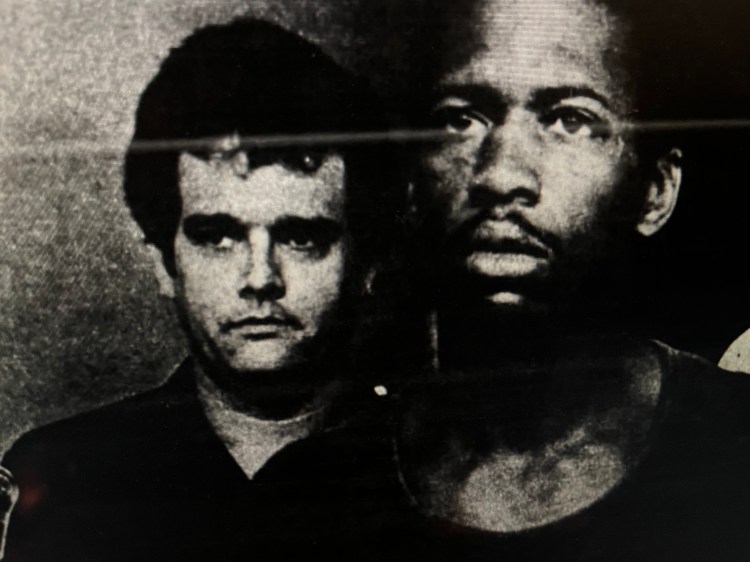
Beginning in June, Eddie Johnson broke from the pattern expected of athlete-heroes and ran into legal trouble. In fairly short order, Johnson was involved in a shooting incident; he was arrested for possession of cocaine, driving under the influence, and driving without a license; and he was accused of stealing a car. This kind of conduct, of course, could jeopardize his career as a basketball player, and a pronouncement by NBA commissioner Larry O’Brien in August to the effect that anyone convicted of possession of cocaine or harder drugs would forfeit his right to play in the NBA seemed ominously applicable to the Atlanta guard.
Johnson’s defense in his pending trial will rest heavily on his lawyers’ contention that the cocaine found by police was uncovered in an illegal search of a rented car that he was driving at the time of his arrest. His lawyers say Eddie didn’t know any drugs were in the trunk. The athlete’s uncharacteristic belligerence during his run-ins with the police have been explained away by the diagnosis of a local psychiatrist, who maintains Eddie was suffering from manic depressive illness, a psychiatric condition brought on by an imbalance of the element lithium in his system.
But, whatever the state of his health last summer, it seems certain that Eddie Johnson’s life had taken a number of turns that seriously disturbed his peace of mind, aroused him to hostility, and caused him to endanger what he had most loved all his life: his status as a great basketball player.
Many of us have longed in our fantasies to have the innate physical ability, the mental determination, the luck, and the opportunity to become professional athletes. In the last 25 years, professional athletes have accrued all the emblems of success our society has to offer: lucrative salaries, status, public adulation. Athletes are celebrities, sex symbols, the idols of youth, the envy of nearly everyone else. Not too long ago even the top names in sports seemed like normal people, and an occasional phenomenon, like Babe Ruth, would stand out from all the rest while he made a fortune playing a game. But the age of Joe Louis has given way to the era of Muhammad Ali. Professional sports are Big Money and Big Business. Many athletes make salaries that corporation board chairmen would be glad to call their own.
And yet, despite all its dazzling appeal, the life of a professional athlete is so demanding that its effects on many people can be tragic. Eddie Johnson’s tailspin into psychiatric care last summer is only one example; compared to his best friend Terry Furlow—who died in an automobile crash while under the influence of several drugs—Johnson is lucky. For some athletes, it is as though having attained a personal paradise, they do not know what they want next; many young athletes never adjust to their success, and they become lost.
Life is always easier when you know what you want. By the time he was in high school, Eddie Johnson, the oldest of five children growing up in the central Florida citrus community of Weirsdale, had known for years that he wanted to be a basketball player. That had been the simple driving force of his life ever since, as a little boy, he had fashioned a court in the sandy yard behind his family’s modest cinderblock house by tacking the rim of an old rusted bucket onto a backboard of scrap lumber. There, not 50 yards from a large orange-packing plant, he played ball with his friends and brothers and began sharpening the skills he would need to become a pro. Every year at Christmas, he would ask for just one toy and no other: a new basketball.
Growing up in Florida, Eddie learned what he didn’t want, too. He didn’t want to leave high school and go to “Citrus Tech,” the term he and his two younger brothers used for the career of an orange-picker, the thankless existence lived on a ladder leaned against a tree that had ruled their father’s life since before they were born. So, by the time he was a teenager and playing basketball in the community league, Eddie Johnson had set his sights on a scholarship to a college far from the campus of Citrus Tech. If he did well enough, it would only be a matter of time before he got his shot at the NBA.
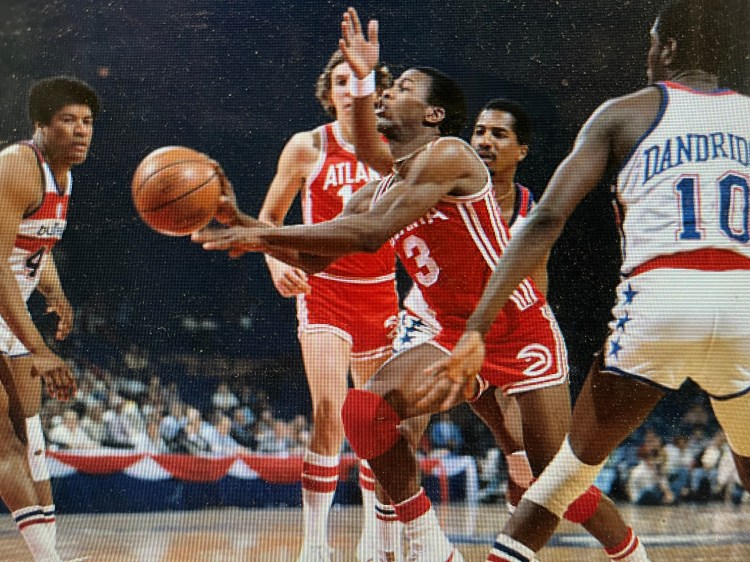
Eddie couldn’t have known it then, but he was going to get everything he hoped to achieve. It would become the greatest challenge he had ever faced. Along the way, he would meet many men who were willing to help him reach his goals. One of them was Hugh Lindsley, the basketball coach at Lake Weir High School, who first saw Eddie play when he was a 5-feet-11 eighth grader.
“I was impressed by him and saw his potential even then,” remembered Lindsley. “When he got to high school, he was a very polite, bashful person. He played junior varsity football as well as basketball. We could see he was a natural athlete during football season. He could play any position—quarterback, halfback, wide receiver—equally well.
“On the junior varsity basketball team, he averaged 30 points a game. I moved him up to the varsity the last eight or nine games of the season, and he earned a starting position in a week and a half. He was absolutely determined not to be a substitute. We won the district championship that year, and Eddie was a major factor in our victory. Aware of Eddie’s inexperience, the opposing school was double-teaming our other guard early in the game. Eddie took advantage of the situation and made six of eight shots in the final couple minutes of the first quarter. We had 12 points before the other school realized what had hit them.”
The young phenomenon from Weirsdale improved every year. Coach Lindsley recalled that, because he was Black and universally admired in the community, Eddie’s presence helped smooth the high school’s transition to full integration. “He was a great attraction for getting the kids to come and practice at the gym,” said Lindsley, “and he excited people into attending summer basketball camps. We never won the state championship while Eddie was on the team, although we were runners-up in 1972, his junior year. But because of his influence, our basketball program picked up measurably, and two years after he left for college, we went undefeated and took the state championship.”
Though he was actively recruited by such basketball powers as Florida State University and Notre Dame, Eddie Johnson opted to attend Auburn University, mainly because Coach Bob Davis of Auburn was a close friend of the principal at Eddie’s high school. Had Eddie attended a more sophisticated school in an urban environment, he might have been better prepared for the life that awaited him as a pro in Atlanta.
As it was, he went from living in one small town to attending college in another. Basketball was his life. His prowess on the court increased with every season, of course, as his self-confidence and physical strength grew under Coach Davis’ guidance. “Eddie put our basketball program back on the map,” said Davis, who is now retired from coaching. “He was responsible for the resurgence of basketball at Auburn. Nobody’s better than Eddie. And he was tough. You couldn’t hurt him. Besides that, he was a good, sweet, terrific kid. He was a very compassionate young man.”
Eddie won the Southeastern Conference scoring title in his freshman year, became an excellent foul shooter, led his team in assists every year, and was one of the nation’s outstanding rebounding guards. But Eddie Johnson evidently struggled with the burden of his emotional intensity, and by his senior year, he was drawing criticism in the press from his own coach. Bob Davis had a lot in common with Hubie Brown: he demanded a great deal from his players, and when he thought he was not getting it, he did not hesitate to crack down on them.
Today, Davis downplays any negative remarks he made about Eddie. “Eddie’s only real problem was that he’d get emotionally upset. We had a lot of battles for that reason. I stayed on him pretty tight. I could only control him by publicly criticizing him in the papers, and it made me look like the bad guy.
“But Eddie could play and not let the fact that I bothered him show—he’s the kind of guy who plays better when he’s responding to a disciplinarian. Still, he had a tendency to go off the deep end; he’d get bottled up inside and had to let it out somehow, but he wouldn’t talk to anyone, and he wouldn’t listen to advice.
“He developed a tendency to pick up the guys who were offbeat—he felt kind of sorry for them—and I’d warn him about being a public figure, but he’d tell me, ‘Nobody can pick my friends.’ He always reminded me of a country boy who wanted peace, but when he got caught up in things, he really changed his nature. The only thing keeping him from being the superstar of all time is his ability to deal with his emotions.”
In Johnson’s senior year, Davis publicly accused him of not performing up to par in a bitter loss to Alabama, a criticism of its favorite son that caused an uproar in central Florida when it was reported in the Orlando newspapers. Though Eddie’s reputation as a “problem player” was blown all out of proportion, according to Davis, it may have had something to do with Eddie’s not being chosen until the third round of the 1977 NBA draft.
“Eddie wasn’t as good as he could have been in his senior year because he was so wound up inside,” said Davis. “He was totally involved in basketball. I don’t think he went to class after the season was over, although he was a good student and could have made straight A’s. He knew he was going to play professional basketball.”
****
So, like many young athletes, Eddie Johnson neglected his classwork. He didn’t get a degree at Auburn, but turned his attention instead to his prospects as a pro. And he did well. Hubie Brown had acquired him in the third round of the draft, but he soon found out he was one of the league’s finest rookies.
Perhaps playing for a hardline coach at Auburn softened the shock of working for the incendiary Brown, for Johnson soon earned a starting position at guard. He learned Brown’s complicated system and, as always, he became steadily better at what he did naturally well. But there are indications that by his third season with the Hawks last year, Eddie might have become involved in a lifestyle that aggravated the emotional stress he already felt as a competitor in the professional marketplace.
I had come to practice to ask Eddie how he has become such an amazing basketball player, and in what ways he thought his pursuit of a professional life had contributed to his problems. I wondered if Hubie Brown’s decision to trade Eddie’s good friend Terry Furlow to the Utah Jazz last November had angered Eddie and caused him to react by running around with a crowd of people he knew his coach would not appreciate. And I wondered if Terry Furlow’s death last May might have sparked some of Eddie’s strange behavior, which came to the attention of the public in June. While in jail awaiting bond after being arrested for possession of cocaine, Eddie had mentioned his intention of wearing Furlow’s number during the upcoming season; he said he would dedicate the entire season to Furlow.
While Eddie was very polite to me, and though he promised that day at practice and on several other occasions to talk with me, he never did; finally, he admitted that he wasn’t going to. His trial may be delayed until early next year or possibly next spring, so it may be a while before Eddie’s version of what he has been through is available, and then, only if his lawyers want him to testify. For the time being, he is concentrating his energy on basketball and not talking about last summer. But I was still interested in discovering what a young ballplayer faces when he steps up to the pros, and in what might distract him as he finds success while laboring to keep his wits about him.
“The college kids who become pros . . . are affected by an economic high,” one coach at a Georgia college told me. “These guys sign for $80,000 or $100,000 a year, and suddenly they’ve attained a financial level they can barely comprehend. All their lives they’ve never had more than $30,000 to spend. But as pros, they buy a Mercedes, a bunch of gold chains, some fancy clothes, maybe even a house. Women are no problem: they come a dime a dozen. With basketball as their only obligation, the ballplayers can walk around in the offseason with $2,000 or $3,000 in their pockets for a night on the town. And what are they going to do with it? Many of them get conned out of their money. Others get hooked on one drug or another, alcohol being the most predominant.”
Tom McMillen, a 6-feet-11 forward with the Hawks in his sixth year in the NBA, agrees that becoming a pro is risky for some players. “Showing off your financial assets is frequently part of the lifestyle when a rookie comes into the league,” he said. “The adulation of the American public is misplaced in my opinion, and it affects some athletes who have longed for the spotlight. It’s not surprising that NBA players have problems—and not just drug problems, but disastrous financial affairs, personal crises, difficulties adjusting, and getting perspective in such a heady occupation.”
A typical young basketball player drafted by the Atlanta Hawks is a Black man fresh out of college who flies into town as a stranger. He has a letter in hand that instructs him to get a room at a designated hotel. The next day, after reporting to the Hawks office, he is driven around the southwest part of town, a predominantly Black section that is conveniently close to the airport, and encouraged to find an apartment there, so he will be close to other players and have no problems catching flights to away games. This effectively drops him into a “swinging single” lifestyle, close to many temptations that he might do best to avoid: near where he lives will be clubs, bars, and the kind of people who will make a fuss over an athlete . . .
Meanwhile, the athlete is dealing with Hubie Brown’s caustic coaching style, trying to learn the Hawks’ system of play. He’s coping with the awkward social situation of trying to get to know the other players while he competes with them for jobs. One player told me that it’s nearly impossible to really make friends during this critical period; after cuts are made and the team is formed, acquaintances are more easily begun. At first, some players just want to play ball and earn a position on the team. What a player does with his free time, how he spends his money, and how he adjusts to the new life are secondary considerations. But within a couple of years, a successful player becomes established and gains a reputation; it is then that he needs to be careful.
I talked with Bobby Pritchett, now the basketball coach at Clark College, who was Bob Davis’ assistant coach at Auburn when Eddie Johnson played there. “I think Eddie was well suited for playing with the Hawks,” he said, “because he has always been self-motivated to perform at maximum capacity. After playing for Coach Davis, he didn’t have to make a wholesale transition when he came to Hubie, one of the most-demanding coaches in the NBA.
“But you have to grow up as a pro. College coaches need to be more aware of readying these kids. Eddie Johnson has never really been in the real world. Basketball is his world. He was thrown into society—he and his ball. He did okay with his ball, but he needed to learn more about society.”
Coach Pritchett has talked with Eddie many times since his former charge join the Hawks. Like all of those who have coached Johnson, he feels an affection for Eddie and is concerned about his future. “Eddie can fight a battle—he won’t back down from anything. But he has always placed a certain amount of pressure on himself: he demands the ultimate from himself.
“And I think there’s the possibility that to relieve that pressure, he fell in with the wrong crew. I’ve told him about the responsibility that goes with being a pro. It’s difficult to make $100,000 a year and run around with people who are unemployed. You have to go your way and let them go theirs. Eddie wants to be a regular guy, he wants to be accepted; but it’s almost impossible to do that if you want to be a successful pro athlete. Eddie is a happy-go-lucky guy, and I think what he’s been through has been a real trauma.”
The evidence does seem to indicate that Eddie Johnson went through something traumatic. Following his third professional season—a triumphant season, but one in which observers say he was under a great deal of pressure from his coach—Eddie first made the news after he was chased across a parking lot in College Park on June 25 by two men who fired pistols at him. Eddie had been in the apartment of some friends, when the gunmen broke down the door, forcing him and the others to flee by jumping from a second-story balcony. When police arrived, his pursuers escaped. Eddie told the police he had no idea why the two were out to get him. Two days later, the police caught the man who had fired at Johnson, but because Eddie and his friends never showed up to press charges, the men were released from custody. College Park detective E.S. Mears, who handled the case, still doesn’t understand why Eddie failed to show, and he maintains there was a lot more to the incident than Johnson was willing to tell.
“The people in the apartment were frightened after the shooting incident,” he said, “and they told me that Eddiehad been hiding from someone when the door was broken down. According to these people, Eddie had bought some cocaine from one of the guys who was chasing him that day. Eddie hadn’t paid for the cocaine, and he may have slapped around the woman who delivered it. Anyway, he knew her boyfriend, the dealer, would be looking for him, so he didn’t stay at his own house.”
It’s impossible to tell if the two incidents were connected, but within a week of the shooting incident, Eddie’s house was broken into and his stereo and television were stolen. Two weeks after that, Eddie was arrested for possession of cocaine.
On July 24, less than two weeks after his cocaine bust, Eddie Johnson was arrested for auto theft after he drove off in a Porsche from a local car dealership. The charges were later dropped when it became evident that Eddie simply was not any longer in control of himself. He had spent less than a week in a private psychiatric facility in Cobb County following his first arrest, but had left against the advice of his friends. After the car theft incident, he agreed to enter Grady Hospital under the care of Atlanta psychiatrist Lloyd Baccus.
****
While trying to understand how Eddie got involved in the series of bizarre incidents, I couldn’t help but recall what happened to a good friend of mine, who, though highly intelligent and a model gentleman, once became obsessed with snorting cocaine. One week last year, my friend finally got hold of more than he could handle. For four or five straight days, he snorted the drug constantly until he became overwhelmed by paranoid fears and delusions. On the last day of his rampage, he came to believe that the woman he lived with was having a homosexual love affair with a mutual friend, so he took all the things in his house that his girlfriend loved—antique furniture from her grandmother, her spinet piano, her guitar—dragged them outside on the front lawn and hatcheted them into splinters. Then he went inside, laid down on the couch, and began to cry for help.
I cannot say, if the same kind of breakdown, happened to Eddie. The few people I could locate who talked to him last summer noticed that there was something wrong with him, but were unable to find out what it could be. Hugh Lindsley, who now lives near Tampa but drives to Weirsdale when Eddie makes his annual offseason visit to his parents, was puzzled by Eddie’s behavior.
“I really love Eddie,” Lindsley said. “We’ve been friends since I coached him in high school; he’s come to my summer camps and helped me with the kids. But his personality is such that he doesn’t open up, and I’ve had to ask questions to find out what bothers him. The past summer, we were talking in my car when I came to see him, but when the conversation got heavy, he quit talking and went back into the house.”
Eddie’s mother also noticed his uneasiness. “He seemed nervous,” she said. “I had never seen him so thin. He talked a lot more than he ever has, and he wouldn’t sit still, he always wanted to get up and go somewhere. You would really have had to see him before that to understand the change that came over him.”
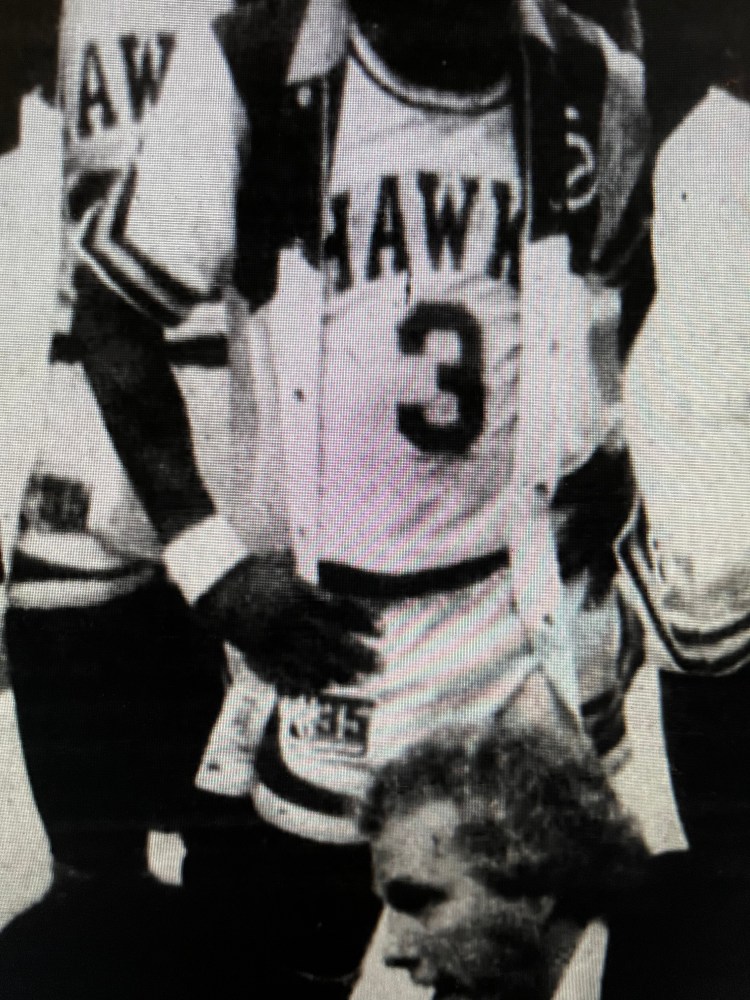
Eddie Johnson emerged from his private struggles at a press conference on September 11, just a day before the Hawks began practicing for the current season. He was newly married; he was taking daily dosages of lithium carbonate to offset the chemical imbalance diagnosed by Dr. Baccus. He professed his desire to play basketball and said he would wear his own jersey rather than that of his dead friend, Terry Furlow.
It was In August, while Eddie Johnson was still in the hospital, that Larry O’Brien, the NBA commissioner, announced that “any player proved to have engaged in such activity [using drugs] will forfeit his right to play in the NBA.” The pronouncement brought up many interesting legal questions, for there are many people who feel that if an athlete breaks the law and is punished in accordance with the dictates of the legal system, there is no justification for also taking away the source of his livelihood.
Eddie’s attorney and agent, Jack Manton, points out that arbitrarily singling out those involved with drugs makes no sense when there are professional players in every sport who have been convicted of much more serious crimes—crimes involving victims—and have never been punished by their commissioners. The official concern of the professional leagues is that young people, who supposedly hang on every word and deed of their athletic heroes, will be drawn to drugs by their idols, and so special precautions are necessary. Of course, athletes are allowed to drink, but the widespread abuse of alcohol doesn’t get the attention that attends an occasional drug bust.
One day while I was waiting after practice for an interview with Eddie Johnson that never materialized, the team gathered in its locker room to listen to a presentation from the federal Drug Enforcement Agency. “We were warned,” one player told me, “that the DEA has really tightened up. They told us they have paid informants all over this town, that we were high-profile people, and that we could expect to be caught if we had anything to do with drugs.”
Whether or not Eddie Johnson actually abused cocaine or any other drug is for the courts to say. In any case, he has left the traumas of the past few months behind him and returned to the basketball court to play in the powerfully beautiful form that has become his trademark. At the several practices I attended, Coach Brown seemed pleased with Eddie’s play and unwilling to raise his voice directly at any of his veterans. Eddie’s sculpted physique shows that his beloved sport has revived his spirits, and he remains a young man with breathtaking speed, strength, and agility who loves to take opposing players on the inside.
And trying to understand how he could have let anything threaten his participation in basketball, perhaps it is useful to remember that the game affects every player differently; each man must find his own way to maturity, and for some, it could be very difficult. According to those who saw him last summer, Eddie Johnson paid a heavy price for any errors in judgment he may have made. Not every athlete is as well-prepared for professional life as he might be. Eddie’s mother asked me not to forget something about her oldest son: “You have to remember,” she said, “he’s just a country boy in a fast town.”


HE WAS NOT IN PRISON I MET EDDIE JOHNSON IN PORTLAND OREGON IN A WINCO IN 2009 I EVEN HAD HIM OVER FOR THANKSGIVING 👀 HE WAS BLIND AND COULDN’T SEE TO SHOP SO I BECAME HIS SHOPPER
HE TOLD ME ALL ABOUT THAT 8 YR OLD GIRL HOW HE FELT SO BAD AND DIDN’T KNOW WHAT HE WAS DOING ALMOST LIKE IT WAS A TRAP
HE TOLD US ALL ABOUT HIS LIFE AS FAST EDDIE 💝A WONDERFUL CARING LOVING MAN 💝 LAST TIME I SAW HIM HE LIVED OFF BURNSIDE BY THE MAX IN 2012.. IF HE DIED IN 2020 IT WAS IN PORTLAND OREGON
AND WITH ALL THE CRIMINAL INVOLVING OF THE NBA IN CRIME TODAY I BELIEVE THEY SET HIM UP
LikeLike