
[Entering the 1985 NBA Draft, Georgetown’s All-American center Patrick Ewing was the consensus first pick. But to determine which team got him, the NBA first held its draft lottery featuring several large white envelopes placed into a clear plastic drum that was rotated exactly six times. Commissioner David Stern then reached into the drum to randomly select an envelope, each one containing a different team logo, that determined the winner. Stern, his demeanor almost robotic, opened the wining envelope, and the New York Knicks’ GM Dave DeBusschere nearly fainted. The Knicks got him! They also got all the larger-than-life public expectations for future NBA championships. In this article, Boston’s GM Red Auerbach welcomes Ewing to the association and prognosticates about his NBA future. The article, which is classic, keeping-it-real Auerbach, appeared in the December 1985 issue of SPORT Magazine.]
****
I remember the first time I saw Patrick Ewing play. He was a sophomore up here in Cambridge, not all that well known, and people were saying, “He’s just a big kid who can’t really shoot.” Well, without being immodest, I remember saying, “He’s just growing into his body, he looks like a determined young man, and I think he’s going to be great.”
I called John Thompson, who played for me and is a good friend, and told him, “There’s a kid up here you ought to take a look at, though he’s still two years away.” He said, “Okay, let me check him out.” He came back and said, “Oh, yeah. This kid is going to be something.”
Since then, of course, I’ve seen Patrick play many times at Georgetown and in the Olympics. I was never really scouting him, though, because I knew there was no chance of the Celtics getting him. I suppose I could have been forced into taking him if he had been available . . . but I didn’t delude myself.
I’m not mad that the Knicks got him. Hey, we’re going to sell out our building no matter what they do. I would have preferred that he’d gone somewhere out West, rather than end up in our division. But New York got lucky, that’s all.
It makes you laugh, though, this lottery. If you asked [Warriors GM] Al Attles to flip a coin for $10, he’d say, “No way. That’s gambling.” But with the first pick and Pat Ewing at stake, you’re talking about a $10-, $20-million raffle. Still, I can’t complain about the lottery—it was my idea.
****
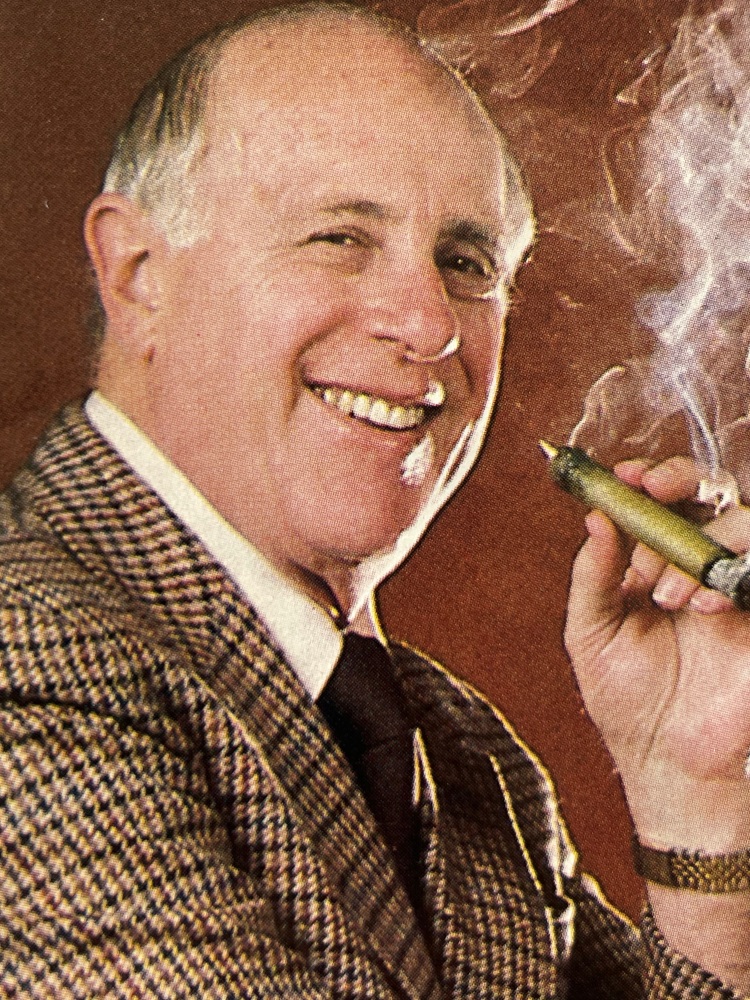
What does Pat Ewing mean to the NBA? His arrival makes the Knicks a drawing power, which is very good for the league. On the other hand, he’s also affected a lot of other teams in a negative way. Ewing gets big money. Then Wayman Tisdale and all these other guys want big money, they’re holding out. And I really don’t think they’re worth it. Ewing is being paid as much as he is because he sells tickets. Ability is only worth so much, but he’s revitalized the franchise. And that’s worth a lot.
His impact on the court? Well, let me set people straight on one thing right from the beginning: Pat Ewing is not the second coming of Bill Russell. I know everyone says he is, but I just don’t think a comparison is indicated at all.
They both block shots. That’s it. Other than that, they play entirely differently. Russell would get the rebound and come down on the break with tremendous speed. Ewing is not slow, but he’s no Russell. None of these guys are—Russell was a track man.
Russell was also extremely clever out there; he could dominate a game as much with his mind as with his body. Only time will tell about Patrick, but I haven’t seen another center yet that could do this as well.
Offensively, I think Ewing has a better touch, a better jumper, and his hooks are as good as Russell’s. And, like Russell, he’ll make up for whatever offensive deficiencies he may have at the other end. Even there, though, Ewing doesn’t block shots with the finesse of a Russell. He’s a power player. In fact, if you look at Ewing’s body and the way he plays, I think you’re better off saying he is the next Wilt Chamberlain rather than the next Bill Russell.
I don’t think Ewing has the offensive potential of the other guys who recently came out, Sampson and Olajuwon. He could be a decent scorer, though; remember, he wasn’t double-teamed in college, he was triple-teamed. They were around him like a tent.
Who’s better? I don’t know. If they all came out together, in the same year, there’d be some NBA people who’d say, “Ewing’s great, but I’d rather have Akeem.” Or, they’d say, “I’ll take Sampson because he’s a much better scorer and runs the floor a little better.” And don’t forget, Ralph’s over three inches taller than Ewing. But because this is a New York situation with New York hype, people are saying, “Sampson and Olajuwon are not in his class.” The hell they’re not.
****
Will the Knicks win with Ewing? That’s hard to say. Of course, when you go to a team that didn’t have any centers last year, because of the injuries to Bill Cartwright, and now you have two centers, that’s going to be quite an improvement. Still, somebody’s got to get him the ball.
Normally, when a guy like Ewing or Sampson comes to a team, you want to use him, say, 38 minutes a game. The guy sells so many tickets, and you pay him all that money to be a platoon player? But if you play Ewing 38 minutes, what are you going to do with Cartwright? You can play them together some, but they won’t be as good as our Twin Towers, Parish and McHale, because those guys can’t put it on the floor, and they’re both used to playing with their backs to the basket. It’ll be an adjustment.
Another adjustment: in college there were very few centers who could physically look Ewing in the eye. But now, one day it’s Jabbar, the next day it’s Moses Malone, Dawkins, then it’s Parish . . . there’s no respite.
I remember there was a problem in his sophomore or junior year where he got into a few altercations. I was at a couple of those games and, as an ex-coach, I sympathized with Patrick entirely. They were grabbing him from behind, they were grabbing him from the sides, they were elbowing him, trying to soften him up, trying to get him mad so he would foul. So, after a while, as any normal athlete would do, he reacted. And I don’t hold that against him at all.
In the pros, some guys like Moses Malone are going to try and muscle him, and I’m sure he’ll respond. But—this may surprise you—I don’t think they’ll really try and test him all that much. I think with his body, his strength, and his college and Olympic careers, that he’s already got the respect of the players and the refs. He’ll be in foul trouble, though. The guy’s still a rookie, after all.
Don’t get me wrong—Patrick is a great player. Besides the blocks, the rebounds, and the points, he gives you the intangibles, the things that can’t be measured. He’s got those big shoulders, and he plays the game with his hands up. He intimidates shooters, he makes them throw a lot of bad passes, things like that. But he still has improvements to make.
He’ll pick up how to use his hands on defense, how to box out when you’re in a man-to-man versus a zone, when to really get out on the break and when to be a trailer, and how to pace yourself. And he’ll improve on the things that he already does well.
The point is, if the Knicks think they’re getting a finished, polished ballplayer, they’re crazy. I just hope they don’t expect too much too soon. If you burden his mind with learning many other skills right away, it will affect the things that he already does well. Little by little, you improve the other facets of his game. You don’t rush him—this is where you can make a big mistake.
****
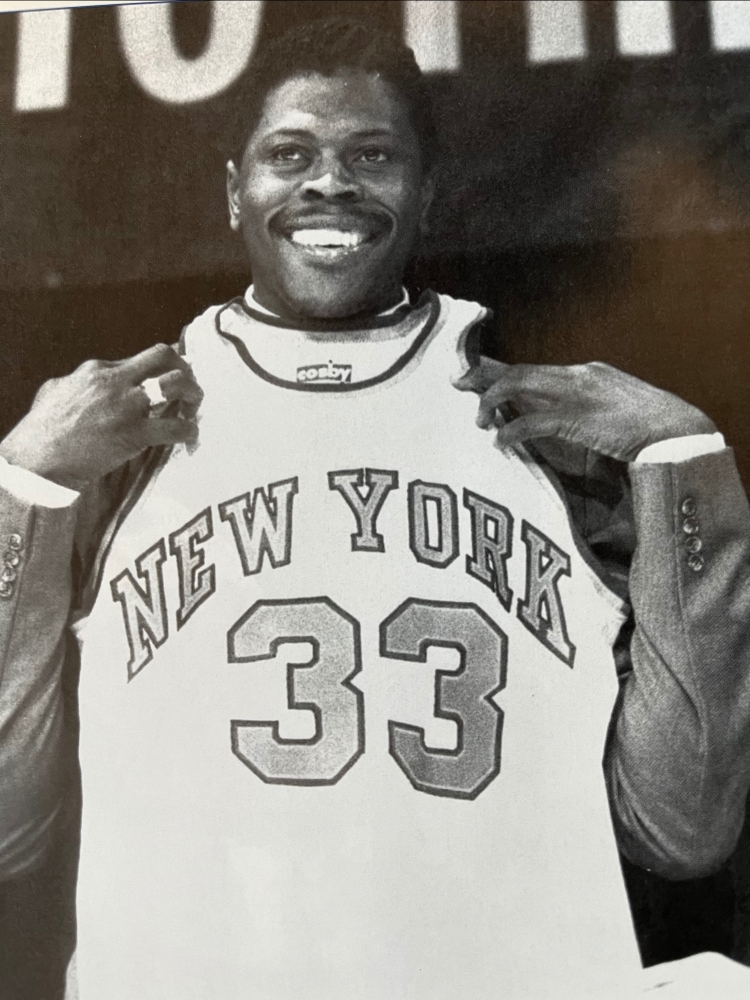
But the thing that really worries me the most is Patrick playing in New York City. That’s going to put a lot of extra pressure on him. Sampson attracted a lot of attention, too, when he first came in, but he was in Houston. He was still able to feel his way, he edged in gradually. Ewing is going to be jumped on from the beginning.
His first game will be on national TV, and there’ll be so many press people there it’ll be a riot. All the local media—and the NBA, too—will be making demands on him. And it’s not just in New York. Every town he goes into, he’ll be hounded. They don’t want Ken Bannister; they want this guy.
Everyone he ever knew or met is going to come out of the woodwork, and they’re all going to want something from him, whether it’s an autographed picture or making a speech or tickets or whatever. Next thing you know, his whole day is full. Then, the next day. And the next. He’s going to have to learn how to say, “Hey, get lost,” to the hangers-on, to choose between the interviews he can do and the ones he can’t. And he’s going to make enemies that way. Certain writers in New York, if he doesn’t become a source or a confidant, they’re gonna start belting him in the papers. So the kid can’t win, he really can’t. I’ve seen it with Larry Bird.
His lifestyle, his choice of friends, are going to be very important. I guess you can’t do it, but it would pay a team like the Knicks to hire a guy to look after his interests, live with him, keep him out of trouble, especially in New York.
****
So, there are a lot of questions, a lot of obstacles, that Patrick will be facing, but I think he’ll overcome them. In fact, I know so. I say that for two reasons: coaching and character.
Ewing has been the beneficiary of good direction and good coaching, which goes back to Mike Jarvis, his high school coach, who is now at Boston University. Mike was a sound fundamentalist, and Pat Ewing had his ass chewed out more than once by him; there was no double standard.
Same way at Georgetown. I saw a lot of their practices, and if the ball got loose down at the other end of the court, it was, “Hey Pat, go get it.” He wasn’t treated any differently than anybody else, which I think was a great tribute to Thompson and a great tribute to Patrick that he wouldn’t accept it.
Patrick has proven that he is a dedicated, sincere young man. I remember people saying to me, “He’ll probably quit school and go into the pros early,” at the end of his sophomore year and again when he was a junior. “Why stay? You gonna get your degree so you can make another $10,000 a year?” John would not stand in his way, if that’s what he wanted to do. But the degree was paramount in his mind, and I admire him for it.
So welcome to the NBA, Patrick. Seldom has a college player been given such fanfare before ever having played a single game. And I have seldom seen a man of your ability who is so dedicated and prepared to pay the price to improve. You’re going to have a great career in this league, there’s no question in my mind about that. And the first time you come up here, back home, to the Boston Garden with the Knicks, I’m sure that you’re going to get a tremendous ovation. And I’ll tell you what—you deserve it.
 From Way Downtown