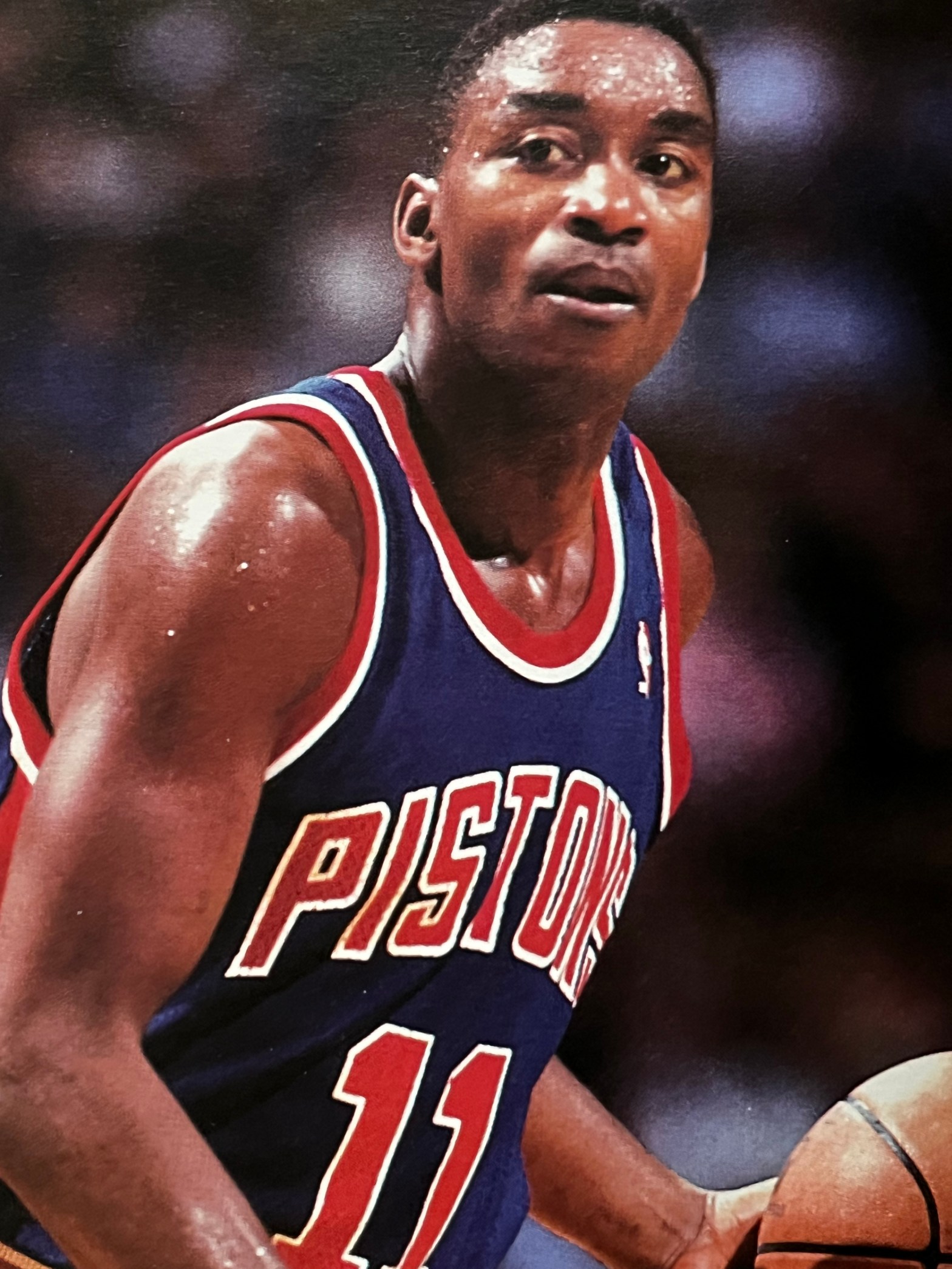
[When long-time sports columnist Charlie Vincent of the Detroit Free Press retired in January 1999, he signed off with these appreciative and apt words:
“Whether it is in [my native] Texas in the winter or here in the summertime, I will not soon forget the readers who wrote to me, the readers who called, the readers who just read, who invested some money and some time to listen to what I had to say in the morning.”
Here’s some classic Morning Vincent from April 29, 1988. His topic: The Detroit Pistons’ IIsiah Thomas and his bad to brilliant showing one night against Steve Colter and the Washington Bullets in the 1988 NBA playoffs. Enjoy!]
****
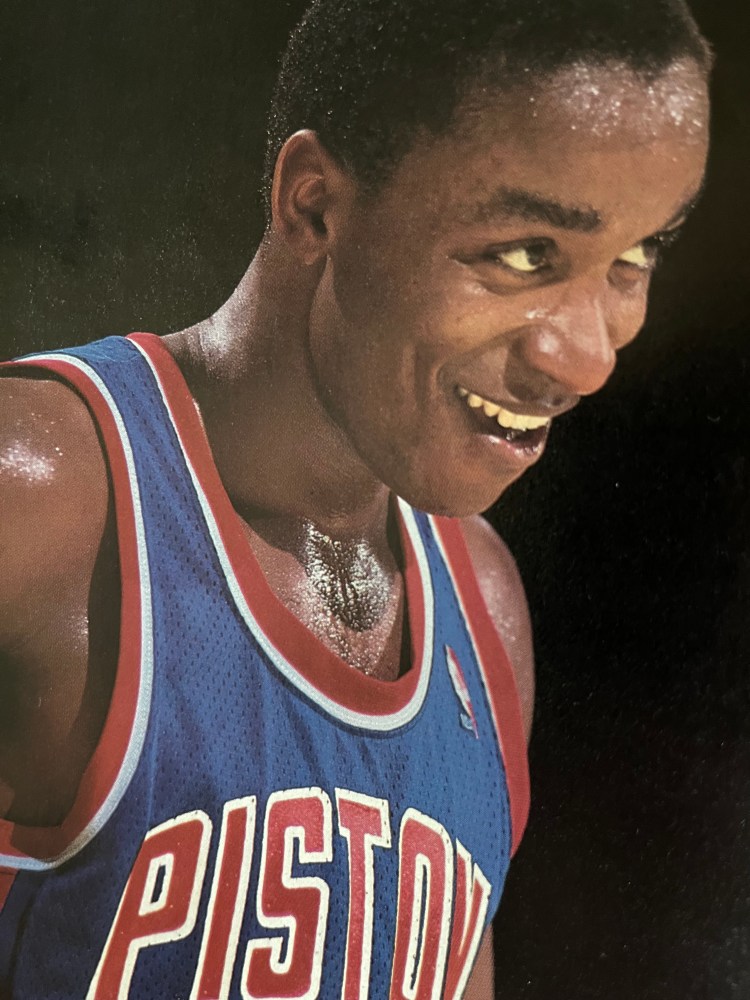
The scrap of paper had been in Isiah Thomas’ locker drawer for a couple of years. He could pinpoint the time by the name at the bottom: Dick Harter. He was a Pistons assistant coach before joining the Indiana Pacers two years ago, and one afternoon he jotted down a quotation from Teddy Roosevelt and presented it to Thomas.
Thomas dug it out of the drawer Thursday and taped it to the mirror in his locker, where he could see it before the opening game of the Pistons’ playoff series against the Washington Bullets:
The credit belongs to the man who is actually in the arena,
Whose face is marred by dust and sweat and blood.
A man who knows the great enthusiasms and the great devotions,
Who spends himself in a worthy cause.
Who in the end knows the triumph of high achievement
And if he fails, at least he fails while daring greatly.
So his place will never be with those timid souls
Who know neither victory or defeat.
And Thursday, in his 589th game as a Detroit Piston, he tasted a little of each. In 588 games, big games and little games, road games and home games, regular-season games and playoff games, Isiah Thomas has probably never had a worse first half then he had Thursday.
This was a big game, and it is usually in games such as this that he plays his best. That’s why that one glaring error against Boston last spring is still in your mind. And mine. Isiah Thomas does not make mistakes like that often. [Ed. note: Larry Bird stepped in front of a pass from Thomas late in Game Five of the Detroit- Boston series. With Bird’s now-famous theft, Boston stole the game, 108-107.] The hundreds of nights when he scored 25 points and passed out a dozen assists became routine as he led the transformation of a team that had been a joke and made it a contender.
The mistakes stand out. The bad nights. The bad halves.
Like Thursday’s.
The Pistons came to the Silverdome worrying about Moses Malone and how they would stop him with Ricky Mahorn available for only a few minutes here and there. But the game was only a few minutes old Wednesday—and the 17,366 fans in the Silverdome—realized there would be another problem.
Steve Colter, a skinny little guy whose uniform hangs in extra gathers around his midsection, went one-on-one with Thomas, and you figured it would be a mismatch—one of the game’s big names against, well, against somebody not too many of us have heard of.
But for most of the first half, Steve Colter was a better player than Isiah Thomas. So were Darrell Walker and Jeff Malone. For the first 18 minutes and 52 seconds Thursday night—in the biggest game of this long, long season—Isiah Thomas did not score, the Pistons were behind, 30-23, and the crowd, reluctant to be critical too soon, booed softly.
It sounded like wind blowing through trees. Just a soft rustling.
But it was there.
Impatience.
Surprise.
Concern.
Isiah Thomas, so often accused of trying to do too much alone, was guilty this time. He flew toward openings that closed around him. He made passes that had no chance of succeeding. He took shots that slammed harmlessly off the rim or the backboard.
Eight times he shot. Eight times the ball missed its mark.
He reacted as you would expect. The smile was gone, and in its place was a grim look that was at the same time determined and frustrated. “I struggled bad the first half,” he would admit later. “But you have to be strong enough mentally to say you’re better than that. And you have to believe it.”
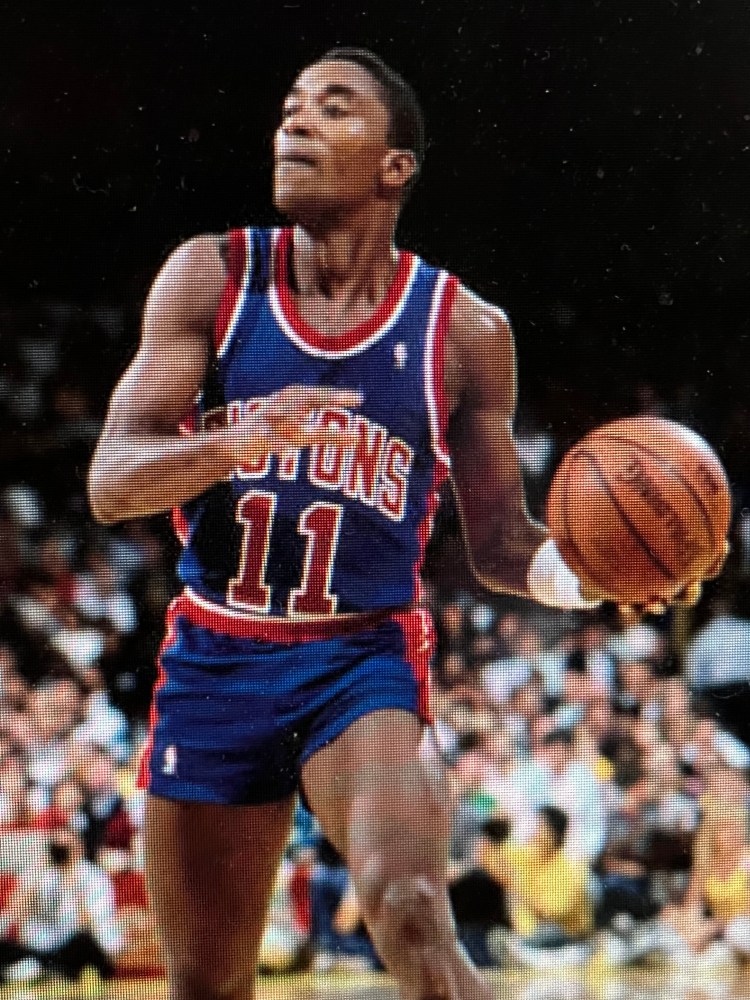
With one second left in the first half, he had scored six points and made two of 10 field goal attempts, had thrown the ball away four times, and the Pistons were behind, 42-36.
Then, as the final second disappeared from the clock, Thomas banked a 17-footer off the glass and cleanly through the hoop. Probably the Bullets didn’t know it then, but the night was over.
Thursday was a night when Isiah Thomas, without his magic, proved the things he has tried to make people believe all along. He—with a lot of help from a lot of people—brought himself and the Pistons back from a gigantic hole, not because of some genetic superiority, but because of a work ethic that will not allow for failure if there is an alternative.
Isiah Thomas was not invincible. Steve Colter made him look ordinary at times. So did Jeff Malone. Colter drove around him and once stole the ball from Thomas. Malone shot over him. But those were battles, not the war.
“If you don’t work hard, I don’t care what job you’re in, you’re not going to be a successful,” Thomas said later. “It comes from within.”
So, like the man in Roosevelt’s quotation, Isiah Thomas, sweaty and devoted to his cause, thought not a moment about being timid. With 4:33 left in the third quarter, he slapped the ball away from Jeff Malone and raced upcourt while Joe Dumars retrieved the ball, then heaved it downcourt to the streaking Thomas. Without breaking stride, he gathered it in and gently laid the ball into the basket—62-61, Detroit.
It was the first time the Pistons had led, and the Bullets never again caught them. When it was over, and the first half only an unpleasant memory, the Pistons had won the first game of the best-of-seven series, 96-87.
Isiah Thomas had scored 34 points, pulled down nine rebounds, given out three assists, blocked a shot, and made four steals.
And those words from the scrap of paper, salvaged from a musty drawer, seemed as timely as the day Teddy Roosevelt spoke them.
 From Way Downtown
Isiah has said Steve Colter was one of the toughest guys he had to guard in his entire time in the NBA!
LikeLike