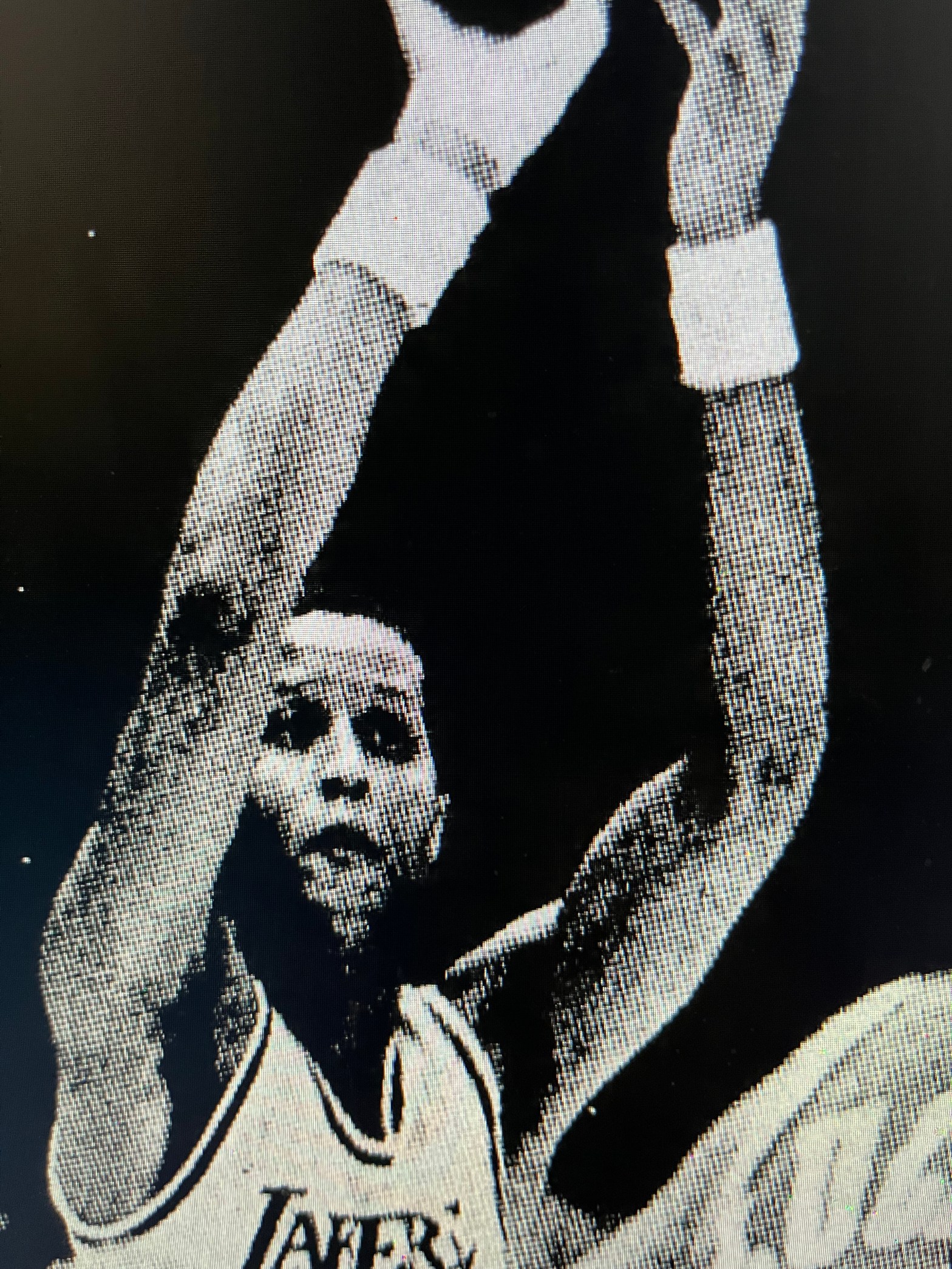
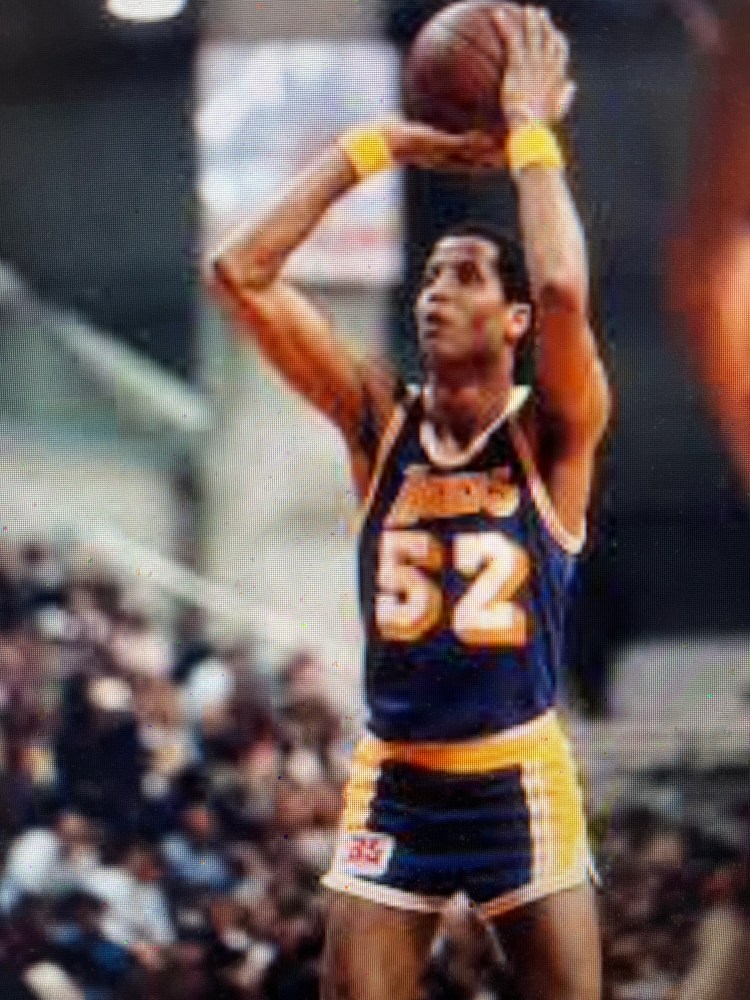
[Jamaal Wilkes is best remembered for his unorthodox corkscrew jump shot. It was a unique, behind-the-head contortion, though Wilkes’ shooting elbow was straight when he released the shot. Everybody wanted to fix his jump shot, give it more textbook form. Nobody ever dared. That shot was, like Wilkes, as smooth as silk. Indeed, everything Wilkes did on the court took place in the same awesomely effective steady state: silky smooth.
Every long-time NBA fan remembers Wilkes and his high-arching daggers. Few players also come close to matching his career resume. In high school, the 6-foot-7 Wilkes finished as California’s Mr. Basketball (1969). At UCLA, Wilkes finished as a two-time All-American and a vital piece of two NCAA championship teams. In the NBA, Wilkes was the Rookie of the Year (1975), a three-time NBA all-star, one of the NBA’s top defenders for most of his 11 seasons, and a trusted teammate. But most of all, Wilkes was a champion. He was a part of four NBA championship teams (Golden State, Los Angeles Lakers).
Wilkes also never dominated the media spotlight. The highest accolades were reserved for his high-profile and truly great teammates Bill Walton, Rick Barry, Kareem Abdul-Jabbar, and Magic Johnson. Nevertheless, there are some excellent profiles of Wilkes still to be had. Here’s one of them from the Los Angeles Times’ award-winning Scott Ostler, who puts pen to paper toward the end of Wilkes’ pro career. Ostler’s article, originally published in the Times on April 16, 1980, was republished in the March 1981 issue of Basketball News. That’s where I found it a year after publication. Ostler knew the “Showtime Lakers” like few others. He is the coauthor of the excellent 1986 book, Winnin’ Times: The Magical Journey of the Los Angeles Lakers.]
****
Watch Jamaal Wilkes when he comes out on the basketball court. He always stops near the end of the Los Angeles Lakers’ bench, picks up a can of powdered rosin, and shakes a little pile of the stuff into his cupped left hand, like a pool hustler chalking up his cue.
Watch the first pass that comes to Wilkes. The impact produces a small cloud of rosin that floats in the air near his head. Then watch him as he studies the game with the noncommittal expression of the pool hustler circling the table. Should he wind up and shoot that odd-but-deadly jump shot? Drive to the hoop for a layup or shoot a jump hook? Pass off and flow into the offense?
The decision is made in a second, and Wilkes, without changing expression and seemingly without exerting any more energy than the pool hustler making a soft kiss shot off the cushion executes. As one veteran NBA sportswriter said, “Wilkes expends fewer calories per basket than any player in the NBA.”
Like the pool hustler, Wilkes goes about his work with a minimum of flash. Gosh, was that the eight ball? Then I win, right? Thank you for the game, I’ll just take my five dollars and be on my way. Unless you’d like to go another game for 20 . . .
The only difference is that a pool hustler relies on anonymity, while Wilkes’ face and method of operation have been well known in college and the NBA for a decade. Opponents are no longer lulled by the unspectacular moves, the unimposing physique (6-6 ½, 185, no discernible muscles) and the placid expression.
They know that Wilkes will quietly get his 20 points and seven rebounds, do all kinds of subtle damage on the fastbreak, and be a real pain on defense. The only consolation is that hardly anyone will notice they have been outplayed. “It’s hard to describe Jamaal,” says Lakers coach Paul Westhead. ”I have referred to him as the best silent forward in the league. He does so many unassuming things with such excellence that I don’t know of anyone in the league who can match him.
“When I say that, a lot of people might think I’m slighting Walter Davis [who now is playing guard]. Davis is truly great, but Jamaal goes after the game in another manner. He doesn’t yell and scream, he just kind of opens you up and steals the game, then closes you back up with a smile.
“He never looks for or takes any credit. I think all players have a tendency to want to show how they can play and get recognition. But with Jamaal, I get the feeling he’s operating on a higher level, a different plane, like he knows something we don’t.”
So Jamaal Wilkes is a pool hustler, a surgeon, a transcendental basketball player. His college teammates named him “Silk” because, on and off the court, he moves at one speed—smooth. He is the least spectacular Laker and probably the most consistent.
When he became a free agent after the 1977-78 season, Lakers owner Jerry Buss signed him to a long-term contract that reportedly ranks him second on the Lakers payroll to Kareem Abdul-Jabbar. Wilkes justified the investment by having the finest season in his six-year pro career, scoring 20 points, shooting 53.5 percent from the floor, 80.9 percent from the line, and playing 37.9 minutes without missing a game.
He is probably the best player in the league who didn’t make the all-star team. When the voting was announced, Westhead commented, “I’m really looking forward to that game, because if there are 22 players who are better than Wilkes, it’s going to be spectacular.”
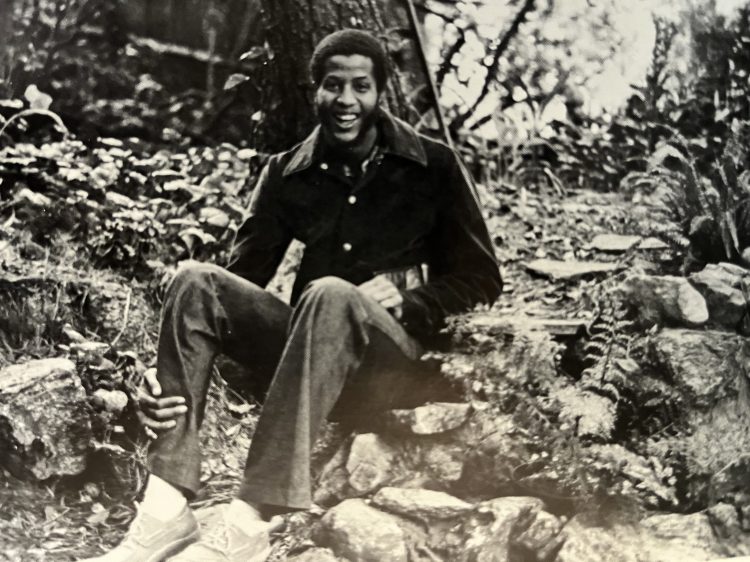
Many NBA observers rank Wilkes with the elite of the league’s small forwards—Julius Erving, Walter Davis, Marques Johnson, and Bobby Dandridge (when he’s healthy). But when it comes to notoriety, Wilkes is strictly a second stringer. And contrary to popular belief, he does enjoy recognition.
“I do think about it,” Wilkes says. “During the all-star break last year, I thought about it. I felt very strongly I should have been out there . . . [thought] about it long and hard before I signed with the Lakers. I knew I’d be playing with the greatest [Abdul-Jabbar], and I knew that a lot of things I do would be overlooked.
“But I weighed that against the opportunity of playing on a world-championship team. I played on two college championships here [at UCLA], I grew up near here [Ventura], and there would be no greater thrill for me than to win a pro championship in L.A.”
During the playoffs last year, Wilkes averaged 20.3 points per game and 8.0 rebounds. In Game 6 against Philadelphia, everyone remembers Magic Johnson’s masterful 42-point performance. But almost totally lost was Wilkes’ 37-point game, a career high for Jamaal.
Wilkes’ problem, from a public-relations standpoint, may be that he makes everything look too easy. “When I’m playing, I’m working hard,” he says, “so if it looks easy, I don’t know why.
“I do try to go into the game with the attitude that I’m not going to let anything distract me, I’m not going to get upset at officials or get mad at my opponents. I try and get very detached from the game and also get very involved in it, if that makes any sense.
“Like when we played at Seattle and they had that giant crowd and a lot of noise, I just tried to block it all out. I do try to work on my concentration. The longer I’m in the league, the more important that tends to become.
“It’s like I’m in a Twilight Zone, another world, I’m so into each moment, like each moment is its own day or hour or whatever. No matter how many wide-open, 10-foot jump shots I miss, I’m going to shoot again. If I turn the ball over three times in a row, the fourth time downcourt, I don’t think about it, those other turnovers are like light years away. It seems like the longer I play, the fluctuations from where I want to be mentally are less and less.”
Wilkes is basketball’s version of Perry Como, the velvet singer whose trademark was the epitome of ultra-relaxed, super-casual, laidback stage presence. Wilkes comes across the same way, on and off the court. You won’t see him hurrying through airports, discoing in the aisles of airplanes, or yelling in the locker room. He is anything but aloof. Wilkes seems to prefer moving through life without creating a commotion.
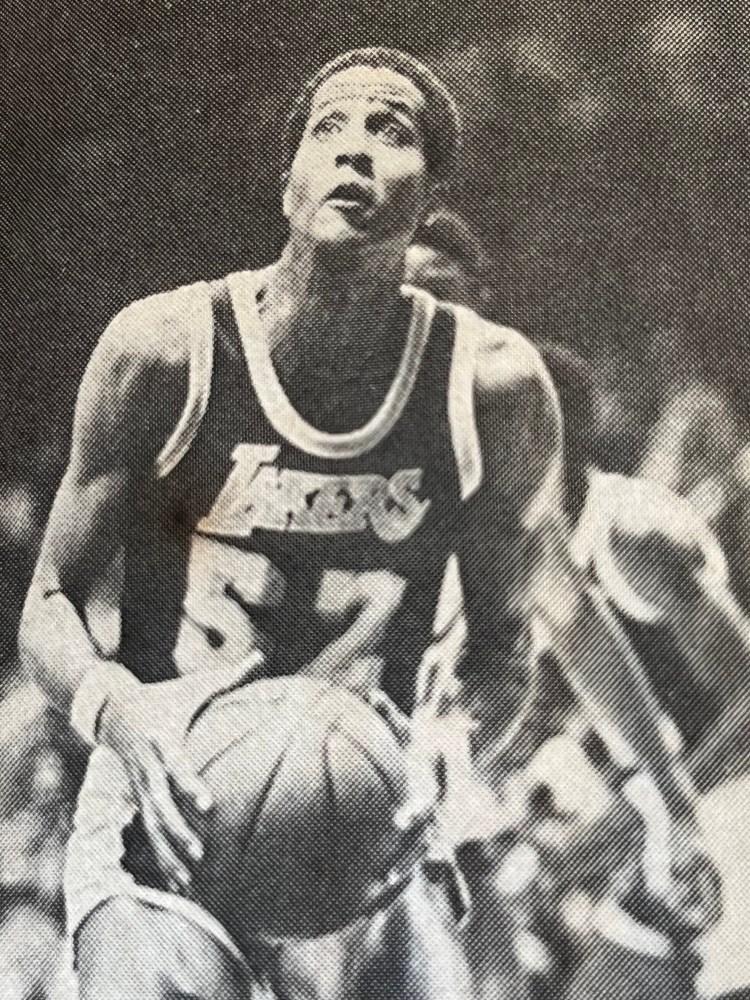
A Wilkes slam dunk is as rare as a comet sighting. And when he is whistled for a foul, his response is to lift his eyelids slightly, glance at the scorer’s table, and raise his right index finger, politely acknowledging the infraction. Asked why he seldom slams [dunks], Wilkes says, “I like to do things that look good, but I take pride in the way I play. I try to do what it takes to get the job done and usually no more . . . I’m not going to sell tickets because I’m exciting or flashy, but if people appreciate good basketball, they might want to watch me.”
He prefers to shoot his layups off the glass rather than over the rim, because that’s the way they did it at UCLA (even in practice, on John Wooden’s orders), and because the energy saved can be applied to something else, like defense. He seldom berates officials because that’s not his style, and because he has noticed that officials tend to appreciate a noncomplainer. “Some guys need anger,” he says. “I don’t think that’s the best route for me. I’m more calculated. I really try hard not to get mad at officials.”
Wooden says he saw Wilkes lose his temper just once in four years. It was in a game at Oregon. Wilkes being hammered by an aggressive defense, got mad and set a pick that closely resembled a football block. Wooden says the incident surprised him, but it was an isolated occurrence.
Is Wilkes perhaps too passive?
“Oh, no,” Wooden says, “I never thought he lacked aggressiveness. A lot of fellows show a lot of animation, but they aren’t aggressive. There can be a lot of activity and not much achievement. But Jamaal isn’t afraid to get in there and mix it up. I never saw him back down from a situation. He’s a competitor without being a fighter.”
Wilkes is a “flow-er,” not a fighter. He flows with the rhythm of the game. His nickname may be one of the most appropriate in sports. Says Westhead: “When you perform at your best, you and the ball and the game all become one. I don’t want to sound mystical, but Silk looks like he plays on that level.”
It’s a style that comes naturally, yet Wilkes tries to improve on it, working out hard in the offseason. “I work out with Nautilus machines,” he says.
“Where are the muscles?” an interviewer asks.
Wilkes laughs. It doesn’t bother him that he has the smallest biceps of any NBA forward. It’s form that he strives for mainly, and so last summer he began an intensive program working with a running coach who observes him on a track and in the gym.
“The idea is to increase the efficiency of my form and movement,” Wilkes says. “We work on things like how high I bring my knees up, my stride. That’s all a fastbreak is . . . is running. He’ll watch my head. If it doesn’t move around when I’m running, that means I’m not wasting a lot of movement. Then we work on my cutting, making the most of my movements there, too. I think it has helped already, and I think it will really help over the years.”
If there isn’t much playground-style flashiness in Wilkes’ game, that may be because he began playing in organized leagues in the third grade. He was a standout from the start. Big for his age, he often got into games with the older boys. To compensate for his lack of strength, he developed that unorthodox jump shot.
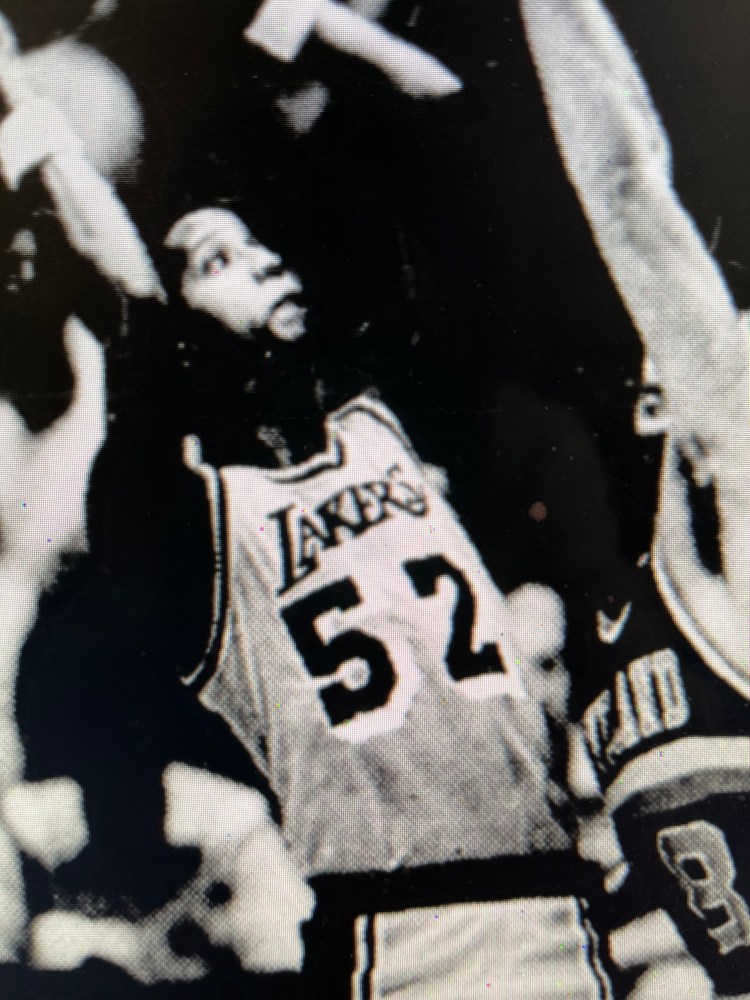
Wilkes releases the ball from somewhere behind his right ear and sends it basket-ward with an odd, sideways spin, like a hanging baseball curveball. It’s a shot that, on form alone, would make him a dropout at any basketball camp or clinic in the country.
His high school coaches chose not to change the shot, and Wooden didn’t tamper with it since Wilkes met Wooden’s two criteria for a shooter: He could get the shot off, and the shot went through the hoop.
Jamaal, whose given name is Keith, was a star at Ventura High. His father, a Baptist minister, moved the family to Santa Barbara when Wilkes was a senior. Wooden remembers making a trip to watch Wilkes play.
“He did seem frail, as I had heard,” Wooden says, “but I only needed to see him once. Then there was no doubt in my mind, because he was well-rounded, played good defense, and was quick.”
After a year of freshmen ball, Wilkes joined Bill Walton on the varsity. The Bruins won NCAA titles in 1971-72 and 1972-73, and lost in the semifinals the following year. “In my opinion, he was the most-consistent player who ever played at UCLA,” says David Meyers, a college teammate and a former player with the Milwaukee Bucks.
A reporter once asked Wooden what qualities he would combine if he could design the ideal basketball player. “I told him,” says Wooden, “that I would have the player be a good team player, a good defensive player and rebounder, a good inside player, outside shooter . . . then I said, ‘Why not just Keith Wilkes, and let it go at that?’”
Wilkes was a two-time All-American at UCLA. However:
“I had considerable problems his senior year,” Wooden says. “General managers and scouts of NBA teams all felt he was too frail. Finally, I talked at length with Bob Ferrick, the late-general manager of the Warriors, and convinced him that Wilkes’ frailness is deceiving. He’s not muscular, but he’s strong. I pointed out that he never was hurt. Not many people realize this, but his first year in the NBA, Jamaal was the only regular on his team who didn’t miss a game with an injury.”
Wilkes graduated with a degree in economics, was drafted by the Warriors, quickly moved into the starting lineup, averaged 14.2 points on the championship team, and was Rookie of the Year. In addition, as a senior at UCLA, he converted to the orthodox Muslim faith and changed his name to Jamall Abdul-Lateef, and that first NBA season, he began to go by the name Jamaal Wilkes.
After three seasons at Golden State, he became a free agent and was signed by the Lakers. That first season in L.A., Wilkes got off to a solid start, then broke his finger and missed most of the second half of the season. There were reports that at least one member of the Laker hierarchy thought Wilkes was dogging it, babying the injury.
But those problems were trivial compared to his offseason problems. His infant daughter died, and his two-year marriage ended in divorce. He told author Bill Libby, “I went through a lot of trauma. I went inside of myself and withdrew from life a little. I lost my enthusiasm for living. There was a lot about what happened to me that I didn’t understand and still don’t understand.
“But time has helped. The scars are still there, but the wounds have healed. I’m back to living again. It helps me keep things in perspective.”
Two years ago, Wilkes quickly resumed his consistency on the court, enjoying his best pro season to date, scoring 18.6 points with a rock-steady floorgame. It was nice timing, financially. His contract was up, and he was a free agent when the season ended.
“Before Dr. Buss bought the team,” Wilkes says, “I didn’t know where I was going to be. I didn’t feel that strongly about the organization. Then after he bought the team . . . he had a lot of things going, and communications between us weren’t the best.
“But our first meeting, he made me feel like he definitely wanted me to stay, and I felt like I definitely wanted to stay in L.A. and play for Jerry Buss. I also talked with [former head coach] Jack McKinney, and I was looking forward to working with him. And Kareem was here, and Norm [Nixon], and I was looking forward to playing with Magic.
“San Diego was the only other team I considered, but they had just signed Bill Walton, and they were really up in the air. I didn’t want to sign with them and see myself go up to Portland [as compensation for Walton]. I feel very fortunate the way things worked out.”
McKinney immediately made life easier for Wilkes by trading forward Adrian Dantley to Utah for Spencer Haywood, the first real power forward the Lakers had had in Wilkes’ time with the team.
When Wilkes and Dantley shared the frontcourt, Wilkes was usually assigned to guard the opponent’s power forward, and that meant giving away up to five inches and 50 pounds. Not that Wilkes wasn’t up to the task. Marques Johnson of the Bucks says he considers Jamaal the toughest defensive forward in the game.
But freeing Wilkes of the inequitable defensive assignments also freed him to participate more on the fastbreak, to benefit from the wizardry of Magic and Nixon. “Jamaal gets more layups than anyone in the league,” marvels teammate Jim Chones. “Our offense is perfectly suited to a guy of his abilities. His transition game is very, very good, and now that he doesn’t have to concentrate as much on rebounding, he can save his energy for scoring. For our team philosophy, our kind of game, Jamaal is perfect.”
****
Wilkes made a typically quiet and remarkable play against the Phoenix Suns last week. He snatched a tough defensive rebound and fired a long outlet pass. At the other end of the court, Magic Johnson took the ball, took a couple dribbles, and slipped a pass to a teammate cutting through the key for an easy layup. The player cutting through the key was Wilkes.
Westhead remembers another subtle play. It happened in Boston at a crucial juncture of the game. Wilkes missed a jump shot from the corner and followed the shot. “I saw the ball going up,” Westhead says, “ and then I could see nothing but giant Celtic bodies below and all those banners (championship banners in the Boston Garden rafters) hanging down from above, and I wondered if the ball would ever get between the giants and the banners.
“Then, the next thing I saw, there was Silk tapping the ball in and trotting back downcourt. Like ho-hum.”
 From Way Downtown
Wilkes was inducted into the Hall of Fame back in 2012.
LikeLike
Thanks so much for the comment. I’ve made the correction. When I wrote the top of the post, I did a quick web search on Wilkes’ Hall of Fame status and didn’t see it mentioned, at least prominently. So, it slipped my eye. And yes, it would be nuts not to enshrine Wilkkes in the Hall.
Thanks again, I really appreciate that you took the time to set me straight. All the best.
LikeLike