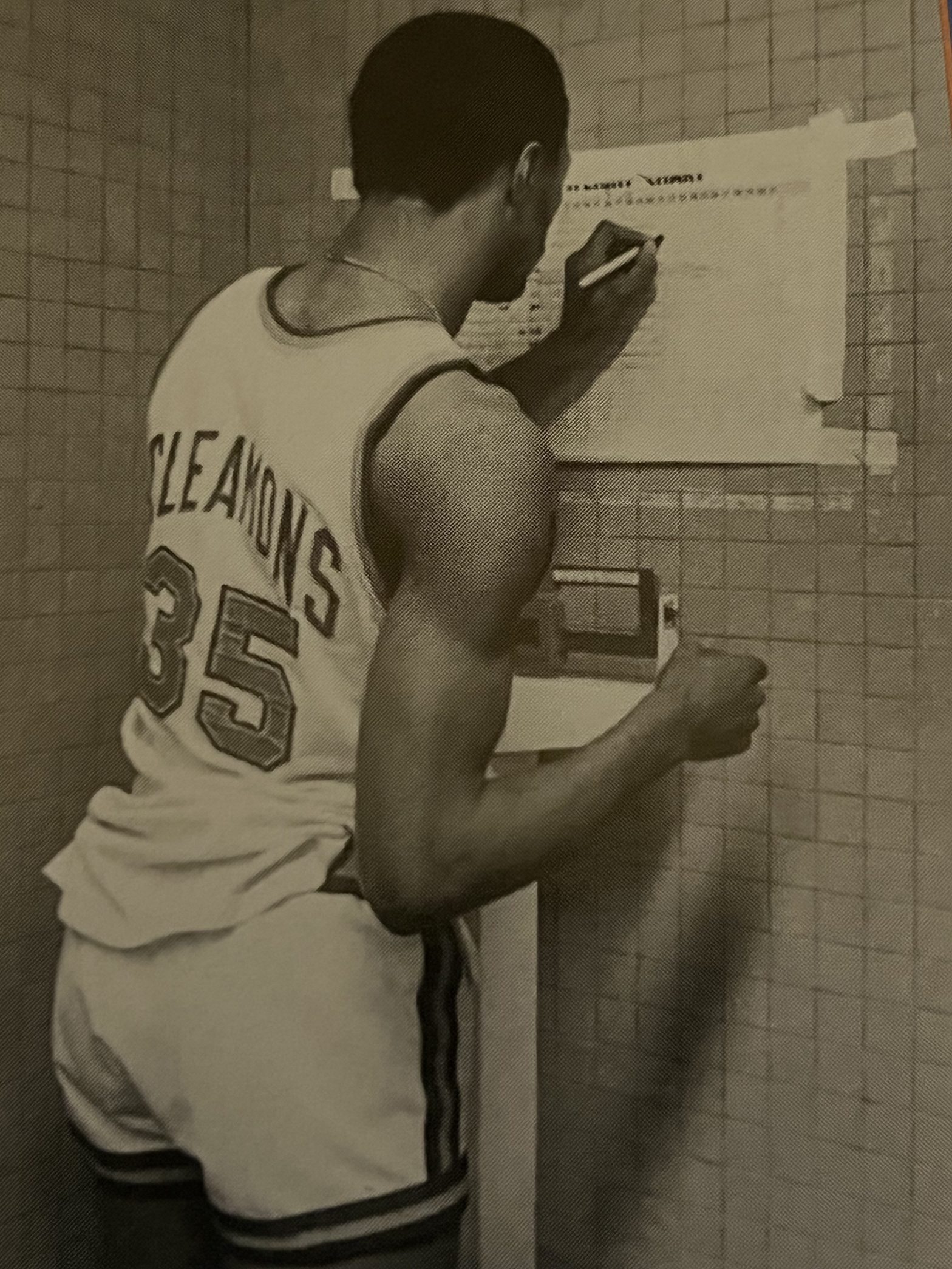
[In October 1977, the Knicks traded their superstar guard Walt Frazier to the Cleveland Cavaliers for Jim Cleamons, a younger floor general. To some in New York, the trade was shocking, like the New York Yankees trading Mickey Mantle. Some players belonged in New York forever, and Frazier was one of them. His mostly stellar 10 seasons as a Knick transcended the usual disloyalty of the sports business.
For others, the trade was a must. Frazier had lost his team captaincy last season along with plenty of playing time due to nagging injuries or, worse, coach’s decision. Now age 32, Frazier had lost a step, maybe two, and the Next-Gen Knicks wanted to play at a faster, quicker clip than Frazier’s aching legs allowed. “The deal,” said Knicks general manager Eddie Donovan, “was good for us, and I think best for him.”
What Donovan meant is Frazier would thrive in then-lowly Cleveland as the tried-and-true backcourt leader. He would be welcomed as a truth-telling NBA legend who would teach the struggling Cavs how to win and bring some excitement to northern Ohio. Had Frazier lingered much longer in New York, like watching the washed-up Mantle struggle to hit a two-seam fastball, images of an old, struggling Frazier would have tainted many a cherished memory of the champion Knicks of 1970 and 1973. Why not extend Frazier’s Hall-of-Fame career in needy Cleveland, while improving the Knicks’ backcourt with the younger, healthier Cleamons?
As the great Mike Lupica of the New York Daily News described the trade, “Getting a tough young floor leader like Cleamons in the process was an incredible plus, the most positive move Donovan has made since his return to power.”
Flip that quote around, and how incredible was it for Cleamons? He was replacing a New York legend known for his lightning quick hands and behind-the-back flair. Cleamons, a steady left-hander, had little flair to his game. That didn’t auger well for Cleamons. It was another classic case of: How do you replace a beloved superstar?
Here’s the full story and attempt at an early answer in the May 1978 issue of Basketball News. Reporting the story is John Rowe of the Bergen County (N.J.) Record. Rowe, who passed away on New Year’s Eve 2021, would be a 45-year institution at the paper.]
****
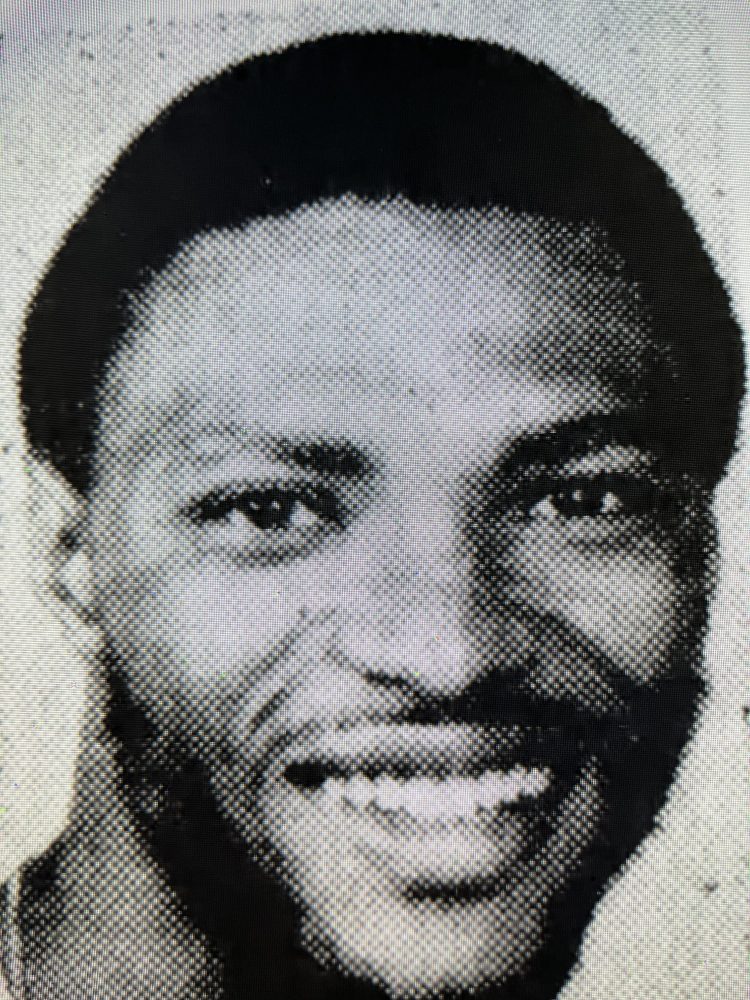
All Knick fans repeat after me: “Jim Cleamons is not Walt Frazier. Jim Cleamons is not Walt Frazier, Jim Cleamons is not . . .”
Jim Cleamons is simply Jim Cleamons. You don’t replace a legend like Walt “Clyde” Frazier, and Cleamons hasn’t tried to since joining the New York Knicks in October. “I’m not pressing,” says Cleamons, “and I’m not Frazier.”
Cleamons wishes he could be appreciated for what he is, not what he isn’t. “I’m really trying to take a relaxed attitude,” says Cleamons. “You can’t worry about people. They are going to have opinions and attitudes about most everything.
“The main thing is winning. My points will come. Because I might go 0-for-2 a couple of games doesn’t mean I can’t shoot. It’s just a little difficult trying to get a feel for this team and trying to run it and play defense.
“It’s a matter of time with me. I know I haven’t played anywhere in the world near my capabilities. I think my teammates know that.”
Cleamons, an 8.7 scorer in six previous seasons, is averaging around seven points for the Knicks. He is fighting for the team lead in assists with Earl Monroe and Ray Williams, while also shooting around 48 percent from the field. Cleamons’ scoring is a far cry from Clyde’s career average of 19.3.
Cleamons, whose career high was a 29-point game against Phoenix two years ago, is a rarity in the National Basketball Association. In a world in which everybody talks about scoring averages, the 6-4 guard talks about assists and defenses.
“Basketball is made up of a lot of subtle things,” says Cleamons, “like setting picks and moving without the ball.
“Some players are gifted, but I’m not the most gifted player in the game by far,” says the Ohio State graduate. “I have to work hard for everything. I have pride in what I do. I’m not a defensive specialist or an offensive specialist. I just consider myself a player. Basketball is a job I love.”
Cleamons, an education major at Ohio State, was planning on a teaching career near his hometown of Columbus, when the Los Angeles Lakers drafted him in the first round of the 1971 college draft.
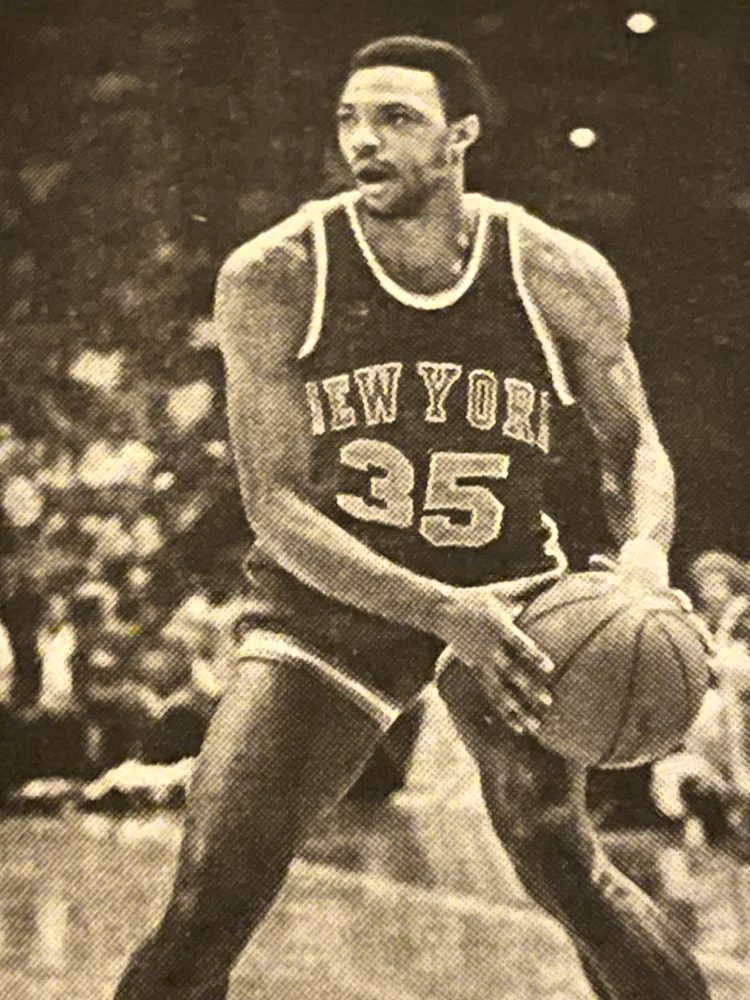
Cleamons spent one season with the Lakers, appearing in 38 games and watching Jerry West and Gail Goodrich from the bench. He was then traded to Cleveland for future draft considerations and had five productive years with the Cavs.
The 28-year-old bachelor averaged double figures in his last three seasons with the Cavaliers. His best year was 1975-76 when he averaged 12.2 in the regular season and 13.8 in the playoffs.
But Cleamons thought his efforts weren’t being appreciated in Cleveland, so he played out his option.
Cleamons sat out the preseason until he was signed by the Knicks October 10 for an estimated $250,000 a year. Frazier was given to Cleveland as compensation.
Cleamons, as a Knick, has not been an overnight success. He suffered a hip pointer in an early game and then had to endure Frazier’s triumphant return to the Garden. “I know what Clem is going through,” said fellow guard Butch Beard. “I went through the same thing in 1972 when I was traded to Seattle for Lenny Wilkens. He was so popular out there that they used to throw mud on my car.”
Cleamons, a vocal player on the court, is a private person off the court. He is still living in the same hotel he checked into when he came to New York to sign his contract and attend a press conference. “Every game is like a road game to me,” he says.
“Slowly, but surely, Cleamons is starting to become a member of the team,” says Knicks coach Willis Reed, who wants more team-oriented players like Cleamons. “I’ve talked to Jim, and I’ve told him I expect the guards to run the team. He’s starting to take command, and another year from now, he will be much better.”
Cleamons is smiling more these days, and his teammates are enjoying him more. On the court, he is starting to run the offense. He doesn’t order players around like he did in Cleveland, but he is starting to get his message across to other Knicks.
“My role is to be a leader, and leadership is acquired, not given to you,” says Cleamons. “Until the guys have faith in me, I can’t come out and tell them what to do. I have to gain their confidence. We are still not where we should be, but we’re making progress. We are starting to communicate like a good team should.”
Jim McMillian has watched Cleamons and has seen progress in the guard’s play. “He’s more familiar in his role, and now he’s in shape,” says McMillian. “When he first came to the team, he wasn’t in shape.
“Jim is still feeling his way, but he’s not totally uncomfortable. You have to remember that he is the new guy here. We have a lot of players with big names and big salaries, so you just don’t come in and tell them what to do. It offends some people. Even if he’s right in what he’s doing, they aren’t always going to listen.”
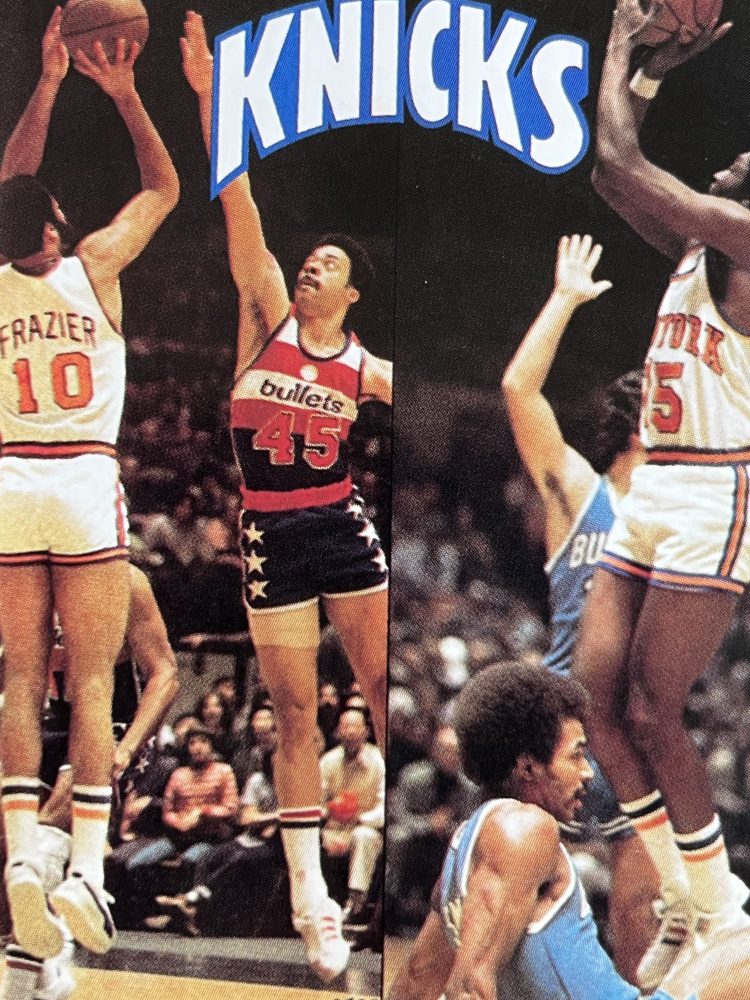
Cleamons admits he was at a disadvantage when he came to the Knicks in the midst of the Reed-Frazier turmoil the weekend before the start of the season. “It’s been a period of apprehension and transition,” he says. “I missed the last third of last season (with a groin injury), missed training camp, and then joined the team the week the season started. My progress has been restricted.
“I know a lot of fans liked Frazier, and rightfully so, but we are trying to do something completely different this season with the changes in coaches.
“Everybody is interested in how many points you score. But hopefully, people come to appreciate what I can do. I didn’t make the Frazier trade, management did. But I’ll probably take the brunt of the blame if it doesn’t work out.”
In football terms, Frazier was the flashy halfback who scored all the touchdowns and demanded all the attention. Cleamons, in his conservative Midwestern ways, is not like Frazier. “I’m characterized as a quarterback,” says Cleamons. “I try to play intelligently. The things I offer a ballclub don’t always show up in the statistics.”
The biggest statistic is that Frazier is turning 33 this month. Long after Clyde has retired, Cleamons should still be playing for the Knicks.
[Actually not. When the Cleveland Cavaliers cut Walt Frazier in October 1979, the Knicks, back under coach Red Holzman, quietly had Jim Cleamons on the trading block. There were no takers. Here’s some background from reporter Derrick Jackson that ran in Newsday on December 5, 1979.]
Almost from the beginning, the message began to reach Jim Cleamons.
When he arrived in New York as a free agent, the Knicks gave Walt Frazier to Cleveland as compensation. It was a very big deal, and Cleamons’ hopes were high, particularly because of the size of his new contract. He figured he was wanted. The Knicks even held a press conference just for him in the Hall of Fame Club.
However, something was wrong, even then. Cleamons’ entrance was certainly not as grand as Frazier’s exit. In a week, perhaps a few days more or less, Cleamons will probably make an exit of his own, one that will be ungrand.
At least, there have been indications that he’ll leave, either through waivers or a trade as soon as Earl Monroe is healthy and fit enough to play. The indications are his absence on the court in crucial situations and the DNP’s beside his name in the box scores, which indicate the times he did not play at all. His longest appearance in any game amounted to only 22 minutes.
“I don’t worry about what’s going to happen,” he said yesterday while waiting at the airport in Indianapolis, “but don’t think that means I don’t care. I do. There’s just not anything I can do in this situation.”
Except wait. He’s gotten a lot of practice at that.
“My strengths were not really exploited when I came to New York,” he said. “The Knicks were more interested in getting rid of Frazier than in getting me. I guess you could call it being in the wrong place at the wrong time. I keep hearing how this team needs a leader, and I wonder what’s wrong with me. My reputation was from leading, playing in any situation, playing a complete game.”
While Cleamons remains, he is an outsider. The other players ate breakfast yesterday while he stood alone in the departure lounge. He is older than they are and doesn’t disco with them. He is too sophisticated for their humor.
In part, he is a victim of the Knicks’ youth movement. Kids are being developed with the playing time he used to get. Even when they get into trouble, like they did in the 119-108 loss to the Pacers on Wednesday night, he has not been put into the game.
However, Cleamons is also a victim of his style, his lack of flair, particularly in comparison to Frazier and Monroe. His statistics won’t jump out at you, and his rebounding, scoring, and assists are modest in comparison to Frazier’s and Monroe’s. No one has ever chanted his name in the Garden.
Frazier and Monroe are heroes from the Knicks’ good years, while Cleamons is associated with only the bad years. Ironically, Cleamons was the better player when he replaced Frazier three years ago, but the people remember what Frazier had once been.
If Monroe replaces him, Cleamons will probably understand. “He’s Earl Monroe,” he said. He didn’t have to say anymore.
The Knicks don’t want to waive Cleamons to make room for Monroe, who should be ready to play by the end of next week. They would prefer a trade, so they can get something in return, even if it’s a second-round draft choice. However, Cleamons’ $250,000 contract is a deterrent to any deal.
Cleamons, barely 30, does not doubt that if he is waived, he will wind up playing somewhere this season. His ordeal with the Knicks has done nothing to damage his confidence. Perhaps he will even welcome the end of the ordeal.
[On December 4, 1979, Cleamons’ ordeal was over. Here is Newsday’s Derrick Jackson again with a brief mention of the trade that sent Cleamons to the Washington Bullets, where he finished out the season and his nine-year NBA career. Those nine years totalled 652 games with career averages of 8.3 points and 3.9 assists per game. Back to the trade.]
Last night was the night that Earl Monroe came back from a groin injury that had sidelined him since the exhibition season, but his debut proved to be only an excuse for the Garden crowd of 11,042 to give a standing ovation . . .
To make room for Monroe, the Knicks, with only 15 minutes to go before the 6 p.m. waiver deadline, traded veteran Jim Cleamons to the Bullets for “future considerations,” which apparently translate into a third-round draft choice next spring. Had the Knicks merely waived Cleamons, they would have had to pay all of his $250,000 salary. They will still pay a sizable portion of the contract . . .
One of the reasons, Cleamons was considered expendable was because of the Knicks’ commitment to youth and a running team.
[Oh, the irony. A commitment to youth and a running team were the same official reasons that made Frazier expendable in October 1977.]

