[In online mentions of favorite old, threadbare basketball book, Blaine Johnson’s What’s Happenin’? often makes the cut. Johnson, who covered the SuperSonics in the late-1970s for the Seattle Post-Intelligencer newspaper, shares his “revealing journey through the world of professional basketball.” Published in 1978, Johnson’s book today is a treasure trove for anyone trying to make sense of the enigmatic Bill Russell as an NBA coach. He was one complex human being.
But Johnson didn’t only write a book. In November 1978, Johnson published a now-obscure profile of Seattle’s enigmatic Fred Brown in an equally obscure publication out of Beaverton, Oregon called Inside Basketball. During a recent trip to the West Coast, I stumbled upon the article and snapped it with my phone. In my haste, however, I missed the mention of a jump and the text that followed on another page. Too late to track down the final maybe 100-200 words and snap them. I’ll just post what I have and call it a condensed version. If you want the whole enchilada, it’s surely out there somewhere in Beaverton or Coos Bay. But it will be a tough slog to find that magical somewhere.
With that said, enjoy this condensed tale of one of the NBA’s all-time great early long-range bombers. When Downtown Freddy Brown was on, he could singlehandedly change a game like few of his era. Now back to Blaine Johnson.]
****
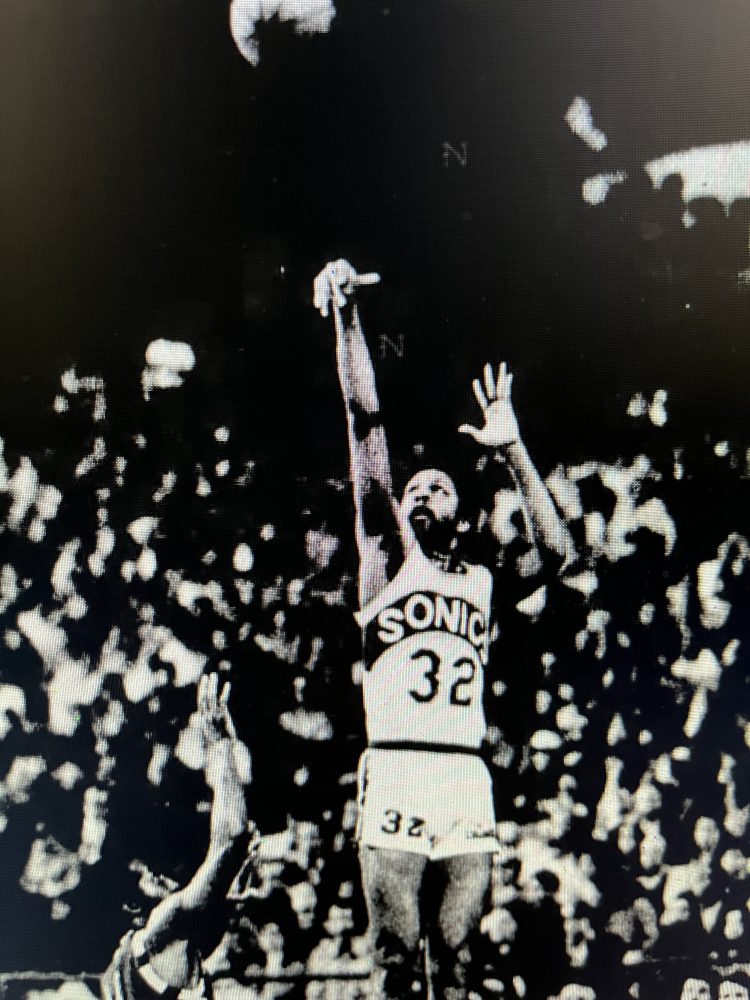
A tear told me Fred Brown was real. The locker room was steamy enough that the single droplet, which rode down his cheek might have been overlooked as perspiration. But it came out of the corner of his eye, and it said a lot more about the pride and depth of Brown than I had been allowed to witness in two seasons of sharing the NBA road with him.
The setting of his sorrow—well, at least extreme disappointment—was the hour following the Seattle Sonics’ narrow loss of the NBA crown to Washington last June. The long climb out of despair over six months of cage warfare had brought Brown and his mates so close to the ultimate prize. So close.
Yet, Brown knew, for all that the season had produced in excitement and drama, it wasn’t first prize. “You don’t get this far very often,” he said softly as reporters waded in with notepads and tape recorders. “There are a lot of things that can happen that will keep you from ever getting back this close to that ring.”
It still seemed frankly unbelievable that he had come this close—had gotten even close to championship play. I apologize for giving my analysis such an influential role in this discussion, but it best dramatizes the changes Brown has been through in the past year.
When I covered the Sonics for the Seattle Post-Intelligencer for the two campaigns previous to last year’s saga, I came to view Brown as a designated shooter on the court—the league’s best from long range—and one of a locker-room full of not-very-cooperative-with-the-press Sonics off the court.
After six years as a pro, Brown seemed to be a potentially great player who was never going to get there. The fact he did get there in his seventh season makes for a rather intriguing study.
Rather than a change in attitude, it seemed Brown surely would be experiencing a change in latitude during Bill Russell’s four years as coach and general manager of the Sonics. Brown was trade bait often—nobody offered quite enough to get him.
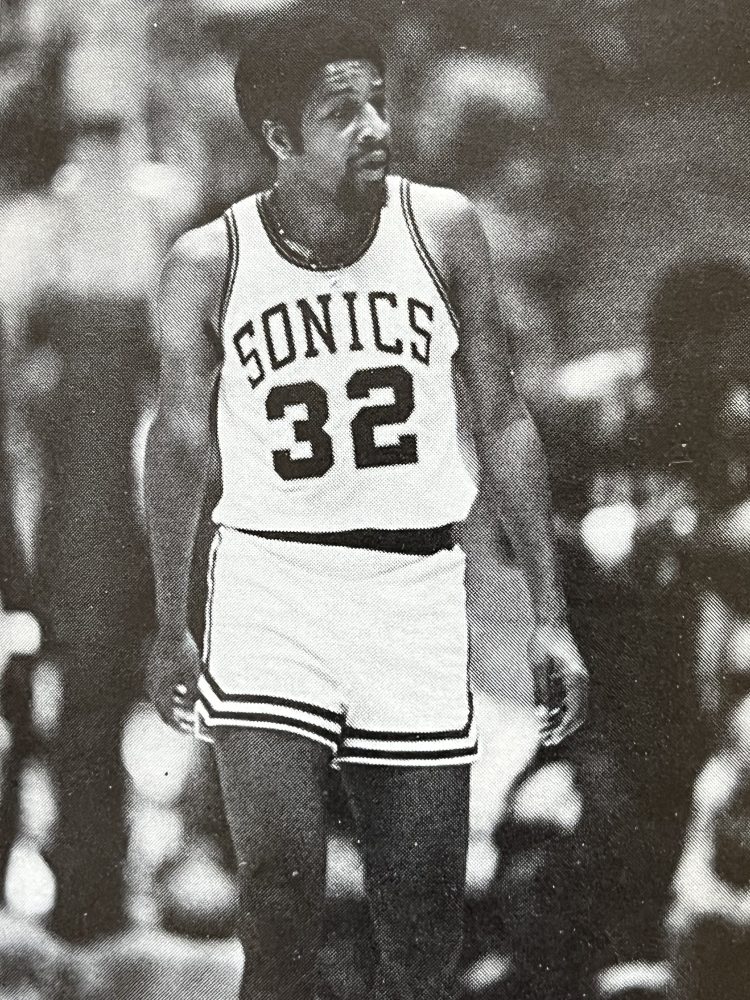
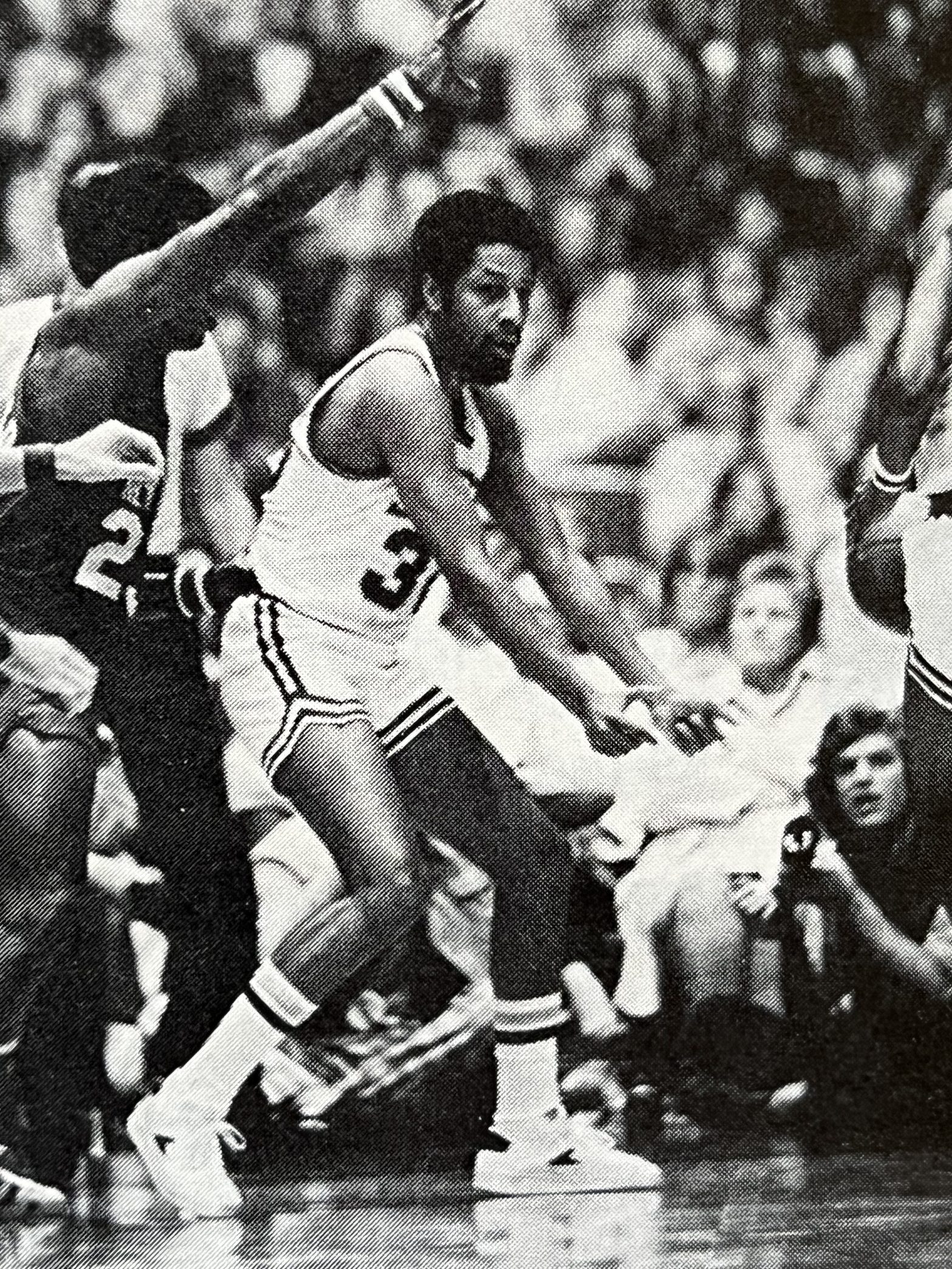
As a result, he’s now Mr. Sonics—in the record books, in the duration of service, and as the symbol of what brought Seattle from a collection of let’s-call-them “unique” characters to a unit of storybook togetherness.
The obvious question is: What happened?
“I think it comes down to a blend of talent and a blend of attitude,” Brown reflected as the Sonics moved, with startling success, into the first weeks of the 1978-79 campaign. “A coach has a lot to do with promoting a certain attitude, and Lenny [Wilkens] was the perfect person to do something like that. He kept everyone comfortable and kept everyone in a realm where they could produce.”
But Russell professed the same things. “Russ said those words. But talking it and doing it are two different things. He talked it very well, but he never did anything to really make it happen. He was always negative to us. He put you down, he put you against the wall, and all you could do was explode in his face—like a mental counterpunch,” commented Brown. “I was deeply hurt, even on nights that I would play exceptionally well. I was hurt because of the way he would relate to his players.
“When I was scoring, I didn’t really want that role. I’ve evolved into a playmaker from the scorer that the coaches insisted I be. I came into the league as a playmaker, but coaches saw how I could always put the ball in the basket, and they wanted to exploit that in me. It was all basically hard work for me, and consequently I suffered a lot of injuries.
“When the offense is designed around you and the opponents have scouted you and they know you’re going to shoot all the time, it makes it tough. The defensive player assigned to me is keyed up. He gets help from his teammates and knows if he isn’t right up on it, he’s going to get 25-30 points in his face. He’s going to get embarrassed.
“Opponents come ready to make war. Therefore, you had everybody taking shots at me, trying to distract me or throw my timing off, banging on me, telling jokes, anything to throw off my concentration. It’s a lot of wear and tear.”
Brown said he was unhappy much of the time to the extent that he doubted he’d be in the league half as long as he sees for himself now. “Last year, I could come in, play 20-25 minutes a night (as opposed to 10 minutes more earlier in his career), and run the offense. Get other guys involved in the offense.
“The total becomes like the ultimate each individual can create, because it’s teamwork. I score fewer points, but I’m more effective. I love to make a good assist, to steal the ball. I feel I can play another five, six years easily.
“I thought I played pretty good defense last year. No one talked about it at all last year. In previous years, it was, ah, I guess you could say it was suspect. Last year, I proved I can play defense, too.”
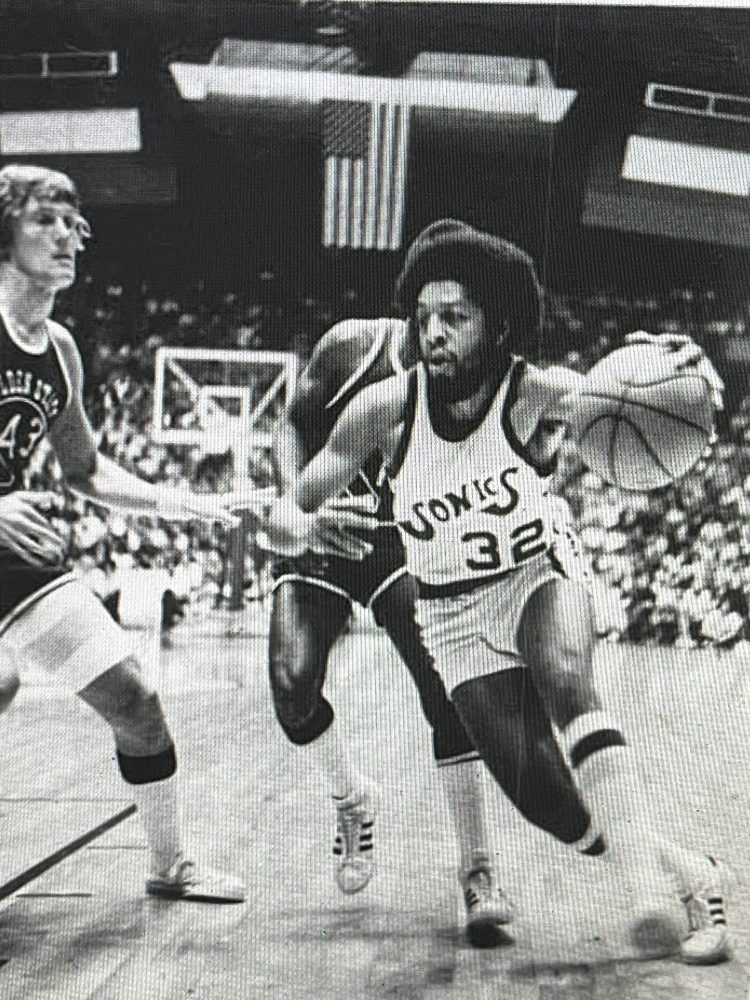
The main thing he proved last year is that he can be an important cog of a winner. Statistically, Brown has made his marks along the way as well. He ranks as the all-time Sonic scoring leader with 8,439 points heading into the season. He had played in 495 games for a total of 14,428 minutes through last season—both Sonic records. His 58 points against Golden State one March evening in 1974 is the top single-game scoring burst by anyone in Seattle’s 11-year NBA history.
He shot .898 from the line last year, a club record and third best in the league. Earlier this season, he moved into fifth on the all-time NBA rankings for free throw accuracy. His 10 steals against Philadelphia two years ago set a club record and a league mark. His 16.6 scoring average last season was tops in the league among non-starting performers.
“I’m happy as can be right now,” Brown enthused a few weeks ago. “Winning is the whole thing. It’s what makes the world go around. It’s like a snowball. Look at our practices. There’s a tremendous intensity out there now. We practice the way we play. It’s out there, it’s visible. We’re trying to push each other so that we can become a truly great team. A lot of people think we got as far as we did last season on kind of a fluke. I don’t think it was just some emotional wave.
“What we have going can endure. I think this could bring about a dynasty, I really do. We may not win 14 championships, but we will bring about a winning image. We can have a winning attitude that everyone can look at the Sonics and know we are the kind of team others wish they could be.
“People think because we made it within one game of the top, we won’t be fighting for all of it this year. Let me tell you, if Marvin [Webster] had come back and we’d been able to build on the same unit we had, we would have been phenomenal. We all had it in our minds that we were there, and we lost by an inch. We would have been out to prove we deserved to be there. There’s no telling what achievements we would have accomplished.
“Now with Lonnie Shelton and Tom LaGarde, we will still have to build a new type of unit. They come in, and they have a chance to be part of this very special thing: this togetherness. They weren’t here last year, all they did was sit and watch with the rest of the nation. It takes time to become as intimately involved as we became last year. It takes a special belief in each other, on and off the court.
“I can’t express what it means to be part of something like this. It’s a dream come true. I was on ‘em in high school, and I was on ‘em in college, and now it’s finally happened in the pros. It’s what basketball is all about. I think it’s what Portland had when they won it all two years ago. I’ve spoken with Walton and Lucas and Hollins, and those guys knew it was something special.
“I was there when they won it. I was in the locker room after all those playoff games, and I knew that’s what I wanted. And last year, we had it—even though we didn’t win the title. We had that togetherness. I said this is what it’s all about, and this is what I’m about and it’s gonna happen to me. I knew it would, sooner or later. And after it was over with, I sat down and was thankful for it.”
At halftime of the Sonics’ game in the Kingdome against Milwaukee, a nationally televised contest, which would provide the seventh and final victory in Seattle’s glittering season-opening burst, Brown received a special honor from Playboy Magazine. NBA coaches were asked to select the five players whom they would want to start in the most crucial money game of the season. Brown was tabbed as “the best clutch sixth man, a non-regular they would most like to have ready to spell a starter or rally an offense.” The others named were Rick Barry, Julius Erving, Bill Walton, David Thompson, and George Gervin.
The Playboy article, which is in the December 1978 issue, said of Brown: “Downtown Freddy Brown was one of the wonders of the NBA last season, averaging 16.6 point over 72 regular-season games, even though he was not a regular member of the starting five. In fact, Brown was second among all SuperSonic scorers. And in the championship series, though the Sonics lost in seven games, it was Brown who came off the bench to sink a quick series of long-range jumpers and key the three victories that his team did secure.”
Of the honor, Brown commented, “It’s obviously a very flattering thing. I guess it puts me in the company of Jerry West and Walt Frazier and Oscar Robertson—these are the all-time clutch players. I guess what makes a clutch player is the ability to concentrate, to be aware of what’s going on on the floor instead of looking at some girl in a low-cut dress in the fifth row behind the hoop.”
Playboy, however, would understand that sort of concentration very well.

