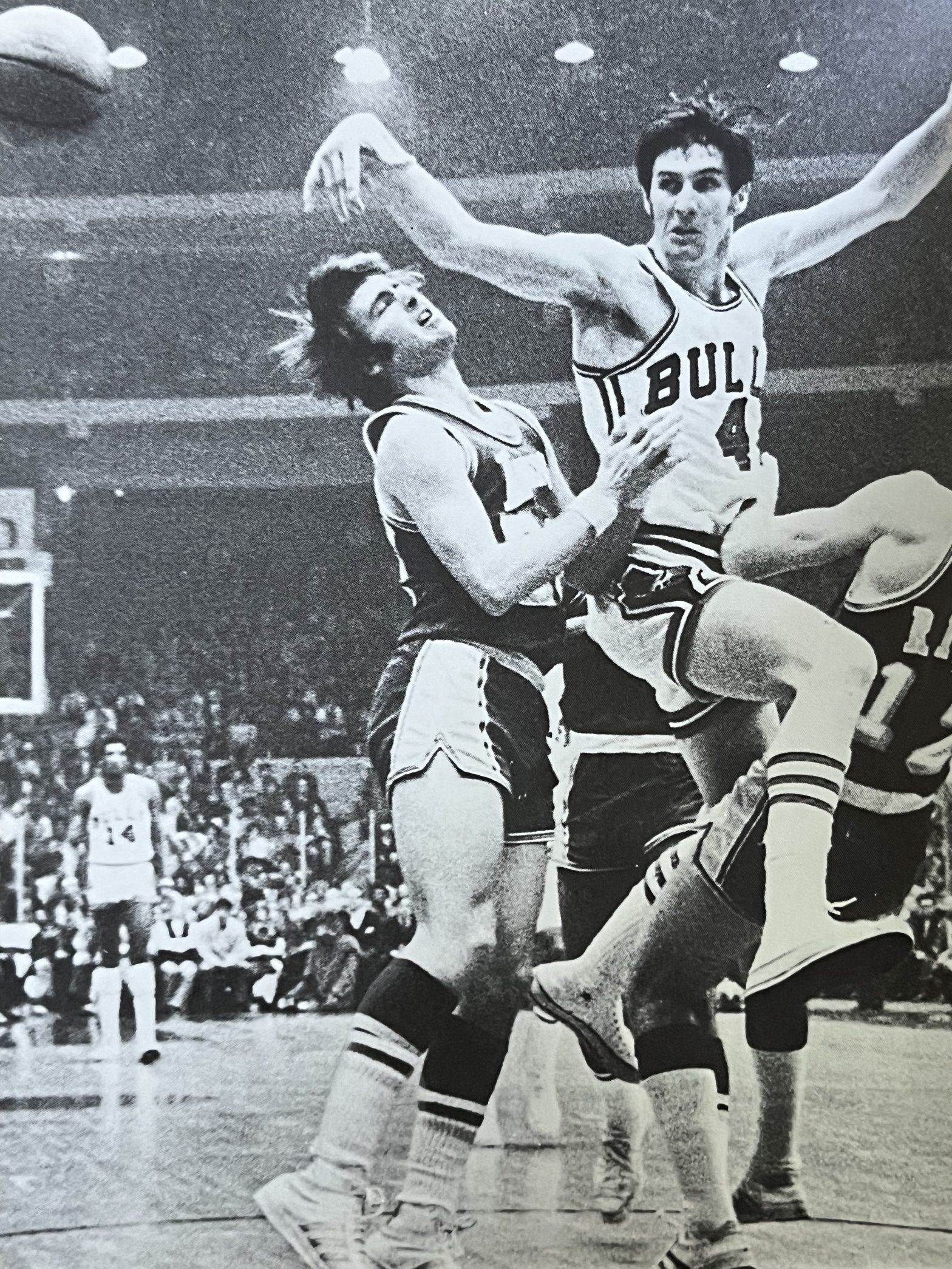
[Another in Basketball Digest’s iconic The Game I’ll Never Forget series. What’s unique about this one is Chicago’s Jerry Sloan remembers most a loss: Game Six of the 1975 Western Conference championship series. It pitted Sloan and his Bulls against the Rick Barry-led Golden State Warriors, who would move on to win the 1975 NBA title. According to Sloan, the Game Six loss was the final death knell for Chicago’s first great Bulls team and its quest for an NBA championship.
Featuring a loss makes Sloan’s memory interesting and worth remembering all these years later. It also speaks volumes about Sloan, IMHO one of the hardest of hardnosed NBA players ever. How so? Here’s so. Chicago Tribune sports columnist Rick Talley offered the following vignette from Game Five in the Bulls-Warriors grudge-match:
“Jerry Sloan had just shot, rebounded his own shot, scored, deflected a pass, sprawled on the floor, and got up in time to draw a charging foul. All within a span of 18 seconds, but when he ran back downcourt, a frustrated fan screamed: ‘You’re loafin’, Sloan, you’re loafin’.’
Jerry never changed expression—the expression of a hawk, ready to descend, claws out, on another prey.
The Chicago Bulls were unrelenting here Thursday night, as they defeated the Golden State Warriors, 89-79 . . . and Sloan was merciless. He played 42 minutes, scored 18 points, and grabbed 10 rebounds . . . and if there had been need for someone to sweep the floor after 12,787 disappointed fans departed the Oakland Coliseum, Sloan probably would have handled that chore, too.”
You get the picture. Sloan wasn’t the fastest, the quickest, or even most skilled. But he attacked his opponents, especially on defense, and let his heart, soul, and sheer will speak for itself. He was one tough hombre. So were his Bulls teammates. The big minutes and the floor burns, though, will eventually either propel a veteran team to an NBA championship . . . or send it sailing over a cliff. For Sloan, Game Six marked that crossroads for his Bulls team. They sailed over the cliff.
Sloan, of course, would chase more NBA titles as the coach of Karl Malone, John Stockton, and the Utah Jazz. But, as a player, what follows is the game he never forgot as recollected in the March 1991 issue of Basketball Digest.]
****
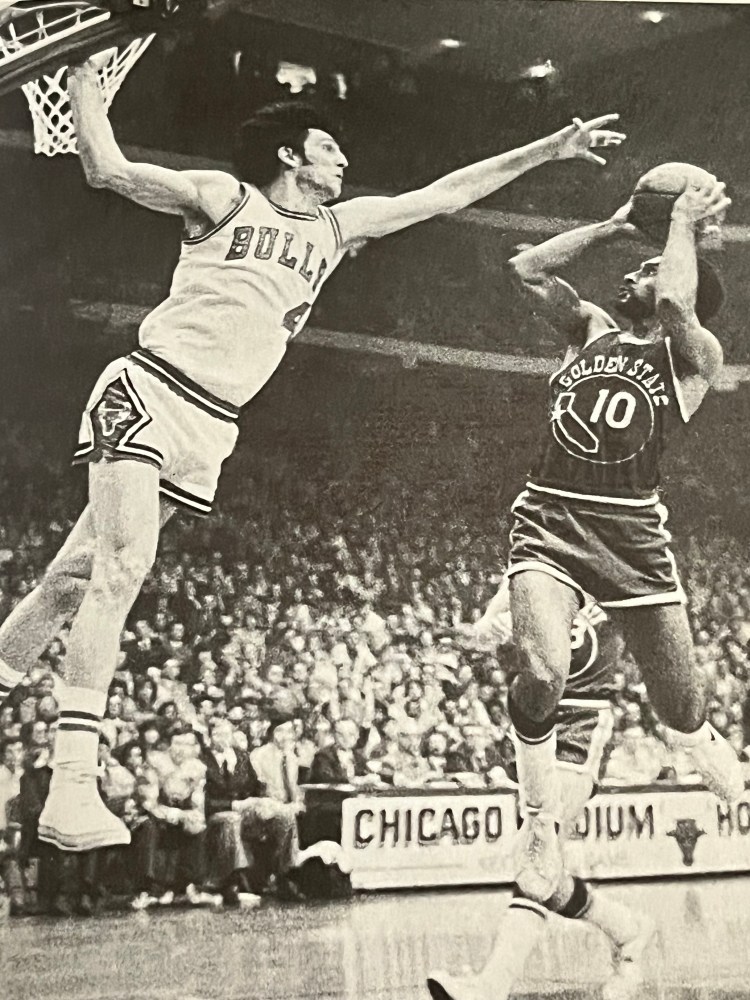
I am a person who remembers losses more than victories. I always believe that you can learn from losses and correct them for the future. That’s why my most memorable game as a pro is a loss rather than a victory. Picking a winning game is easy. Choosing a losing game is not.
The game I selected came during the Western Conference finals in 1975, when I was a player with the Chicago Bulls. That season we had a good, but aging, team with Bob Love and Chet Walker at forwards, Tom Boerwinkle at center, Norm Van Lier and myself at guard, and Nate Thurmond, Matt Guokas, and Rowland Garrett in reserve.
Although our record [47-35] was not as good as those in any of the previous four seasons, when we finished in second place in the Midwest Division each year, it was good enough to win the title this time—the first divisional championship in Bulls history.
Having finished first, we received an automatic bye in the first round of the playoffs. Then, in the Western Conference semifinals, we defeated the Kansas City-Omaha Kings four games to two. That put us into the conference finals against the Golden State Warriors, champions of the Pacific Division. During the regular season, we had beaten them in three of four games, twice at Chicago and once at Oakland. But overall, Golden State had a better record and had the homecourt advantage.
The schedule for the series, however, was not the usual 2-2-1-1-1 format [because of problems with arena availability in Oakland]. Instead, the first game was scheduled at Oakland, the next two at Chicago, Games Four and Five at Oakland, Game Six at Chicago, and Game Seven at Oakland.
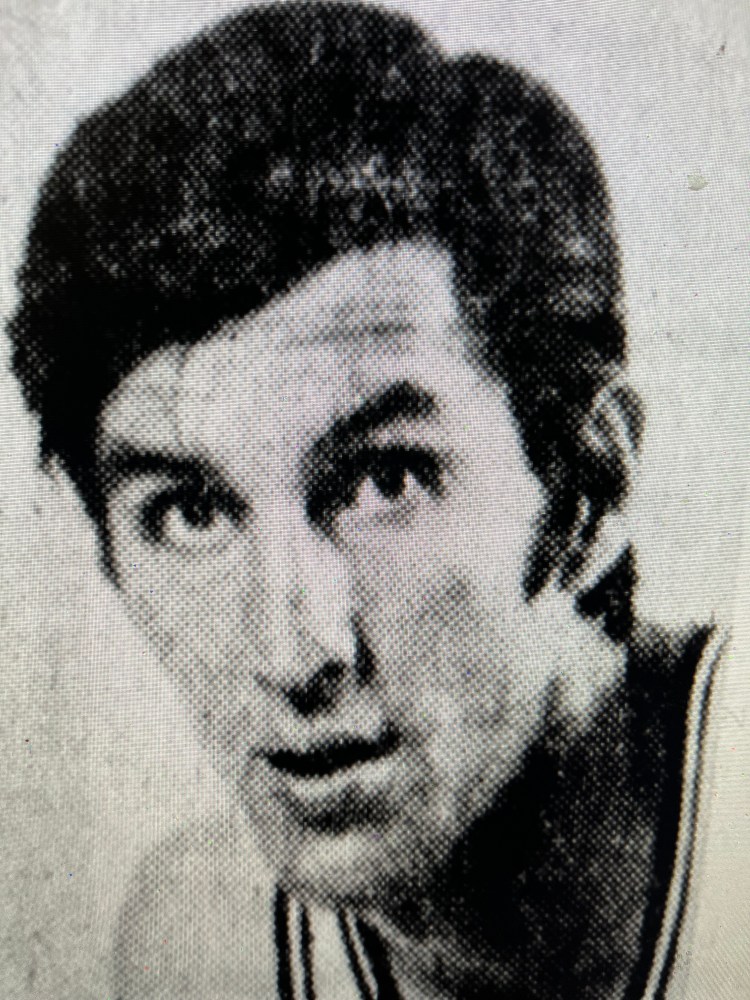
In the first four games, the homecourt made the difference, with each team winning twice at home. However, in Game Five, we beat the Warriors at Oakland to take a 3-2 lead in the series. Now, we were going back home and thought we could beat them at Chicago Stadium.
But this was a very tough series. Except for the opening game, in which the Warriors beat us easily, the games were generally close. Since we were not a deep team, the starters had been playing a lot of minutes for us and were beginning to wear down. In fact, I was losing a lot of weight as the series grew longer. I started Game One at 190 pounds, and each game my weight was decreasing steadily. By the end of the series, I weighed only 170—a 20-pound loss in two-and-a-half weeks.
While we were playing six people regularly—Thurmond was the key substitute—the Warriors were playing nine men and were a lot fresher. In addition to their starting five of Rick Barry and Jamaal Wilkes at the forwards, Clifford Ray at center, and Butch Beard and Charles Johnson at guards, they used Bill Bridges, Jeff Mullins, Phil Smith, and George Johnson off the bench.
With the game being possibly our last at home that season—if we lost, we had to go to Oakland for Game Seven—a record crowd of more than 19,500 showed up at Chicago Stadium. In the first quarter, we gave the fans a lot to cheer for as we took a 25-18 lead. But then the Warriors, led by Barry, began to take charge in the second period. Barry, one of the game’s outstanding players, scored 12 points in the second period—only one less than our entire team—and by halftime, the Warriors had a 46-38 lead. A 10-point run during the period by Golden State turned around the momentum of the game.
The Warriors increased their advantage to 14 points in the third quarter, and the closest we got after that was five points, 71-66, in the fourth period. With Barry finishing with 36 points, the Warriors pulled away to a 86-72 victory, tying the series at three games apiece.
That loss devastated us. After beating them in Game Five on their court, we thought we could put them away at home. But we just weren’t good enough to beat them in Game Six, nor Game Seven, which we lost 83-79.
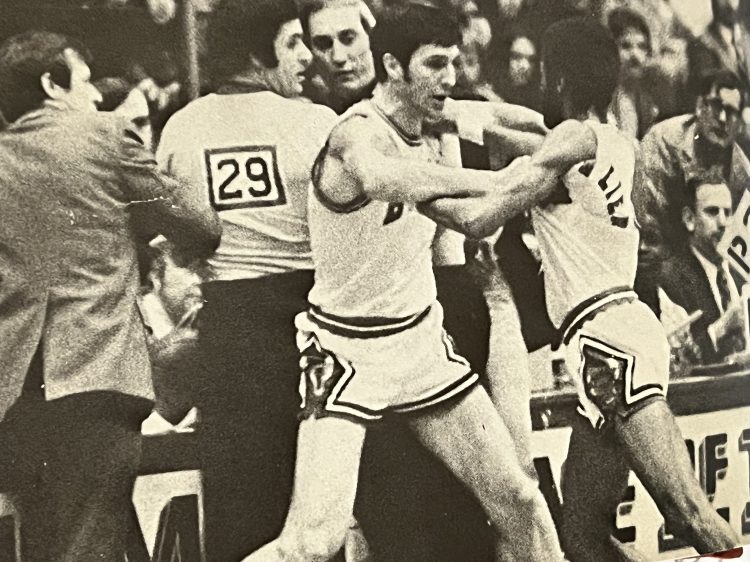
I thought Game Five would give us the lift we needed to get past the Warriors, but we couldn’t sustain it. Our guys tried as hard as they could, but Golden State had too much depth and too much youth for us.
We weren’t a very big or fast team. To tell the truth, we were small and slow. In addition, we didn’t have great athletic ability. But we played hard, especially on defense, and got further than we should have that season. Playing hard, however, doesn’t necessarily win a championship.
In all my years in the NBA, that was the closest I’ve ever gotten to winning the title. After the Warriors beat us, they swept the Washington Bullets in four games in the championship series. I think we also could have beaten Washington—not necessarily in four games, but beaten them and won the championship.
After that season, that group of Bulls never did much. We were a team at the end of the road; age and injuries then tore us apart. Only our coach, Dick Motta, was fortunate enough to go on and win an NBA championship with Washington in 1978.
I played very little after that season—only 22 games with the Bulls in the 1975-76 season before retiring as a player.
The loss not only was disappointing for the players but also for the city of Chicago. That series was such a big thing for Chicago that we were lumped in with all the other losing teams in the city. I never felt that way, but we were classified in that group, too. We felt we were as good as we could be. We just came up short.
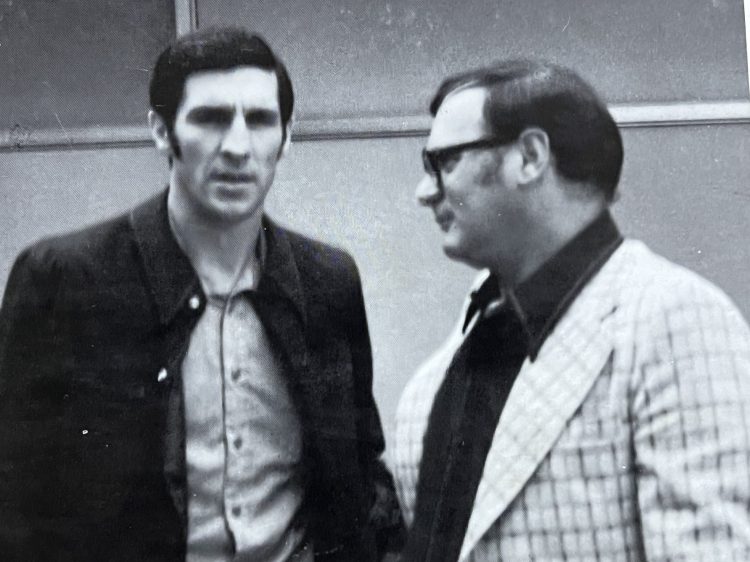
[BONUS COVERAGE: The Chicago Tribune’s feisty Bob Logan covered the Bulls during the early 1970s. Here is a condensed version of Logan’s thoughts after the Game Six debacle, published on May 12, 1975.]
The sweet smell of success was everywhere. A record Chicago Stadium crowd gave the Bulls a hair-raising, toenail-curling ovation before they could even be introduced Sunday afternoon. It’s World Series time, baby. Let’s just brush off these pesky Golden State Warriors, and we’re in the payoff playoff.
“You can’t write a script for this team,” a somber Dick Motta added a few hours later. His lifeless charges had just been dumped off Navy Pier in a weighted sack by the same Warriors, 86–72, and their National Basketball Association series was tied 3-3. Like deflated balloons, the throng of 19,594 expelled a last sigh of breath before vanishing in the closing minutes. The great come- and-get-it day had disappeared, too, gone with the 1967 White Sox and the 1969 Cubs and the 1971 Black Hawks.
That’s not to say the Bulls can’t snatch it back by winning Game Seven Wednesday in Oakland, which is more their style, anyway. It would have been just too theatrical to produce the happy ending at home—and too easy. “Everything was there for us,” Motta agreed. “The referees had no effect on the outcome. We didn’t deserve to win. It just wasn’t meant to be.”
Did that spontaneous bellow of jubilant affection from the fans blow the Bulls up too high?
“It may have gotten us a little over anxious,” the coach replied. “The first thing I told them after Game Five was ‘you haven’t won anything yet.’ And I just got through telling them that I don’t want to go to the coast prepared to lose. They have to beat us. This reminds me of the Boston- Milwaukee (final) series last year, when the homecourt advantage didn’t mean anything.”
What’s left for the Bulls is preventing a flat finish to 1974-75. The Comeback Kids were going down to the last shake of the dice, the only way they know how to do things.
 From Way Downtown
My dad came to Chicago in 1969 with two years removed from Malaysia, 3 years from India and year from Cleveland. He started to follow Chicago sports mostly Bears. He knew Bobby Hull, Billy Williams, Rick Monday and Stan Mikita. But he followed the Bulls a bit when his Chicago Indian group had tickets to the games.
The Bulls lost to the Lakers in three straight playoff series. He didn’t go the Milwaukee series though he had tickets to go. The Warriors one due to playoff format and conflicts he couldn’t go. But to him Game 6 was big Chicago disappointment but he moved on to Bears.
LikeLike