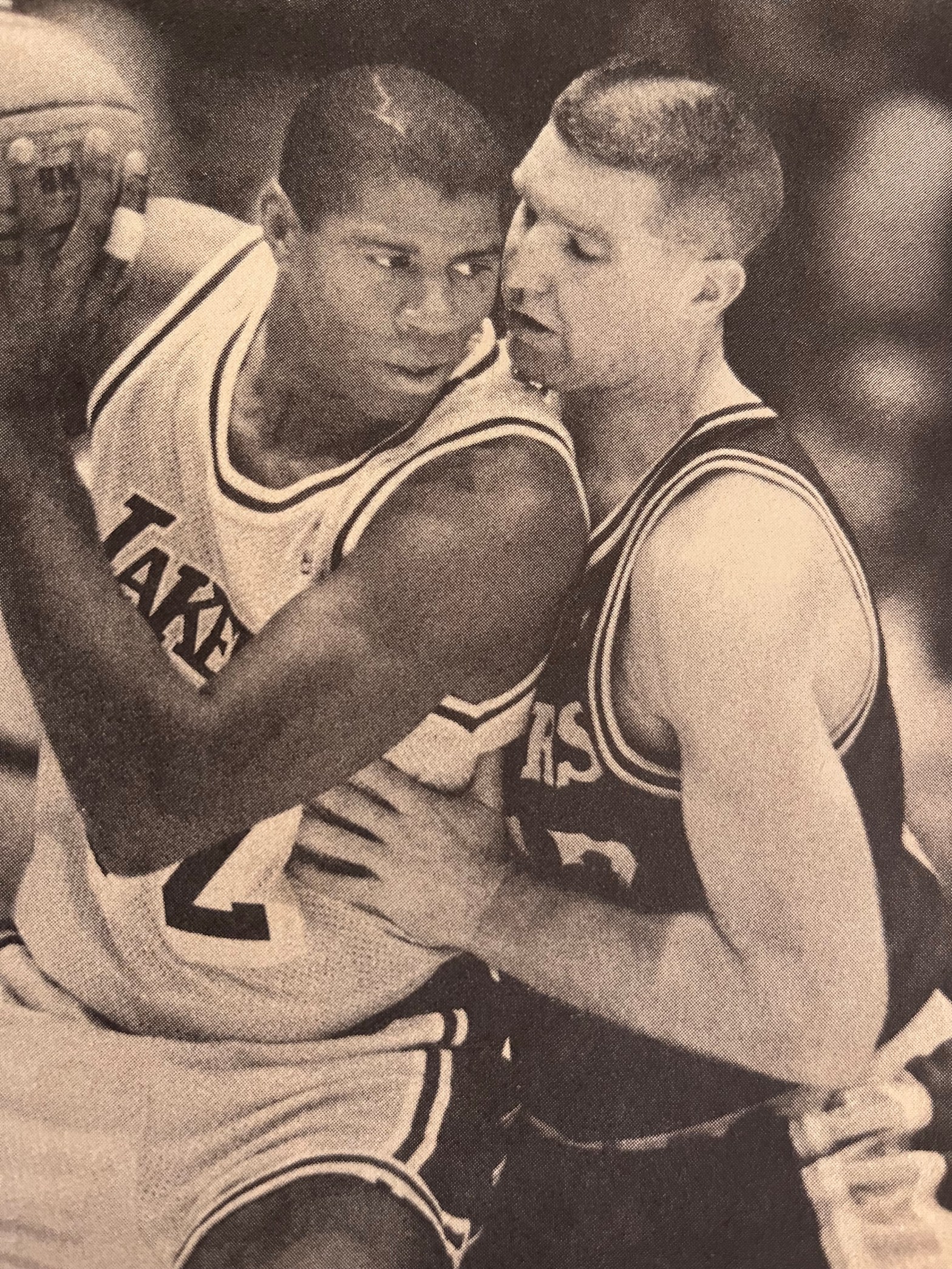
[Time passes quickly, and it passed a little too swiftly on Golden State’s magical “TMC” trio of Mitch Richmond, Chris Mullin, and Tim Hardaway. This band of NBA brothers lasted just two full seasons (1989-90, 1990-91), after which Richmond was traded to Sacramento in early November 1991.
That’s also about when Street & Smith’s 1991-92 Pro Basketball Annual arrived on newsstands, another example of how magazines and their old months-long production schedules could lead to embarrassingly outdated feature articles. That the case with this article, through no fault of his own, from the veteran California-based journalist Dwight Chapin. He was a gentleman’s gentleman and a personal journalistic hero, who passed away this month at age 89.
Soon after Richmond was traded, he returned to Oakland to face the Warriors for the first time. It was a special moment that, according to the beloved Bay Area-columnist Art Spander went something like this:
This was the moment he feared. This was the moment he anticipated. The public address announcer’s voice resounded, and there was Mitch Richmond, the man we miss, jogging toward his teammates, the wrong teammates. And the crowd was on its feet and screaming. Ten seconds. Twenty seconds. Mitch Richmond had returned. Thirty seconds. Forty seconds. Richmond gave a wave that seemed equal parts embarrassment and acknowledgment, and finally the last member of the Sacramento Kings starting lineup, diminutive guard Spud Webb, was introduced. And so the ovation ebbed. And so the game started.
In the same spirit of deep appreciation, here’s to the short, prolific run of the great TMC and the long, prolific career of the great Dwight Chapin.
****
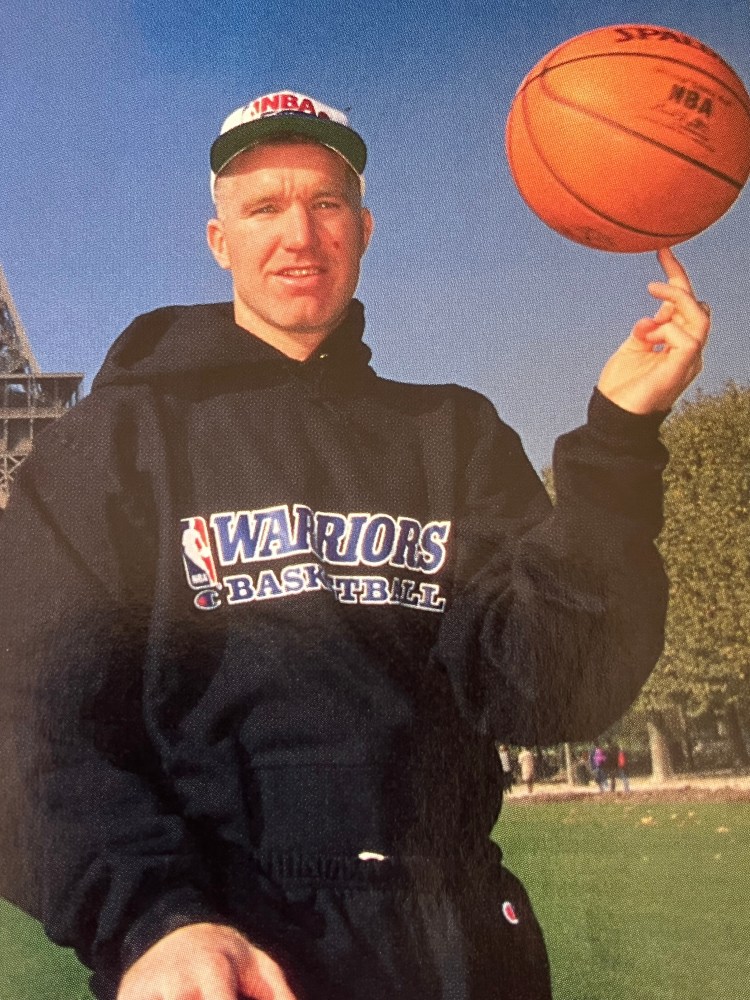
The Golden State Warriors almost lost their heart, soul, and two-thirds of their points in a bizarre accident last spring. The team’s Big Three—some would say the team’s Only Three—were together under one [car] sunroof, headed for a charity luncheon on San Francisco’s waterfront. Chris Mullin was driving his pickup truck, with Mitch Richmond and Tim Hardaway as passengers. They were moving uneventfully under the elevated Embarcadero Freeway, which was badly damaged in the October 1989 earthquake and was in the process of being demolished.
Then, without warning, something struck the sunroof, which shattered. “It might have been a screw, a rock, or a piece of concrete,” Mullin said. “I don’t know. All I know is that it was loud. Mitch and I were covered with a million pieces of glass. It was real scary.”
But the three players, typically, kept their cool. They went right on to the luncheon, and Mullin didn’t even mention the incident to San Francisco mayor Art Agnos, who was another guest. “I was going to ask the mayor what to do about it,” Mullin said, “but it was kind of a nice event, and I didn’t want to bother him.”
This was also typical. Mullin, Hardaway, and Richmond may be the NBA’s most unassuming stars. As well as among the league’s most unsung, Mullin and Hardaway both were on the West All-Star team last season, but not a lot of fuss was made about it. In the Bay Area, at least, there was more commotion over the fact Richmond didn’t make it. But even that didn’t last long, probably because Richmond doesn’t have an ounce of self-promoter in him.
All three of them, in fact, avoid the spotlight whenever possible, whatever the circumstance. At a press conference during All-Star Weekend, Hardaway went virtually unrecognized—some mistook him for a ballboy—and didn’t seem to mind a bit. At practice the next day, Mullin sat on a stage instead of standing on the court where the rest of the players were being interviewed, an outsider who appeared to prefer it that way.
A San Francisco newspaper ran a contest last season to give the three players a nickname—and it let them select the winner. They spurned such far-out entries as The Totally Tubular Trio, The Joint Chiefs of Stats, and The Three That Be, and picked Run TMC, a pale play on their first names and a popular rap group. Hardaway has been known to chide opponents on the court, but clearly, the Big Three would much rather let their play speak for them.
Example: Richmond was upset over being snubbed by Western Conference coaches for the all-star team, but you wouldn’t have known that just by talking to him. “I can’t do anything about it now,” he said the day he was passed over. “I don’t have any control over how people judge what I’ve been doing. I just have to go out and keep doing it.”
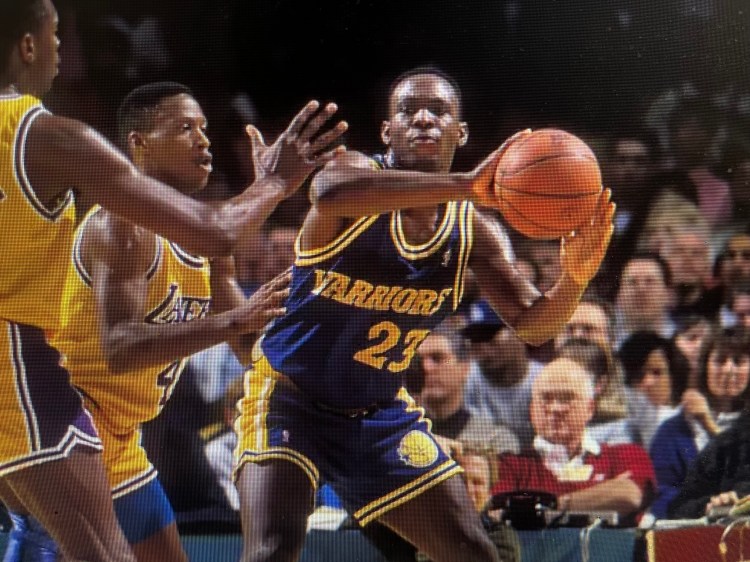
Then he went out and scored 40 points—the second-highest total of his pro career—made seven steals, had seven assists, and played his usual gritty defense against the Los Angeles Clippers. Richmond wasn’t Superman in every game after that, but seldom have three teammates had a season of such sustained excellence as Mullin, Richmond, and Hardaway did in 1990-91. They just missed becoming the first three players on one NBA squad ever to average more than 23 points a game each. Mullin finished at 25.7, eighth best in the league; Richmond was 10th at 25.6, and Hardaway 11th at 22.9. If they all had been in the top 10 in scoring, it would have been the first time a trio from one team had accomplished that since the Boston Celtics of the 1950s.
But much of the way last season, Coach Don Nelson was as concerned with his star trio’s stamina as their statistics. Because they were so good and the rest of the Warriors weren’t, for the most part, Nelson had to play them way too much. Several times, he said he was going to rest them more, but it never quite worked out that way. Mullin ended the regular season averaging 40.4 minutes a game, Richmond 39.3, Hardaway 39.2.
Still, Golden State improved from a lottery team to the seventh playoff seed in the West, advancing to the second round against the Los Angeles Lakers, and there’s no question who made the difference. Mullin, Richmond, Hardaway seem to take turns in the spotlight, and, as the point guard, Hardaway adroitly directs the offense. But, game in and game out, Mullin is the leader, the conscience of the Golden State Warriors.
This six-year veteran with a complexion like unbaked bread dough and the army-recruit haircut is probably the least likely-looking great player in the league. He’s not very big, he’s not very fast, and he doesn’t jump very high, but he is very, very good. “You think his move to the basket is slow, but it’s not,” said Detroit’s Dennis Rodman. “He gets 30 points a night, and you wonder, ‘I’m playing great defense, but he’s still scoring.’”
He’s a New York basketball player, tough, smart, a 24-hour-a-day student of the game. The Warriors drafted Mullin out of St. John’s, where he was College Player of the Year, as a lottery pick in 1985. The transition from East Coast to West Coast, from college to professional basketball, was anything but easy. His two primary friends in his rookie season were junk food and beer. His weight soared from 210 pounds to 240. Drinking became a real problem.
“We always sensed he was sad whenever we spoke to him on the phone,” said Eileen Mullin, Chris’ mother. “We made as many trips out there as we could to help him.”
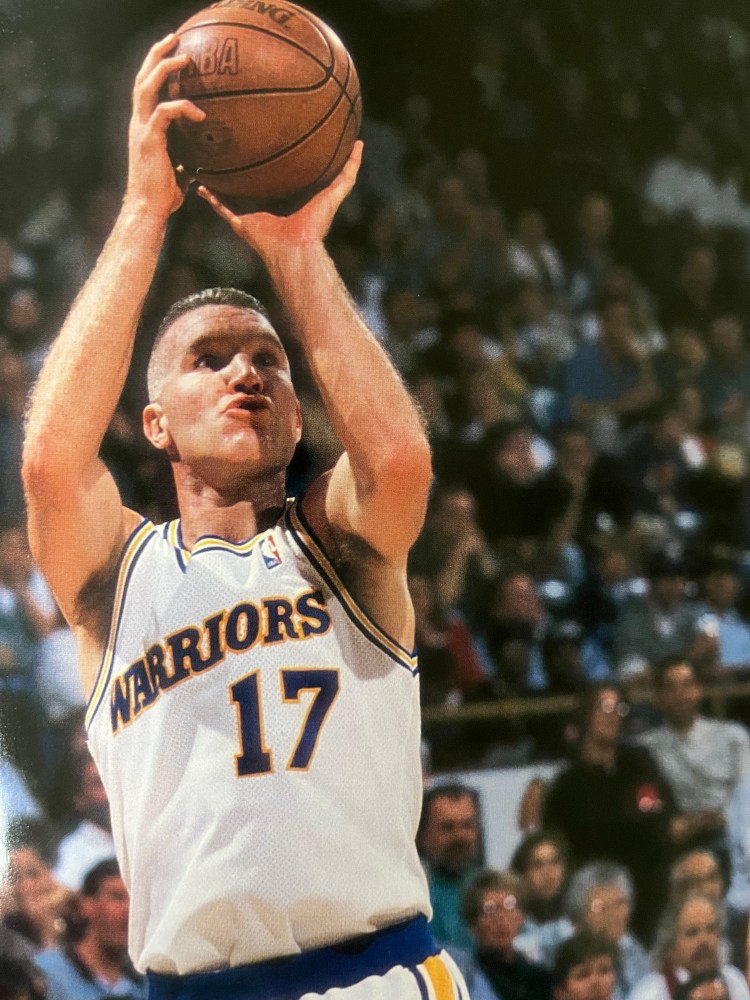
On December 20, 1987, he was suspended for missing a work out. Two days later, he voluntarily entered an alcohol rehabilitation program in Southern California. The reaction from Nelson and the rest of the Warriors was crucial, “Everyone in the organization gave me support and time to grow,” Mullin said. “Nobody rushed me back. They made me feel I was doing the right thing.”
Mullin spent a month in the hospital. When he returned, he had a new mindset to go with his still-marvelous skills. His first day back with the Warriors, he joined Mark Grabow, the team’s conditioning coach, at a Bay Area gymnasium. “After he worked out for 90 minutes, I told him to shoot 10 free throws,” Grabow said. “He hadn’t touched a basketball in 30 days. He made 91 in a row.”
Mullin and Grabow became a team within a team. The now-sober Mullin quickly became a physical conditioning zealot, working out for hours every day. All the Warriors have a key to the Oakland Coliseum, but Mullin really used his, at all hours of the day and night. He even worked out on game days.
The sweat and strain trimmed the 30 excess pounds and pared his body fat from 15 to 6 percent, 4 percent lower than the NBA average, according to Grabow. “He’s one of the few players who can play 48 minutes a night regularly,” Grabow said. “He’s calloused his body so he can stand a lot of physical stress. He has such a passion for the game and to be great.”
If anything, Mullin now works even harder in the off-season to stay in shape than he does during the season. His mental adjustment has been just as noteworthy. “A lot of times, I would let basketball dictate everything,” he said. “If I had a good game, I’d feel good about myself. If I didn’t, I was down. Now if I have a bad game, I don’t feel bad about it. Basketball was a barometer for my life. But it was much too up-and-down. Now I have a steady and consistent life.”
Mullin’s girlfriend, college sweetheart Liz Connolly, has been a major help in all this. So was Mullin’s dad, Rod, who died of cancer last year. Father and son used to talk after each of Mullin’s games. “I miss calling him,” Mullin said, “but I still talk to him sometimes. I know he’s still watching. I still feel him a lot, some days more than others. But I feel I’ve got a relationship going on with him.”
There is probably no more dedicated player in the NBA now than Chris Mullin, and the hard work and discipline have resulted in three straight trips to the All-Star Game for a man who once looked as if he was on his way to skidding right out of the league. Little wonder that players like Magic Johnson of the Lakers have said that Mullin is now the Warriors’ indispensable ingredient, the symbol of a scrappy squad on the rise.
Even with Mullin’s talents, however, the Warriors were pretty much going nowhere until Nelson worked Richmond and Hardaway into the mix. Mullin calls Richmond “Rock,” as in rock solid, and that’s exactly what he’s been since Nelson drafted him as a lottery pick out of Kansas State in 1988. Some people thought he was a blown choice, since the Warriors needed a rebounder and a shot blocker more than a 6-5 shooting guard.
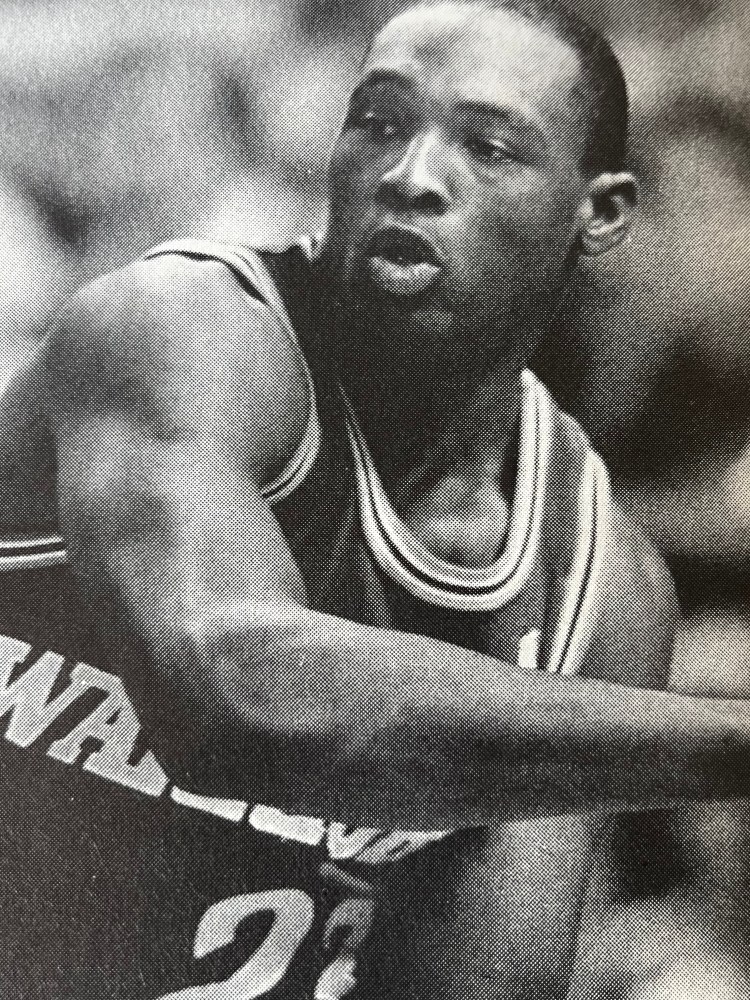
Nelson’s rationale: “I believe that whenever possible, you should draft star quality. And we think Mitch Richmond has star quality.”
He also had a rare confidence that showed up early. “He wasn’t like most rookies,” former teammate Terry Teagle said. “He believed in himself, and he knew he belonged in this league. I haven’t seen someone come into the NBA with that much composure since Michael Jordan.” Richmond went on to be named NBA Rookie of the Year. There were 85 ballots cast. Only five named anyone but Richmond. In accepting the award, Richmond was quick to thank his mother, Ernell O’Neal. “She was there when I needed her,” he said. “When I wanted to do something, she always told me to go out and grab it.”
Both teammates and rivals rave about his play. “He plays both ends of the court,” said Mullin. “I think that says a lot about him. He’s not just an offensive player, not just a guy who goes for the glory. He does all the dirty work, too.”
Jordan, whom Richmond says he “really looks up to,” agrees. “Mitch’s physical ability causes trouble both offensively and defensively. It’s tough for me to spin away from him and tough to get low and post-up. I have a lot of respect for him. He’s competition.”
Offensively, Richmond, who is just about perfectly constructed for his position, can get his own shot, shoot from the perimeter, go inside, rebound, just about anything that needs to be done. This will come as no comfort to other NBA teams, but he is still learning, too. “You’ve yet to see the real greatness that is in the Mitch,” Nelson said.
That’s because Richmond, even though his childhood athletic hero was Julius Erving, didn’t play organized basketball until he was a high school sophomore in Florida. “I didn’t think about going out for the team,” he said, “mainly because I was only six feet tall when I was a 10th grader and only a pretty good player.”
By the time he finished high school, however, he had added five inches and a whole bunch of honors, but scholastic awards were not among them. “I messed up so bad in the ninth grade, I didn’t even have a 2.0 grade-point average when I was a senior,” he said. That meant he had to make a two-year stop at Moberly Area Junior College in Missouri, where coach Dana Altman switched him—under pressure—from power forward to guard and convinced him of the benefits of academics. Both of them moved on to Kansas State. Altman as an assistant coach to coach Lon Kruger, Richmond as a budding star player.
“Mitch had such natural instincts and was always gifted,” Kruger said. “But when he arrived, he didn’t fully realize how he stacked up, that he was one of the best. In time, he learned that. He also loved to play. I think that was the bottom line. He loved to play and loved the challenge.”
In public, Richmond is almost always quiet and becomingly humble. “Mitch was always shy,” said his mother, “but he’s a very positive person. I instilled that in him. I call him before and after games and tell him to stop pushing and relax. I call him sometimes to see if he’s eating properly, and other times I call just to hear his voice.”
That voice is used in a variety of ways with his teammates. Richmond often plays court jester with them, mimicking their movements, mannerisms, and speech patterns with deadly accuracy. “He does me better than I can do myself,” said Mullin.
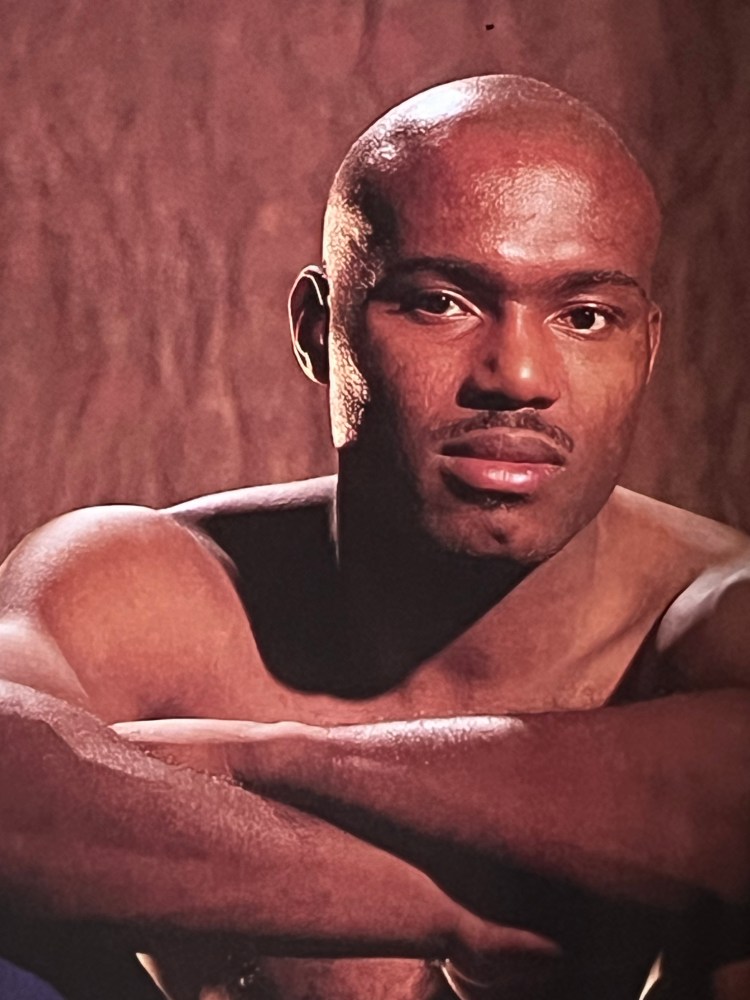
Like Mullin, Richmond often stays long after practice to play one-on-one with anyone who’ll stick around. But he doesn’t strain credibility with his workout schedule, the way Mullin does, because he has more natural athletic gifts.
So does Hardaway, the fearless little big man who completes the triumvirate. Basketball observers blinked when Nelson drafted the point guard out of Texas El Paso as the No. 14 pick overall in 1989. What were the Warriors, a team still looking for size, doing in selecting a guy generously listed as a six-footer? Nelson himself had doubts. But scout Ed Gregory kept pushing for this Tiny Tim from Texas, arguing, among other things, that he was quicker than a meter maid handing out a parking ticket.
One of Gregory’s scouting reports said: “This game is easy for him! Explosive! He could be a star!”
Nelson still wanted Louisiana Tech forward Randy White, but couldn’t work out a trade to move up in the draft and get him. So Nelson finally settled on the quicksilver Hardaway, and it didn’t take him long to conclude he had come up with someone special. In fact, it wasn’t long until Nelson—never exactly a fan of first-year players—turned over on-court control of the Warriors to the rookie point guard who seldom made rookie mistakes. “He’s like Mighty Mouse.” Nelson said. “When the hour is bleakest, he saves the day.”
And he never has the slightest doubt that he can do it. “He’s got the most confidence I’ve ever seen in a human being,” said Mullin.
Hardaway is from Chicago—“the mean streets of Chicago,” people are always writing. Basketball was almost as much a part of him as breathing from as far back as he can remember. His father, Donald Hardaway, was a 6-3 Chicago playground legend who was once invited to try out for the Chicago Bulls but turned them down because he didn’t want to be on the road away from his family.
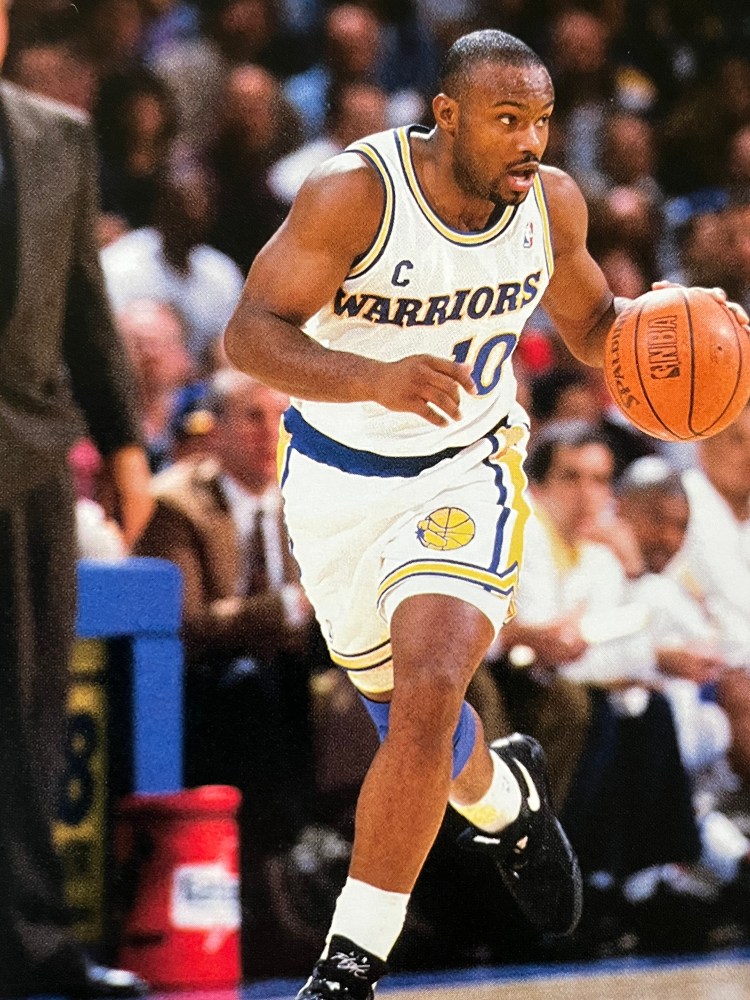
“The first time I saw my dad play, he dunked on a guy, shot a bunch of jumpers, and just played real tough,” Hardaway said. “That’s what I saw. Tough. His whole crowd was like that. Even if your wrist or your arm was broken, you’d be out there playing, because you could still shoot with pain.”
Hardaway’s parents divorced when he was 12, and he and his brother, Donald, were reared by their mother, Gwen, a mail carrier, and grandmother, Minny Eubanks. Tim was extremely close to both women.
When he was chosen for the All-Star team last season, he said: “This honor is as much for my mom as for me. She’s done so much for me. I just want to give it all back.” And he thinks so much of his late grandmother that he’s put her initials—MEE—on the back of his sneakers.
Hardaway never excelled in school or liked being there much. As early as first grade, his exasperated teacher frequently sent him to the principal, who led him out to the basketball court to work off his brimming energy. His mother still has a letter the principal sent home one day: “Watch Tim. He plays exceptionally well in basketball.”
Gwen watched, and despite having to rein Tim in every so often, she encouraged his play, telling him, “Go for it. Work hard. Be the best one.” His high school coach helped steer him away from the drugs and gangs that stymied some of his teammates and also convinced him that success had to be earned. Hardaway, obviously superfast and dexterous with the ball, worked almost constantly on that still much-maligned, non-rotation jump shot, which caused a lot of pro scouts to question whether he could shoot.
He would fire up 300 to 500 shots a day, with his brother and his best friend retrieving the balls, and when only a fraction would fall in and onlookers would yell, “Man, you’re missin’”, he’d ignore them. “I’d just say to myself, ‘Don’t worry about missing. Just worry about the form,’” he said.
If Gwen Hardaway never had a doubt that her son’s path was almost preordained, it was dispelled when she accompanied him to a high school tournament in Champaign, Ill. They walked into the University of Illinois’ Assembly Hall, the largest basketball arena he had ever seen, seats rising all around, a huge scoreboard hanging down, and he turned around and around, ever so slowly surveying everything in sight. Finally, he turned to his mom and said, “This is where I want to be.”
He obviously still does. “I feel like when I’m on the court, that it’s my court,” he said. “Especially at home. I feel like I can do no wrong there. Like if I want to slide from half court to the baseline, I could do it. That’s really how I feel. Like I’m bulletproof.”

