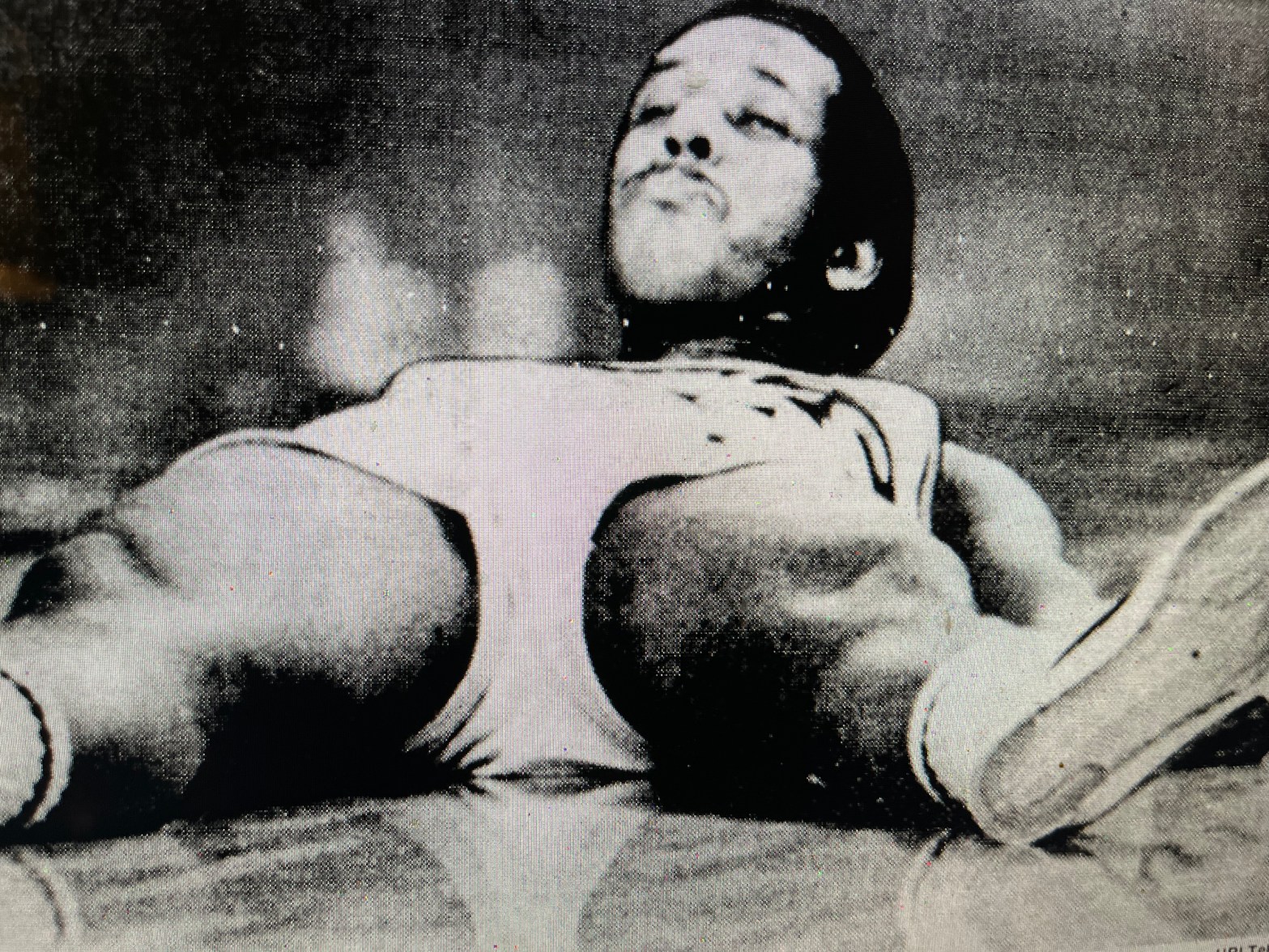
[In June 1977, John Johnson was traded from Houston to Boston. What seemed like a ho-hum acquisition of Houston’s 6-foot-7 reserve swingman would erupt into one of the NBA’s most-contentious trades of the 1970s. Today, few remember the trade. But from a historic perspective, this botched exchange is a fantastic example of the culture clash in the 1970s NBA between its dwindling old-school front-office pioneers and its rising new school business executives.
It all started with the Celtics and their veteran forward Sidney Wicks. Heading into the 1977 offseason, Wicks chose not to resign with Boston, at least not immediately. Wicks wanted to test this newfangled NBA thing called restricted free agency. Red Auerbach, Celtic GM and the old school NBA pioneer, remained opposed to free agency of any variety in the NBA, and he vowed not to be held hostage by Wicks’ decision to look around for more money.
And so Auerbach called his front-office counterpart Ray Patterson in Houston in early June and inquired about Johnson’s availability. Based on newspaper reports, Auerbach envisioned the veteran Johnson as a two-for-one acquisition. Johnson, nicknamed J.J., was a skilled passer and ballhandler who could play either in the backcourt (backing up Charlie Scott) or on the frontline (should Wicks walk).
After bouncing around some names and scenarios, Auerbach and Patterson reached an agreement: two second-round draft choices for Johnson. A press release was issued, and brief mentions of this minor trade appeared the next day in newspapers around the country. In Boston, Auerbach said of Johnson, “He’s a player’s player, and he can put the ball in the hole.”
But Johnson never put the ball in the hole as a Celtic. Instead, Johnson landed in an NBA black hole. Make that, the NBA Twilight Zone. In early September, when he departed his home in Beaverton, Ore. for his first training camp with Boston, Johnson discovered the Celtic front-office had messed up his airline reservation. After a few SOS phone calls to Auerbach, Johnson boarded a later flight for Boston. No harm, no foul, except Johnson flew across the country in coach, his long legs crammed under his chin. When he arrived in Boston, Johnson learned that his newly leased apartment wasn’t ready for occupancy. Johnson called his wife, who answered and said she’d just been in a car crash. More phone calls, and Johnson got a hotel room and fell into bed. At 4:45 a.m., the fire alarm wailed, and Johnson raced out of his room and down six flights of stairs. False alarm. According to Johnson, it scared the Bejesus out of him.
Johnson regained his composure, but he remained trapped in this NBA Twilight Zone. Early in training camp (at Buzzards Bay, no less), Johnson tweaked his right hamstring but bandaged it and gutted through the pain and discomfort. After training camp, Johnson seemed to be the odd man out and likely to be waived. Wicks had resigned with the Celtics, their top rookie Cornbread Maxwell looked impressive, and aging former All-Pros John Havlicek and Dave Bing decided to play another season. Before he was waived, things turned weird for Johnson. In early October, with the regular season about to start, Auerbach cryptically asked Johnson not to practice with the Celtics . . . then Auerbach told him that the trade had been cancelled . . . Auerbach told Johnson to return to Houston, he was their property. The Rockets’ Patterson ordered Johnson to stay put in Boston, saying he was still a Celtic and a hearing was scheduled to decide his NBA fate.
Sound nuts? Here’s a more detailed account of this Trade From Hell, starting with a short article by the Hartford Courant’s George Smith on October 6, 1977. Auerbach happened to be in Hartford when he grumped and cancelled the trade.]
****
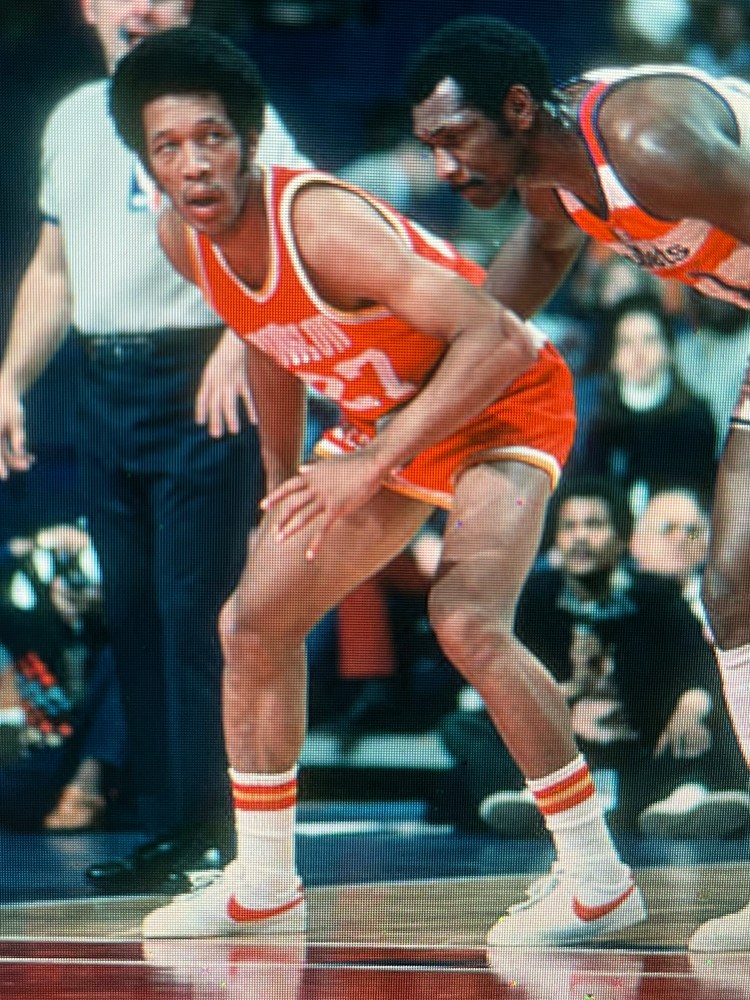
The Boston Celtics sent 6-7 forward John Johnson back to the Houston Rockets Wednesday over a “misrepresentation” in the agreement the two teams apparently reached when the deal was made in June. “Never in my 31 years in the league have I seen such outrageous misrepresentation,” Boston Celtic general manager Red Auerbach told a press gathering in Hartford Wednesday, prior to an exhibition game with Philadelphia.
The deal for the 30-year-old Johnson, a six-year veteran from Iowa, was reportedly made prior to the NBA draft, but the contract papers to cement the agreement arrived on Auerbach’s desk just yesterday.
“I blew my top,” said Auerbach. “It was entirely, entirely different than our agreement. As far as I’m concerned, (Johnson) is still the property of Houston. I refuse to sign the papers. It has nothing to do with Johnson,” he added. “He’s a hell of a kid.”
Though Auerbach didn’t specifically point out the misrepresentation, he said it wasn’t so much the money, but rather something to do with (Johnson’s) long-term contract. The Celtics, according to Auerbach, gave up a couple of second-round draft choices for Johnson. Apparently, according to the contract which arrived yesterday, the Rockets expect more.
[Now some valuable perspective from the Boston Globe’s outstanding John Powers, author of The Short Season: A Boston Celtics Diary, 1877-78. Powers covers the botched trade there. Take a look if you have the book handy. If not, below is a column that ran in the Globe on October 9, 1977 and a summary well done.]
As they say, verbal contracts aren’t worth the paper they’re printed on . . . so John Johnson floats in limbo amid a classic my-word-against-yours dispute. And if the NBA office doesn’t have the evidence both sides hope it does, then Larry O’Brien is going to have a sticky decision on his hands.
There seems to be only three possibilities: (1) Ray Patterson, president of the Houston Rockets, misrepresented the deal from the start (which Red Auerbach claims); (2) Auerbach merely wanted a free look at Johnson and deliberately left the deal unconsummated as an escape route (which Patterson implies); (3) There was an honest misunderstanding on both sides.
At worst, somebody was running a con on the other. At best, it was pretty casual business procedure. Admittedly, the NBA is still a relatively informal league in some respects. General managers phone each other and make deals as naturally as one could buy a stick of pepperoni. Auerbach had done it for years without incident, which is why he’s “shocked” at what he feels has been done to him.
Still, as Patterson suggests, the rules of the marketplace apply. “If you’re buying something, you better find out what you’re buying,” he said last week. Auerbach, he says, should have known that as well as anybody. It does seem surprising that Auerbach didn’t press Houston for Johnson’s contract earlier, or that he didn’t have the league office send him a copy, especially since the Rockets got an immediate payoff.
But then, Auerbach probably figured it wasn’t a major deal, and there were still three months before training camp. And he’d never had cause to doubt a peer’s word before.
Of course, this isn’t 1956 anymore, and it isn’t an eight-team league. And there is enough complicated business going on, what with enormous salaries, free agency, and more litigation than ever, to demand that everything be down in writing and checked by a lawyer. It may be a shame, as Auerbach says, when you can’t take a man’s word as his bond. But then, that’s why loan sharks keep a few leg-breakers around. Not everybody remembers the terms.
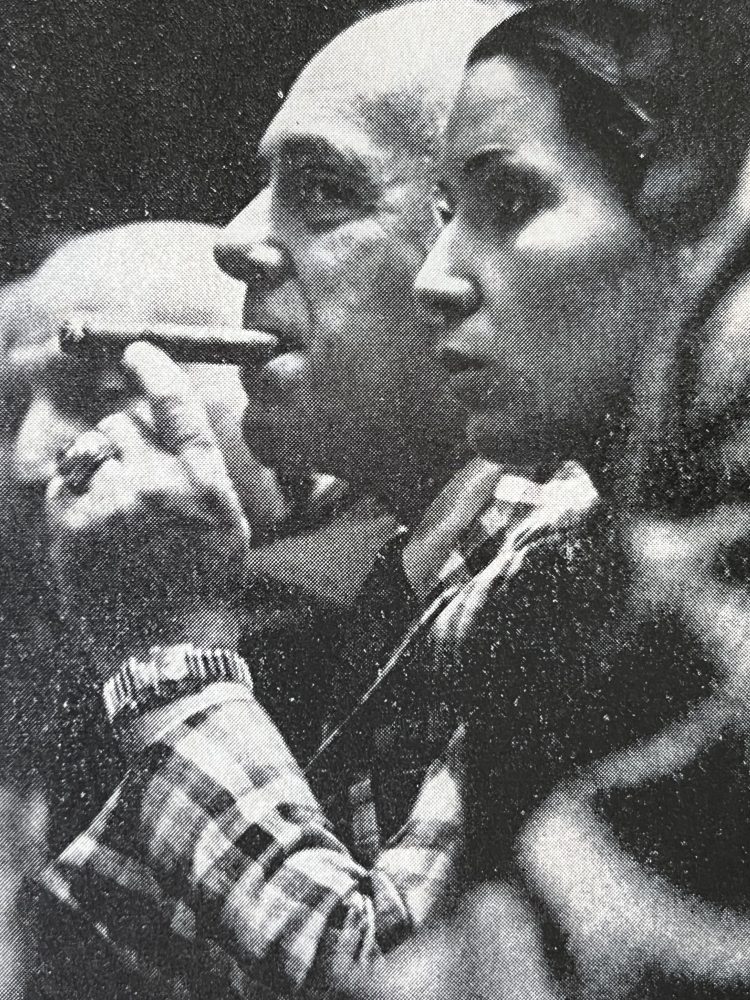
[News of the alleged “misrepresentation” had by now reached Houston. To learn more, the Houston Chronicle’s Tommy Bonk made some phone calls. Here is a slightly condensed version of what he discovered, as published in the newspaper on October 11, 1977.]
When the Houston Rockets traded John Johnson to Boston in June, Johnson thought he was a Celtic, Red Auerbach thought he was a Celtic, and so did Ray Patterson. Then early last week, Auerbach, the Celtics’ president and general manager, said Johnson’s contract had been misrepresented to him by Patterson, Houston’s president and general manager, and the whole deal was off. Johnson, Auerbach said, is a Rocket again.
Patterson says the trade is irreversible. The NBA has set an October 17 hearing in New York to settle the dispute. Until then, John Johnson, 29, a jump shooter, is lounging in his Boston apartment with his wife and kids, watching television. He is, not surprisingly, confused and upset.
“Tell me what’s happening, and we’ll both know,” Johnson said. “I’m just caught up in the middle of this. Here everybody is talking to Red and Ray, and I’m the poor guy who’s suffering. I hope something breaks soon, because I’m not a TV buff.”
Johnson is waiting for his agent, Chicago attorney Arthur Morse, and NBA Players Association counsel Larry Fleisher to work something out before October 17, two days before the Celtics open the regular season at San Antonio and the Rockets begin at home against Chicago.
“Delaying this thing any longer would just further cloud the issue,” Johnson said. “I’m in limbo, that’s where I’m at. The situation is between two ballclubs and the NBA, and I didn’t have anything to do with it. I’m the only one suffering from this. Why shouldn’t I be upset? I’m the man in the middle. My career is on the line.”
Johnson has been around seven years, long enough to understand the dark tunnels and sudden twists of direction in the NBA, enough time, seemingly to be ready for a Big Surprise. Still, Johnson wasn’t prepared.
“I was shattered,” he said.
Johnson said Auerbach called him after the Celtics returned from an exhibition game in Portland, Me., and told him there had been some kind of misrepresentation in Johnson’s contract. Auerbach then gave Johnson a clue something was up.
“He told me not to catch the team bus,” Johnson said. “I’ve been an innocent bystander. I don’t ask for trouble, but it seem like [bleep] is always around the corner. I’m just a little fish in a big pond, and everything is above my head.”
Johnson has been advised by Morse not to say where he’d like to play. “I didn’t deserve a thing like this,” he said. “All I want to do is play ball, whether it be Boston or Houston.”
Meanwhile, until Fleisher, O’Brien, Auerbach and his attorney, and Patterson and his attorney work something out, John Johnson has no place to shoot his jump shot.
“I’ve tried to tell myself, ‘JJ don’t never be surprised what happens in the NBA.’ But this here was a real blast, I’ll tell you.”
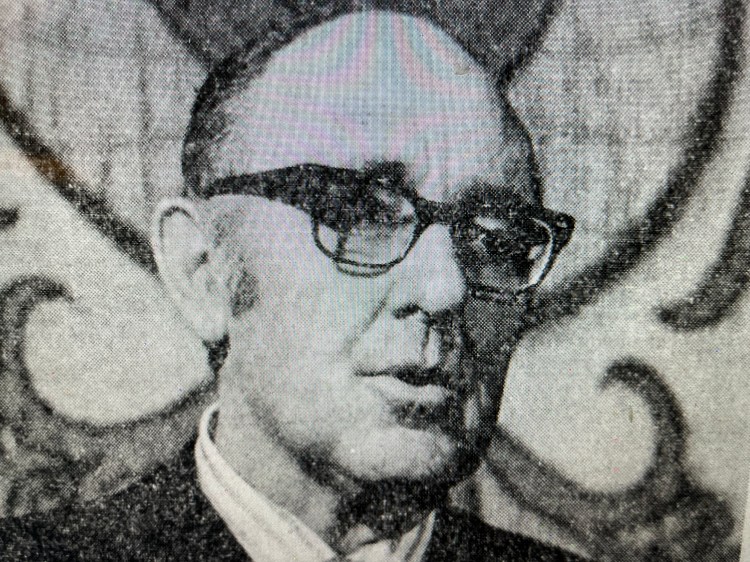
[With the help and contemplation of NBA Commissioner Larry O’Brien, Johnson finally got a decision. In slightly condensed form, here’s Tommy Bonk again reporting the O’Brien’s decision, as published in the Houston Chronicle on October 19, 1977.]
Commissioner Larry O’Brien of the National Basketball Association secured John Johnson’s future Tuesday when he voided the June 9 trade, returned his contract to the Rockets, and ruled Houston could keep both the No. 2 draft choices obtained in the transaction. O’Brien’s decision came after a nearly six-hour meeting in New York Monday involving league brass, attorneys, club presidents, and chairmen of the board . . . everybody except Johnson.
Johnson, 29, was dropped from the Boston roster Oct. 4 when Celtic president and general manager Red Auerbach said Johnson’s contract had been misrepresented to him by Ray Patterson, the Rockets’ president and general manager.
O’Brien, nearly two weeks after Johnson was idled, said the whole thing was a blunder. “There has been a failure on the part of both teams in carrying out the trade procedures, and there has been a failure on the part of the league office as well,” O’Brien said in a statement.
The commissioner said he felt Patterson did not willfully misrepresent the contract and that Boston did not believe it was assuming a no-cut contract. O’Brien said Boston was willing to pay two draft choices to take a look at Johnson, then decided it was not interested in him at any price.
The NBA memorandum made as a result of a conference call among Auerbach, Patterson, and league counsel Russell Granik and league practices about conference calls was inadequate, O’Brien said. “The only innocent party,” O’Brien said, “is Mr. Johnson.”
[Finally, here’s a belated postmortem on the now trade-that-never-was. It comes from the Boston Globe’s Alan Richman, destined to become one of America’s top food writers at the magazine GQ. Richman spoke his peace on October 28, which was enough time to thresh out the story and discover Johnson’s next home for the 1977-78 season.]
A head shaking at the other end of a telephone conversation is not always discernible, but this head obviously was shaking. It was the head of a general manager of a National Basketball Association team, and he was expressing astonishment over the John Johnson deal that used to be. The general manager asked to remain anonymous, so that the next time he meets with Red Auerbach a cigar will not be extinguished on his forehead.
“I knew what John Johnson was making,” he said. “I even knew the terms of the contract, and I wasn’t a party to the deal.”
Johnson, the superfluous small forward who used to play for the Houston Rockets, who almost played for the Boston Celtics, and who now plays for the Seattle SuperSonics, has two seasons remaining on his contract. It is a no-cut contract, and it pays $150,000 a year. No applause, please. Finding out the details of an NBA contract is not exactly like breaking the most secret code of the Third Reich.
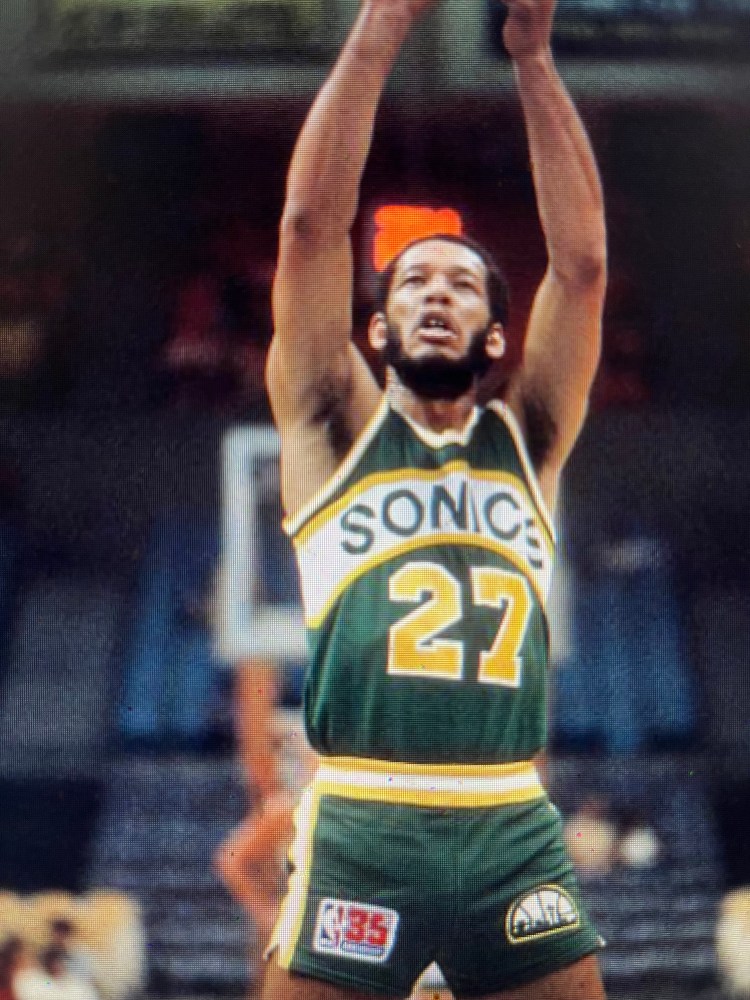
Johnson has been in the league for eight seasons, and his value is known. Asked if most general managers knew the terms of his contract back in June when the Celtics traded for him, the nameless general manager said, “Yes.”
The deal was made between Red Auerbach, president and general manager of the Celtics, and Ray Patterson, president and general manager of the Houston Rockets. The Celtics got Johnson. The Rockets got two second round draft picks.
Early this month the Celtics received a copy of Johnson’s contract. They screamed. Auerbach said he was never told Johnson had a no-cut provision. He said he was told Johnson was making half as much as the terms of the contract. The dispute was settled a week ago Tuesday in a six- hour hearing at NBA headquarters in New York. Johnson went back to Houston. The two draft choices did not go back to Boston. Patterson got to keep both of them, one of which he had already turned into a player in the 1977 college draft.
“We’re happy with the second-round draft choices, and we’re happy with the Commissioner,” Patterson said.
“Happy? Of course, not,” Auerbach said.
The decision by NBA Commissioner Larry O’Brien, while benefiting Houston, spread the blame equally. What it did not do was resolve any of the little nasties. Was Auerbach really misled by Patterson, or was Red just looking for an excuse to rid himself of a $300,000 liability? Once the Celtics had signed Dave Bing to play third guard and had slotted John Havlicek back at small forward, they had no use for Johnson.
Did Paterson simply forget to forward Johnson’s contract to Auerbach, something he was obligated to do within 10 days, or was he maneuvering to put the Celtics in an irreversible position? Once the Rockets selected Larry Moffett with the Celtics’ draft pick and Johnson joined the Celtics team, the deal was all but history. How do you tell two working players it has all been a mistake?
Did Russ Granik, legal counsel for the NBA, completely neglect his responsibilities when he monitored the deal in a conference call among himself, Patterson, and Auerbach? If so, it is an offense roughly comparable to a sentry falling asleep on duty.
NBA trading procedures are uncomplicated. First, make the deal. Said the head-shaking general manager, “Without question, one of the major items of discussion in a trade is knowing the liabilities, the contract, the payout, the terms in detail. That is a forgone conclusion.”
Second, telephone the league and set up a conference call with Granik, controller Kenneth Bailey, or deputy commissioner Simon Gourdine. This particular call happened to be with Granik. The head-shaking general manager continued. “Now you go through it all over again. Say you’re Boston, and I’m Houston. I say, ‘Russ, we’ve made a deal. We’re transferring John Johnson to Boston for two picks in 1977 and 1978. He says, ‘Okay, let’s discuss the contract. Red, you’re familiar with John Johnson’s contract. Two years at $150,000 a year. No cut, $75,000 cash, and $75,000 deferred.’ That’s how it’s normally done.”
The next two are routine. Each team sends a telex to league headquarters confirming the trade, but not necessarily giving the details of the contract. Some general managers are so cautious, they will go into detail all over again. Finally, the team transferring the live body prepares trade papers and sends them on for signatures and forwarding to league headquarters. That is when Boston received Johnson’s contract. Auerbach did not sign the trade papers. He accused Patterson of misrepresenting the terms of the deal.
Although O’Brien handed down his decision more than a week ago, there are still strong feelings, all of them hard. Sad Patterson: “I think Red vacillated in his mind what was misrepresented. I think he’s gone all the way from his first statement, where he said the contract was too lavish [and] which John Johnson would argue is not so, to something else. He said he never knew it was a no-cut, which is not a valid statement because he had already agreed to have John Johnson’s entire family move out to Boston, which you would never do unless you had a guy with a no-cut contract.”
Said Auerbach: “He’s full of shit. I never would have made that kind of agreement in my life. He never even brough that up at the trial (O’Brien hearing). They would have laughed at him.”
The six-hour hearing in New York was attended by the commissioner, the deputy commissioner, three members of the Celtics’ organization, three members of the Rockets’ organization, and Granik. O’Brien ruled Patterson “did not willfully misrepresent the terms of the Johnson contract,” and Boston “did not believe it was assuming a no-cut contract.”
In other words, what Patterson was saying was different from what Auerbach was hearing. Only in the NBA.
For his failure to forward the Johnson papers within 10 days, Patterson was not even charged with a technical foul. Auerbach, of course, could have contacted Patterson at any time during the four-month delay and demanded the papers, but he did not. He said he thought it was unnecessary.
“It’s his responsibility,” Auerbach said. “You take a man at his word. I’ve made deals for 31 years, and no one has misrepresented one before.”
As for Granik, who apparently failed to ask any of the mandatory questions during the conference call, his fate is unknown. Apparently, he is still legal counsel for the NBA, but he refuses to make himself available for questioning. Auerbach said the entire conference call with Granik and Patterson lasted for “four or five minutes,” and Granik’s memo of the call proved inconclusive. There is no record that the particulars of the case were discussed.
Johnson now plays for the Seattle SuperSonics. Lenny Wilkens, director of player personnel for the SuperSonics, gave up two second-round draft picks for Johnson. “Coach (Bob) Hopkins needed a player, and Johnson was the player he wanted,” Wilkens said. Thus did Patterson end up with four second-round draft picks for a player he did not want.
The Celtics ended up with nothing except a tiny hole in their future. The logic behind O’Brien’s decision to allow Houston to keep the two draft picks traded by Boston was that the Celtics were going to cut Johnson anyway. The flaw is that Auerbach was never permitted to dispose of Johnson as he desired. Certainly he could have made the same deal with Seattle.
In the NBA, a first-round draft pick is worth everything and a third-round draft pick is worth practically nothing. A second-round pick is a form of fluctuating currency. To a team like Seattle, which has two No. 1 picks and two No. 2 picks in 1979, giving away the lesser of the second-round picks was no sacrifice. To a team like the Celtics, somewhat aging and somewhat fading, a second-round pick could be of value.
The head-shaking general manager said Auerbach has a reputation for not paying close attention to detail. But he said Auerbach always deals “above-board, clean.”
He did not speak so kindly of Patterson. “With Ray,” he said, stumbling over his words in search of tact, “people [pause] question some of his [pause] methods, his means of reaching objectives. I’m trying to be nice.”
And there is the irony: Red Auerbach, the nice guy who finished last.
[Richman’s last line was written with the greatest of sarcasm. As the astute reader would have already noted, Johnson came out way ahead. He was a starter and a main cog on a SuperSonics squad that lost that season in the NBA Finals. In Boston, the aging C’s struggled through a rotten season (32-50) and missed the playoffs.]

