[In its June 1979 issue, SPORT Magazine featured a long interview with Red Auerbach, the outspoken president and general manager of the Boston Celtics and a true NBA pioneer who’d seen just about everything. Too bad the 1979 NBA playoffs, unlike today, had wrapped up by June 1. Auerbach’s comments on the NBA and its postseason may have been belated then, but it’s never too late today to revisit the thoughts of one of the game’s winningest coaches of all-time.
What follows is a condensed version of the Q & A to cut out some topics of relevance to readers in 1979, but not so much today. Get the magazine (baseball’s Dave Parker on the cover) if you want to read the complete interview. If not, here’s the good stuff, which starts with a long intro. So let’s get right to it.]
***
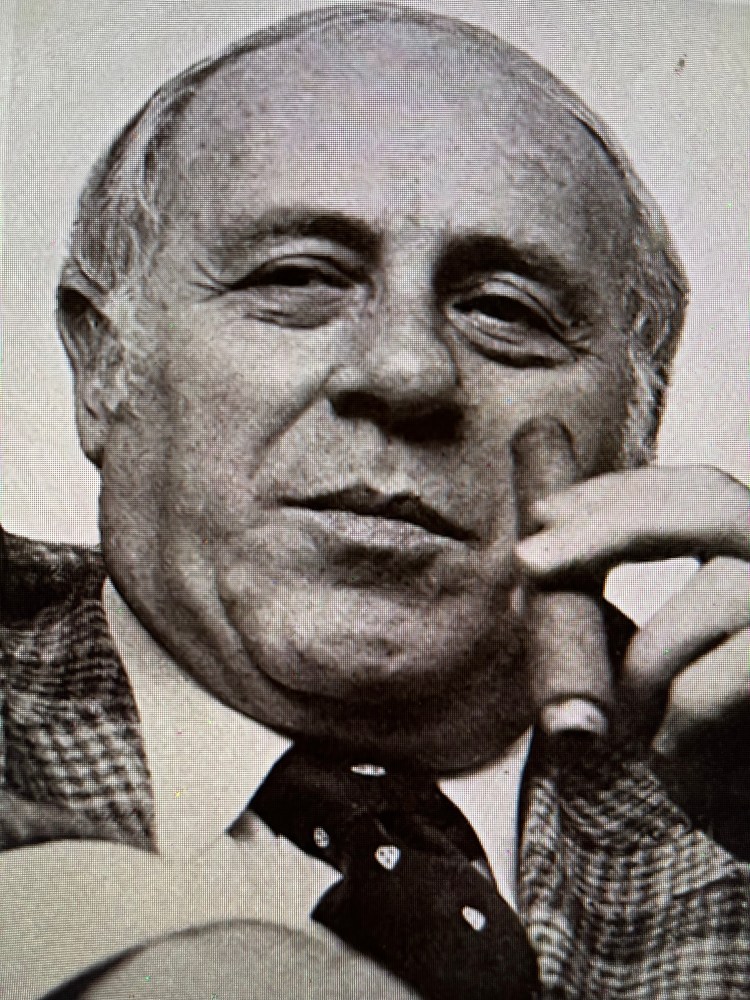
Not long after World War II ended and Arnold “Red” Auerbach was mustered out of the U.S. Navy, he heard that the new Basketball Association of America (later renamed the National Basketball Association) was forming a franchise in Washington, D.C. Auerbach tracked down the owner of the prospective team, Mike Uline, and fast-talked his way into a job as coach of the Washington Capitols. He did it even though his coaching background was limited to high school and military basketball. “I don’t know why,” Auerbach would say years later, “but Mike bought my brag.”
Uline also bought a winner. Auerbach’s team finished first in 1946-47 in the BAA’s Eastern Division with a 49-11 record. And though Washington was eliminated in the playoffs, Red Auerbach had proven he could keep big-league company. In the years to follow, as coach of the Boston Celtics, he won nine divisional titles and nine championships—eight of them in a row. When he retired from coaching after the 1965-66 season, he had a lifetime pro record, including playoffs, of 1,037 wins and 548 losses. He remains the winningest coach in pro basketball.
With Auerbach in his present position of president and general manager, the Celtics captured league titles in 1967-68, 1968-69 under coach Bill Russell, and in 1973-74, 1975-76 under Tom Heinsohn. And though Boston’s fortunes have slumped recently, Red is still highly respected for his canny basketball mind. Which is why—with the NBA playoffs at hand and so much recent discussion about the game’s decline in popularity—SPORT sent Phil Berger to Boston to interview Auerbach. In 1970, Berger’s book, Miracle on 33rd Street, provided the inside story of the New York Knicks’ 1969-70 championship season. Its candor resulted in the Knick management barring him the following season from the team’s locker room.
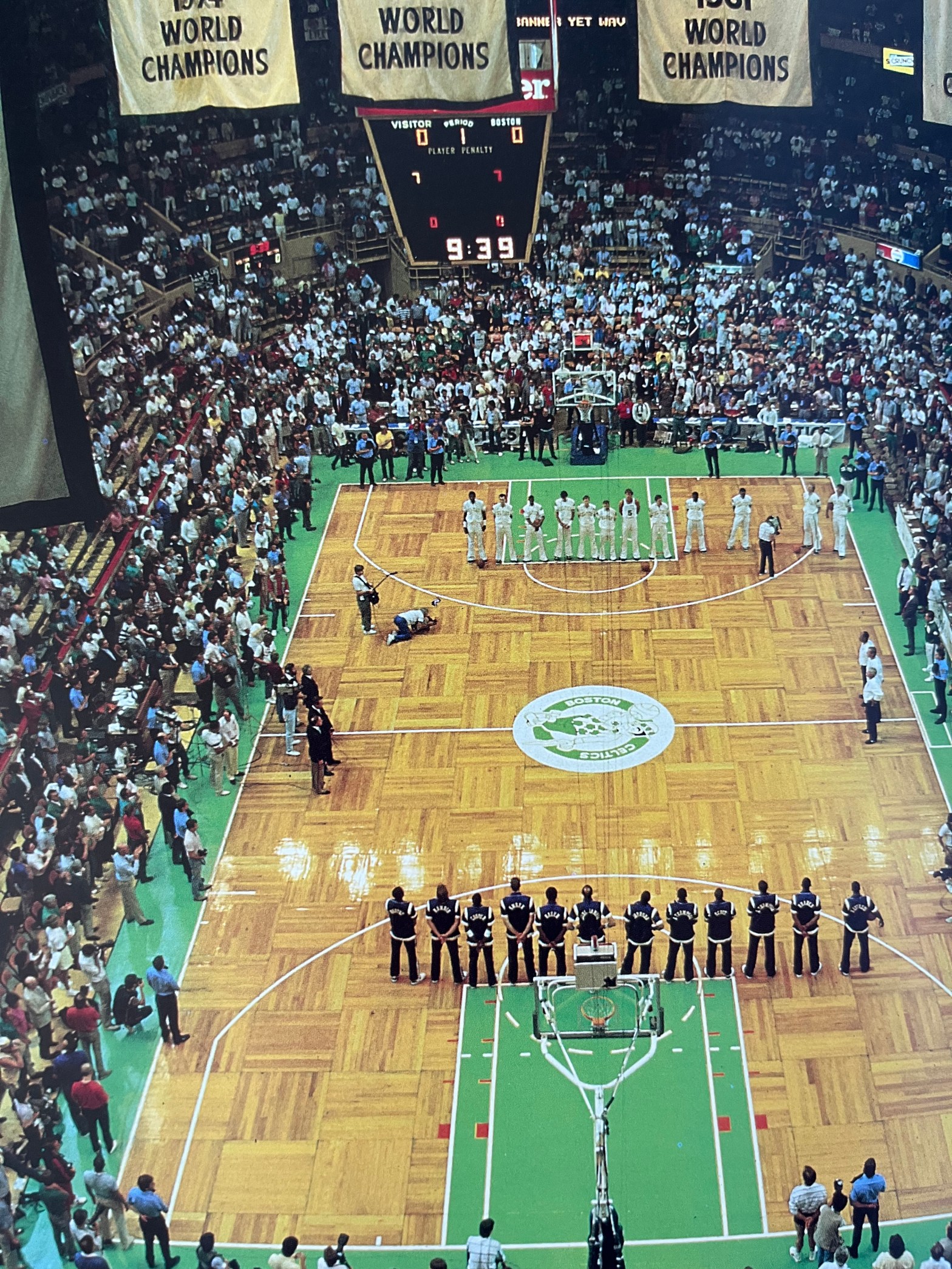
Auerbach’s office in the Boston Garden was the scene of the interview. The office is cluttered mostly with basketball memorabilia: photos, cartoons, news clippings, trophies. On the wall behind Auerbach’s equally cluttered desk is the faded green-and-gold Washington Capitols jacket that he wore in 1946. Also on display are hundreds of letter openers—Auerbach collects them—many of exotic origins and unique designs.
On the days when the Celtics are scheduled to play at home, Red sends out to a local delicatessen for cold cuts and invites in friends for a pregame nosh. On this March morning, though, Red contented himself with the familiar cigar and, when the tape recorder went on, he began to talk.
****
SPORT: As a coach, your record in the NBA playoffs is far and away better than anybody else’s. Is there a reason? Did you have a special philosophy?
AUERBACH: Well, I used to tell the guys: “Okay, you won the season and you had a heck of a year—unfortunately, it means nothing. It’s not like winning a pennant in baseball or winning an AFC or NFL division. All you’re fighting for is a homecourt advantage, which can be dissipated easily.” So you had to get ‘em ready for a different type of season.
SPORT: And what about the pressure of that second season—the playoffs?
AUERBACH: I always used to tell the players in pregame talks: “Hey, this is playoff time. I know you’re a little uptight. I want you to be uptight. Because I want you to think how uptight they must be. They must be shaking in their pants to come out and face you.”
But the thing is that when the games were close, we never panicked. I never got out the drawing board at playoff time and drew a play, that kind of stuff. Hell, if we didn’t know our plays by then, there’s no way you’re going to draw up a new play right at the last minute.
SPORT: Other coaches improvised plays.
AUERBACH: Sure. All of a sudden they’re doing something. See, we used to practice hairy situations. Twenty seconds left, the white team is two points ahead. We’d get a referee, a timer. And we’d go over situations. Is it a strategic time to foul? Should you try to steal the ball? How should you play the guy taking the ball in?
SPORT: What mistakes do coaches make in the playoffs?
AUERBACH: Well, doing new things. You know, try to change their pattern, change their matchups. Hoping that I would fall into the trap and react to what they’re going to do. No, I make them react to what I’m going to do. And if it doesn’t work, then I try to adjust while I’m on the bench. You get the feel of the game, the flow of the game, while you’re sitting there.
SPORT: Obviously, a team has to be mentally ready at playoff time. How did you do that in your pregame talks?
AUERBACH: After a while, a coach’s voice can get tiresome to players. They don’t pay attention. The key is to give the players one-fourth of the information that you think they should have, but make sure they know the one-fourth that you give them. So it’s up to me to determine what to give them. The mistake is to keep talking and talking. All you’re doing is confusing them.
Sometimes, to get their attention in my pregame playoff talks, I’d have a little fun. Like one day Bill Russell was drinking tea before a playoff game. I said, “That’s a good way to get ready for the playoffs. Russell’s showing you the proper way to drink tea—with his pinky out. The hell with the game.” See, I only used to take 10 minutes for my talks. And out of 10 minutes, I’d fool around for four or five. You break a little tension, then: “All right, Enough of that goddamn nonsense . . .” And I’d go into my talk.
SPORT: What did you emphasize in pregame talks?
AUERBACH: Primarily concentration. You’re not going to teach them at this point. It’s already been done. You’ve played a whole year. Now you say, “Okay, you know what to do. Satch [Sanders], just a little refresher. You’re guarding [Elgin] Baylor. Remember. You’re playing as tight as you can without the ball. Once he gets the ball, take a third of a step back, let him shoot over you if he has to. But when he shoots the ball, I don’t want you to get the rebound. All I want you to do is see that Baylor does not get a second shot.” Just one of two little things to each player as to what they got to keep fresh in their minds.
SPORT: Would the pressure of the playoffs ever get to you?
AUERBACH: Nah. See, I was lucky. When I coached, win or lose, I’d calm down after the game and unwind. And when the game was over, I was already scheming for the next game, remembering the mistakes and so forth. By doing what I always did, I would try to make the players feel that I wasn’t panicking. All I wanted to do is what we did to get there.
SPORT: What about the pressure on the players?
AUERBACH: Well, it’s the same in any sport. You’re playing for all the marbles, and sometimes guys try too hard and forget that basketball’s a game of touch. Like, for example, we had Bill Sharman. To me, he was the greatest shooter I ever saw, probably one of the greatest of all time. We had a playoff game. He shot 2-for-21. And one of those was a breakaway layup. So he really got 1-for-20. But I kept telling him, “Sharman, if we lose the ballgame, we lose the ballgame. But you’re the best shooter in the world. So shoot the ball. If you miss, so you miss and we lose. But we lose it with our best.”
SPORT: Do you remember taking advantage of times when the opposition was tense?
AUERBACH: Oh sure. See, when I coached, I always had every ballplayer tell me if he felt there was a good situation out on the court. Like if his man was overplaying him, we could backdoor him, things like that. Or I’d say, “Hey so-and-so is knocking himself out. He’s jumping all over you. He’s overreacting. Before you make your move, fake, and he’ll foul you every time. Let’s take it to him.” Simple as that.
But you can’t do that till the game is in progress. You see, there’ve been a lot of great bench coaches. By a bench coach, I mean a guy that can get in the flow of the game and make adjustments as the game is progressing.
SPORT: You consider yourself good at that?
AUERBACH: Yeah, I do. I thought I was the best.
SPORT: Did you ever get a sense of the opposing coach becoming unglued?
AUERBACH: Sure. There were a lot of coaches, without mentioning names, that I used to drive crazy. They’d say, “I wonder what that goddamn Auerbach is doing? How’s he going to work on those referees?” They’d spend the whole pregame worrying about what the hell I was going to do instead of getting their teams ready for the game.
SPORT: Their players told you this later?
AUERBACH: Sure. A lot of them. I’ll tell you the secret of coaching, especially in a playoff situation. You gotta analyze the personalities on the other team. And you gotta analyze the referees. As soon as you find out who’s refereeing the ballgame, your pregame talk has to gear itself to that. Referees have certain eccentricities, things that they like. For example, a guy like [Sid] Borgia, who was one of the great referees of all time, had complete control of the game, but he liked to see the guys play. So I’d say, “You got Borgia out there. You’d better be real tough under the boards . . . he’s not going to all the chintzy stuff.”
And then there were some referees that were refereeing for TV. They always would make the unusual call to attract attention. And I’d say, “Something’s going to happen out there with this guy. He’s going to call some crazy thing. Now don’t blow your cork.” Sometimes I’d blow my cork. Then it’s different.
Now you don’t play your whole game for the referee, but up to a point, you gotta take advantage of the situations. Like some refs give the driver the edge over the defense. So you say, “When this guy’s the inside official, move the ball and go to the hoop more. He’ll give you the foul.” And there are a lot of refs, when you take a jump shot and you jump into the guy, they’ll always call it on the defensive guy. Some guys would call it on the charging guy. You got to know who calls what.
SPORT: Let’s change the subject and talk about the state of the game today. There’s a feeling among the press and fans that pro basketball is declining as a popular attraction.
AUERBACH: Let me tell you something. You know what bothers me? It bothers me that a lot of people in the sport—coaches, players, GMs—they talk negative. Saying the game hasn’t progressed. You know, those guys would be lucky if they were making $12,000 a year today if it wasn’t for basketball. And instead of helping the game, they go around knocking the game.
SPORT: What would you do to improve the pro game? You still prefer man-to-man to zone defenses, right?
AUERBACH: Yes. Because it gives everybody a chance at self-expression. Because if you’ve got 24 seconds, and a team plays a good zone. It’s hard to crack a zone in 24 seconds. I would be more inclined to lower the shot clock to 20 seconds and be stricter on the zone.
SPORT: The National Basketball Players Association has suggested legalizing the zone and increasing the shot clock to 30 or 40 seconds.
AUERBACH: See, there are two ways to do it. If you permit the zone, then you’ve got to go up to 30 seconds because it takes a little longer to break a zone. But if you are very strict on the zone situation, then you can cut it down to 20 seconds, you’d have too much stalling, too much standing around, too much playing catch to break the zone. You know, like the colleges.
I want more action! I want teams to get the rebound, throw it out, boom, boom, boom. I want a breaking type of game. Everything you could do to get that hustling, scratching, clawing type of running game will aid our game.
When you see a team like L.A. take ball downcourt and try to penetrate, that Dixon, Nixon [Norm Nixon]—whatever his name is—if he can’t do it, all he does is throw the ball up into the air to the big guy, and [Kareem Abdul] Jabbar gets the skyhook. It becomes stereotyped.
SPORT: A lot of people say that the pros have degenerated into a tedious run-and-gun game.
AUERBACH: I’m talking about a planned fastbreak game. If there’s no shot, you go to a play or a pattern—the kind of game the Celtics used to play. And that includes defense. People compare pros to the colleges and say the defense in the pros is not as good. That’s asinine. The defense in the pros is maybe three, four times as good as in college for the simple reason the pros are better players. In college, they play defense by holding the ball. That’s what keeps the score down, not good defense.
You’ve gotta educate the people to watch the pro game so they know what they’re seeing. I think that TV—I’m not talking about all TV—is not focusing on the subtleties. Take a kid like Don Buse. He’s a cog in that Phoenix team. All you’ll read about is Paul Westphal—who is a great player—but what about Buse’s sacrificing on defense? See, if a man plays intense defense every second he is out there, it’s got to hurt his offense. For example, a guy that’s averaging 25 points a game, if he worked like a dog on his defense, his average would go down to 20. But his team might win more ballgames. That’s what I’m trying to get these teams to do.
SPORT: Why aren’t the players, who are being paid tremendous amounts of money, doing that on their own?
AUERBACH: It just doesn’t work that way. In any sport. Look at Reggie Jackson in baseball. Is he going to make that money ‘cause he’s a helluva fielder? When I was the coach and GM of the Celtics, I determined the salaries of my players by their contributions to winning. Today, unfortunately, the courts came in to basketball, and they’ve done more to ruin the game. And all sports.
SPORT: You’re saying that by giving a player the right to become a free agent, the courts have made him an individual who is just looking out for himself and to hell with the team?
AUERBACH: It’s not total. It’s just that there are more of the ones who aren’t dedicated. Years ago, you had to make the team every season. You didn’t put out—boom, boom—you were gone. Nowadays, they don’t have to make the team because of the no-cut contract. So all of a sudden, they become smart. They get in shape at their own pace. It affects their offseason attitude, too. If you gotta make the team every year, you work like hell.
SPORT: Now what’s happened is that your kind of the purse-string control is disappearing?
AUERBACH: Right. Name me some good defensive men in the league that are not high scorers and yet make big bucks. I mean, some of them do, but on the whole, they don’t.
Years ago, say a player got $40,000. The coach got $30,000. Today, a player may get $400,000, and the coach $75,000. It’s such a big difference. Now, if a guy’s got a five-year, no-cut contract making $400,000 a year, and he gets mad at the coach—he’s not getting enough playing time—he walks around saying: “Hey, why are you bugging me?” What can a coach do? Years ago, you’d fine him or throw him out on his ass or suspend him. Now, you can’t do it. The courts don’t let you do those things. You got arbitration. You got the Players Association. You got no protection on the other end.
But eventually, it’s got to be changed. I think that, little by little, it’s starting to change. The contracts are not for as long, and they’re for not as much money. And after a while, some of the owners will say, “The hell with that dog. I’ll eat that contract. I’m not going to put up with it.”
SPORT: Isn’t that what the Celtics did with Marvin Barnes?
AUERBACH: Marvin Barnes is an intelligent young man—he really is. And Marvin Barnes, I also feel, is easily led. He wasn’t associating with the right people. He didn’t put his priorities right. When basketball is paying for everything, that should’ve been his first priority. But he let himself get out of condition.
SPORT: Would he literally be too tired after a few minutes on the floor?
AUERBACH: Sometimes. On different occasions, sure. Sometimes he’d come in and say to [former player-coach Dave] Cowens, “I don’t feel like playing. I don’t feel good.” You don’t know whether it’s a hangover or what. All I know is it happened too many times. He’d do it in practice. He wouldn’t show up.
SPORT: Why have the Celtics declined over the last few years?
AUERBACH: You go in cycles. When things happen, everything goes wrong. We were on our way to building up a good ballclub, and what hurt us was the transition of ownership. We were on our way to a helluva ballclub.
Now I did it once before, when Russell and Sam Jones retired, I built up a ballclub in a year and a half and won a championship. People say, “Well the Celtics made some good drafts but they made a lot of mistakes.” They don’t realize that some of those drafts were 15th choice. How many 15th choices make it?
SPORT: Let’s talk about Larry Bird. Does the fact that he shies away from the press suggest that he may have difficulties in the pressurized world of the pros?
AUERBACH: Well, I talked to him, and he handles himself exceptionally well. I was pleasantly surprised. The fact is that he is shy, reticent. Show me a great athlete who is 20 or 21 years old and he likes to be bugged 24 hours a day.
SPORT: What do you like about him?
AUERBACH: Well, his whole vision of the game, his whole approach to the game. He comes to win. He’s a great passer. Great shooter. But he’s not a hungry shooter. And he’s a tough kid. He’s just a great player.
SPORT: Bird can just about get what he wants from you.
AUERBACH: No, you got it wrong. There’s a limit. Suppose a guy comes over to you and says, “I want five million dollars a year.” I say, “I can’t do it.” Well, is somebody else gonna give him five million dollars a year? If Boston cannot sign him, he doesn’t know where he’s going, then they [the team that drafted him] have him over a barrel because he doesn’t have any bargaining power anymore.
SPORT: Assuming you sign Bird, what’s ahead for the Celtics?
AUERBACH: We’ll be back.

