[After Pistol Pete, there was Johnny Gun. Most today remember Pete Maravich, but far fewer recall Johnny Neumann. Understandably so. Maravich had a phenomenal college and, at times, pro career, while Neumann excelled in the college game for one season, went pro, but never lived up to the hype.
Still, Neumann is worth remembering so many years later. Not to parse his career numbers, but to track his semi-tragic story. Neumann’s worst enemy was himself. But Neumann never quit on the game or his jump shot. Picking up on this theme, the great Mike Littwin visited Neumann in late 1982 during his improbable gig as coach and general manager of the minor-league Maine Lumberjacks. His visit, published during December 1982 in the Los Angeles Times, also ran in May 1983 in the Basketball Digest. That’s where I happened upon the story. Neumann, like Maravich, passed away way too soon. In any case, here you go . . . Johnny Gun.]
****
Stacey Neumann is at the wheel of the car, a loaner and a real clunker. It’s cold outside, Maine-in-December cold, and the heater is providing more noise than warmth. Stacey is vainly attempting to blow life into her hands all the while lamenting her days here.
“I remember,” she says wistfully, “spending Thanksgiving on the beach when we lived in Playa Del Rey. I’ll never forget that.”
Or this. No, never this.

The road Johnny and Stacey Neumann, a pair of basketball gypsies, have traveled together has taken them most of the way around the world and back again, a couple of times. Usually, they traveled first class; that was the only way Johnny Cool ever thought to learn. His philosophy on life can be boiled down to one sentence: Why settle for a car when you can own a Ferrari?
But who would ever have thought that road would lead to Bangor? Certainly not Stacey. She signed with Neumann’s Traveling Band back in 1974 as a bright-eyed, 17-year-old kid out of Salt Lake City, where Johnny Cool happened to be practicing his jump shot at the time.
And the times she has seen . . .
“There’s the restaurant,” she says, still at the wheel. “Biggest salad bar in the world, they tell me. Am I going too fast? This is all on the Bangor tour. That white stuff you see is snow. They don’t have that in California, do they? And here is our Forum. Do you like it?”
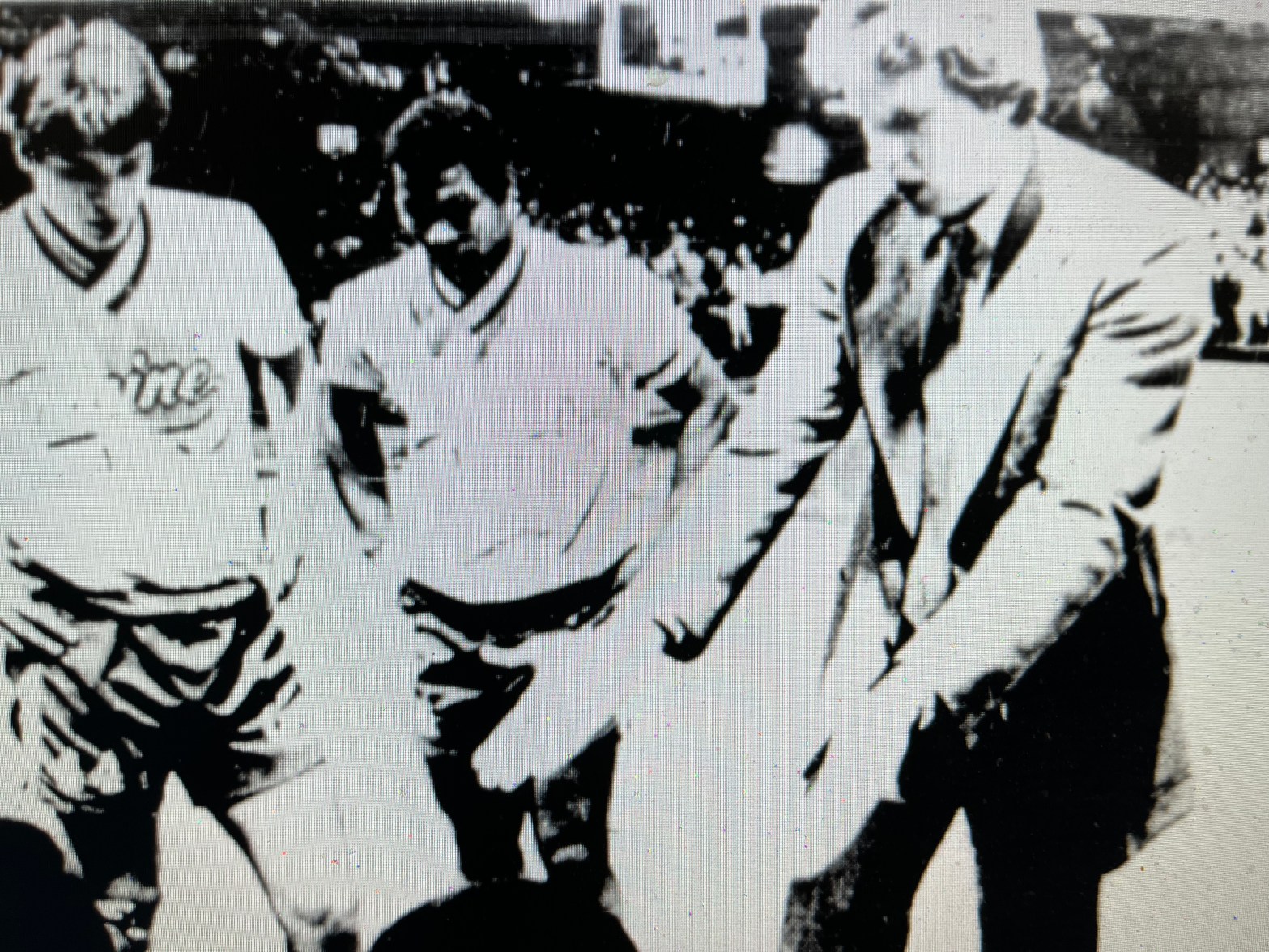
It’s the Bangor Auditorium, home of the Maine Lumberjacks of the Continental Basketball Association, pro basketball’s minor league. A life-size statue (three stories high) of the legendary Paul Bunyan, who supposedly was born in Bangor, stands outside the arena. Inside stands Johnny Neumann, the Lumberjacks coach and general manager, also life-size, also a legend.
Ah, the incongruities. Johnny Cool in Bangor. Johnny Cool a coach. Johnny Cool a general manager. “Guess you never thought you’d see me here,” Neumann says. “Well, you gotta be somewhere.”
But surely not in Bangor. Not where the only action in town is at the Holiday Inn. On the other hand, Bangor is perfect, the place where Johnny Neumann, after all these years, can come in from the cold. It’s a hard life here. It’s time, at 32, that Neumann meets up with the hard life before it’s too late.

Introducing Coach Neumann.
“He’s the last person I ever thought would be a coach,” says Bob Bass, general manager of the San Antonio Spurs and once Neumann’s coach. “Now he’s going to see what it’s like to coach a player like him.”
Of course, there were no players quite like Johnny Cool. “They broke the mold,” says Jerry West, another Neumann coach.
Here’s one view of Coach Neumann. He was playing for the Lakers at the time in a game at Portland. This one fan was riding him the whole game, wondering where the fair-skinned Neumann picked up his “icebox tan.”
Neumann, who played off the bench that season with the Lakers, was in the game at the end, Los Angeles leading by two points with the ball and the clock showing under 24 seconds to play. But instead of just holding the ball, as West instructed, Neumann let fly from about 25 feet. “Count that, you bleep,” he yelled up into the stands at his heckler as the ball slid unmolested through the net. Says Neumann: “I guess I could be pretty tough to coach at times.”
Some background.
We first met Neumann in the winter of 1971. He was a sophomore at Ole Miss and averaging just over 40 points a game. Johnny Gun, successor to Pistol Pete. Sports Illustrated went there to take a look and told the world about Johnny Cool and his girl Slick, his first wife.
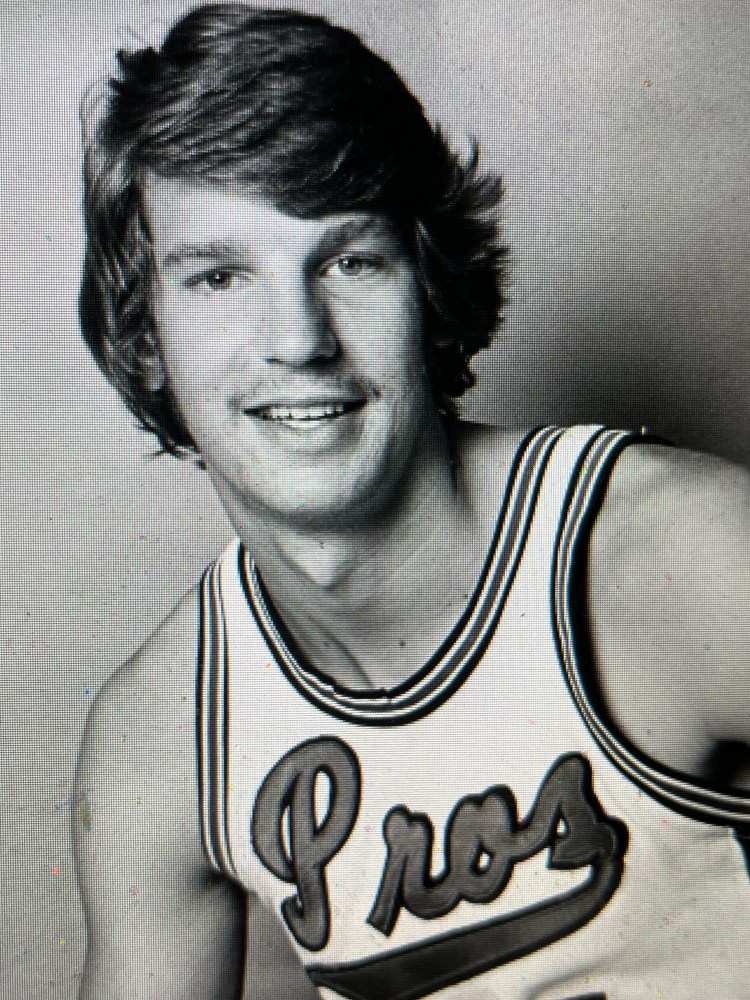
A year later, his father recovering from a heart attack, Neumann left school to turn professional, signing up with the hometown Memphis Pros of the now-defunct American Basketball Association. Before he had ever fired a shot in anger, Neumann was fined $5,000 for refusing to play in a rookie game against the Indiana Pacers. That’s what it said in the papers, anyway. The team never collected the money. And Neumann learned a valuable lesson: If you can play, you can get away with murder.
The problem was Neumann, while a great talent, a 6-6 guard who could shoot over people and pass around them, was never a great player. He was always too fat or too lazy or too flaky or too messed up. Or, as Neumann puts it: “I was a headcase.”
In pro ball, it’s “have bad head, will travel.” And so he did. From Memphis to Utah to Virginia to Indiana to Virginia to Kentucky to Buffalo to Los Angeles to Buffalo to Indiana in nine seasons. Seems like he bought a different car in every town. Once he owned a Ferrari for which he was paying $650 a month and another $1,200 a year in insurance while living on $60,000. Lost a wife in one city, found one in another. And then there was bankruptcy. But always there was basketball.
His second chance at Indiana—people were always giving him a second chance— Neumann called the coach, Slick Leonard, a particularly nasty name, and that was the end of his NBA career. But not the end of his travels. From America, the Neumanns followed the bouncing ball to Italy, then to Germany, back to San Francisco for a year of broadcast school, then back to Germany. And now, Bangor.
Bangor?
When basketball is all you know and you have a reputation like Johnny Neumann’s, you take what you can get. On the advice of Stan Albeck, another former coach, Neumann wrote to the CBA and said he was looking for a job. Bangor, coincidentally, was looking for a coach.
“There were a lot of people who recommended him,” said Frank Lennon, then the general manager. “They said he knew basketball, and that we should give him a chance.”
It’s no wonder that people are willing to give Neumann a chance. He’s so damn likable. He can laugh at himself, even when he is being serious. “My only regret,” he says, “is that I wasted all that talent. I was a bona fide blue-chipper. The reason I didn’t make it was because of her.”
He points to his wife. “The reason you didn’t make it,” Stacey shoots back in fun, “is because of your big mouth.”
Like the time on the plane he told Joe Mullaney, another coach (was it in Utah or was it in Kentucky?) that he’d never seen a tie that ugly. Neumann didn’t play that night.
Neumann can laugh, recalling the good-old, bad-old days. “I wasn’t really such a bad guy, you know,” he says. “I played for three teams twice. People took me back. I couldn’t have been that bad a guy.”
Neumann was not a bad guy. A character, West calls him. “A good kid who needed a little discipline in his life,” says Al Bianchi, another former coach.
Not a bad guy, just one who never understood discipline, who never learned to respect authority, who never thought that work and play could be the same thing. As Bass recalls: “Neumann was always open. Never been covered yet. You know the expression, ‘If they wanted you to pass the ball, they would have made it oblong like football.’ That was made just for him.”
Of course, there was the night when, stung by criticism that he shot too often, Neumann shot the ball twice while breaking an ABA assist record. “Everything was so easy,” Neumann says. “Even when I was fat, really fat, I could still keep up with those bleeps.”
Once he was a few pounds overweight, and Jack Kent Cooke, then the Lakers owner, had the idea that West should tie a five-pound roast to Neumann’s waist so Neumann would know what an extra five pounds could do to a player.
This is coaching material?
“I’ve got a lot to give to the game,” Neumann says.
One thing is apparent, he’s willing to start at the bottom. The CBA is low on salaries (Neumann makes about $10,000), long on bus rides (14 hours all night from Albany), longer still on dreams (where every player believes he can make it to the NBA). The CBA is where the coach has a player living with him in his one-bedroom apartment and asks his wife if they might possibly fit in another. The CBA has a team payroll of no more than $45,000 and per diem of $15 a player. The CBA is a funny-rules league, where the NBA, which is a sponsor, experiments. In the CBA, you get a point for each quarter won and three points for winning a game. The CBA is the bushes.
Throw Bangor into the equation, and you’ve got yourself quite a winter’s tale. “People weren’t meant to live in this kind of weather,” says Charles Jones, the last of the Jones basketball family that includes brothers Caldwell and Major. “I remember one time where the sun didn’t come up for three days.”

Jones wants to join his brothers in the NBA, so he does what he can. He plays for Bangor, which is affiliated with Boston and Washington. Twenty-nine former CBA players have made it to the NBA. Jones wants to be a statistic. So does Skip Dillard, the ex-DePaul guard, who came to Bangor about 10 pounds overweight. The list goes on. Billy Ray Bates made it out of Bangor.
Maybe even Johnny Neumann can. But it won’t be easy. It never is where Neumann is concerned. On the weekend, a reporter stops by to take a look, the general manager is fired. Neumann reluctantly adds that position to coaching, and Stacey (“Are they crazy? I don’t know anything about this.”) becomes assistant general manager.
“I’m always in the middle of it,” Neumann says. “Why does it always happen to me?”
Well . . .
Stacey tells this story. Neumann was playing ball in Venice, the one in Italy, and the fans were on him. One fan yelled something obscene about Neumann’s mother. Neumann, at the foul line, pulled up his shorts, kissed one hand, and planted the hand on his slightly exposed derriere. The Venetians, those that were waving flags during the game, broke their flag sticks, and came after Neumann. He and Stacey were escorted off the court by police and taken out the back door and set sail on one of Venice’s canals.
Things do happen to Johnny Neumann. Legend has it that once in Indiana, Neumann, upon entering a game, tore off his warmups only to find no shorts underneath. Supposedly, he got a standing ovation.
That’s the same Johnny Neumann who, while dribbling the ball upcourt, would shout over to the press table, “Watch this, I’m going to take this guy left and burn him.” And he would.
Life has never been dull with Neumann. Even in Bangor. General manager Neumann has to cut a player. A team can have only 10, and only eight of those can travel. Money is the chief consideration in the CBA, money and survival. He calls up the player, who asks Neumann if he can stay one more day. Why? He just washed his clothes, and it will take until morning until they’re dry.
“I want to be the kind of coach who thinks of his players as people, not numbers,” Neumann says. “I care about guys. I care what happens to them. I know what it’s like to play for people who don’t care about you. These guys all have a dream. And I know about dreams, too. I want to help them make it.”
He has a dream—to get back to the NBA—as a coach this time. Neumann is still getting paid by Indiana, but the money won’t last forever. So he’s learning to coach. “If I was coaching me,” he said. “I would have busted my bleep.” Borrowed this idea from one coach, that from another. He fines players. Johnny Neumann fines players. He has curfews. Johnny Neumann has curfews. He practices them—hard. Johnny Neumann practices them hard.
But he’s still the old Johnny Cool. He’s got a player named Schweitz, a gunner who took 30 shots one night. “You know I’m not going to pull a guy for missing a couple of shots,” he says.
At practice, he screams at his players. “You’re slower than bleep,” he says to one. Later, to the same player, “That’s the way I know you can play,” and gives him a pat on the rear.
Finally, game night. They play a 44-game schedule, from December to March. The Lumberjacks, who have been in the league four years, have always been losers, and they lost the first four in the Neumann era. “Three on the road,” Neumann explains. “Tough to win on the road.”
It’s a Friday, and the crowd for the Rochester Zeniths is small, maybe 1,000 people. They’re giving away a video cassette, and when the winning number is called, one loser yells out a barnyard epithet. Everyone hears him, and most laugh.
But it’s a good night. Dillard is playing his first game and is running the offense. Jones is in his first game and blocks five shots, Caldwell-style. Neumann dressed in a hand-tailored gray-pinstripe suit he bought in Italy, is up the entire game, screaming until he is hoarse. Drawing plays on his very own chalkboard. Coaching.
The Lumberjacks win, and Neumann is ready to celebrate. Instead, the team owner comes up from Boston, and the general manager is fired.
It’s always something.
“We’re getting there,” Neumann says. “We’re going to try to have some fun . . . if we can make it through the winter.”

