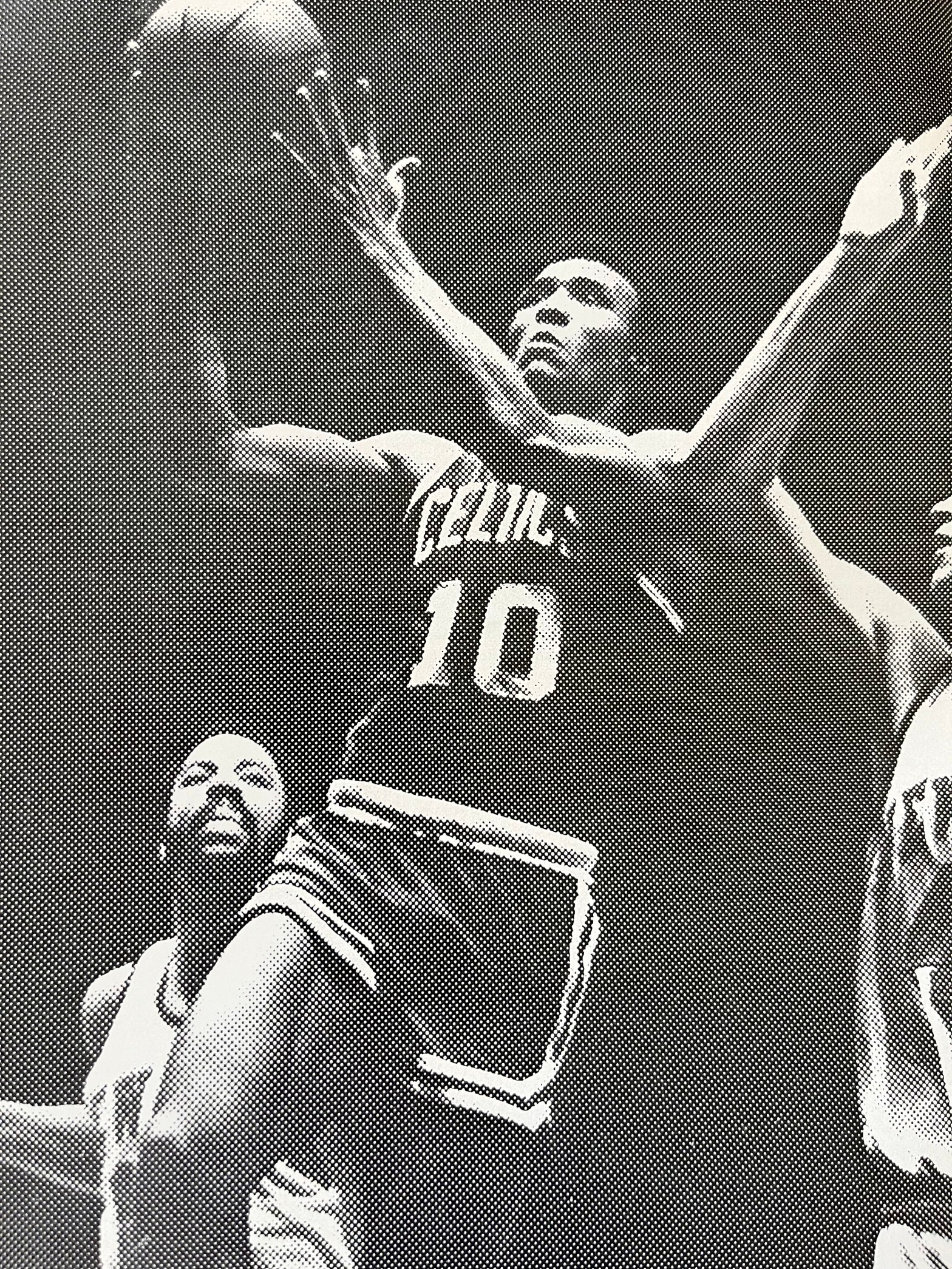
[The NBA great Bob Cousy published a book in the late-1980s titled Cousy on the Celtic Mystique. It was Cousy’s attempt, with a big editorial hand from the Boston Globe’s Bob Ryan, to explain why the Boston Celtics were the most-dominant of the NBA’s then-23 franchises. In the book’s prologue—and specifically referring to the shrewd Red Auerbach, mastermind of the Celtic mystique—Cousy wrote:
“The proliferation of retired numbers speaks to the very heart of Celtic mystique . . . Auerbach has never put this down on paper. He has never said, by honoring a Don Nelson, I am trying to impress fans in New Orleans or Keokuk that by choosing to root for the Celtics they have chosen an elite organization. That would never occur to Red. But that is exactly what has happened.”
An elite organization that Auerbach populated with a mix of good-to-great players who viewed basketball as a team sport and were willing to fill their defined roles in Boston. This all-for-one willingness made the Celtics a greater combined force than their individual parts.
But not all of Auerbach’s shrewd acquisitions were Celtic-ready from day one (or fit the Celtics’ mold after all). That included the late-great Jo Jo White. Coming out of college, White wasn’t a natural fit for the Celtics. But time and Auerbach would prove to be on his side.
In this article, published in the January 1977 issue of the magazine Black Sports, the aforementioned Ryan looks back on White, then in his eighth season in Beantown. He writes about White’s early critics and how he survived the sniping to become an all-time Celtic great. A quick admission. I saw Ryan’s byline and imagined his humorous, always insightful prose. This article isn’t quite what I’d expected, especially the lack of good one-liners and giggles. But, for those who loved watching number 10 zip around the parquet of smoke-filled Boston Garden, the article is worth revisiting . . . and remembering.]
****
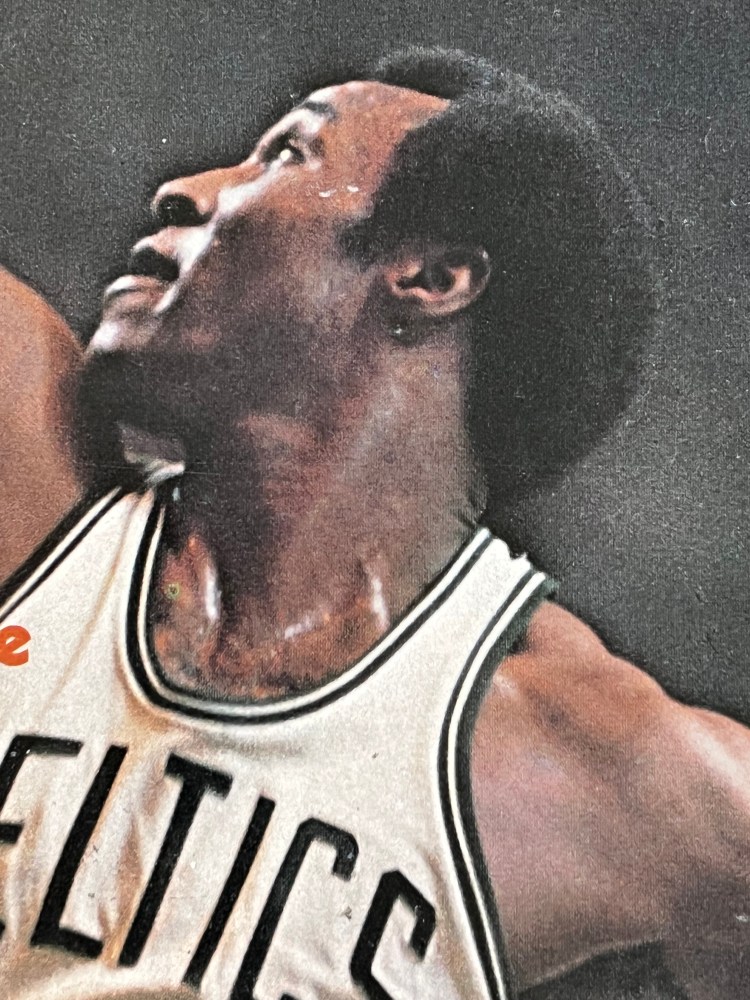
The house is a handsome brick Tudor. Stylish his and hers Mercedes are parked in the garage. It is located in Brookline, the perfect Boston suburb. The quiet neighborhood offers a seclusion unequaled in many so-called “exclusive” suburbs located many miles from downtown. In good traffic, Jo Jo White is just 10 minutes away from his place of employment.
The living room is tastefully furnished in cleverly meshed green and orange. An exotic white wicker bar stands in one corner. A number of plants decorate the room. Everything in the room, in the entire house, speaks of quiet class.
Ostentation is not Jo Jo White’s manner. His entire playing style is based, he says, on one principle: “Keep it simple.” It probably explains why Jo Jo has never bothered to dunk in an NBA game. White is content to take the two points in a more conventional fashion: Run, jump, release, arc, follow-through. Two.
For an NBA guard to attract attention he must, almost as a rule, be flashy, either on or off the court. Walt Frazier is an excellent basketball player, but it is his alter ego, Clyde, which has made Frazier a folk hero. No one soon forgets Nate Archibald zig-zag the length of the court for a spectacular twisting drive. Pete Maravich makes incredible passes and even more incredible shots. Fred Brown make shots from distances and angles which seem inhuman.
White, however, just moves to open spots with the grace of a panther, occasionally exploding to the basket for a well-executed drive. People tend to forget he’s out there until the final stats are in, and White has scored 25 points and has handed out eight assists.
Battling for recognition with flashy rivals is tough enough, but scrambling for attention with talented and taller teammates is even more difficult. It therefore came as a surprise to White when he was voted Most Valuable Player in last season’s NBA playoff final against Phoenix. “The award meant a great deal to me,” White says. “Ever since I’ve been with the Celtics, I’ve had to adjust my game. In the beginning, I was asked to score as much as possible. Over the last few years, I’ve tried to become the team quarterback, which is a big job.
“You’ve got to be aware of what’s happening on the floor at all times. You’ve got to know who is hot, who likes the ball in what spot, and when you’ve got your own shot. It wasn’t until the last couple of years that I felt comfortable in that role, and I felt good that I was able to help the team as much as I did in the finals.”
One of White’s major adjustments was to Charlie Scott, his backcourt partner. For six years, White had teamed with the mild-mannered, defense-oriented Don Chaney. When Chaney played out his option after the 1974-75 season and jumped to the ABA Spirits of St. Louis, general manager Red Auerbach acquired fast-talking, offense-oriented Charlie Scott from the Phoenix Suns. The matchup, on paper at least, was not ideal. It bore a striking resemblance to the linking up of Frazier and Earl Monroe. People openly questioned if White and Scott could play together, especially since they had not exactly been bosom buddies when they were teammates on the 1968 Olympic basketball team.
Complicating matters was the fact that Chaney and White had been close friends. “We would constantly visit each other’s house or call each other on the phone to talk basketball,” White recalls. “On the floor, we had a communication that couldn’t be replaced. Each knew what the other was thinking on both offense and defense. Neither of us had to worry about gambling on defense, because you knew the other guy would back you up.”
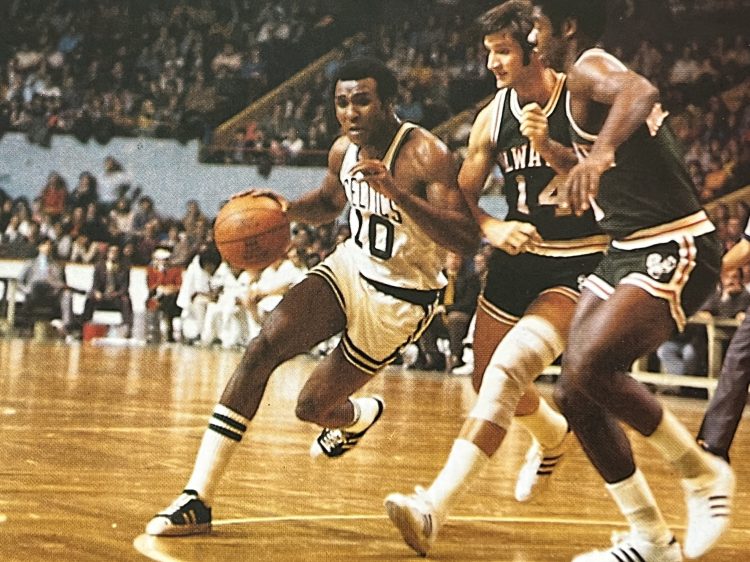
When Scott arrived at the Celtics’ training camp, White went out of his way to make him feel comfortable. “We were going to have to play together,” Jo Jo explains, “and I feel I want to know everything I can about my teammates. A lot of teams don’t operate that way, but I feel it’s one reason for the Celtics’ success. Nobody gets on anybody here. People say constructive things in private, not destructive things in public. It’s helped us win, although talent and hard work have had something to do with it, too.”
Thirty years old, White ranks as the second man in seniority on the Celtics. Only John Havlicek has served longer. This qualifies White as a spokesman for the Celtics’ way of doing things, which strikes some people as ironic. Not too long ago, he stood accused of not being a true Celtic at all.
The story broke in January 1973. Boston was on its way to a spectacular 68-14 season, but there had been some grumbling among players on the team about how White was playing. Some players complained that he held the ball too much and didn’t pass enough, especially as a middle man on the fastbreak. Others cited White’s alleged breach of proper bench etiquette. They said he pouted when removed from games, and he wouldn’t budge from his seat when substitutions were being made. The situation came to a head in Atlanta one night when then-Celtics’ TV broadcaster Guy Mainella implied on the air that the club was thinking about trading White.
There were undeniable problems on the team. But both Red Auerbach and Tom Heinsohn denied that Jo Jo was on the trade block. Auerbach and Heinsohn, in fact, had always attempted to shield White from critics and had never criticized him for anything. Although trade rumors were apocryphal, the hint of trouble between White and his mates was accurate. White came away from the whole thing hurt and confused by all the furor, especially since the team’s record at the time was 31-7.
“I was playing my butt off,” he recalls, “and the team was having a great year. I just wanted to know, ‘Why me? Why were people on my back?’”
The incident might have had more effect on White’s subconscious than on his conscious mind, but it’s clear that he was forced into some soul-searching. Almost immediately his game did improve noticeably. Some say, and not without justification, that he crossed over the line from stardom to superstardom after this incident. “It did make me want to play hard harder,” he admits. “It’s not that I felt I had anything to prove . . . it’s just something I can’t even put into words.”
It was the first and last public crisis in White’s professional career. He survived it, just like he has survived every change in role thrust upon him during his seven-year Celtic career. Satisfaction about being able to prove his ability, to adjust, was one reason why Jo Jo treasured the playoff MVP award.
But it wasn’t the only one. “It always seems to me,” Jo Jo points out, “that no matter what a guard does, he is overlooked in favor of the big men. I was glad to get the recognition for the guards. They can’t play the game without us.”
The game which probably nailed down the award for him, the historic triple-overtime fifth game against the Suns, was perhaps the best indicator of what Jo Jo means to the Celtics. With Scott, Dave Cowens and Paul Silas all fouled out, and with John Havlicek limping around ineffectively on a bad foot, White took charge. He hit seven of his last eight shots and scored 33 points in all as the Celtics pulled out a 128-126 victory. For one glorious afternoon, Jo Jo White was singlehandedly upholding the Celtic tradition against the aggressive Suns.
White, who prides himself on his conditioning and is the reigning NBA Iron Man (he hasn’t missed a game in over four years), logged 60 minutes of playing time in the game. “I kept telling myself to hang on,” he laughs. “I figured that if I was tired, I knew damn well they were tired.”
He has long since achieved his stated career goal, which was to be known as a consistent player. “Anybody can have a good game once in a while,” he reasons. “The outstanding players are the ones who are versatile, durable, and consistent. I never, ever want it said that I had two bad games in a row.”
It’s highly unlikely anyone has ever said that, dating back to Jo Jo’s playing days at Buder Recreation Center in St. Louis. By the time he was 11, White was spending so much time at the center (until after midnight some nights) that his father, a Baptist minister, was more than mildly suspicious about his sons whereabouts. The Good Reverend White had already raised six other children (“You’ve heard of second hands,” jokes White. “I had seventh hands”), and he found it hard to believe that all Jo Jo was doing until midnight was playing basketball.
Rev. White had his mind put at ease, however, the first time he saw Jo Jo playing for Vashon High. It was obvious that his son would have had to have played a lot of basketball in order to be that good. After his sophomore year, Jo Jo transferred to McKinley High, where he became an all-state player and a household name to college recruiters.
“I grew up in what I call the front part of the ghetto,” says White. “The neighborhood was fun to grow up in.” There were the requisite number of rough characters associated with an urban setting, but White was channeled into athletics early enough to avoid trouble.
He chose to attend Kansas University, in part because the school was noted for being a “big man’s school.” He says he wanted to be the first All-American guard there in many years, and he succeeded in accomplishing just that. At Kansas, he was a ball-control guard. “I was taught that the ball was a precious gem,” he explains.
White joined the Celtics in 1969. He had to gear his mind for a different pace, and the transition wasn’t easy. In time, he settled down.
As long as understatement remains the hallmark of his playing and living style, Jo Jo White will be denied the headlines and honors which go to the more flamboyant performers. He has made the Eastern Conference All-Star team six times in six seasons, but he has never been named to the starting five, nor, he says, “have I been able to wear my own number.” That’s because both he and Frazier wear number 10.
Though he has been probably the most consistent guard in the league over a four-year period, White has but one second-team All-League mention to his credit, which came two years ago. And though he may be the most elegantly and intelligently dressed athlete in all of professional sports, White neither seeks nor attracts publicity for his wardrobe. All of this at least gives him more incentives.
What he does have that only Frazier among the league guards has is a pair of championship rings. The ultimate, and telling, difference between White and some of his more heralded rivals is the continuing presence of Jo Jo around those net-cutting festivities. White always seems to be associated with winners. He was a great star at Kansas and a key man on championship World University Games, Pan-American, and Olympic teams. Back in the 1966-69 period, White was undoubtedly the most sought-after, and highly regarded, amateur basketball player of his era.
For an athlete who thought it would be wonderful if he ever made $20,000 a year playing basketball, Jo Jo White has done all right. He’s not looking for honors either. “If I’m playing well,” he says, “I don’t care if people say I’m the best just as long as they say I’m one of the best.”

