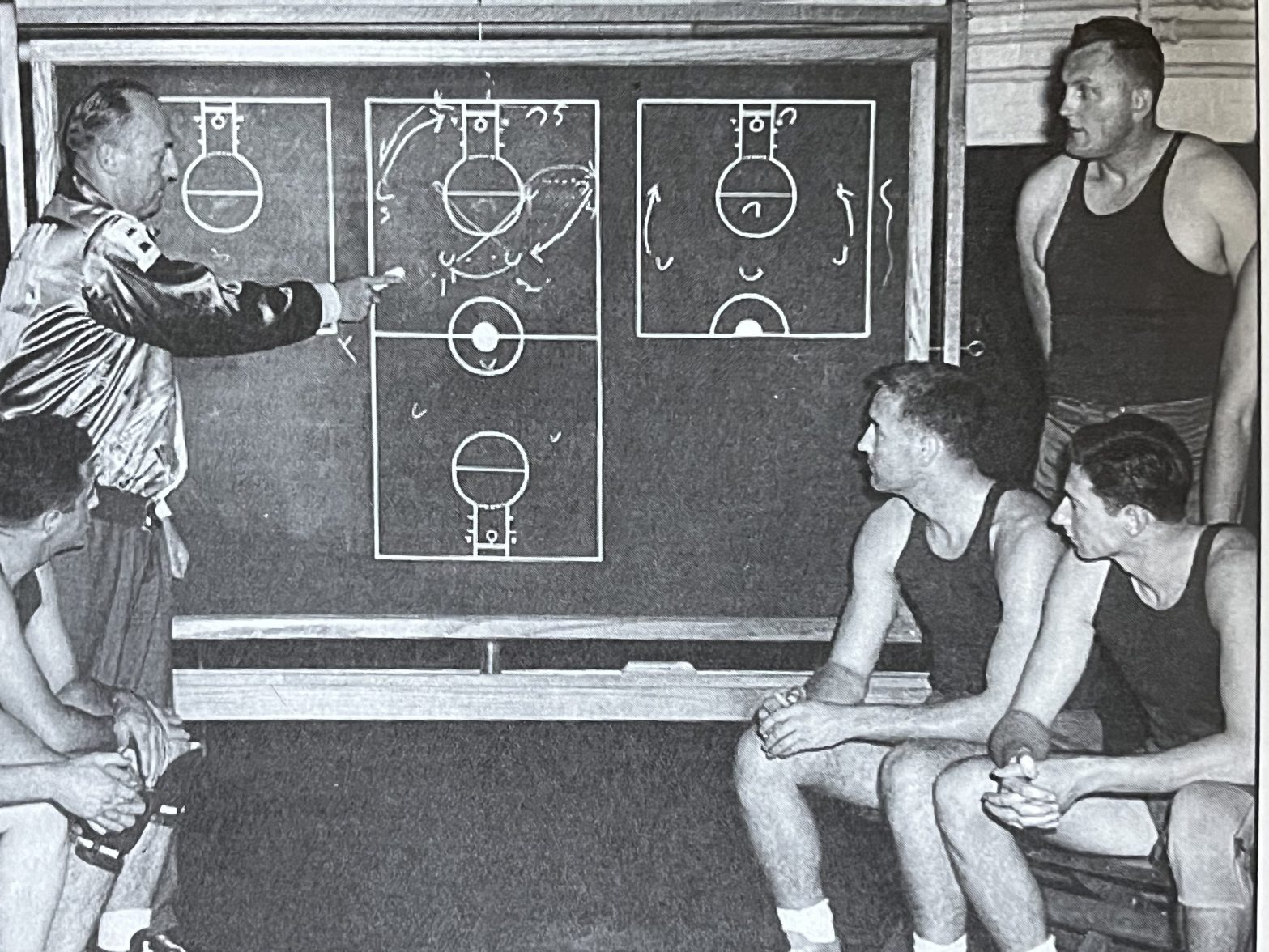
[For many “old heads,” today’s NBA needs a reset. There’s too many three-pointers and not enough low-post play. Their argument being, the NBA was a whole lot more balanced and better in the 1970s through the early 2000s. The good old days.
Ironically, it’s an argument that today’s old heads sometimes heard leveled against them back in the day. Doing the finger wagging then were from the NBA pioneers from the 1940s and 1950s. They felt overlooked and disrespected by the “modern player” who, according to some old-timers, were too big for their britches and inflated pro salaries.
New York-based writer Steve Ende takes up the topic in this article featuring the above headline. Ende published his findings in Sports Reviews’ 1972 Special Playoff Basketball Issue. This article is definitely worth the short read to get a flavor of the NBA’s evolution and mostly unsuccessful resistance to change over the years.]
****
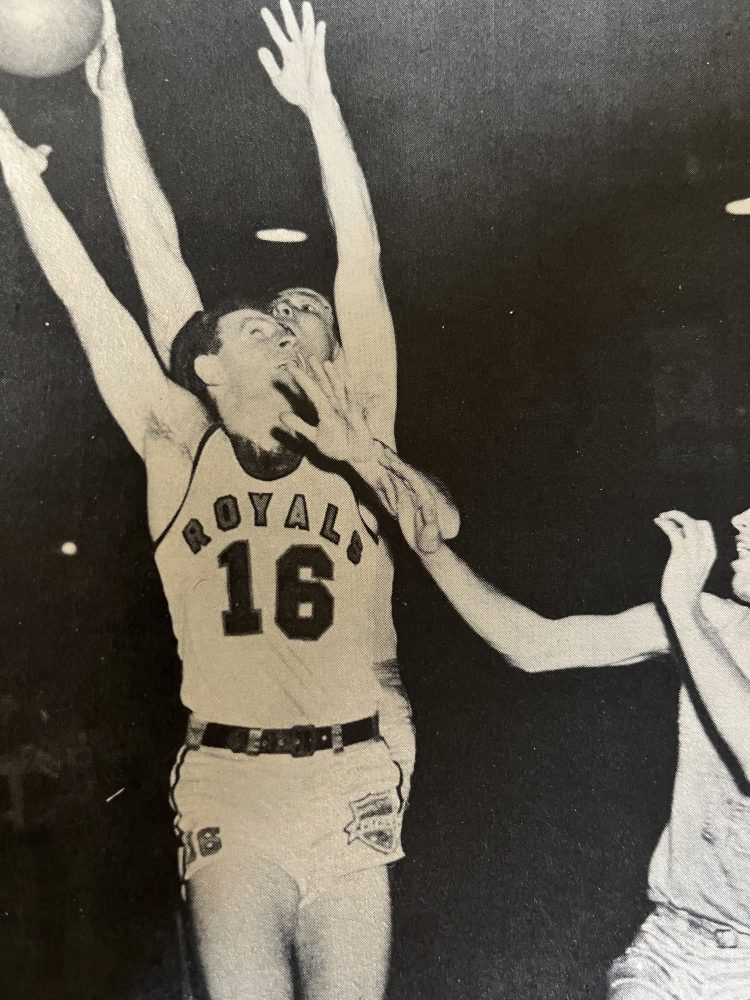
They played in places like Waterloo, Iowa; Sheboygan, Wisconsin; Providence, Rhode Island; Rochester, New York; Fort Wayne, Indiana. The games were held mostly in high school gymnasiums, but a few teams had home arenas. The Rochester Royals were one of those lucky teams. Their arena held 4,000.
These were the early days of the National Basketball Association, the present-day league hatched from the struggling Basketball Association of America (BAA) and National Basketball League (NBL). Today, players take it for granted when they walk onto the shiny floor of the Forum in Los Angeles and see 17,000 people paying six dollars per ticket to watch them perform. Players have signed contracts for hundreds of thousands of dollars and, more recently, millions of dollars. It’s a far cry from the early days.
“I remember the day we heard that Otto Graham signed a contract for a $5,000 bonus,” recalled Red Holzman, now New York Knicks coach and one of the earlier NBA players. “We simply did not believe it. Something like that was unheard of.”
Holzman was on one of the better teams of the early days, the Rochester Royals. Born in 1948 (using the NBA calendar), the Royals, the ancestors of today’s Cincinnati Royals, were 45-15 in their first year, 51-17 in their second year, 41-27 in their third year, and 41-25 in their fourth season. But it wasn’t until their fifth year that Rochester won the NBA championship, interrupting the NBA’s first dynasty, the George Mikan-led Minneapolis Lakers.
The Royals possessed one of the sport’s greatest backcourts in Bob Wanzer and Bob Davies. Frank “Pep” Saul, Paul Noel, and Holzman were the other guards. Up front there were Bill Calhoun, Joe McNamee, Jack Coleman, and Arnie Johnson. And the center was big Arnie Risen. Would any of those stars be able to start on the NBA teams of today?
“I doubt it,” said Lester Harrison, the man who coached the Royals to that championship. “Two or three of the guys from my era could play today, but most of them couldn’t. It’s a different game. It’s an offensive game now. Back then, it was strictly defense.
“What changed the game was the 24-second clock. We would think nothing of working the ball around for a while before taking a good shot. Defense was every bit as important as offense. The first thing that changed the game was the jump shot, the one-handed shot. Then came the big centers, the fantastic leapers. But the 24-second clock was the big thing.”
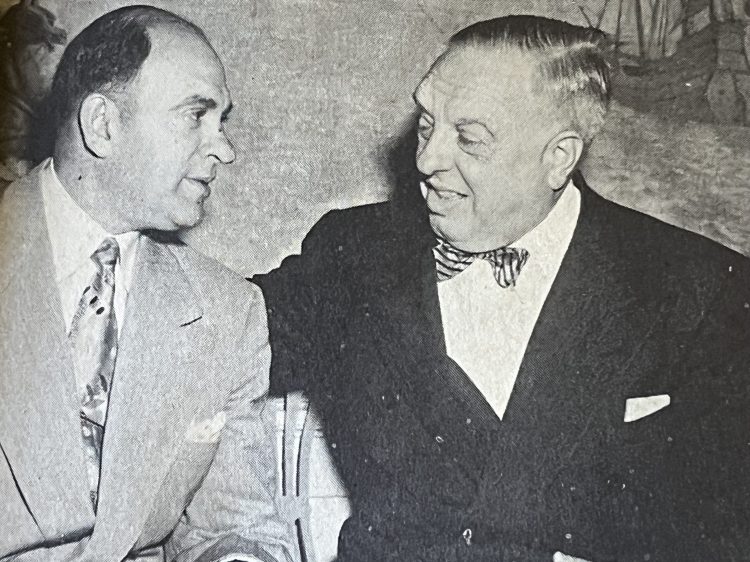
Harrison is one of the founders of the NBA, and he recalls the old days with a kind of bittersweet reverence. “We were the pioneers of the game, and, in some of the places we played, we couldn’t have been anything else but pioneers. We played in high school gyms before crowds of about 2,500 to 3,000 people. We traveled by trains, and the wealthier franchises rode sleepers. I remember postponed games because the trains couldn’t get through the snow.
“But we were happy. Top salaries in the early 1950s were $12,000 or $15,000. Pros nowadays start at $20,000, and the better ones get fantastic bonuses. Bonuses! Ha. I’ve got to laugh. Our franchises were lucky to survive. Top admissions were $2.50 or $3.00. That didn’t leave much for bonuses.”
Not all franchises did survive. The NBA graveyard contains tombstones with epitaphs like Waterloo Hawks, 1949-1950; Washington Capitols, 1946-1951; Pittsburgh Ironmen, 1946-1947; St. Louis Bombers, 1946-1950; Denver Nuggets, 1949-1950; Chicago Stags, 1946-1950; Indianapolis Jets, 1948-1949; Indianapolis Olympians, 1949-1953; and others.
Other franchises survived by dint of a geographical fastbreak. The Milwaukee Hawks became the St. Louis Hawks and then the Atlanta Hawks. Harrison’s Rochester Royals became the Cincinnati Royals, and because of attendance problems they soon may become the “Somewhere-Else” Royals. The Detroit Pistons are the descendants of the Fort Wayne Pistons, and not the old Detroit Falcons, who met their demise in 1947 after one year’s existence.
Before moving to Los Angeles, the Lakers of Minneapolis were basketball’s first true Dynasty. And, if you can figure this one out, the Philadelphia 76ers were the Syracuse Nationals, while the Golden State Warriors, formerly the San Francisco Warriors, were originally the Philadelphia Warriors.
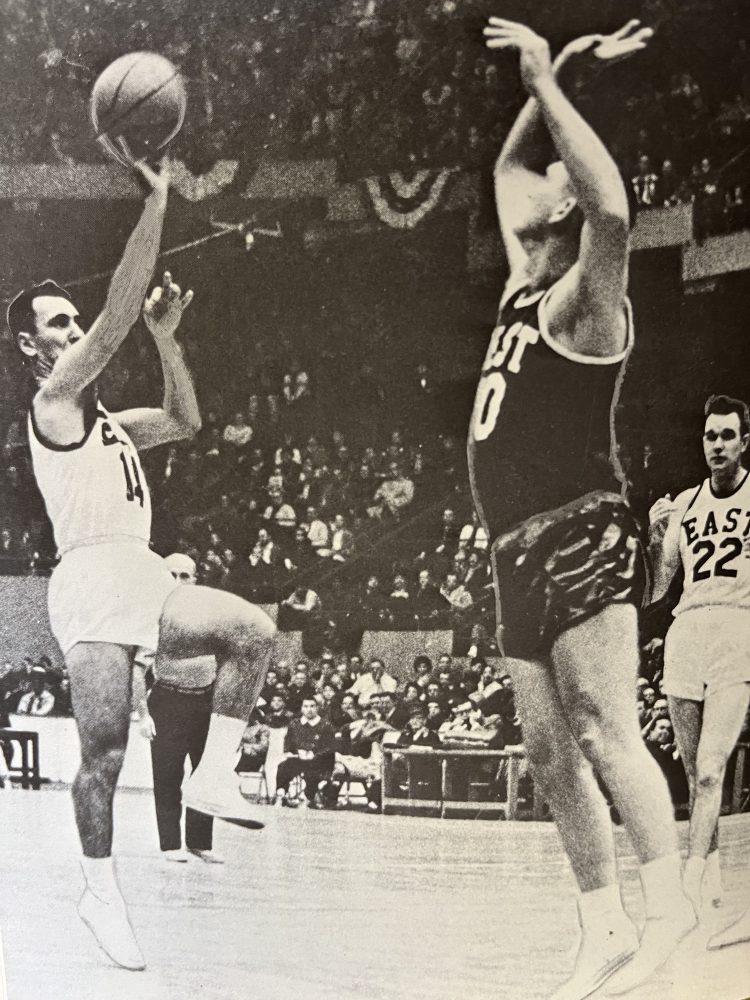
There’s no doubt the original owners had to do a lot of fastbreaking to stay ahead of the creditors. In fact, of the present NBA franchisees, only two—the Knicks and Celtics—have passed through the years unchanged, unmoved, and unscathed.
“There are some great memories from those old days,” recalls Holzman. “In the old BAA, we played a 34-game schedule. But we also played about 80 exhibition games so the owners could meet the payrolls. I was lucky. The teams I played for never had problems paying the players. I never missed a payday. The money was enough to make a living on, and we made a little more than the average guy in the street.
“We traveled by train and always stayed in the best hotels the cities had to offer. But some of those cities weren’t very big. We played in Sheboygan, Oshkosh, Anderson, Fort Wayne, and places like that. Sometimes we played in high school gyms. The locker rooms weren’t always the greatest, but we didn’t mind. Nobody complained.”
If that seems a far cry from today’s carpeted locker rooms with whirlpool baths, hot showers, and huge bonuses—it is.
“The referees had it rough in those days,” Holzman continued. “Most of them were part-timers, and they had to be. They couldn’t make a living from just refereeing. Of course, we did without some of the little niceties today’s players have. There were no team trainers on the road, only at home games, and the Knicks started that.
“We often had to wash our practice jerseys at home, but our game jerseys were always cleaned and taken care of. There were no such things as endorsements or offseason public-relations jobs. I used to go to school during the summers and, after I got married, I worked at camps in the country. It was difficult, but nobody complained.”
Harrison, too, made a point out of recalling how happy the players were despite the comparative adversity. “There seemed to be more togetherness on our team, and maybe it was because we were pioneers,” he mused. “The Rochester Royals played as a team. We won five divisional titles and three world championships, two in the National League and one in the NBA. And the key was team play. That’s why I got such a kick when the Knicks won the championship two years ago (1970). That wasn’t Red coaching out there. That was me. Red is a friend of mine, and he won with the same kind of team play we had back in Rochester in 1953.”
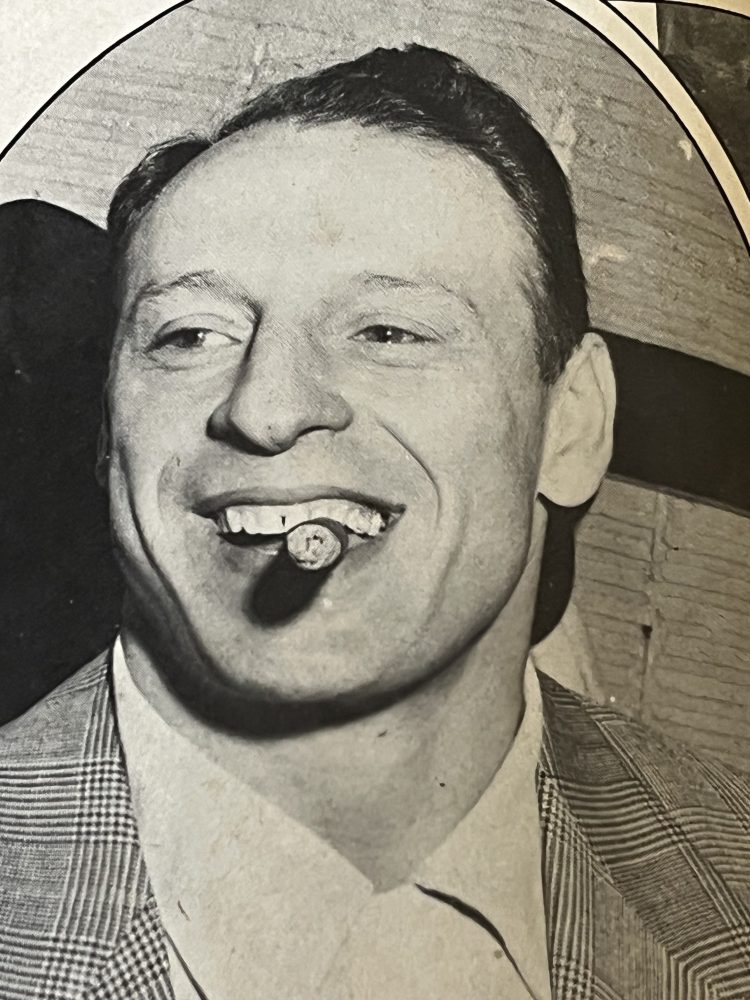
One man who recalls the early days with reverence is Al Cervi, who goes back to the NBL. Cervi is one of the few men who isn’t all that sure today’s stars are so much better than yesterday’s. “The greatest basketball I ever saw was played from 1945-1955,” Cervi insists, “because the teams had balance.
“Nowadays, people like Chamberlain, Alcindor, and Russell dominate the game. Look at Milwaukee. They were nothing. They got one guy, Alcindor, then suddenly they’re champions. This could never have happened in the old days. One man simply didn’t make that much difference. It was a team game. We had great guards and great defensive players. Sure, we had our big men as well. George Mikan was a superstar. We had guys like Arnie Risen, Clyde Lovellette, and Larry Faust. They were all over 6-9.
“Today, all anybody does is shoot the ball. There’s no defense. [Walt] Frazier of the Knicks might be the only guy who can play defense, because I don’t consider some seven-foot-tall guy who sticks his hand up and blocks shots as a defensive player. That’s why I think for all-around play, the old-timers had it over today’s players. We’d jockey around for 15 minutes sometimes, looking for an open shot.”
Cervi’s complaint is that pro basketball, by and large, has been taken away from the realm of possibility of average-type people. Guards are 6-4 and 6-5. Where does that leave the 5-10 or 5-11 guy who can play?
“Everybody says six-footers can’t play this game anymore, and they couldn’t be more wrong,” Cervi exclaims. “If I was born 25 years later so I could get the chance to play now—I’d be willing to die right afterwards just so I could show these guys that small guys can still play.
“That’s why I’m so happy for Calvin Murphy. Nobody’s going to tell Al Cervi that a 6-5 guard can move the ball any better than he can. All the experts say short guards are no good because a big guard can take them into the pivot. That’s a lot of garbage. How many times a game do you see that happen? What they don’t understand is that jumping power, and not height, is the most important thing. And nobody can move the ball around like the small guys. We played three little men against the Lakers’ three big men. We had little Paul Seymour (6-0) on Jim Pollard (6-6). For five years, we used those matchups, and the Lakers beat the hell out of everybody but us.”
One facet of the modern-day NBA operation that bothers Cervi is its refusal to recognize the existence of the old National League. Although most people consider the NBA the offspring of a marriage between the BAA and the National League, in reality, the NBA is the child of the BAA mixed in with some National League teams that it stole.
“The NBA really began in 1950 because, between 1946 and 1950, there was still friction between the NBL and the BAA teams,” Cervi remembers. “We used to laugh at the BAA. It was a terrible league. But they stole the good teams from the NBL in 1948. They stole Indianapolis, Fort Wayne, Rochester, and Minneapolis, and they immediately became the best teams in the new league.
“But what hurts is that they wiped the NBL right out of the record books, as if it never existed. With the Royals in 1945, I led the league in scoring. Nobody’d ever believe me if I had to prove it. It’s not there. I won five championships. Yet the only one that’s in the record book is the one with Syracuse in 1955.”
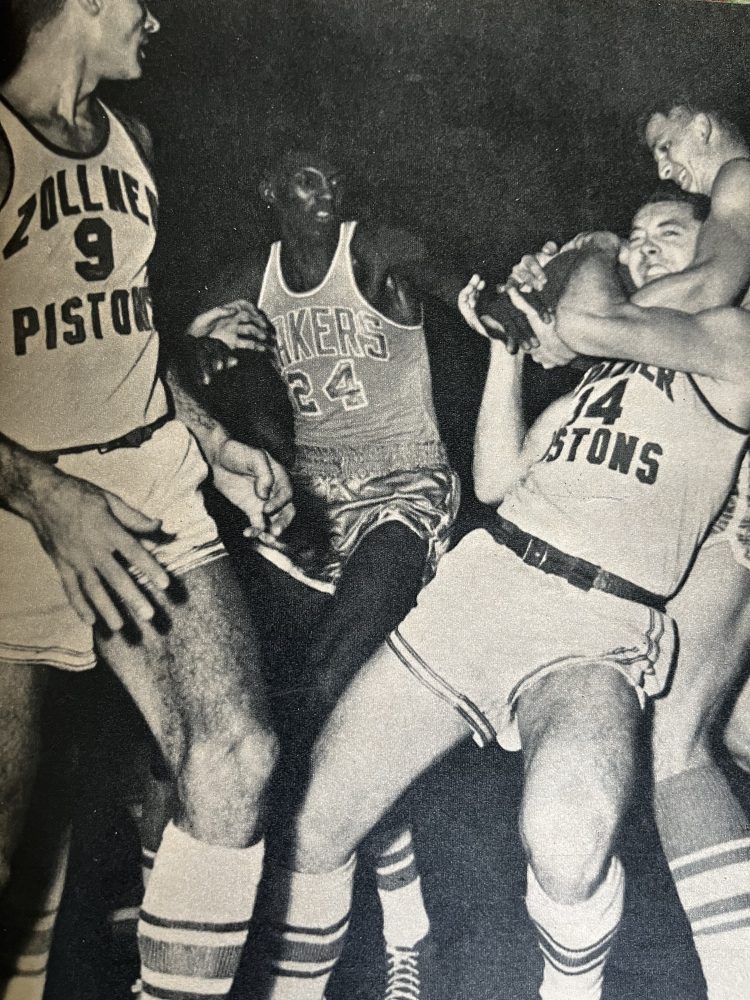
The NBA explains away the missing records by saying the old league never gave their records to them. They’ve been lost in antiquity. Perhaps now, that is the case. But it is doubtful it was the case back in the middle of 1940s, when the struggling BAA stole the best teams and players from the struggling NBL.
The war between the leagues aside, Cervi has fond memories of the early days, although today’s ballplayers would be on the phone with their union reps if they had to play under similar conditions.
“There were times we had to bring our own basketballs,” Cervi recalls, “and that was even into the late 1950s. Philadelphia wasn’t much of a place to play. They had a narrow court, and the dressing rooms were terrible. Baltimore had two showers in the whole place. The Uline Arena in Washington was so bad, I couldn’t begin to describe it.
“We never got any of the crazy bonuses today’s players get. We played for something else. We played to win. If we didn’t win, our franchisees didn’t survive. It was that simple. Now there are so many teams, it’s ridiculous. The quality of the game is inferior, because there are too many inferior players. In 1956, there were eight teams in the NBA. Now, there are 28. Are you going to tell me there are 250 better ballplayers now?
“Even the salaries are absurd now. I made between $13,000 and $14,000 in 1958, and I did everything but take tickets. We made $1,800 per man if we won the playoffs. Today’s salaries are the most ridiculous thing in the history of sports. No player is worth what he’s getting, except maybe Alcindor, and that’s because the game has changed to allow him to be such a dominating force.
“The game must be restructured to stop the giants from ruining it. The ABA has the right idea with its three-point rule. That’s the first step to bringing the small men back into the game. I mean, let’s face it. Alcindor—and I have nothing against him, I’m just using him as an example—shoots the ball 3 ½-feet down and gets two points! Some little guy makes a 25-foot shot and gets the same two points. What is that?
“But, of course, the thing that changed basketball and made it strictly a big man’s game was the 24-second rule. It has made incapable players capable of playing. It has taken defense out of the game. It has allowed the game to be dominated by the centers.”
If Cervi sounds like an angry man—he is. And for a number of reasons. A star player in the mid-1940s, Al has been seen his records and those of his league—the pioneers of basketball— wiped out. He has seen the small men eliminated. But the worst snub, he feels, is the present-day players’ non-recognition of the contributions of the pioneers.
“These guys are making $1,000 an hour, and all they’re worried about is their pension plan,” Al says. “Why not include the old guys in that pension plan, too? We played on TV, and that money went into the NBA kitty, but we didn’t see a dime of it. We had to put up with TV timeouts and never saw a nickel.
“Hell, we started this game, made it possible for these guys to come along and sign million-dollar contracts. We were the frontiersmen. Forgetting about my years in the NBL, which, according to the NBA never existed, I still had eight years in the NBA, 1946-1953. I’d be perfectly willing to put in $15,000 in retroactive pay, so I could draw the pension.”
Harrison, whose ideas for the most part don’t agree with Cervi’s, is in agreement on this point. “The pioneers should be included in the pension plans if they played a minimum of five years,” he said. “Why? If not for these men—there’d be no basketball today.”
A spokesman for the NBA Players Association noted that there has been talk of including the “pioneers” in some form of pension agreement. But so far, nothing has been done, and nothing is on the agenda. As for the NBL records, even if they were found, it’s unlikely they’d ever be included in the NBA press guide since the NBA itself considers 1946 as the year it was born, although it was still the BAA at that time.
So what everything boils down to is: Whether or not the “good old days” of pro basketball were good depends upon who’s answering the question. In terms of salaries, playing facilities, popularity, and benefits—the old days were not as good as today. In terms of ability, diversity of play, and camaraderie among teammates, the old days might have been as good as, if not better, than today. Some things, like wars between the leagues, never seem to change. Whether or not the game itself is better or worse probably depends upon how you feel about the 24-second clock.
But Cervi makes two points it seems difficult to disagree with. There should be some sort of remembrance of the pioneers, those men who traveled by train, played in high school gyms, and shared a single shower nozzle. If it is too much to include them in pension arrangements, those who played in the NBL should at least get the recognition of having their achievements listed in pro basketball’s record book. After all, it has been a quarter century since the NBL-BAA war, and even countries who fought in World War II have managed to forgive and forget by now.
Cervi’s other good point is that something must be done to return the small man to prominence of sorts in today’s style of basketball. Although basketball remains quite popular today, there are a large number of people under 6-9, this writer included, who simply can’t get excited over a sport played by giants. Can you really identify with a Kareem Abdul-Jabbar shooting the ball down at the basket?
One reason for hockey’s mushrooming popularity is that a 5-6 or 5-7 man who can play the game remains as fundamental to a team’s success as anybody any other size. Like Cervi, I, too, root like hell for the Calvin Murphys of pro basketball. That’s why I’d rather watch an ABA game. At least the value of a small outside shooter gets some recognition.
Pro basketball has done nothing to promote its history. Where every young baseball fan has at least heard of the Babe Ruth, Walter Johnson, Cy Young, Honus Wagner, and other long-ago stars, there is a whole generation of basketball fans who know nothing of George Mikan, Jumpin’ Joe Fulks, Slater Martin, Max Zazlofsky, and even Al Cervi. They’ve never heard of the center jump after each basket, or the freeze, or the two-minute rule.
Maybe I’m wrong. But there was something special about those good old days.

