[Sports journalist Charley Rosen passed away last year at age 84. He left behind plenty of magazine articles about the NBA past, including this one published in the January/February 2000 issue of Hangtimes. Rosen asks the simple question: Do former players make better coaches? Rosen never really answers the question, but he broaches many of the myriad issues worth parsing to answer the question. That makes his article historically interesting, and it remains topical today as retired players continue to move into coaching NBA gigs.]
****
On the first day of the Orlando Magic’s preseason camp, rookie coach Glenn “Doc” Rivers was teaching his players his theory and practice of defensive rotation. One particular maneuver required the small forward to follow the movement of the ball and successively double-team the pivot, trap the wing, and then hustle to redouble the low post. A certain young veteran, however, considered his coach’s gameplan unworkable. “There’s too much ground to cover,” the player said. “I don’t think I can get there.”
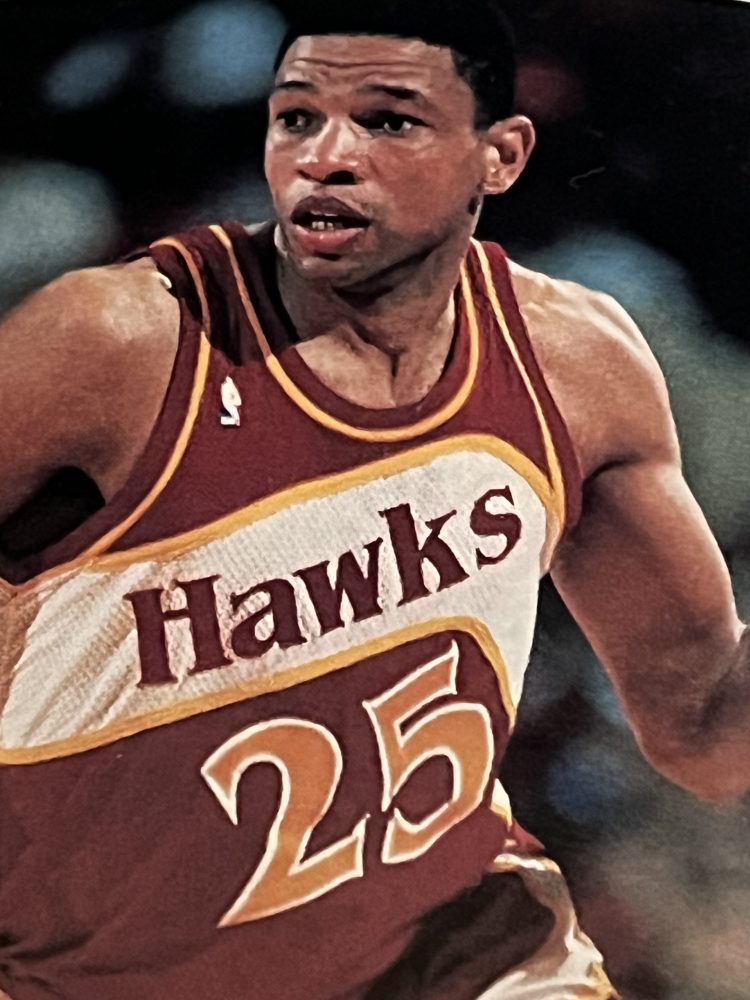
But Rivers insisted. Speaking from 13 years’ experience as a cagey backcourtman with the Hawks, Clippers, Knicks, and Spurs, Rivers said, “I know you can get there.”
And so it was.
This kind of court-wise knowledge is precisely why 20 of the NBA’s 29 coaches are former players. “Basketball is like any other business,” Rivers said. “You have to be able to do something yourself in order to teach it to somebody else.”
The recent trend of hiring ex-players as head coaches is actually a reaction against a previously cherished philosophy that dated back to the early 1970s—i.e., well-seasoned college coaches who had already learned their trade were the best qualified to command NBA teams. The likes of Jack Ramsay, Cotton Fitzsimmons, Bill Fitch, John MacLeod, Dick Motta, and Hubie Brown spent many long seasons mastering the zigs and zags of the college game before they graduated into the NBA.
“Before we appeared on the scene,” Brown recalled, “NBA defenses began at the top of the circle, relied most on switching, and strongly resembled zone principles. The collegiate coaches introduced two-timing the post, the various full-, three-quarters, and halfcourt traps, as well as the concept of defensive rotation.”
When Ramsay guided Portland to the NBA title in 1977, and Motta’s Washington Bullets copped the crown a year later, another wave of college coaches was eventually recruited into the pro ranks—most notably Chuck Daly, Mike Fratello, Bob Hill, Richie Abubato, Del Harris, Ron Rothstein, Rick Pitino, Stan Albeck, and, later, P. J. Carlesimo and John Calipari. The Detroit Pistons’ championship seasons of 1989 and 1990 under Daly’s leadership reinforced the belief that experienced college coaches were best suited for success in the pro ranks.
College coaches were perceived to possess several considerable advantages: They were unsurpassed in organizing practice sessions and managing the clock during end-game situations. Because of countless hours spent watching tapes, their game preparations were immaculate. Most of all, they were exceptional teachers of the game, men fluent in the intricate language of Xs and Os.
At the same time, there were also significant disadvantages. “In the colleges,” said Jerry West, the Lakers’ executive vice president for Basketball Operations, “coaches recruit only the players they want and are able to control nearly every aspect of the program down to what sneakers the players wear. Obviously, there’s no recruiting in the NBA, and within constraints of the salary, even making trades is increasingly difficult.
“Also, the hectic NBA schedule allows little time for teaching, because a team can go for as long as three weeks without any practice sessions. In any case, veteran players generally resist a coach coming in and trying to change the way they’ve always played. In college, coaches are father figures. In the NBA, coaches are mentors.”
Moreover, the NBA’s hectic-if-it’s-a-Tuesday-it-must-be-the-Timberwolves lifestyle can easily frustrate coaches who’ve been habituated to the collegiate schedule of two games per week. A successful college coach will anguish over three or four losses every season, whereas 20 losses constitutes a sensational, outstanding professional season.
The furious physicality of NBA play provides another difficult lesson for college coaches. Because of the grueling travel requirements and limited recovery time, NBA players are always playing through minor injuries that range from barely healed sprained ankles to jammed fingers, from chronic tendinitis to a variety of elbow-induced lumps and bruises. This means that sometimes, simply surviving the game at hand is all that the player’s best efforts can accomplish, and winning becomes secondary. In the college season, the wear and tear is a factor only in postseason tournaments.
After the backwash of Daly’s achievements at Detroit had subsided, it became apparent that the influx of college coaches had changed the game too much. “The college coaches unnecessarily complicated the pro game,” said West. “The bottom line is that simple plays run by the proper players are unstoppable.”
The complexity of college-derived offenses and the emphasis on defense also served to slow the game down. In recent years, teams rarely scored 100 points, and high-flying scorers were too often grounded by savage, bone-to-bone collisions. “One of the reasons that club owners brought in ex-players to coach,” said Charlotte coach Paul Silas, “was to open the game up again.”
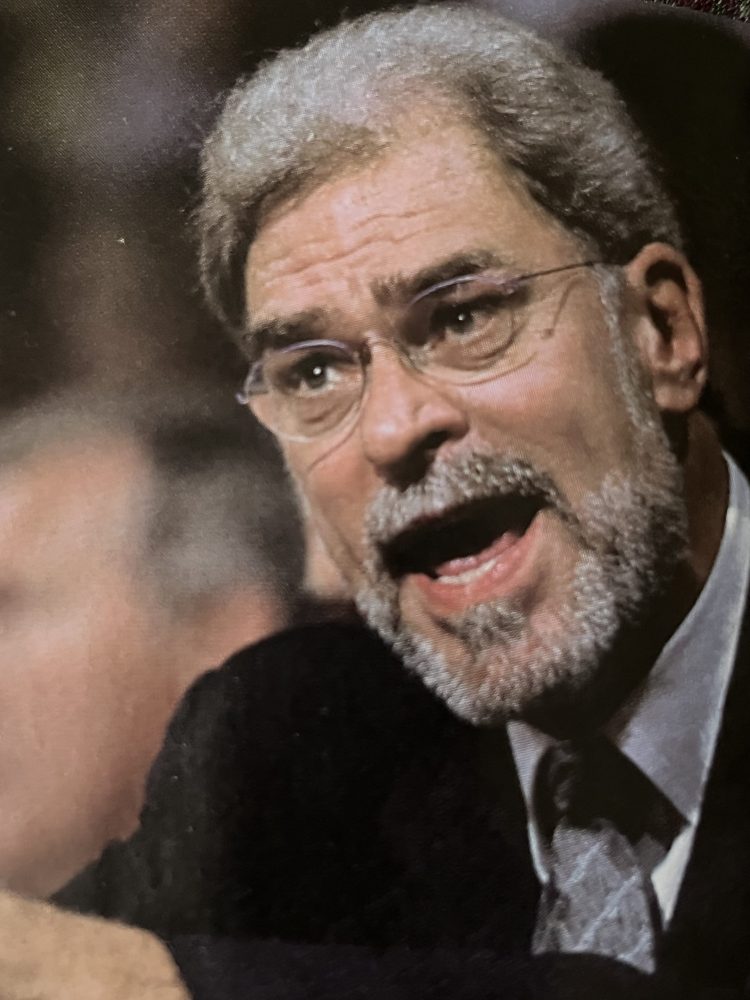
According to Los Angeles Lakers coach Phil Jackson, today’s NBA players are better qualified to coach than ever before. “There’s much more a sense of professionalism in the league these days,” said Jackson. “Guys take care of themselves, working out diligently in the offseason, preparing mentally, emotionally, and physically for every game and also being mindful of their diet. That’s why so many guys are able to play into their late 30s and early 40s. They’re more committed to the game, more analytical, and therefore better prepared to take over a ballclub.”
Take it as gospel that no current NBA player grew up dreaming of becoming a coach. The desire to coach results from a developing love affair with the game itself—the camaraderie, the competition, the winning, and even the losing that must proceed the winning. (To say nothing of the hefty paychecks.) Coaching is the next best thing to playing, and most retired players yearn to stay involved.
But not every NBA player can make the transformation. Rivers hasn’t laced his sneakers in four years, and he stresses the importance of being “disconnected.” Imagine occasionally partying with your teammates and perhaps sneaking into the hotel together after curfew. Then switch hats, and imagine trying to enforce rigid curfews upon those same erstwhile buddies.
“One of the players on the Magic is Monty Williams,” said Rivers, “and we played together with the Knicks and the Spurs. Monty is an easygoing guy, and we’ve always respected each other, so there’ve been no problems up to now. But coaching guys with whom you’ve played can be a very dangerous situation.”
Another potential problem for the ex-player is dealing with the league’s referees. “I used to flop a lot on defense,” said Rivers, “and I was also very physical, and there were a couple of refs who didn’t call the game the way I played it. In my career, I was thrown out twice for arguing with a referee, and I may have disliked a particular ref at the moment, but I like to think there was never any personal animosity involved. I can see some ex-players having difficulties with certain referees they might have been constantly at odds with and occasionally cussed out, but I don’t think that’ll be a problem for me.”
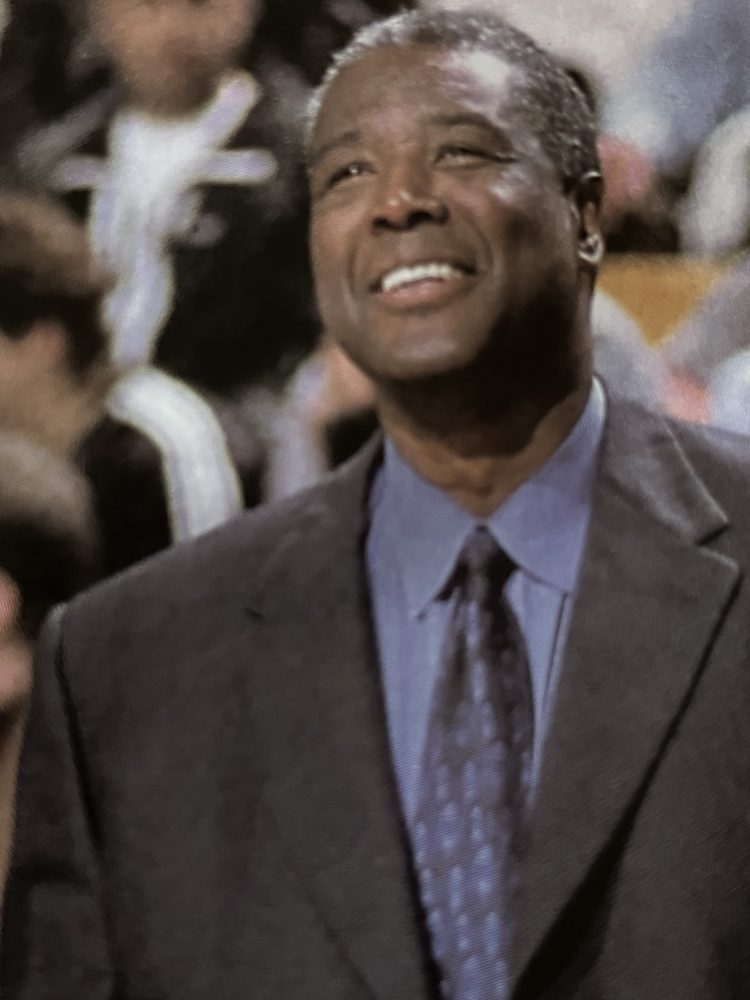
Aside from notorious ref-baiters, there is another type of NBA player who is categorically doomed to failure once he moves to the head of the bench: NBA superstars generally don’t make the cut. The examples are legion—Jerry West, Bill Russell, Bob Cousy, Dave Cowens, Doug Collins, Willis Reed, and Elgin Baylor. (Among the notable exceptions are current coaches Lenny Wilkens, Rudy Tomjanovich, and Larry Bird, and former coach Billy Cunningham.) The truth is that the talents of most Hall of Famers were so overwhelming that they saw the game differently. For example, West the player was legendary for his ability to anticipate action on the floor several seconds in advance. West the coach simply could not understand why his players did not see the same things he did.
“As coaches,” said Silas, “the super players also lack the patience to let their players learn at their own respective speeds. They expect everybody to play as well and as easily as they did.”
Conversely, the limited talents of players such as Phil Jackson, Pat Riley, K.C. Jones, and Alex Hannum compelled them to survive by their wits. As such, they had to hustle and scheme for every small advantage. So too, by meticulously executing their teams’ offenses and defenses, they could also minimize their own shortcomings. Students of the game, they learned how and why good things happen. “Hard-knock players,” said Jackson, “can understand the value of role players.”
The most basic reason given for the sudden influx of NBA players into the coaching fraternity, however, is their ability to communicate with their players. “No question about it,” Jackson said. “Ex-players know what it’s like to play 82 games and the pressures that arise during a season. In a subliminal fashion, they also learn how to deal with the media, which has become such a vital part of an NBA coach’s duties. But the main thing is that the coach and his players can speak the same language. Being an ex-player is an enormous advantage.”
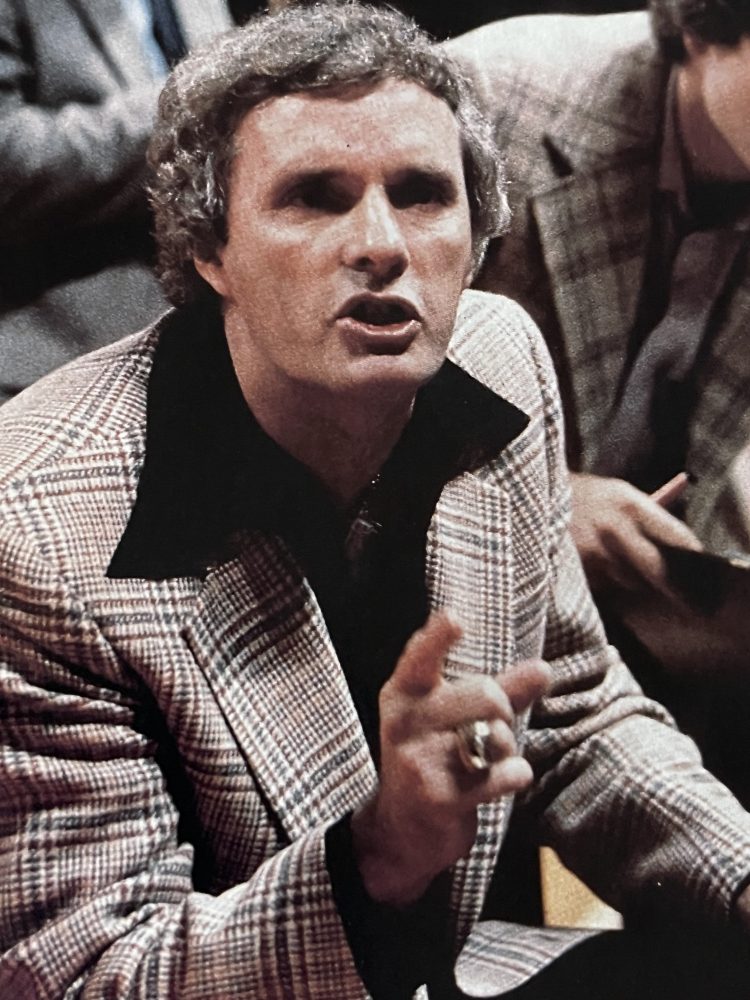
Communication is vital for several reasons, the foremost being that for a coach to succeed, his players have to understand and accept his philosophy. As ever, Hubie Brown can break the game down into useful statistics.
“At every level of basketball,” said Brown, “from high school to the pros, the reality is that one-third of the coaches are outstanding, one-third are average, and one-third are overmatched. It’s certainly possible, however, to be an excellent coach and have a losing record. Just as possible as it is to be in over your head and having a winning record. But the determining factor is this: No matter what a coach’s background might be, his team has a chance to win if his two best players buy his system and can execute that system under pressure.”
If Brown underlines the importance of player-coach communication, he disagrees that ex-players have any advantage here. “To say that ex-players communicate better,” Brown insisted, “is an ignorant statement. Coaches coming into the NBA from the college ranks are given the opportunity exactly because they’ve already been successful, and no coach can be successful at any level unless he can communicate with this players. It all comes down to respect anyway, something that every coach has to earn on his own merits.”
In fact the most common gripe among the college-bred coaches is that despite their impressive resumes, they invariably wind up with the worst jobs in the league. “Typically,” one veteran NBA coach claimed, “college guys get to coach expansion teams or other ballclubs at the bottom of the heap. Then they work their butts off for a few years, get fired, and watch somebody else take over and get the credit when the team blossoms. It’s the ex-players who get the good jobs, and that’s the only reason why they get to 500 career wins quicker than the college guys.”
Another one-time college and NBA coach agreed: “The basketball experts say that ex-players have a bigger and more immediate impact on an NBA team, but that’s nonsense. How many times has a jock-turned-rookie coach brought an inferior team into the playoffs? Take away Larry Costello and the Milwaukee Bucks the year [after] Kareem arrived, and the answer is none. Why, then, are there so many ex-players on the job? Because too many ownership types love to buddy-up to former superstars. And because general managers who’ve played in the NBA are eager to hire old friends and teammates.”
Like most cultural phenomena, the NBA moves in cycles. Remember the physical play of the Pistons in the late 1980s? Or the evolution, extinction, then resurrection of the Twin Towers? How about oversized guards a la Magic Johnson? Or runt-sized speedsters like Spud Webb? The only true constant is that winners get rehired, and losers get canned.
With 20 former players currently prowling the NBA’s sidelines, rest assured that more of them will lose than win. And that the wheel will continue to turn.

