[Here’s another remembrance of the Los Angeles Lakers’ record-setting 1971-72 championship season. This remembrance of things past comes from veteran L.A. reporter Mitch Chortkoff, who’d covered the Lakers for decades when he put pen to paper to mark the 20th anniversary of that milestone season and a reunion of its heroes. His account, though a little rough in places and very minimally edited here for clarity and flow, offers an eyewitness view and firsthand perspective of this magical Lakers’ season. Chortkoff’s piece was published in the 1992-93 edition of Street & Smith’s Pro Basketball Annual. Let me know what you think.]
****
Twenty years after Wilt Chamberlain and Jerry West led Los Angeles to its first championship, the 1972 Lakers remain in pro basketball’s spotlight. The team gathered for a reunion before a Lakers’ game in the Forum last season [1992]. It had a lot of fond memories. The 1972 Lakers went 69-13, won a league-record 33 consecutive games, and required only five games to dispose of the New York Knicks in the finals.
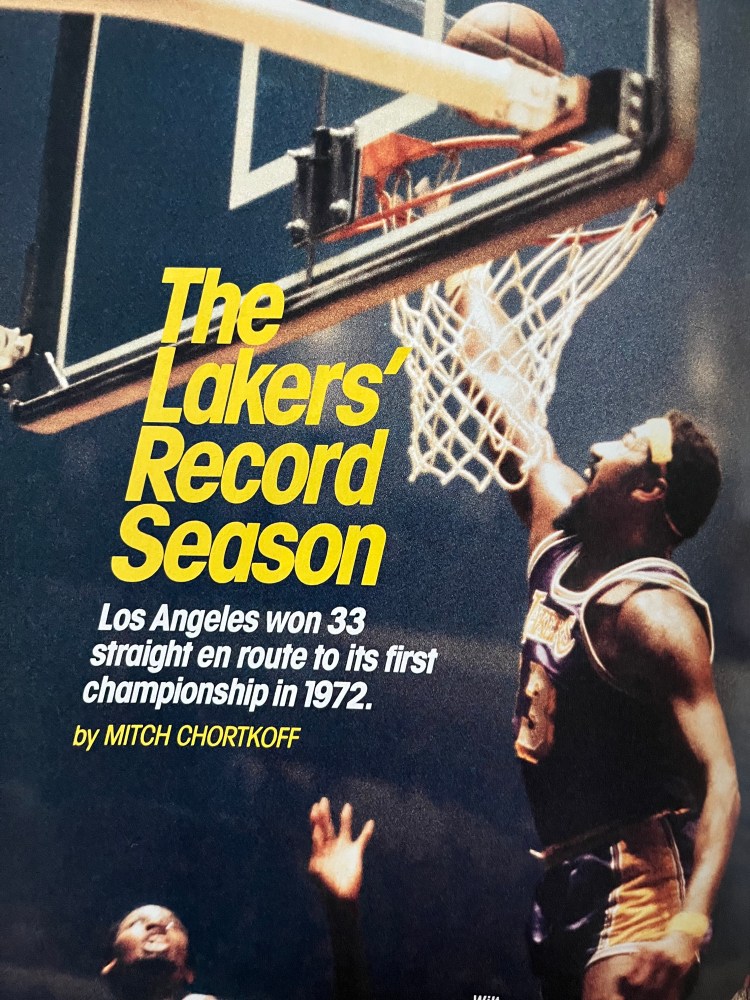
As the Lakers won the championship, Chamberlain played the final game with both of his hands bandaged like a boxer’s, the result of a chip fracture and soft tissue damage from a fall. “I could not miss that game,” recalled Chamberlain. “Not after everything we’d gone through to get there. I had a job to complete.”
****
The Lakers moved to Los Angeles from Minneapolis in 1960. Crowds as low as 3,000 greeted the team in the Los Angeles Sports Arena. There was no pro basketball tradition on the West Coast, and the Lakers had to compete with the baseball Dodgers and pro football for attention. Soon, though, the brilliance of Elgin Baylor and West created an audience, and the Lakers began a skein of final round appearances against the Boston Celtics. The trouble was, the Lakers always lost. Six times in the 1960s, to be exact. They also lost in the 1970 finals to the Knicks. By then, the Lakers had gone through three coaches: Fred Schaus, Bill van Breda Kolff, and Joe Mullaney.
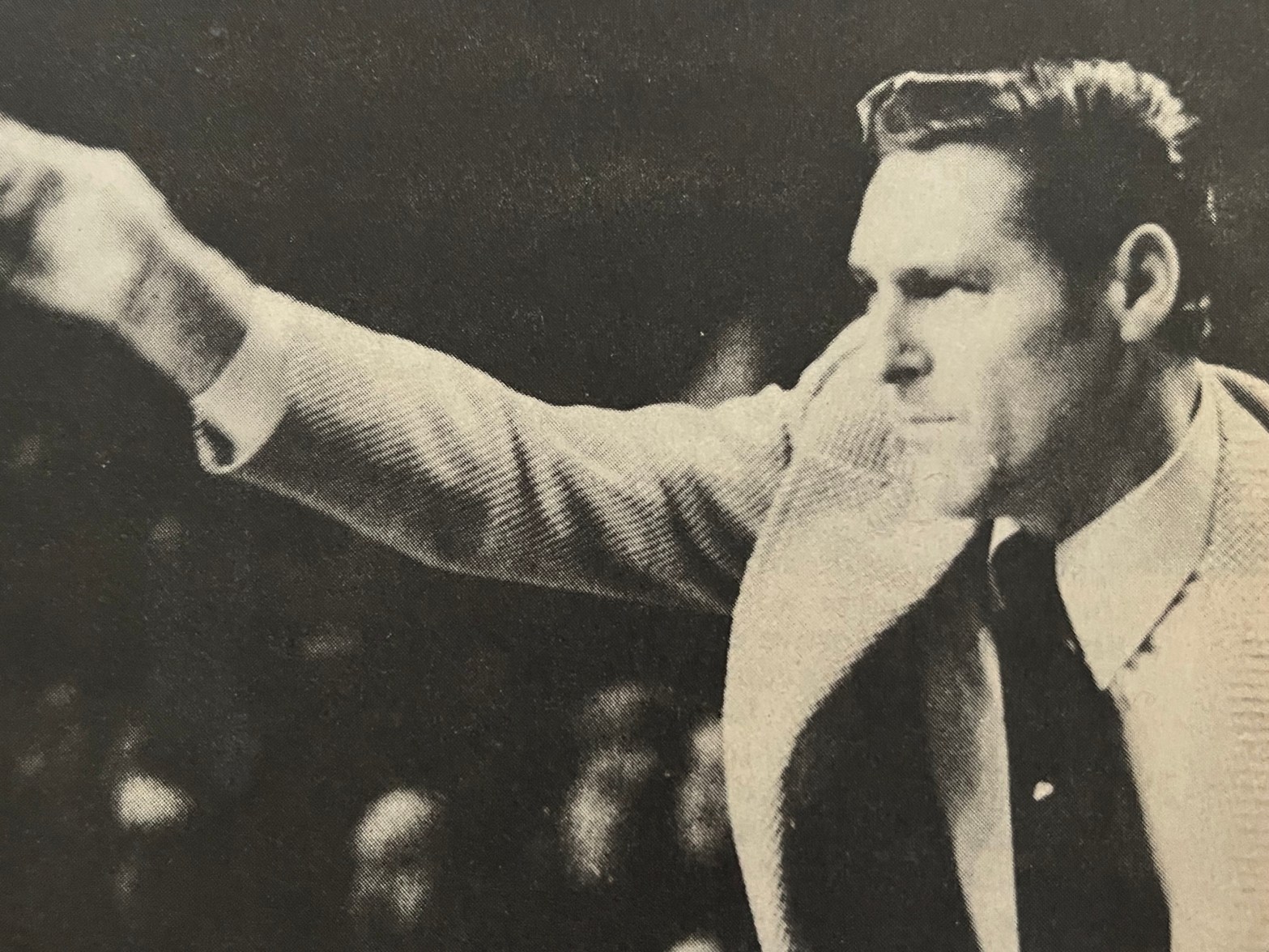
Owner Jack Kent Cooke sought the best man possible to lead his team and decided on Bill Sharman. There was the matter of Sharman already having a job with the Utah Stars of the American Basketball Association, but an ownership change with that team had left some doubt about the legality of Sharman’s contract. Three weeks were required to untangle the legal snarls, and on July 12, 1971, Sharman was introduced as the Lakers’ coach. He brought along former Celtic great K.C. Jones, which prompted Cooke to say, “We’ve never had an assistant coach before, except, of course [opinionated broadcaster] Chick Hearn.”
Asked his goal, Sharman replied: “The world’s championship.”
And so, the odyssey began. The Lakers went to training camp in Hawaii amid talk Sharman would have difficulty coaching Chamberlain. Wilt always had his way, said the critics. Any coach would be facing quite a challenge with him. Sharman didn’t come in like a taskmaster. He took the approach of seeking input from the players. When Chamberlain was on the sidelines during a drill, Sharman walked by and said casually, “I’d like to get your ideas on how we ought to play defense. I know in Boston we funneled play toward the middle where Bill Russell was, but your coaches haven’t always played it that way.”
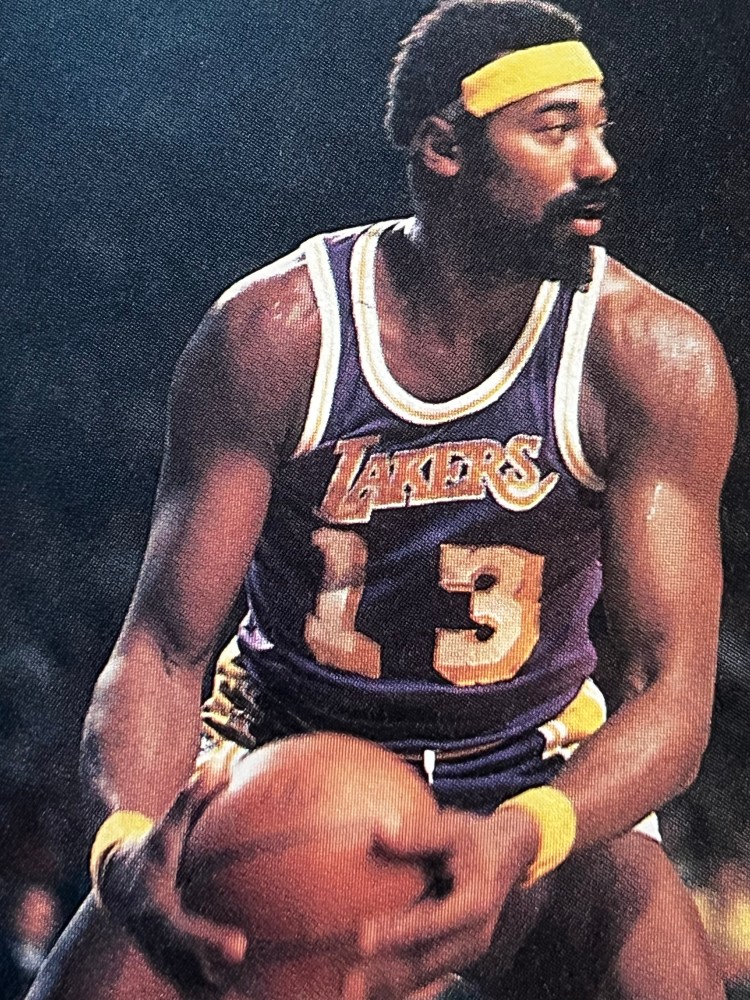
Chamberlain, a 13-year veteran, certainly had his ideas. The fact that a coach was asking pleased him immensely. It was decided Chamberlain would play it in Russell-style, and the Lakers’ first hurdle was overcome.
Soon there would be a new crisis, though. A few games into the season, it became apparent Baylor wouldn’t thrive in Sharman’s system. The forwards did the most running, and second-year pro Jim McMillian from Columbia University was better suited to the small-forward position. Baylor, a legend, could not be removed from the starting lineup without a discussion. So, on November 3, before a practice at Loyola University, Sharman waited outside the gymnasium for Baylor to arrive. The men then talked about the possibility of Baylor coming off the bench. Baylor had played only two games the previous season due to a knee injury. Could he be happy as a reserve? “Think it over,” said Sharman. Baylor did, but not for long. The next day, he announced his retirement. Up to that moment, he was the greatest player of the Lakers’ 11 years in L.A. But it was time for the franchise to move on.
The Streak Begins
The Lakers had a 6-3 record. It would improve to 39-3. The team was virtually flawless with Happy Hairston teaming with Chamberlain on the boards, McMillian running a wing, and Gail Goodrich complementing West in the backcourt. For subs, there was the hot-shooting Flynn Robinson until Keith Erickson recovered from an injury late in the season, 6-11 Leroy Ellis, and a tenacious swingman named Pat Riley.
“The pieces fit perfectly,” recalled Erickson. “It seldom works out that way. Everyone knew his role and performed it. Enough can’t be said about Wilt scoring less for the good of the team and about West and Goodrich. I think they’re the best pair of guards ever on the same team.”
The next game was against the Baltimore Bullets. It was November 5, and Sharman greeted the team in the locker room 90 minutes before tip-off. “You all know about Elgin,” he said. “We’ll need a new captain. My thinking is that Wilt and Jerry should share it.”
West declined and Chamberlain accepted, creating another nuance of the Sharman Era that was distinctive. Guards were usually captains—rarely a center. But Chamberlain was eager for the job, citing the fact he’d done it before in Philadelphia. And Sharman was only too happy to see his center take a leadership role. The rest is, as they say, history.
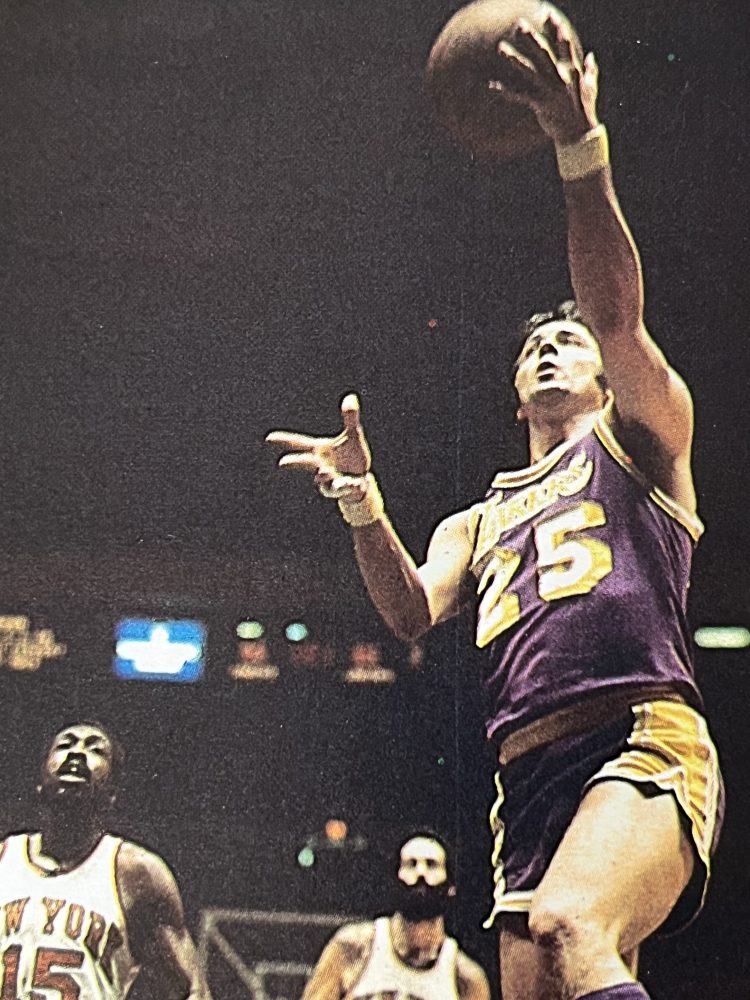
The Lakers beat the Bullets that night, 110-106, led by Goodrich’s 31 points and 22 by McMillian. Chamberlain outrebounded Bullets center Wes Unseld, 25-12. It was the beginning of 33 in a row. For two months, the Lakers wouldn’t lose. They’d win 17 home games and 16 road games, putting together a streak never equaled before or since. Their 21st consecutive victory, 104-95, over Atlanta, shattered the NBA record. Their 26th in a row, 117–103 at Buffalo, passed another milestone. The 1916 New York Giants, under manager John McGraw, had set the record for baseball. It was also believed to be the most victories in a row for any major professional sports league.
The Lakers finally met defeat January 9 in Milwaukee, 120-104. Kareem Abdul-Jabbar, in later seasons to become a Laker, had 39 points and 20 rebounds for the Bucks that day. Sharman’s response to the streak? “It was great,” he said.” But we have 40 games left, then the playoffs.”
The Lakers continued, setting standards along the way. Jerry West made the winning basket for the West team in the NBA All-Star Game at the Forum and was named MVP. Chamberlain became the first player to score 30,000 points; Chamberlain and Hairston became the highest-rebounding pair in league history.
The Playoffs
Finally, the postseason arrived, and the Lakers were ready. They swept the Chicago Bulls, 4-0, in the first round. The second round was a matchup of powerhouse teams. The defending-champion Bucks were given a chance to dispose of the Lakers. “We’re still the champions until proven otherwise,” said Bucks coach Larry Costello. It was Chamberlain and West against Abdul-Jabbar and Oscar Robertson. At least that was the proposed matchup. Unfortunately, Robertson was plagued by a pulled stomach muscle. The Bucks won the first game, but the Lakers took the series, four games to two. In the final game, Robertson played only seven minutes.
Then it was the Knicks, who won the first game by hitting 73 percent in the first half. But the Lakers won the second game as New York forward Dave DeBusschere suffered a severe hip injury. The Lakers won the next three games, including a 116–111 overtime decision in Game Four.
There would be many ways to describe the team’s first championship. My most vivid memories are of West and Baylor, who had given so much to the franchise and virtually made certain pro basketball would thrive in the West. “It’s an incredible feeling,” said West at the time, “something I’ve always wanted to experience. So many other summers we had to explain what happened. Not this time. If we win 10 championships, it won’t be any better than this one. I was never so psyched up for a game as the last one.”
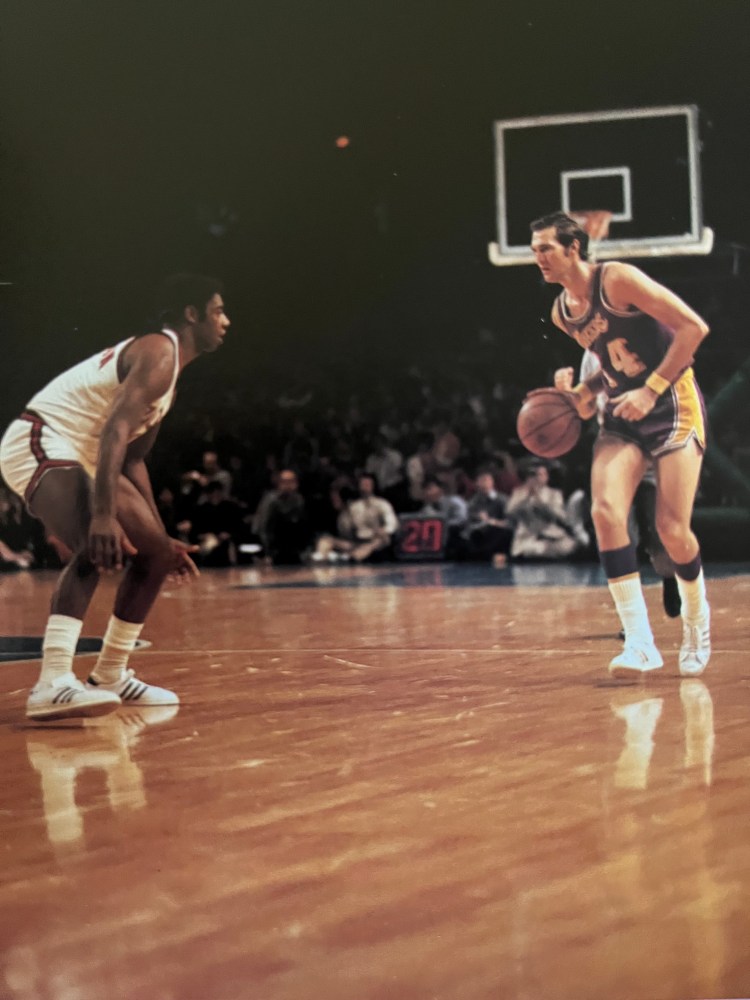
In future years, West would have high praise for Chamberlain. The memory of being teammates on that momentous occasion is indelible. Critics would knock Wilt, but West would never agree.
Meanwhile, Baylor tried to feel a part of it but found that difficult. “I’m happy for the guys,” he said. “I retired hoping they’d win.” Baylor seemed distant from the celebration, but Sharman noticed. The coach caught up with the ex-star in a corridor outside the dressing room and put his arm around him. “You were part of this,” Sharman told him.
Broadcaster Hearn recalls the confidence the team developed. “It was incredible,” he said. “I mean, 33 in a row. It can’t happen. In my opinion, of all the records in sports, that one won’t be equaled. Can you imagine anything like that today? With all the good teams and all the travel. I can’t.”
But it wasn’t all basketball. The season also included the social event of the year in Southern California. Chamberlain sent out 350 invitations for friends and business associates to view his $1.5 million estate known as Ursa Major in the Santa Monica mountains. One group was invited for the afternoon, the other for the evening. The home had a 45-foot-high fireplace, a bedroom with a sliding roof to open on nice evenings, a bathtub with a capacity of 6,500 gallons, sculpture from many cultures acquired by Wilt during his travels, and ceilings that were 9-feet high in places and 20 feet in others.
“I’ve had to adapt to normal sizes all my life,” said Chamberlain. “I’m used to it by now. I don’t want my friends to have to adapt to a giant world. Willie Shoemaker, the jockey, is a friend. I’d like him to come over for dinner and be comfortable.”
The many-faceted Chamberlain was in his element being the center of attention, doing something dramatic. He was always like that. On airplanes, he would rarely sleep. He would invite conversation—debates really—or challenge teammates and writers to games. He had an active mind and was most always a charming companion.
West was high-strung, usually chattering and continually fighting himself as a perfectionist. If he had a bad game, he almost always came back with a great one. If he felt aches and pains toward the end of a season, he’d talk about retiring. That happened about eight straight years.
Backcourt partner Gail Goodrich looked frail but played more than 3,000 minutes three times in four seasons. He had a unique skill of being able to move without the ball, and West got it to him just as Walt Hazzard had at UCLA. Goodrich, the championship team’s leading scorer (25.9), said the system was perfect for him. “The running game really was good for a small man,” he said. “Usually, a coach wants you to hold up until there are rebounders, but Sharman told me to shoot whenever I had my shot, even if we didn’t have anyone else there.”
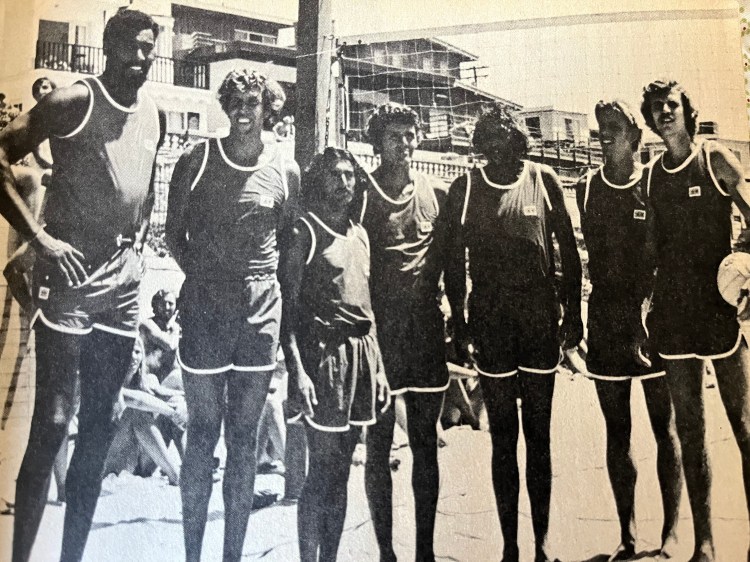
Erickson was a study in himself. A superior athlete, he once entered the Pacific Southwest Tennis Tournament in L.A. during a holdout from the Lakers. He won two matches. He was also a highly skilled shortstop and was best known outside of basketball for his exploits in volleyball. He was a member of the 1968 U.S. Olympic team.
It is not surprising that this group won additional championships. Riley, a reserve with a 6.9-point average that season, studied the game from the bench and made himself into a premier coach. Getting an opportunity with the Lakers when Paul Westhead was fired in 1982, Riley guided the team to four titles. After leaving coaching for a season, he returned with a flourish, coaxing the Knicks into the second round of the playoffs last season, where they made a gallant stand against the Bulls. West built the Laker championship teams of the 1980s as general manager after a three-year fling with coaching.
Another member of the team earned a championship ring beyond his contributions in 1972. Jim Cleamons was a rookie guard that season from Ohio State who rarely played, but he emerged later in life as a college head coach and then as an assistant with the Bulls. When Phil Jackson was ejected from a playoff game last season, Cleamons was placed in charge of the team. Obviously, he is emerging even more in the sport.
The list of achievers includes Baylor, who endured season after season of grief as GM of the Los Angeles Clippers but finally built a playoff team last season. The Clippers are a talented young team and are moving up on the Lakers for attention in L.A. How fitting that all these years later, West and Baylor are the architects of the L.A. teams.
The 1972 Lakers were loaded with talent, but, of course, not every talented team wins. Much credit goes to Sharman, who ultimately suffered major damage to his vocal cords. Sharman was a master of detail. If you asked if he was hungry, he’d look at his watch. He ate at a certain time, no exceptions. He wrote letters on plane rides. No reason to waste that time. He invented the morning shoot-around, now a common practice among NBA teams.
At first, Chamberlain wasn’t impressed. “He can have me there at 11 AM or at 7:30 PM when the game starts, not both,” said Wilt. Eventually, though, Sharman convinced Chamberlain and all of the others it was important to get out of bed, loosen up the muscles, and get a mental picture of the baskets in visiting arenas. Sharman sent each player a two-page message entitled, “Playoff Strategy and Suggestions,” just prior to the postseason tournament. Included was an item about the officials allowing more physical play than in the regular season. The man left nothing to chance.
Neither did his players. That’s why the Lakers’ championship season remains a source of pride 20 years later.

