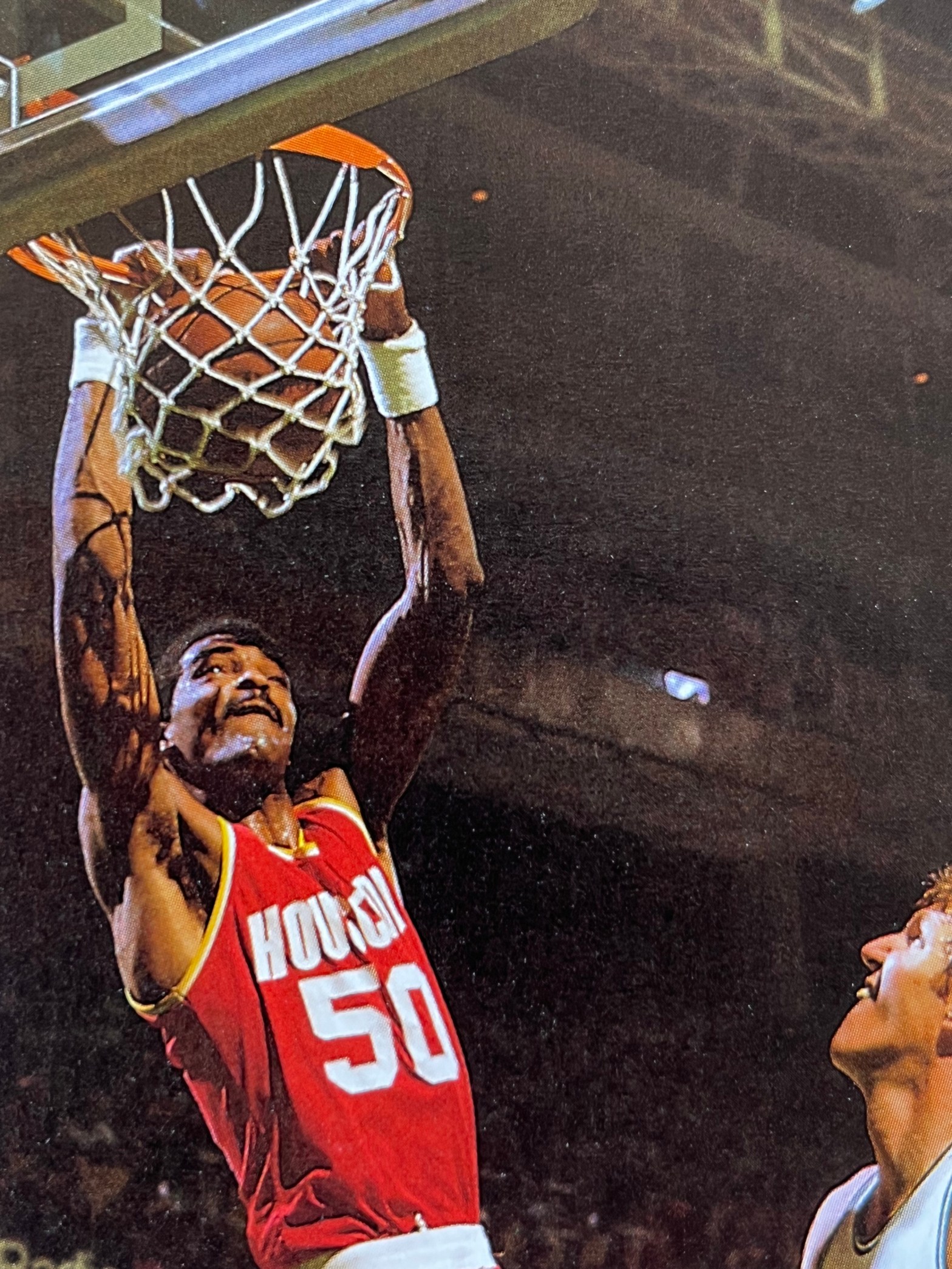
[Since starting this blog and sifting through literally stacks of old basketball stories, I’ve been wowed by many of the NBA’s fantastic former beat reporters from 1960s through the 1990s. Numbered high among them is Houston-based sports journalist Fran Blinebury. Every NBA story that Blinebury touched (and still touches) comes out smart, humorous in places, and always well worth the read.
That includes Blinebury’s article below, published in the March 1986 issue of Basketball Digest. His subject: Ralph Sampson, early in his NBA career with the Houston Rockets. Sampson, though standing 7-4, isn’t a traditional NBA center. He’s a versatile, Wemby-like perfect fit for today’s position-less game who navigated a tougher NBA era that expected him to shut up, post up, and act like Goliath inside. Rather than wax on here about Sampson and his high, mostly unfair NBA expectations, I’ll defer to Blinebury. He offers a compelling profile of one of the NBA’s most freakishly talented and articulate seven-footers of the 1980s.]
****
When you’re the Houston Rockets coming off a 48-win season, one short of the franchise record, public expectations are high. When you’re Ralph Sampson, high expectations from the public are all you have ever known.
Is it because you were a consensus choice as college player of the year three times in a row at the University of Virginia? Because you were the sought-after prize three consecutive years by NBA teams who wanted you to leave school before getting your degree? Because you were the No. 1 pick in the 1983 college draft? Because you make in excess of $1 million a year?
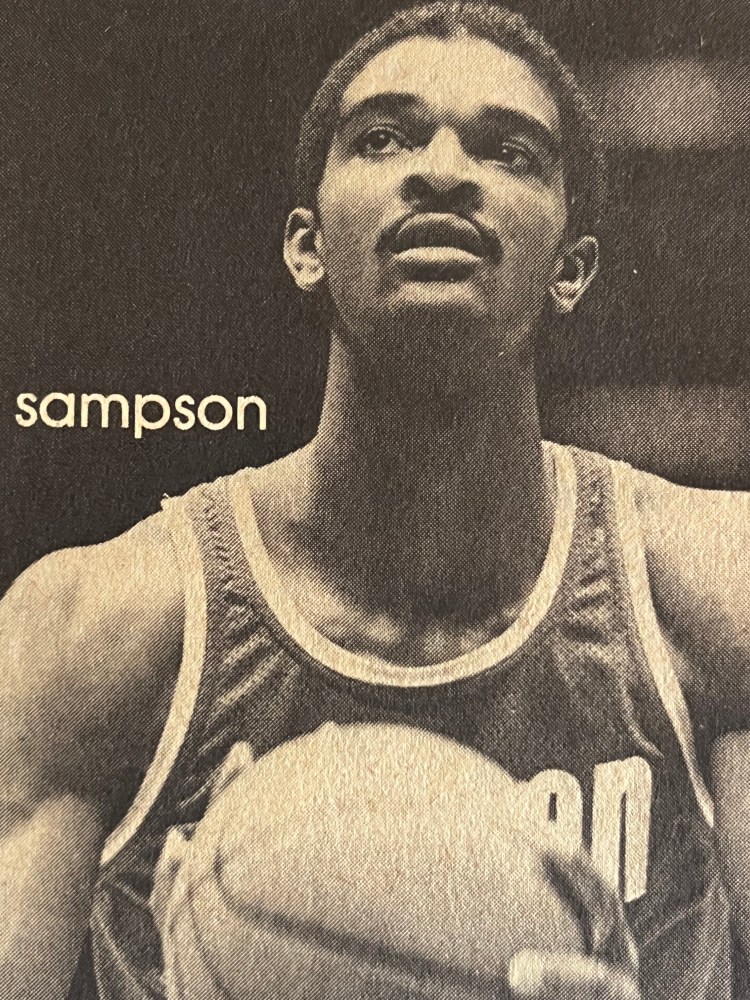
Surely, those factors contribute to the great expectations that are your constant companions. But more than anything else, Ralph Lee Sampson, Jr. is judged by a harsher set of standards than his peers simply because of the 88 inches between the top of his closely cropped haircut and the soles of his size 17 sneakers.
“The big guy is always supposed to win, isn’t he?” Sampson asked his questioner between forkfuls of pancakes during a late breakfast.
Indeed, nowhere else is that more true than in basketball, where height usually makes might, and where men who were born with genes that enable them to stand head and shoulders above the crowd are forced to go through life in a no-win situation. After all, if Sampson prevails, that is what he’s supposed to do. If he loses, it is said he hasn’t tried hard enough.
It is the old story of nobody rooting for Goliath. A burden that has been borne by so many seven-footers before him, most notably Kareem Abdul-Jabbar and Wilt Chamberlain.
It is a narrow-minded view of a player’s worth that takes into account only the number of championship rings on his fingers. Sampson, of course, through four years at Virginia and his first two with the Rockets, has only one: an NIT championship while at Virginia.
“I don’t know what people expect of me,” Sampson said. “They expect wins, sure. But I really have never understood what people have wanted out of me personally. I guess it just comes down to me being expected to win every time I walk on the floor.
“But that is not something that I can guarantee. The only thing I have control over is how much I put out, how much effort I put into every performance. And I know that I do all that I can. So, I guess that’s what I expect of myself that really matters. That might sound selfish or arrogant. But people who know me know that I do expect an awful lot from myself.
“I learned a while ago that if I worried constantly about what other people think, I’d be driven crazy. So, I’ve just got to go ahead and play the game the best that I know how and hope that things will work out for themselves.
“But I don’t ever go out on the court not caring about what’s going to happen. I don’t like to lose. Do people really think I do?”
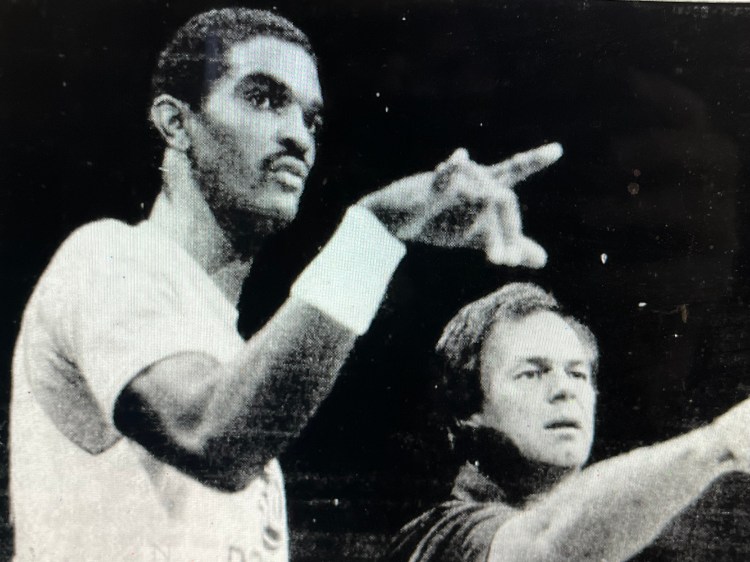
They wouldn’t if they looked coolly and objectively at what Sampson has done in his brief career. Take nothing more than his two-year statistics with the Rockets. In 1983-84, he led the club in almost every category, averaging 21.0 points, 11.1 rebounds, and 2.4 blocked shots while becoming only the second player in the history of the NBA to be named Rookie of the Year by a unanimous vote.
Last season, with the addition of Akeem Olajuwon, Sampson made the transition to forward with remarkable ease for someone 7-4. While learning the ropes at a new position, he ranked 11th in the league in rebounding (10.4), 19th in scoring (22.1), and was voted second-team All-NBA. He was MVP in the 1983 All-Star Game in Indianapolis with 24 points and 10 rebounds, scored in double figures 74 times, had 20 or more points 47 times, 30 or more 17 times, and three games of 40 or better with a career-high of 43.
Yet, when all was said and done and Sampson went back home during the summer to Harrisonburg, Va., he was trailed by criticism from a public that felt like a jilted lover when the Rockets lost in the first round of the playoffs to Utah. Overrated, they said. A loser.
Never mind that Sampson had averaged 21.2 points and 11.6 rebounds in the series. Fingers pointed only to his record in grabbing the brass ring over the last half-dozen years. Here was the first man his size ever to move out to the wing and have such success, yet the albatross squeezed tighter around his neck. It took Julius Erving eight years to finally win his first NBA title, and George Gervin has never even played for the championship. But no one has ever questioned their greatness.
Sampson is the target of so many of the same barbs that were directed at Abdul-Jabbar during the 1970s, when he went nine years between winning championships. Yet now in his 17th season, Abdul-Jabbar is receiving a shower of accolades.
“If anything, I think what’s happened with Kareem shows how much of a team game this is,” Sampson said. “There’s a guy who has the skyhook that everybody says is the greatest shot in the history of the game, and it took him all that time to win his second championship. People said this about him and that about him for a lot of years. Then what happened? The Lakers put some great players around Kareem, and he won three championships in six years.
“Did Magic Johnson and James Worthy make Kareem better? Did Kareem make Magic and Worthy better? Or did they all work together and make each other better? But it’s a lot more complicated than to say that the biggest guy on the floor should always win.”
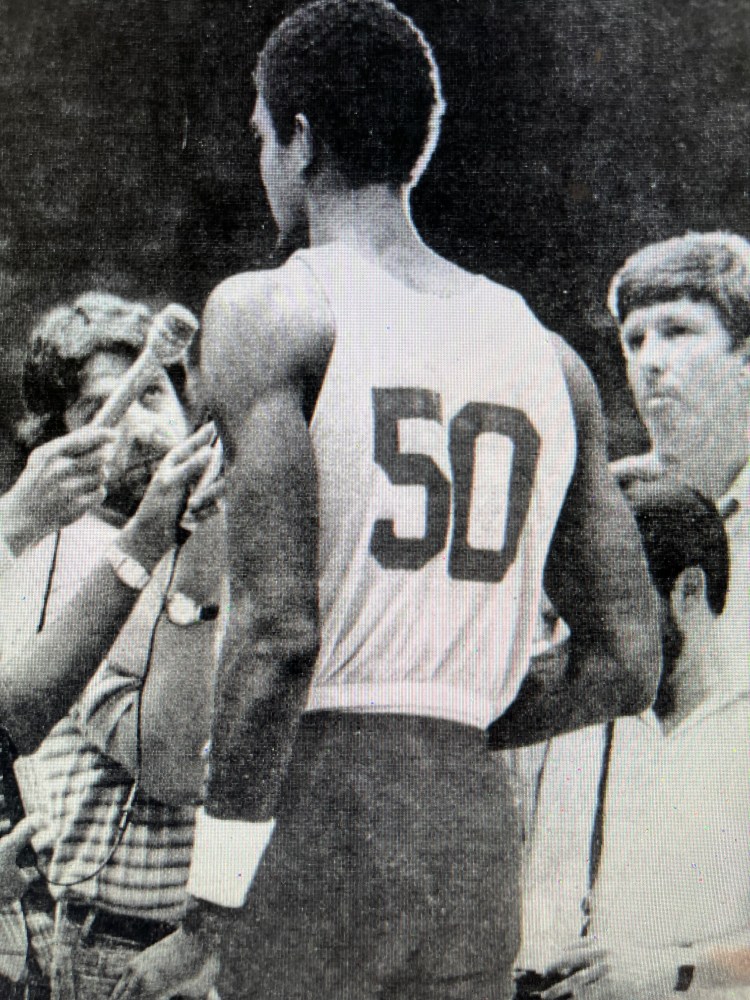
Perhaps even more complicated when the biggest guy on the floor—despite his size—doesn’t have a big man’s game. Sampson has heard and read about his heart, his desire, and his guts being questioned by those who wondered why he wasn’t able to lead Virginia to a string of NCAA titles and why he wasn’t able to come to Houston and take the Rockets immediately to the top, the way Larry Bird did with the Boston Celtics.
The fact is that while Sampson may stand 7-4, his game has never been that of a traditional low-post center. Some of his fondest memories of playing are from his prep days at Harrisonburg High School, when he was permitted to dribble the ball up the floor, occasionally go behind his back, and let fly with a couple of jumpers from the perimeter.
While there are those who might argue that Sampson—a center by tradition, if nothing else—should not have been permitted to do those things, it should not be overlooked that Harrisonburg High School won two state championships.
It was at Virginia, where his freedom on the court was more restricted, that the criticism began. When zone defenses collapsed on Sampson in the middle in the NCAA tournament, Virginia was suddenly left like a gunfighter with no bullets. The Cavaliers lost, and Sampson took the blame.
Now, when the Rockets lose, Sampson takes the blame. More than Olajuwon, more than Rodney McCray or John Lucas or any of them. After all, he’s the biggest, and he’s the square peg who doesn’t fit into the round hole.
People in the stands see Sampson try to dribble the ball up the floor and lose it out of bounds off his foot and say he shouldn’t do it. They see him take a jump shot from the top of the key and cringe—even when he makes it. Even people such as Rockets coach Bill Fitch see Sampson attempting a variety of moves and wish he’d work on perfecting one shot—a la Abdul-Jabbar’s skyhook—instead.
But is it fair to compare Sampson to other big men who have played this game? Who has seen another one like him? Yes, Olajuwon and Moses Malone get the job done in the middle. But without demeaning their talents, that is what they are—inside players. They are blue-collar types who hustle and scrap for every rebound and loose ball because they must hustle and scrap.
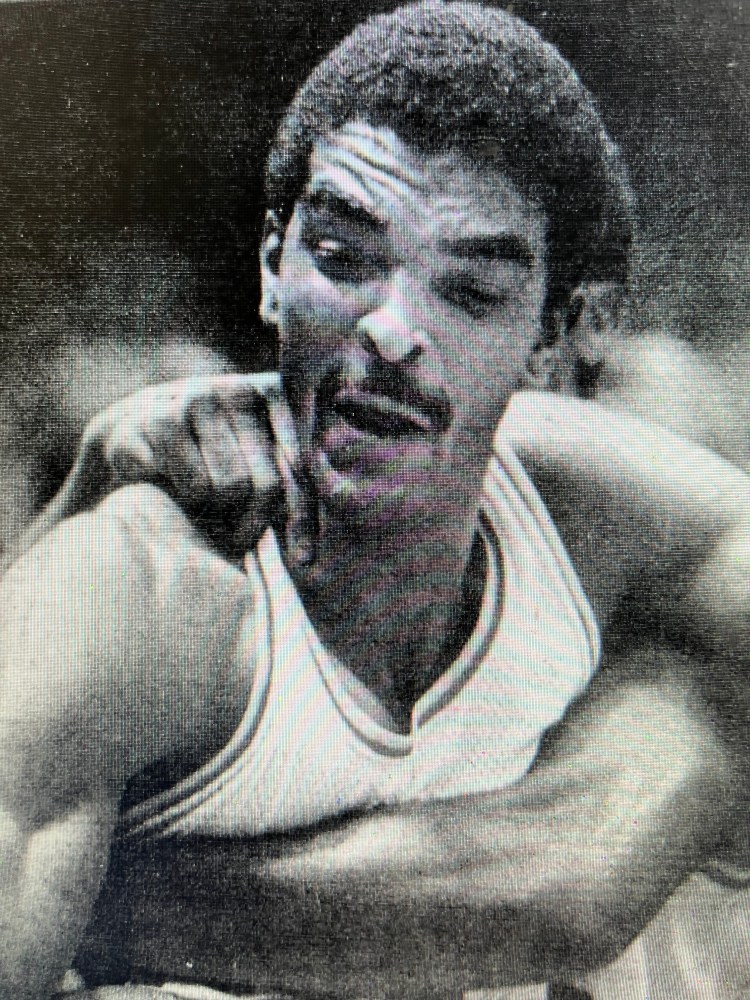
Sampson can go high for an offensive rebound tap-in on one possession, swish a 20-foot jumper on the next, then nail a post-up turnaround followed by a windmill slam dunk on the fastbreak. He is a hybrid, a new life form, much the same way as Magic when he broke the backcourt barrier as the NBA’s first 6-9 point guard.
“They all hollered at me in college, and Fitch hollers at me about getting a basic shot,” said Sampson. “But in my mind, I don’t ever want to get a basic shot. Maybe something like Kareem’s hook will keep me in the league a couple of extra years. But I don’t want to depend on one thing.
“I don’t ever want to be in a position where a team can shut off one thing that I do best and stop me. I don’t want to do one thing well. I want to be the best player in this league at everything.
“It’s funny when I hear things that people say about me, like that I don’t have much emotion, that I don’t care enough about winning a championship. I’ve got plenty of emotion. I just don’t show it. I keep it inside of me. I think that you can motivate kids who are 18 or 19 in college with emotion and fire them up. But we’re all professionals now. Guys are in their 20s and 30s.
“I don’t think that I have to holler and scream at anybody just because I’m the captain. I really don’t think any of us need to be hollered and screamed at this season. We’re veterans now. We’re ready for the next step. I don’t think we need all of the restrictions of the past.
“Let’s get rid of all the bullbleep. Let’s decide on a style of play, decide who he [Fitch] can coach, and let’s play. Throw the ball up and go. Let’s stop all this playing around with little things and talking about fitting in this piece and that piece.
“We’ve got players here now who can win in this league. So let’s stop talking about getting a little bit better this year and set our goal on playing for the championship. Sooner or later, we’ve got to have the confidence placed in us. We can’t have the coach calling every play every time down the floor. We can’t have our point guard running down the court and looking at the bench to get every play.
“Let’s just rebound the ball, fill the lanes, run the break, and do what we do best. You look at L.A. [Coach Pat] Riley coaches them, sure. But mostly he sits there and watches them play. If he sees something he doesn’t like, he calls a timeout and redirects them. Then he turns them loose again.”
It is a style that obviously appeals to Sampson, and the idea of his playing someday for the Lakers is one that weighs heavily, if not on Sampson’s mind, then on everyone else’s. When the Lakers announced that Abdul-Jabbar had agreed to play through the 1986-87 season, it was not overlooked that Sampson’s contract with the Rockets expires in the same year.
Just think back to the All-Star Game in Indianapolis, when Magic was feeding Sampson the ball. “If I had the big guy on my team,” Magic said that day, “you could start ordering the championship rings for the next 10 years.”
Indeed, Sampson has thought about the possibility. “If I had the opportunity to go to L.A. and Houston didn’t want me, then I’d go to L.A.,” he said. “But if the Rockets want me to stay after four years here and we can agree to terms, I’ll stay in Houston.
“A lot could happen between now and then. Right now, the Rockets have the right of first-refusal on anything. But the collective-bargaining agreement will be up then [1987], and things could change. So, I’ll just leave that up to the agents and management now and concentrate on playing this season.”
Sampson attended Pete Newell’s camp for big men for the third summer in a row and feels his footwork has improved. He is also more comfortable at forward. “Last year was a learning process,” Sampson said. “I had to think about everything I was doing before I did it. Now I feel a lot more at home. Playing the position is coming more naturally.”
The pressure to win, however, remains. “I get tired of it sometimes,” he said. “I don’t remember what game it was. But it was in the preseason, I guess somebody in the stands thought I should have been doing more out there. The guy just stood up and yelled, ‘Sampson do more!’
“I was playing as hard as I could. I don’t know what else he wanted me to do. If I get 20 points and 10 rebounds, I guess he’ll want 40 and 20. Yelling back isn’t anything you can do. He’s just up there watching, paying his money, which is the name of the game. I guess he wants more. I guess he thinks I’m not hustling [enough] for what he’s paying. I don’t know what that person thinks.
“But I know that I don’t think I’ve got to apologize for how much I’ve put out on the court over the years. I won championships in high school. We didn’t win many in college, but we had a winning percentage [112–23 and a .829 winning percentage] that was the best in the country over four years.
“Also, Virginia was not a consistently powerful team before I went there. Now the program is among the best. I’m happy about those things. I had a hand in them. So I’m not worried about what people say about my time at Virginia. We won plenty of games.
“Now, in the NBA, when we get the right combination together, we’ll go all the way. My time will come. I’ll win a championship.”
And when he does, the next year he’ll be expected to win another. “I know,” said Ralph Sampson. “They’ll always be wanting more.”

