
[Continuing with this week’s series on Maurice Lucas. Up next is a profile of Lucas that ran in the Pittsburgh Press Sunday Magazine on February 23, 1986. The date corresponds with Lucas nearing the end of his pro career while throwing around his weight for the defending world-champion Los Angeles Lakers. Here, Lucas also waxes nostalgic about his Pittsburgh roots, his highly regarded high school teammates greats who failed to attain college or pro stardom, and the power of creating his own opportunities for success. The byline belongs to Gene Collier, who has enjoyed an award-winning, five decade-career as a Pittsburgh newspaper columnist. Collier continues to tell-it-like-it-is on all things sports, politics, and social issues for the Post-Gazette.]
****
The Southern California morning is almost annoyingly beautiful. The sun is flooding the streets around Inglewood, the ocean is posing for postcards, and people in immaculately clean cars are fleeing to the freeways. You take Manchester Avenue westbound past boutiques, beauty parlors, and BMW dealerships until you get to the monument that says Loyola Marymount College, and if it’s the right day of the month at about 11 a.m., you can find him in the first building on the right.
Maurice Lucas lives, people.
You might have heard of him. Basketball. Strength. Courage. Righteous defiance. Pittsburgh. Good stuff.
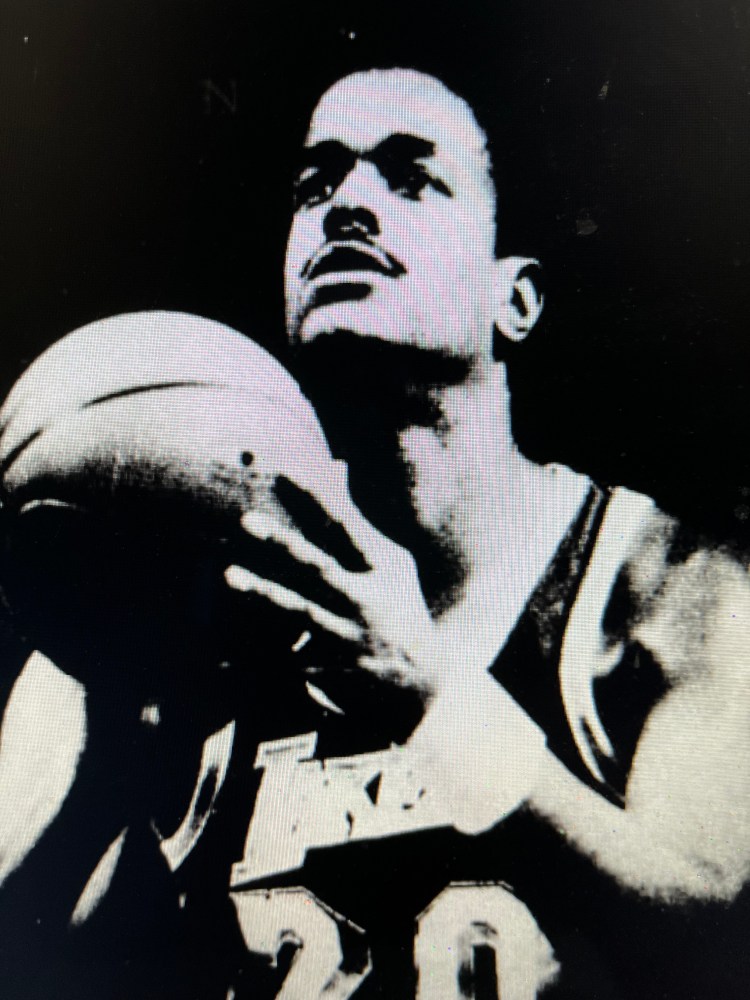
He is there on this morning scrimmaging with his teammates, the world-champion Los Angeles Lakers, who practice here on almost every annoyingly beautiful Southern California morning that their Marquis de Sade travel schedule allows.
Except for these end-of-practice scrimmages, the Lakers are stone-cold delighted to have Maurice Lucas, the NBA’s longstanding prototype power forward who is nearing the end of a lovely career without nearing any loss of efficiency. But for the next few minutes, they will have to play against him. Ouch.
Michael Cooper, the spectacular but stick-thin shooting guard, bolts down the lane and finds to his horror that Lucas fills it on defense. There is not so much a collision as a quiet thud, and Cooper is on the floor yelping something about a foul.
“No blood, no foul,” Lucas says, refusing to smile.
On the next run through, Lucas observes that he has knocked Kurt Rambis onto his back and that Rambis’ glasses have abandoned his face and scattered across the baseline. Also that Rambis seems to be writhing a bit. “That,” he says, “might have been a foul.”
Twenty minutes later, the Lakers are dismissed. Lucas, dripping wet but having agreed to a long talk, folds himself into the wooden bleachers and runs a towel over the parts of his 6-9 that he can easily reach.
“In the spring,” his visitor says, “It will be 15 years. “
His head lolls back, then forward into his right hand. “Fifteen years,” he whispers.
There is a poignant silence as Maurice Lucas seems about to swipe a line from George Lucas: “A long time ago in a galaxy far, far away.”
****
It is another relentlessly stark morning in the Hill District. A typically nasty Pittsburgh winter has blown most of the ponderous streetcorner population inside the taverns along Centre and Wiley avenues. Clusters of dark, weathered faces look out from beneath neon Budweiser lights, looking for hope but seeing not much else but the sick irony of flaking lottery advertisements. Life is a lottery stacked in wrong numbers. Up until 15 years ago, Maurice Lucas would walk out of his mother’s house on Francis Street and make his way through these streets to Schenley High School. He found this was facilitated by assuming the look of a young man with whom you didn’t mess. He got so good at the look, he practically made a career of it.
In the spring of 1971, Al McGuire, the basketball coach at Marquette, found himself walking up the steps of Schenley High School, through the doors, and into “Mardi gras!”
“At that time, they went to class for 10 minutes and were in the halls for 50—it was Mardi gras in the halls, people up and down, laughing,” McGuire remembered. “I asked Maurice if you’d like to go for a walk. I took him for a walk, and we stopped for pizza. I recruited Maurice Lucas over a 25-cent slice of pizza.”
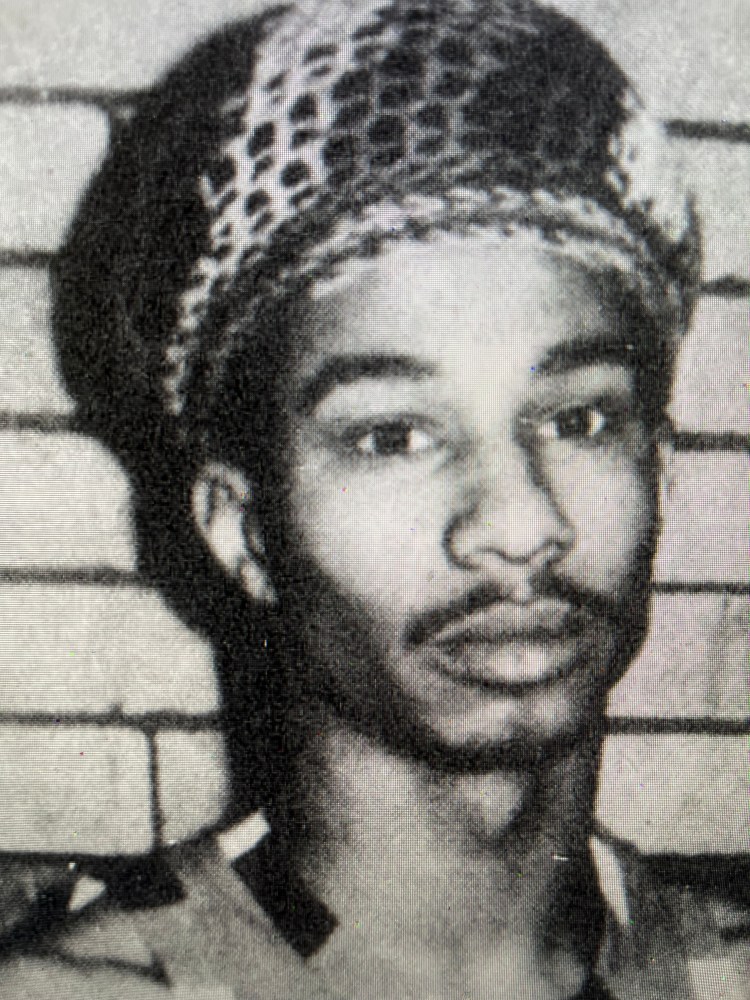
Local history tells us that as Maurice bit away the crust, Al McGuire had a major recruiting victory. This was no ordinary player, insomuch as Schenley was no ordinary place during that wondrous springtime 15 years ago.
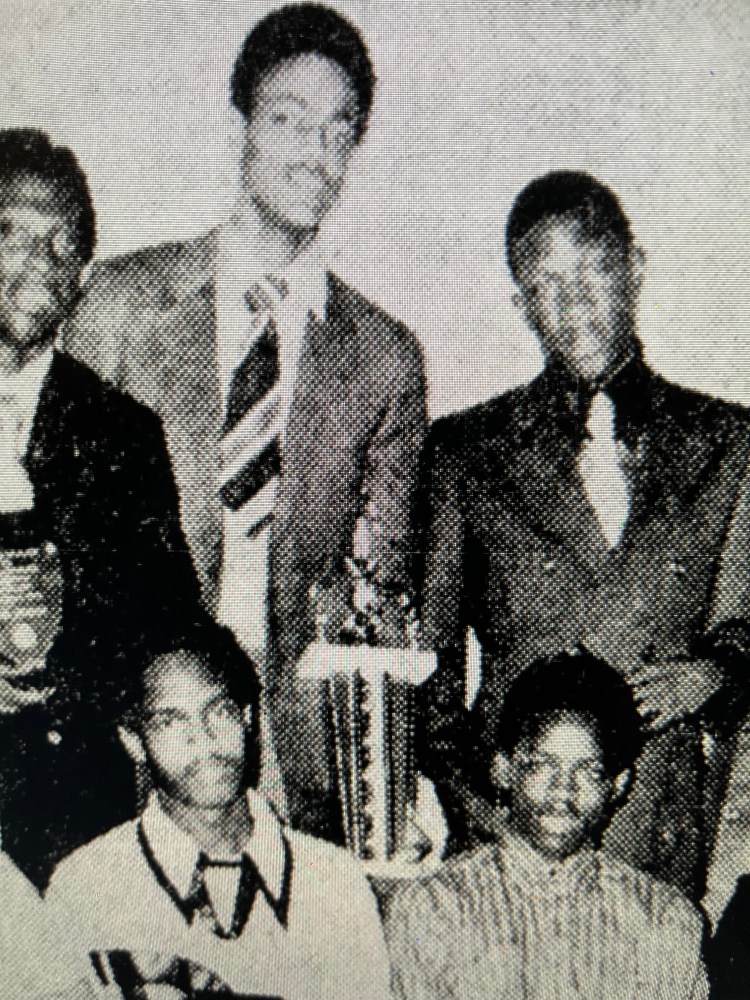
The 1971 Schenley team had won the state championship squashing raved-about Norristown like a bug. The principals were the kids in the halls with the foppish, floppy hats. They were the emotional leaders of the school. Lucas was now headed for Marquette. Ricky Coleman for Jacksonville. Jeep Kelley for the University of Nevada-Las Vegas. Tom Thornton for the University of Detroit.
“I wasn’t nearly as good a player as Ricky Coleman,” Lucas said in a well-considered sentence that is part confession, part pathos. “And Jeep, oh, he was an unbelievable, a great player.”
Coleman and Kelley are ghetto legends, part of a tattered edge of Pittsburgh’s sports fabric. Lucas is not, because his career long ago escaped the bounds of folklore. Legends like Coleman and Kelley are spoken history, but Maurice Lucas is documentable.
“This is the end, after this team,” Lucas said. “I’ve achieved a lot of goals a lot of doubters thought I wouldn’t. I have achieved goals I never anticipated achieving. I’ve been in pro basketball for 12 years, and I’ve been a success at it. I’ve been all-pro. I’ve been in the All-Star Game. I’ve won a world championship (with the 1977 Portland Trail Blazers).”
Maurice Lucas hit the NBA three years after Wilt Chamberlain left it, or about five years after Wilt discovered it was harder to get 30 rebounds and 50 points than it had been when everyone else was a half-foot shorter than he was. Centers near 7 feet were multiplying like lab mice, and coaches, by their inherent genius, started looking for the next best thing.
Now you need a power forward, the thinking went. Somebody big and powerful enough to dictate to everybody outside the standoff in the middle. Lucas was that man. Hey, Lucas is that man.
Frank Brady, who has covered the NBA on both coasts for 10 years and who sees the Lakers’ every game for the Los Angeles Herald Examiner, said, “On the floor, he’s still a bitch. He’s still as pugnacious as ever. Against Phoenix, when the Bulgarian (Georgi Glouchkov) was playing in his first exhibition, geez, Maurice almost knocked him down before he got on the court right.”
It is the kind of approach Pittsburgh finds so embraceable in its football players, but pretty much shrugs at in Lucas. “More than anything, I guess I’ll be remembered for being an enforcer and probably for being the original power forward-type player,” Lucas said. “But the most memorable thing will be my championship season. If I won another one, it would be great. But I don’t think it would top that initial feeling. One thing I know, I understand it better this time. When you’re young, you really don’t realize what goes into it, and you don’t appreciate it as much. You have to enjoy them when they come along.”
****
That championship season came upon Lucas in a sizable hurry and not by happenstance. He arrived in Portland with Bill Walton, the red-haired socially conscious UCLA center with whom he shared an appreciation of health food, leftist politics, and transcendental meditation. And with giddy acceleration, they found themselves in the finals against the ostentatiously talented Philadelphia 76ers of Julius Erving, George McGinnis, Lloyd Free, Darryl Dawkins, and Doug Collins.
Philadelphia won the first game easily and the second as well, but a not-so-funny thing happened before the second game was history. To this day, there is nothing that has done more for the Maurice Lucas aura and nothing that testifies more to his personal signature on NBA history as the events of the second half of that second game. “It certainly brought a lot of attention to my game and to the style in which I do things,” Lucas said. “It also allowed me to do what I wanted to do from that point. I was able to play more aggressively after that.”
What happened was that Philadelphia’s Dawkins, a 6-11, 260-pound kid who had gone straight to the NBA from a Florida high school, where opposing fans threw bananas at him, lost his composure over the continual hounding by Portland’s Bobby Gross.
Dawkins lashed out at Gross, but Lucas bolted to Gross’ rescue. The flailing result was one of the most memorable freeze frames in NBA history. Dawkins and Lucas first matching glowers at maybe five paces for what seemed like perpetuity, then colliding in a cacophony of muscle and passion.
“It changed the whole tempo of the series,” Lucas remembered rather proudly. “After we showed them we weren’t going to back down from them, that was it.” Portland won four straight and took the championship in six games.

Lucas’s favorite part of it is this laughable footnote. “I’ll tell you what didn’t hurt us any. (Philadelphia’s) Doug Collins couldn’t shoot anymore because Dawkins’ first punch missed and hit him in the eye.”
He giggled. Maurice Lucas can actually giggle.
He has, after all this, a somehow refreshing and somehow ominously cavalier attitude to little fits of violence.
****
In the preseason this year, Lucas and Boston center Robert Parish were wrangling for position underneath. Lucas established inside position for a rebound that went the other way, but Parish left his feet and tried to go over Lucas’ right shoulder. Here’s an eyewitness account of what followed:
“Lucas lashed out with his arms, then they separated and squared off,” said Dan Shaughnessy of the Boston Globe, who found himself sitting in a riot. “Both of them had their arms extended, but Lucas had all the forward momentum. In a minute, Parish . . . was on the scorer’s table, and the next minute, he was over the scorer’s table. There was a big pileup, and it was a little scary.”
Asked for details on this, Lucas seemed to wonder what the details were worth. “That was just a kind of quick reaction type of thing on my part,” he said. “That’s all.”
“But weren’t people tumbling over the scorer’s table?”
“Yeah, I guess some guys did go over the table.” And he giggled again.
The Lakers signed Lucas to a one-year contract for the relatively inexpensive sum of $475,000 in base salary for the 1985-86 season, far less than he would have made had he remained with the Phoenix Suns, who announced a new-faces rebuilding campaign after last season that Luke wanted no part of. Lucas said negotiations for another one-year deal with the Lakers are just about set. It will be, quite possibly, his final contract.
Los Angeles needed rebounding help, especially on the offensive board because the 7-2 Kareem Abdul-Jabbar’s trademark sky hook so often leaves him too far from the basket to help. While Kurt Rambis and Mitch Kupchak provided enough defense and rebounding to allow the Lakers to shed their aloof, quiche-eating image on the way to last year’s NBA championship, Lucas does what they do and more. Specifically, he scores.
In Madison Square Garden, in the much-trumpeted first meeting between Abdul-Jabbar and New York Knicks rookie Patrick Ewing, Lucas quietly scored 19 points and pulled 10 rebounds, six on the offensive end. Lucas, the Lakers’ leading rebounder, banged the 7-foot Ewing so relentlessly that the former Georgetown Enforcer found only one rebound in the second half.
“You know,” McGuire said, laughing in mild embarrassment. “I really didn’t think Maurice was that good. Then when he left me, I found out he was. Maurice, when the game is over, his stats would stand up even if his play wouldn’t. He didn’t catch your eye. The reason was, he didn’t do French pastry. He had no central carnival-type move. It was a layup, it was a layup.”
Dr. Jack Ramsay, the coach at Portland, long ago described Lucas as “a terribly complicated player, capable of giving you a good game and a bad game on the same night.”
And yet, being perhaps equal parts unremarkable and complex, Lucas has played most of 12 years, averaging about 17 points and 11 rebounds. In generic terms, he has been a very good player for a long time, and that is what they all wanted 15 years ago.
The careers of Kelley and Coleman hit the wall and exploded in college. Back in The Hill, both were eventually arrested for delivery of heroin, both underwent varying forms of rehabilitation, and both are still trying to put their lives together again. The Schenley team’s fifth starter, Jeffrey Matthews, has since done nothing of public note beyond a forgery conviction. Thornton, the pronounced exception, dropped basketball for an education and got an engineering degree and a master’s in business management.
“He’s an electrical engineer, I think,” Lucas said admiringly, “but every time I think about the others—and I think about it an awful lot—it makes me strive even more. Jeep lived with us when he was a sophomore in high school. It was the only arrangement they’d accept to keep him from going to jail; he had to live with us. Ricky, I always told him to call me if I could help him. When I was in New Jersey (playing with the Nets), he finally made the call and said he had a serious problem. We got him over there and got him into a rehab program, and I thought he had it pretty much straightened out, but I haven’t heard anything about him for a while.
“Jeffrey Matthews came out of high school, and everybody wanted to be his friend. They’d say, ‘Yeah, go ahead and do it, and if it doesn’t work out, you’ll always be welcome here.’
“That’s the difference with me. Hell, I don’t want to be welcome anywhere. I want to work. Do it myself.”
Lucas generally answers “persistence” when asked to explain himself from his roots. Others lay ample credit on his mother, Ruth, “an aristocratic lady,” McGuire said. But it is probably as much perception as persistence. Lucas knew something about Pittsburgh and about The Hill that the others weren’t sure of, namely that it was not for him.
“There was nothing there for me. I could have come back and gotten into the old routine with my friends, but I wanted to expand, to see what the world held for me. I thought seriously about Pitt, but I didn’t see myself expanding there. I couldn’t be my own man. Pittsburgh has one of the toughest interior ghettos. It’s compressed. It’s depressed. I’ve been in all the tough ghettos, playing ball. Harlem, the ultimate, Chicago, Philadelphia. Pittsburgh is as tough as any of them.
“I’ve been in some awful situation’s at times. I’ve been extremely fortunate and extremely lucky. But then, one makes his own luck.”
The story goes that Luke’s dad got up from the breakfast table one morning in 1956, left to buy some butter, and didn’t come back. Luke threatened publicly to flatten him if ever he showed his face. When the two finally met, there was no violence.
“He died earlier this year, Lucas said. I had just gotten to know him. I wanted to find out a lot of things that were missing. There was a part of me that was just vacant. In order to recapture some of that emptiness, I had always resolved to be my own man. I’m an entrepreneur at heart, by nature, and it does me proud to go out and make business deals with people, to make a successful presentation, to be my own boss and not have a fool for an employee.”
As nobody’s fool, Lucas now runs his own company, Pro-Flow, Inc., a cash-monitoring service for professionals who have enough cash that needs monitoring. He is a former officer of the NBA Players Association. He is the father of David and Maurice II.
“Maurice was always just a cut above, the way he dressed, the way he handled himself,” McGuire said. “You knew not to fool with him when his eyes got a little watery. He is a warrior. In my world, and it’s pretty hard to con me—you can’t con a con man—he’s all pluses. He does what’s right. He’s an Einstein of common sense. I’m not talking basketball. I’m talking about life.”
For all his success and for his courageous cultivation of an image Pittsburgh normally embraces, we do not hold Lucas in the sports esteem that we do the Marinos and Montanas and Coverts and Fralics. “I’ve been doing it a lot longer than those guys, and I’ve been as successful, if not more successful, than those guys,” he said. “But Pittsburgh is football territory, and that’s the way it is. It doesn’t bother me.”
You didn’t expect it to, did you?

